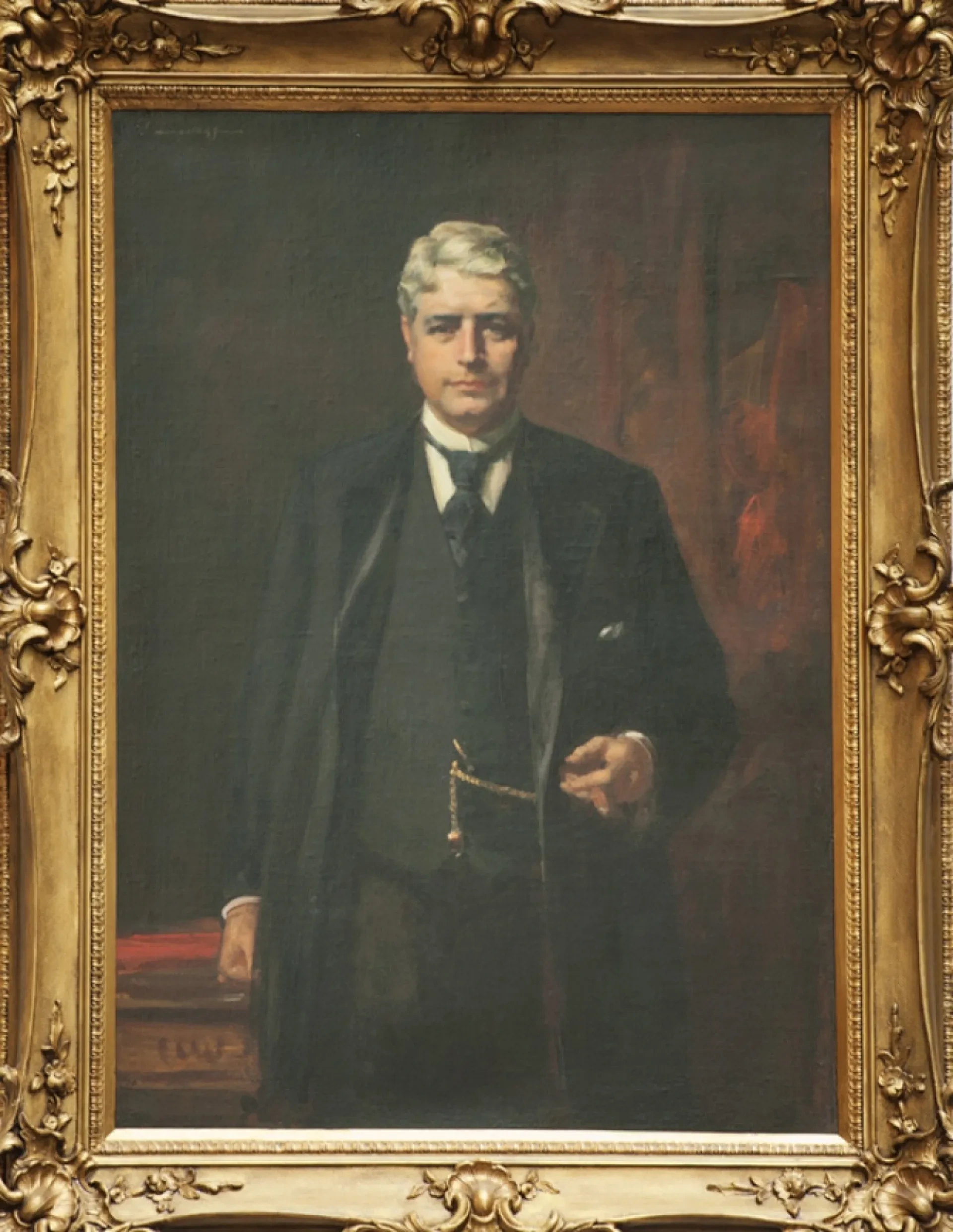
Edmund Barton
 Australia
Also known as: Sir Edmund Barton, Toby Barton
Birthday
January 18, 1849
Birth Sign
Capricorn
Birthplace
Glebe, New South Wales, Australia
Age
Died at 70
About
Sir Edmund "Toby" Barton was the first prime minister of Australia, serving from 1901 to 1903, and later a founding justice of the High Court of Australia. A barrister and politician, he is remembered as one of the nation's founding fathers for his central role in the federation movement. He was a leading advocate for the union of the Australian colonies, famously summarising the goal as "a nation for a continent, and a continent for a nation."
Barton's political career was marked by his work on the Australian Constitution. He was a delegate to the constitutional conventions of the 1890s and helped draft the document that would become the foundation of the new nation. When Australia became a federation on January 1, 1901, he was sworn in as its first prime minister. His government established the Australian Defence Force and the Commonwealth Public Service, and introduced women's suffrage for federal elections.
In 1903, Barton resigned from politics to become one of the three founding justices of the High Court, where he served until his death in 1920. His legacy is that of a statesman who shaped both the political and legal landscape of Australia. He is honoured through the Barton electorate, named after him in 1922, and continues to be celebrated as a key figure in the nation's history. The centenary of his death was commemorated by the Parliament of Australia in 2020, underscoring his enduring significance.
Early Life & Background
Edmund Barton was born on January 18, 1849, in Glebe, Sydney, the eleventh of twelve children. His father, William Barton, was a London-born accountant, stockbroker, and real estate agent, often described as Sydney's first stockbroker. His mother, Mary Louisa (née Whydah), ran a girls' school at one point to help support the large family. Three of his siblings died in childhood, marking his early years with both privilege and loss. His given name may have honoured the recently deceased explorer Edmund Kennedy.
He attended Fort Street Primary School and then Sydney Grammar School, where he excelled academically. In 1868, he graduated with first-class honours in classics from the University of Sydney. His education set the stage for a career in law; he was called to the bar in 1871. As a young barrister, he travelled widely across New South Wales for court hearings, often combining work with his love of cricket and rowing. He also joined the Sydney School of Arts Debating Society, where he sharpened the public speaking skills that would later define his political career.
Barton's entry into politics came in 1879, when he was elected to the New South Wales Legislative Assembly. His rise was swift: he became the youngest Speaker of the Assembly in 1883, a position he held until 1887. That year, he received a life appointment to the Legislative Council, with the support of Henry Parkes, then a dominant figure in colonial politics. His early political career also included two stints as Attorney-General, in 1889 and again from 1891 to 1893. But it was the federation movement that would become his defining cause. Inspired by Parkes' Tenterfield speech in October 1889 and discussions with Andrew Inglis Clark, Barton became a passionate advocate for uniting the Australian colonies.
Career Growth
Edmund Barton's breakthrough came with the federation movement. He was a delegate to the Australasian Federal Convention in Sydney in March 1891, where he sat on the constitution committee and helped draft the Australian Constitution. Over the following years, he led the campaign for a "yes" vote in the referendums, travelling across the colonies to rally support. In early 1900, he led the Australian delegation to London to negotiate amendments to the Constitution Bill and oversee its passage through the UK Parliament.
On January 1, 1901, Barton was sworn in as Australia's first prime minister, following the so-called "Hopetoun Blunder." At the first federal election in March 1901, his Protectionist Party won the most seats but not a majority, so he governed with the support of the Australian Labor Party. His government passed significant legislation, including the Commonwealth Franchise Act 1902, which gave women the right to vote in federal elections, and the Immigration Restriction Act 1901, which laid the groundwork for the White Australia policy. He also served as Minister for External Affairs. He received a knighthood in 1902 and was decorated with the Japanese Grand Cordon, Order of the Rising Sun.
In 1903, Barton resigned as prime minister to become one of the three founding justices of the High Court of Australia, a court his own government had created. He served on the bench until his death on January 7, 1920. His successor as prime minister was Alfred Deakin. Barton's time on the High Court allowed him to interpret the constitution he had helped write, a dual legacy that remains unmatched in Australian history.
Career Timeline
Public Image & Style
Edmund Barton is remembered as a charismatic and even-tempered statesman, a founding father of the Australian nation. His public image is tied to the federation movement and the drafting of the constitution. He was known for his eloquence and his ability to connect with people, both in public speeches and in private debates. He was often described as handsome, with dark hair and expressive eyes, though he grew portly in later years. His legacy is honoured through national institutions, including the Barton electorate, named after him in 1922. He is portrayed in historical contexts as a generous and principled leader, a man who put the nation's interests above his own. In 1951, on the 50th anniversary of the opening of federal Parliament, an 88-year-old Billy Hughes laid a wreath on Barton's grave, paying tribute to his memory.
Fame & Fandom
Edmund Barton's legacy is not that of a modern celebrity with a named fanbase. There is no official fandom designation for the man who served as Australia's first prime minister, no organized community of devotees with a shared moniker. Instead, his memory is preserved through the weight of history: parliamentary records, national archives, and the ongoing civic recognition of his role as a founding father. The Edmund Barton Building in Canberra, a prominent landmark that made headlines in 2026 with a projected $300 million sale, stands as a physical reminder of his enduring presence in the nation's capital.
His most iconic moment, the federation inauguration on New Year's Day 1901, was captured on film, making him one of the earliest political figures recorded in Australian history. That footage, preserved by the National Film and Sound Archive, remains a touchstone for documentaries and school lessons. Yet, his legacy is not without controversy. In 2022, activists called for the removal of his statue, citing his role in implementing the White Australia Policy, sparking debates about how to remember complex historical figures.
As of August 2026, iFANN's Global Fame Engine has evaluated Edmund Barton but he does not currently hold a placement in the published rankings, including the Global Top 1,000 or any Top-100 scope list. His fame is historical and institutional rather than contemporary, a status that reflects his era and the nature of his contributions.
Interesting Facts and Legends
Edmund Barton was known by the nickname "Toby" all his life, a moniker that stuck from his youth. He was an active sportsman, participating in cricket and rowing, and he was an omnivorous reader with a particular love for Shakespeare and the theatre. His convivial nature led him to spend time at the Athenaeum Club with figures such as Jules Francois Archibald and William Bede Dalley.
The first biography of Barton was published in 1948 by John Reynolds, with a foreword by Sir Robert Menzies. He was described as handsome, with "finely chiselled features," curling black hair, and "beautiful black eyes that glowed with enthusiasm," though he grew portly with age.
One of the most enduring legends is his role as the "Father of Federation," a title that underscores his central part in drafting the Australian Constitution and leading the colonies to union. A poignant story from World War I involves a letter he wrote to his nephew serving in the conflict, a document that became a symbol of his personal compassion and the human cost of war. The letter was featured in a 2026 Canberra Times article exploring the legacy of a family's two world wars.
Notable Quotes
“A nation for a continent, and a continent for a nation.”
“If the question of Federation is to be satisfactorily handled … its conduct should be in the hands of a Minister, and that Minister, an ardent Federationist.”
Family & Personal Life
Edmund Barton married Jane Ross in 1877, and they had six children together. The family lived in Sydney, where Barton's political and legal career kept him busy. His wife, Jane, was a constant support throughout his life. Barton's parents were William Barton, a London-born accountant and stockbroker, and Mary Louisa (née Whydah), who at one stage ran a girls' school. He was the eleventh of twelve children, though three of his siblings died in childhood. His brother, George Burnett Barton, was a writer. Barton was a devoted family man, and his marriage to Jane lasted until his death in 1920.
Notable Connections
Edmund Barton was closely associated with several key figures in Australian history. Henry Parkes supported his early political career and inspired him with the Tenterfield speech. Andrew Inglis Clark was a fellow advocate for federation, and they discussed the idea of a federal legislative body. Alfred Deakin succeeded Barton as prime minister. George Reid was both a political opponent and later an ally in the federation campaign. Barton also spent time at the Athenaeum Club with Jules Francois Archibald and William Bede Dalley.
Relationships & Dating History
Edmund Barton married Jane Ross in 1877, and they remained together until his death in 1920. The couple had six children. There are no documented public romantic relationships beyond his marriage. Barton's marriage was a stable and supportive partnership, with Jane providing a steady home life throughout his political and judicial career. As of 2026, Barton is deceased; his marriage to Jane was his only known relationship.
- MarriedJane Barton1877 - 1920Married Jane Ross in 1877; they had six children together.
Death & Aftermath
Died
January 7, 1920 (aged 70)
Death Place
Mosman, New South Wales
Cause of Death
reported as pneumonia following a severe cold
Sir Edmund Barton spent his final days recovering from a severe cold at his residence in Mosman, New South Wales. The illness progressed rapidly into pneumonia, claiming the first Prime Minister of Australia on January 7, 1920. Medical certification by attending physicians confirmed the cause, following the customary protocols for natural deaths among prominent citizens of that era. National mourning ensued immediately, with tributes pouring in from government officials and peers who recognized him as a Father of Federation. Parliament eulogized the man who had dedicated his life to drafting the Constitution he later interpreted as a High Court justice.
A public state funeral followed shortly after, featuring a procession through Sydney attended by fellow federationists, members of the High Court, and government officials. He was laid to rest in Waverley Cemetery, a site chosen for its prominence and accessibility to the political elite. Posthumous honors have multiplied over the decades, cementing his legacy despite modern debates regarding his role in the White Australia Policy. His papers were preserved by the National Archives of Australia, ensuring his words remain accessible to future generations studying the foundations of the Commonwealth.
Net Worth (Estate Value)
N/A
iFANN Editorial Team estimate
When Edmund Barton died in 1920, no contemporary net worth figures exist. His estate value at death is not recorded in the available sources. iFANN's editorial research traces his posthumous legacy to historical institutions rather than commercial licensing. The Barton electorate and historical commemorations by the Parliament of Australia and the National Museum of Australia represent the primary ongoing honours. No posthumous revenue streams such as royalties or merchandise are documented. The centenary of his death was commemorated by the Parliament of Australia.
Awards Won (2)
Edmund Barton received a knighthood in 1902, and was also decorated with the Japanese Grand Cordon, Order of the Rising Sun. In July 1922, the federal Parliament honoured him by naming the electorate of Barton after him. On 9 May 1951, the 50th anniversary of the opening of federal Parliament, an 88-year-old Billy Hughes laid a wreath on Barton's grave, paying tribute to his memory. The first biography of Barton was published in 1948 by John Reynolds, with a foreword by Sir Robert Menzies.
1902 · Honour
Service to Australia
1902 · Honour
Diplomatic service
Known For
First Prime Minister of Australia
1901 · Prime Minister
Federation of Australia
1901 · Leading advocate
High Court of Australia
1903 · Founding Justice
Keywords
Sources
Quick Facts
- Profession
- politician, diplomat, judge
- Born
- January 18, 1849
- Birthplace
- Glebe, New South Wales, Australia
- Died
- January 7, 1920
- Death Place
- Medlow Bath, New South Wales, Australia
- Gender
- Male
- Spouse
- Jane Barton
- Birth Sign
- Capricorn
- Children
- Six
Personal Details
- Full Name
- Edmund Barton
- Spouse
- Jane Barton
- Children
- Six children
- Education
- Fort Street Primary School, Sydney Grammar School, University of Sydney (first-class honours in classics, 1868)
Frequently Asked Questions
Who was Australia's first prime minister?
What did Edmund Barton achieve?
When did Edmund Barton die?
Who was Edmund Barton's wife?
What was the White Australia policy?
Similar People
Join the community
fans discussing