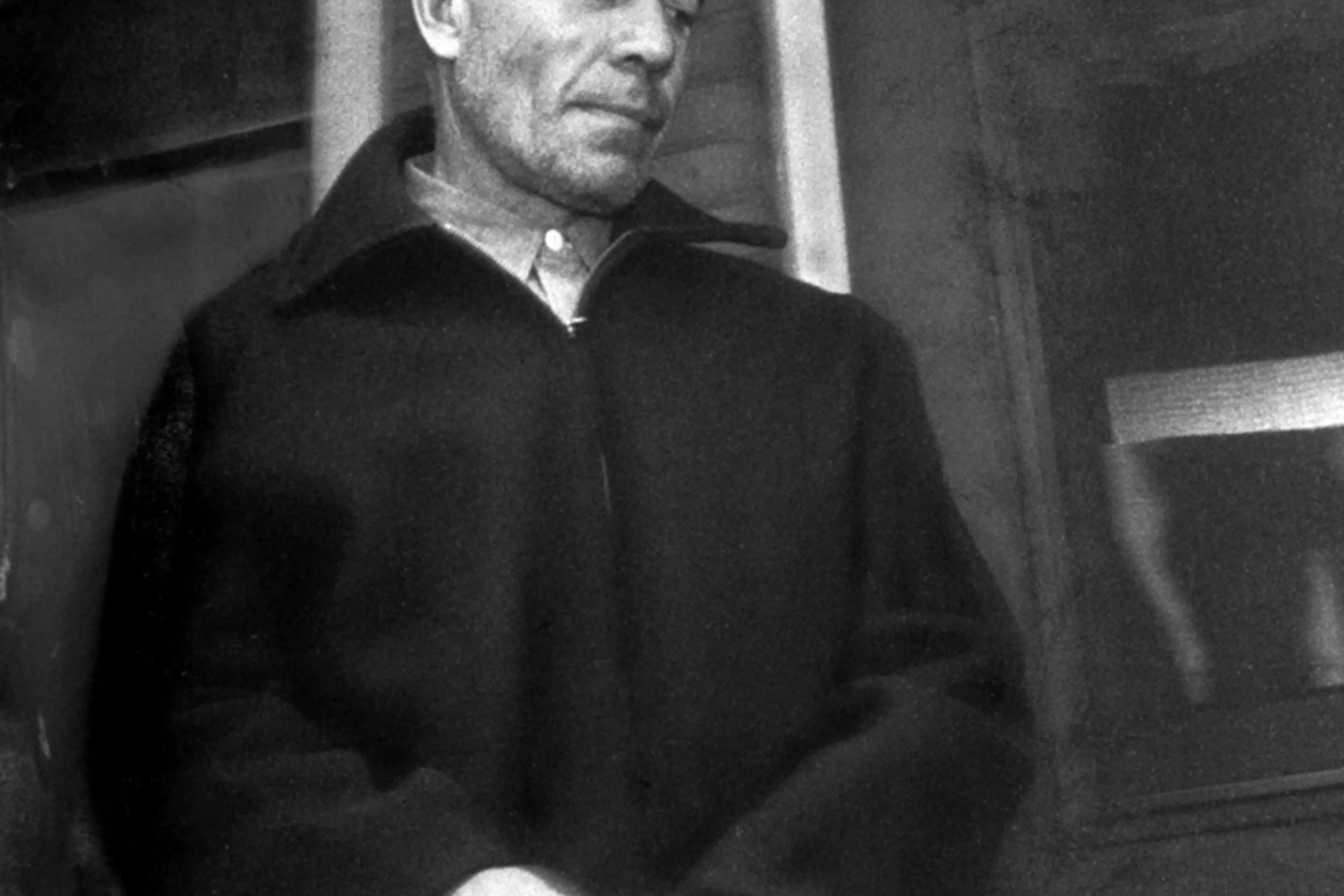
Ed Gein
 United States
Also known as: Butcher of Plainfield, Plainfield Ghoul
Birthday
August 27, 1906
Birth Sign
Virgo
Birthplace
La Crosse, Wisconsin, USA
Age
Died at 77
Height
5 ft 7 in (170 cm)
About
Edward Theodore Gein, known as the Butcher of Plainfield and the Plainfield Ghoul, was an American murderer and grave robber whose crimes in the 1950s stunned the nation and left a permanent imprint on horror culture. Born on August 27, 1906, in La Crosse, Wisconsin, he lived a reclusive life on a farm in Plainfield with his domineering mother, Augusta, whose extreme religious views warped his mind. After her death in 1945, Gein's behavior deteriorated significantly, and he began digging up corpses from local cemeteries, fashioning grotesque items from their skin and bones. His world collapsed in 1957 when police found human remains and macabre keepsakes in his home, leading him to confess to killing two women: tavern owner Mary Hogan in 1954 and hardware store proprietor Bernice Worden in 1957.
Gein's trial became a landmark in forensic psychology. Initially unfit to stand trial, he was committed to mental institutions for years before being ruled competent in 1968. He was convicted of Worden's murder but found legally insane and sent back to psychiatric care, where he stayed until his death from cancer on July 26, 1984, at age 77. Despite his small confirmed body count, the sheer horror of his grave-robbing and the artifacts he created made him a cultural touchstone. His story directly inspired Norman Bates in Psycho, Leatherface in The Texas Chain Saw Massacre, and Buffalo Bill in The Silence of the Lambs, cementing his role as a dark muse for modern horror. He stood 5 feet 7 inches tall.
Early Life & Background
Ed Gein was born on August 27, 1906, in La Crosse, Wisconsin, to George and Augusta Gein. He had an older brother, Henry, and the family moved to a farm near Plainfield when Ed was young. His mother, Augusta, was a devout and controlling woman who preached that women were sinful and that the outside world was corrupt. She isolated her sons from other children, and Ed grew up with few friends, deeply attached to her. His father was mostly absent and ineffectual, and the family struggled financially. George Gein died in 1940.
In 1944, his brother Henry died under suspicious circumstances, officially ruled as asphyxiation from a fire, but some suspected Ed's involvement. The next year, Augusta suffered a stroke and died. Gein was devastated. He boarded up the rooms his mother had used, preserving them like a shrine, and began living in a single room of the farmhouse. He took on odd jobs as a handyman but increasingly withdrew from the community. Around 1947, he started visiting local cemeteries at night, digging up freshly buried bodies. He would take the corpses home, skin them, and craft the flesh into masks, lampshades, belts, and other keepsakes. He also collected body parts from morgues and crematoriums. This secret life continued for years, hidden behind the decaying walls of his farmhouse.
Career Growth
Gein's crimes came to light on November 16, 1957, when the disappearance of Bernice Worden, a Plainfield hardware store owner, led police to his door. A search of his property uncovered a human heart on the stove, severed heads, a skin mask, and numerous items made from human remains. Gein initially denied involvement but later confessed to shooting Worden and to killing Mary Hogan, a tavern owner who vanished in 1954. He also admitted to exhuming around nine bodies from local graveyards.
His trial was a media sensation. In 1958, he was found unfit to stand trial and committed to the Central State Hospital for the Criminally Insane. After years of treatment, he was ruled competent in 1968, tried for Worden's murder, and convicted, but the jury found him legally insane, sending him back to the Mendota Mental Health Institute. He spent the rest of his life there, occasionally drawing or making crafts, until his death in 1984. In the decades since, his story has been endlessly retold in books, films, and television. The Netflix series Monster: The Ed Gein Story, created by Ryan Murphy and Ian Brennan, premiered in 2025 with Charlie Hunnam in the title role, exploring how Gein became what many call the godfather of serial killers. An indie horror film, Ed Gein: The House of Horrors, released its first trailer in July 2026. Hunnam's performance garnered Emmy nominations, and cinematographer Michael Bauman discussed the show's visual approach in interviews in 2026.
Career Timeline
Public Image & Style
Ed Gein's public image is that of a reclusive, deeply disturbed man whose crimes shocked 1950s America. The macabre artifacts he created, masks, lampshades, and belts made from human skin, have become iconic in horror culture. The media has portrayed him as a cautionary figure, the archetype of the isolated small-town monster. Netflix's Monster: The Ed Gein Story describes him as the godfather of all serial killers, emphasizing his outsized influence on horror cinema. True-crime enthusiasts and horror fans have shown intense interest in his story, but there is no official fandom name. His legacy is one of morbid fascination, and his name is synonymous with the darkest corners of human behavior.
Fame & Fandom (iFAMOUS Rankings)
Ed Gein never sought an audience, yet his legacy commands a devoted following of true-crime enthusiasts and horror aficionados who dissect his crimes through documentaries, biographies, and the 2026 Netflix release Monster: The Ed Gein Story. This fanbase lacks a formal name or organized campaigns; instead, their engagement is retrospective, fueled by the chilling accuracy of Charlie Hunnam's portrayal in Ryan Murphy's anthology series. While viewers debate the show's eerie green palette and Hunnam's method acting, the core attraction remains the verified history of the Plainfield Ghoul rather than any living celebrity persona. The mythology surrounding Gein is built on the 1957 police raid that uncovered his house of horrors, transforming him from a reclusive farmer into the archetype for iconic killers like Norman Bates and Leatherface. This cultural resonance has kept his story alive for decades, with recent discussions focusing on the psychological depth of his relationship with his mother rather than new historical revelations. His influence extends beyond mere fascination into the very fabric of horror cinema, where his crimes serve as the blueprint for generations of fictional monsters. Despite the lack of active rituals or fan-funded projects, the global attention he receives remains significant. According to the iFANN Global Fame Rankings, Ed Gein holds a specific standing in the modern consciousness. He is currently the 24th most famous person in True Crime, a position holding steady from the previous cycle.
Interesting Facts and Legends
Edward Theodore Gein earned the grim nicknames the Butcher of Plainfield and the Plainfield Ghoul due to his habit of skinning and butchering corpses. His farmhouse was destroyed by fire in 1958, likely set by vandals, and his grave in Plainfield has suffered repeated vandalism with pieces of the headstone stolen over the years. Police discovered a bowl crafted from a human skull and a belt made from human nipples among his possessions. The widely retold legend of his crimes centers on the 1957 police raid, where investigators found a house filled with macabre artifacts including masks and lampshades made from human skin. This discovery cemented his status as a cautionary figure and inspired three major horror characters. His story also served as the basis for the 1974 film Deranged and the 2000 movie Ed Gein. Modern audiences continue to engage with these legends through the 2025 release of Monster: The Ed Gein Story, which revitalized interest in the case without altering the historical facts.
Family & Personal Life
Ed Gein's mother, Augusta, was the central figure of his life. A fiercely religious woman, she controlled her sons and indoctrinated them with her belief that women were inherently evil. After her death in 1945, Gein preserved her bedroom exactly as it was, sealing it off and refusing to let anyone enter. His father, George, died in 1940. His older brother, Henry, died in 1944 in a fire under circumstances that some found suspicious. Gein never married and had no children. He lived alone on the family farm until his arrest.
Notable Connections
Charlie Hunnam portrayed Gein in the Netflix series Monster: The Ed Gein Story, a role that earned Emmy nominations. Ryan Murphy and Ian Brennan created the show. Michael Bauman served as cinematographer, and Lesley Manville played Bernice Worden. Gein's mother, Augusta, shaped his psyche, and his two confirmed victims were Mary Hogan and Bernice Worden.
Relationships & Dating History
Ed Gein never married and had no known romantic relationships. He lived with his mother, Augusta, until her death in 1945, and her controlling influence was the defining relationship of his life. Psychologists later identified his pathological attachment to her as a key factor in his crimes. There are no records of any dating, engagements, or children. At the time of his death, he was single.
Death & Aftermath
Died
July 26, 1984 (aged 77)
Death Place
Madison, Wisconsin
Cause of Death
Complications from cancer
Edward Theodore Gein died on July 26, 1984, at the Mendota Mental Health Institute in Madison, Wisconsin. He was 77 years old when complications from cancer ended his life after nearly two decades of institutional confinement. By this time, his original legal proceedings had concluded long before, leaving no new trials or investigations triggered by his passing. The quiet death marked the end of a notorious chapter, vigils, or immediate media surges that often accompany celebrity deaths. His funeral arrangements remained private, and he was buried in Oakwood Cemetery in Plainfield, Wisconsin. Decades later, interest in his legacy resurged through cultural productions rather than commemoration of his death itself. The 2026 Netflix series Monster: The Ed Gein Story brought renewed attention to his crimes, featuring Charlie Hunnam in the title role and exploring his transformation into a figure of horror culture. A disturbing incident in August 2026 involving human remains and an Ed Gein shrine in Fond du Lac County further reignited local news coverage regarding his enduring notoriety.
Net Worth (Estate Value)
$0
iFANN Editorial Team estimate
Ed Gein died in 1984 with no significant personal wealth. Per iFANN's editorial analysis, his total net worth stands at $0. He lived as a reclusive farmer and handyman, leaving behind an estate with no notable assets. His family farmhouse was destroyed by fire in 1958, and his grave has been repeatedly vandalized. There are no documented posthumous revenue streams from his estate, and no estate manager or current value is recorded. His cultural impact has generated substantial commercial interest in books, films, and television about his life, though none of that revenue goes to his estate.
Awards & Accolades
View 1 records, honours and achievementsKnown For
Murder of Bernice Worden
1957 · Confirmed killer
Murder of Mary Hogan
1954 · Confirmed killer
Grave robbing
1947-1957 · Perpetrator
Keywords
Sources
Quick Facts
- Profession
- Murderer, Grave Robber
- Born
- August 27, 1906
- Birthplace
- La Crosse, Wisconsin
- Died
- July 26, 1984
- Death Place
- Madison, Wisconsin
- Gender
- Male
- Height
- 5 ft 7 in (170 cm)
Personal Details
- Full Name
- Edward Theodore Gein
- Height
- 5 ft 7 in (170 cm)
Frequently Asked Questions
Who was Ed Gein?
Why is Ed Gein called the 'Butcher of Plainfield'?
What movies were inspired by Ed Gein?
How many people did Ed Gein kill?
What happened to Ed Gein?
Similar People

Join the community
fans discussing