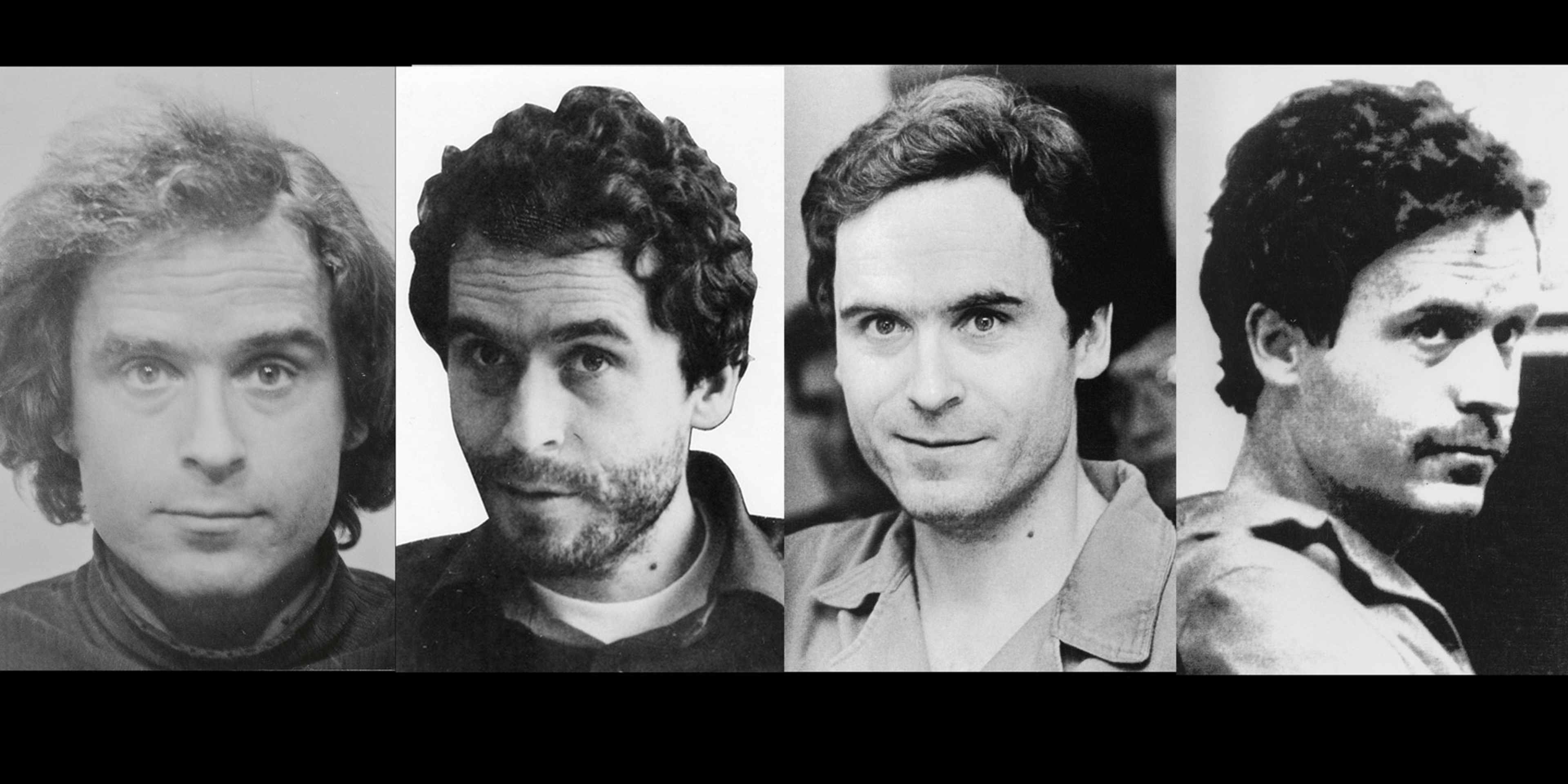
Ted Bundy
serial killer•psychology student
Also known as: Theodore Robert Cowell, Ted Cowell
Birthday
November 24, 1946
Birth Sign
Sagittarius
Birthplace
Burlington, Vermont
Age
Died at 42
Height
6 ft 1 in (1.85 m)
About
Theodore Robert Bundy was born Theodore Robert Cowell in Burlington, Vermont, on November 24, 1946. He became one of the most notorious serial killers in American history, responsible for the kidnapping, rape, and murder of dozens of young women and girls between 1974 and 1978. His crimes spanned multiple states including Washington, Oregon, Colorado, Utah, Idaho, and Florida. Bundy died by execution via electric chair at Florida State Prison on January 24, 1989, just days before his 43rd birthday.
His public persona masked a predatory nature. He cultivated an image of intelligence and charm while studying psychology and law, often using leg braces to feign injury and gain sympathy from potential victims. Authorities describe him as a sadistic sociopath who derived pleasure from controlling others. Biographer Ann Rule, who knew him personally, characterized him as the embodiment of heartless evil.
Early Life & Background
Bundy was born out of wedlock to Eleanor Louise Cowell, who raised him primarily in Washington state and later Oregon. She told him he was her brother rather than her son, a deception that contributed to his psychological development throughout his childhood. The family name changed to Bundy in 1951 after his mother married Donald John Bundy, whom Ted legally adopted as a teenager.
His violent tendencies emerged early. Around age 14, Bundy admitted to strangling and sexually molesting an eight-year-old girl in an orchard, marking his first known act of violence. He attended the University of Washington where he majored in psychology and political science. During college, he worked part-time at a crisis center, volunteered with police, and ran for student government. These roles allowed him to refine the charming and articulate public face he used to deceive people. He briefly attended law school at the University of Utah but dropped out due to poor grades and personal issues.
Career Growth
Bundy's criminal activities began in earnest in February 1974 in Washington state. Over the next four years, he committed a series of brutal assaults and murders across six states. His modus operandi involved luring victims by feigning injury or posing as an authority figure, bludgeoning them unconscious, restraining them with handcuffs, and transporting them to remote locations for sexual assault and murder. He frequently engaged in necrophilia with his victims' bodies after death.
In January 1975, authorities arrested him in Utah for aggravated kidnapping and attempted assault. While facing charges in Colorado, he engineered two dramatic escapes from custody in Aspen and later Denver. Recaptured in Panama City Beach, Florida, in December 1975, he continued his killing spree in 1978 while awaiting trial. In April 1978, he confessed to additional murders in Florida. He was convicted of three counts of first-degree murder in January 1979 following two trials. Despite appeals, he remained on death row until his execution on January 24, 1989.
Career Timeline
Public Image & Style
Bundy presented himself as a handsome, intelligent man with dark hair and blue eyes, traits that contributed to his ability to deceive victims and the public. His public image was defined by the duality of a charming, articulate individual and a sadistic sociopath. Biographers and legal professionals have consistently described him as the embodiment of heartless evil. His use of leg braces to feign injury highlighted his manipulative nature, allowing him to lower the guard of potential victims. Even after his execution, his legacy remains one of fear and fascination within the true crime community.
Fame & Fandom (iFAMOUS Rankings)
The cultural footprint of Theodore Robert Bundy is not measured in merchandise sales or organized conventions, but in the grim fascination that has sustained true crime consumption for decades. Unlike pop stars who cultivate devoted followings with specific names and rituals, Bundy's legacy is defined by a detached audience of observers rather than devotees. There is no formal fanbase, no collective identity like "Bundy Nation," and no documented campaigns to honor his memory. The only gatherings occur in courtrooms, museums, and digital forums where the focus remains on the victims and the forensic details of his crimes. Recent 2026 investigations linking him to cold cases in Utah and Philadelphia have renewed this morbid interest, yet the public response remains one of horror rather than adoration. While the iFANN Global Fame Rankings do not yet include him in their active data set for August 2026, his historical standing within the genre of American criminal history remains absolute. He is widely cited as the archetype of the charismatic killer, a figure whose self-representation in court and escape from the Pitkin County Jail created a dark mythology that persists in media adaptations. His ability to manipulate the legal system while representing himself stands as a central pillar of his enduring notoriety. The absence of a current numerical ranking reflects the fact that he is deceased and his case is closed, rather than a lack of historical impact. The only recent "events" involving public attention are law enforcement updates and exhibitions featuring his crimes alongside other notorious figures like Gary Ridgway. This lack of active fandom distinguishes him from living celebrities; his story is consumed as a cautionary tale rather than celebrated entertainment.
Interesting Facts and Legends
Bundy once worked as a campaign worker for Governor George Romney's presidential bid, demonstrating his ability to blend into mainstream political circles. He is known for wearing leg braces to feign injury and gain sympathy from victims during his attacks. His escape from the Pitkin County Jail in Colorado involved breaking through a wall with a metal file and a stolen key, a feat that shocked law enforcement at the time. Recent investigations in 2026 have uncovered a handwritten note referencing Bundy and zip ties found at a property in Philadelphia, linking the item to ongoing inquiries about potential accomplices or copycats. Another chilling detail involves a piece referencing zip ties found in Eugene Horsch's home, adding to the chilling details emerging around his claims of innocence regarding certain cases.
Notable Quotes
“I'm not going to beg for my life... I don't think I deserve it.”
“I am a predator.”
“I liked it. I just liked it.”
Family & Personal Life
Bundy was born to Eleanor Louise Cowell, a single mother who told him he was her brother rather than her son. This deception contributed significantly to his psychological development. He grew up primarily in Washington state and later Oregon, living with his grandmother and mother before his mother remarried Donald John Bundy in 1951. There are no credible reports of children fathered by Bundy, nor any official records of a divorce, engagement, or marriage. His interactions with women were almost exclusively predatory, and he left no surviving family members to manage an estate.
Notable Connections
Ann Rule, Polly Nelson, Elizabeth Kloepfer, Caryn Campbell
Relationships & Dating History
Ted Bundy had no documented marriages or long-term romantic relationships in the traditional sense. While he was known for his charm and ability to attract women, historical records do not list specific girlfriends, fiancées, or spouses with dates, names, or breakup reasons. His interactions with women were almost exclusively predatory; he used his charisma to lure victims rather than form genuine romantic bonds. Elizabeth Kloepfer dated him for several years but was unaware of his crimes until they were revealed publicly. There are no credible reports of children fathered by Bundy, nor any official records of a divorce, engagement, or marriage. As of his death in 1989, his status was legally single with no surviving partner.
- DatedElizabeth Kloepfer1973 - 1975She was unaware of his crimes until they were revealed publicly.
Death & Aftermath
Died
January 24, 1989 (aged 42)
Death Place
Raiford, Florida
Cause of Death
Cardiac arrest from electrocution
The execution of Ted Bundy triggered a complex public reaction that oscillated between relief for the victims' families and a disturbing, persistent fascination with the killer himself. While law enforcement agencies marked the event as the conclusion of a long legal battle, a subculture of 'Bundy fandom' emerged in the decades following his death, manifesting in vigils attended by individuals obsessed with his crimes and surges in sales of true crime media. This cultural afterlife included streaming content like Conversations with a Killer: The Ted Bundy Tapes, which kept his story in the public eye. On January 24, 1989, Bundy was executed via electric chair at Florida State Prison in Raiford, Florida, at approximately 7:16 a.m. EST. He had spent his final days in solitary confinement awaiting the denial of all stays of execution.
The cause of death was officially ruled as cardiac arrest resulting from the electrocution, a determination established through standard medical procedures performed immediately by correctional officers and medical staff. Reports of a final statement suggesting he offered love to his family remain unverified in official transcripts. His body was cremated, and his ashes were scattered at an undisclosed location by his family to avoid creating a pilgrimage site. Posthumous legal activity has shifted entirely to cold case investigations involving his victims rather than inquiries into his own death. As of 2026, DNA testing has continued to link Bundy to unsolved murders, including the confirmation of Laura Ann Aime's murder in April 2026, providing closure to families while his estate generated no significant income.
Net Worth (Estate Value)
$0
iFANN Editorial Team estimate
Ted Bundy died insolvent. He spent much of his adult life in poverty, relying on odd jobs and welfare during periods of unemployment. He had no significant assets, real estate holdings, or business ventures. Consequently, there is no estate value to report, no posthumous revenue streams, and no management of an estate. Any figures found online regarding "net worth" are likely speculative or confused with fictional portrayals. The concept of a net worth for Bundy does not apply in the financial sense. Research by the iFANN Editorial Team confirms that no credible financial data exists for his estate.
Awards & Accolades
View 1 records, honours and achievementsKnown For
Conversations with a Killer: The Ted Bundy Tapes
2019 · Subject
Extremely Wicked, Shockingly Evil and Vile
2019 · Subject
The Stranger Beside Me
1980 · Subject
Keywords
Sources
Quick Facts
- Profession
- serial killer, psychology student
- Born
- November 24, 1946
- Birthplace
- Burlington, Vermont
- Died
- January 24, 1989
- Death Place
- Florida State Prison
- Gender
- Male
- Birth Sign
- Sagittarius
Personal Details
- Full Name
- Theodore Robert Cowell
- Height
- 6 ft 1 in (1.85 m)
- Children
- Education
- University of Washington; University of Utah School of Law (dropped out)
Frequently Asked Questions
Who was Ted Bundy?
How many people did Ted Bundy kill?
When did Ted Bundy die?
Did Ted Bundy have a family?
Was Ted Bundy ever caught red-handed?
Similar People
Join the community
fans discussing