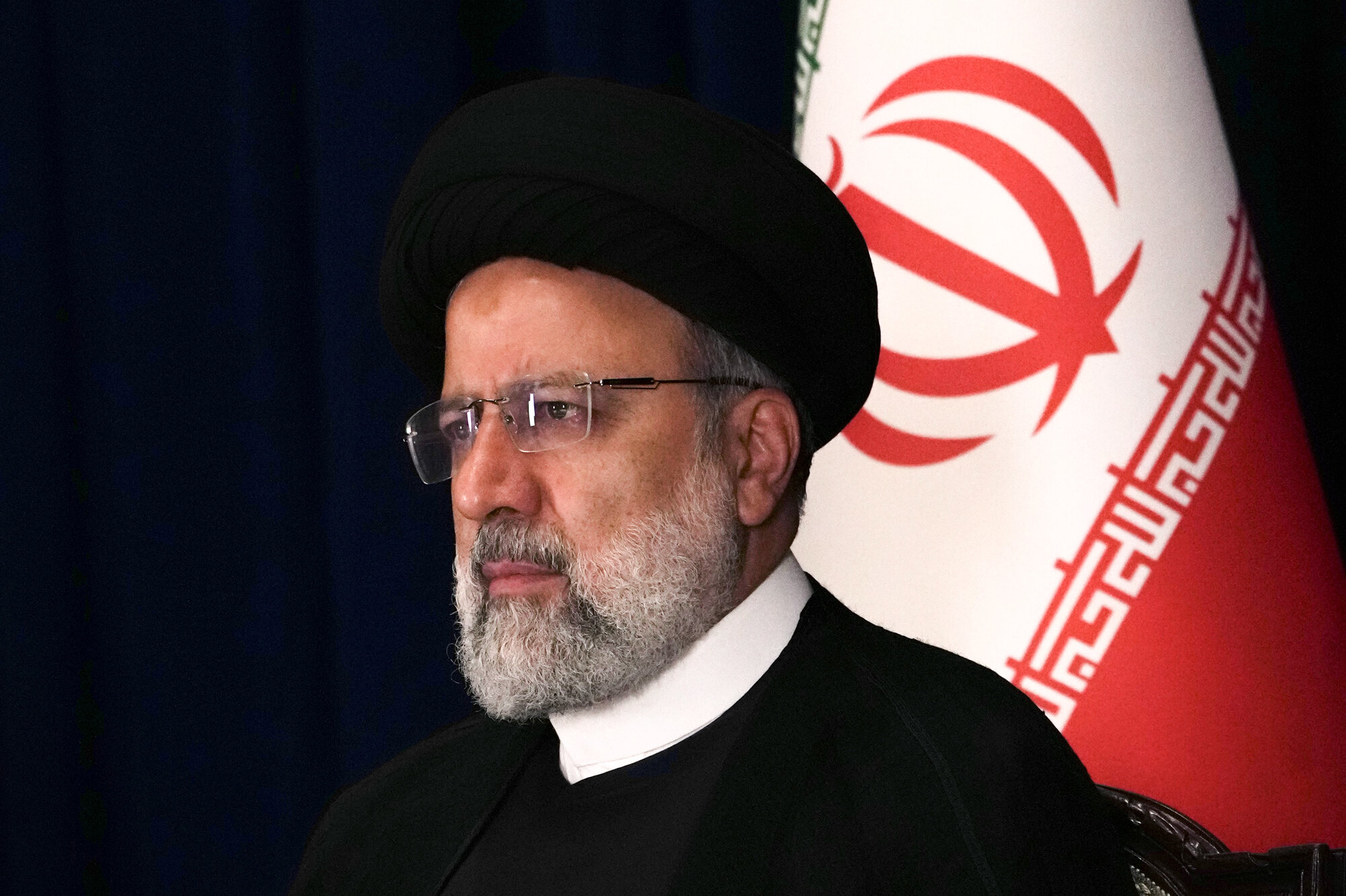
Ebrahim Raisi
 Iran
Iranpolitician•qadi•Islamic jurist
Also known as: Ebrahim Raisolsadati, Sayyid Ebrahim Raisol-Sadati, Seyyed Ebrahim Rais al-Sadati
Birthday
December 14, 1960
Birth Sign
Sagittarius
Birthplace
Mashhad, Iran
Age
Died at 63
About
Ebrahim Raisi was an Iranian cleric and politician who served as the eighth president of Iran from August 2021 until his death in May 2024. A hardline Principlist and close ally of Supreme Leader Ali Khamenei, Raisi spent decades in the country's judiciary before winning the presidency. His tenure was marked by economic hardship, a violent crackdown on nationwide protests, and heightened international isolation. He died in a helicopter crash near the Azerbaijan border, becoming the second Iranian president to die in office.
Raisi's career in the judiciary began soon after the 1979 revolution. He held key prosecutorial roles, including deputy prosecutor and prosecutor of Tehran, and later rose to deputy chief justice and attorney general. His involvement in the 1988 mass executions of political prisoners earned him the nickname "Butcher of Tehran" and lasting condemnation from human rights groups. From 2016 to 2019, he managed Astan Quds Razavi, a powerful religious foundation, before being appointed chief justice in 2019.
Raisi ran for president in 2017, losing to Hassan Rouhani, but won in 2021 after a low-turnout election in which many moderate candidates were disqualified. His presidency saw stalled nuclear talks, continued uranium enrichment, and alignment with Russia and China. The death of Mahsa Amini in 2022 triggered the "Woman, Life, Freedom" protests, which Raisi's government suppressed with force. He was 63 when he died, leaving behind a deeply controversial legacy.
Early Life & Background
Ebrahim Raisi was born on December 14, 1960, in the Noghan district of Mashhad, a city home to Iran's holiest Shia shrine. His father, Seyed Haji Rais Al-Sadati, was a cleric who died when Raisi was only five. His mother, Seyedeh Esmat Khodadad Hosseini, raised him and his siblings. He completed primary education at Javadiyeh School before beginning seminary studies in Mashhad. At age 15, in 1975, he moved to Qom to attend the Ayatollah Boroujerdi School and continue his religious education at the Qom Seminary.
In Qom, Raisi immersed himself in seminary life and became influenced by Ayatollah Ruhollah Khomeini's vision of Islamic governance. As opposition to the Shah intensified in the mid-1970s, he participated in meetings with prominent clerics. At 18, he took part in the 1979 revolution that toppled the monarchy. Shortly after, in 1981, he entered the judiciary, starting as a prosecutor in Karaj and later serving in Hamadan. By 1985, at just 25, he was appointed deputy prosecutor of Tehran, a rapid rise that marked him as a rising figure in the Islamic Republic's legal establishment.
Raisi's early career also placed him at the center of one of the regime's darkest chapters. In 1988, he was part of a four-member committee that, under Ayatollah Khomeini's orders, authorized the mass execution of up to 5,000 political prisoners. Grand Ayatollah Hossein-Ali Montazeri, then Khomeini's designated successor, confronted the committee, reportedly telling them that history would condemn them as criminals. This episode would define Raisi's reputation for decades.
Career Growth
Raisi's career in the judiciary advanced steadily. He served as prosecutor general of Tehran from 1989 to 1994, then headed the State Inspectorate Organization for a decade. From 2004 to 2014, he was first deputy chief justice under Sadeq Larijani. In 2006, he won a seat in the Assembly of Experts, the body tasked with appointing the Supreme Leader. In 2012, he became prosecutor general of the Special Court for the Clergy. He later became attorney general in 2014, and in 2016, Supreme Leader Khamenei appointed him custodian of Astan Quds Razavi, a religious foundation with vast holdings in Mashhad. On March 7, 2019, he was appointed chief justice.
He first ran for president in 2017, losing to Hassan Rouhani with 38.5 percent of the vote to Rouhani's 57 percent. In 2021, he won decisively with roughly 62 percent, though turnout was a record low of under 49 percent, as many reformist and moderate candidates had been barred from running. He was inaugurated on August 3, 2021.
As president, Raisi promised to improve the economy and support any diplomatic plan that would lift sanctions. Nuclear negotiations with the United States stalled, and Iran continued enriching uranium to near weapons-grade levels. He deepened ties with Russia and China, securing Iran's membership in the Shanghai Cooperation Organisation and BRICS. Domestically, his government faced a major crisis in September 2022 after the death of Mahsa Amini, which sparked nationwide protests. The crackdown that followed resulted in hundreds of deaths and thousands of arrests. Raisi also supported regional proxies and launched attacks on Israel during the Gaza war. His presidency ended abruptly on May 19, 2024, when he died in a helicopter crash.
Career Timeline
Public Image & Style
Raisi's public image was that of a stern, hardline cleric, deeply loyal to Supreme Leader Khamenei. He was often described as a "Principlist" who prioritized revolutionary ideals over reform. His nickname "Butcher of Tehran" followed him from the 1988 executions, and human rights groups consistently condemned his role. Media portrayals highlighted his unpopularity among many Iranians, particularly after the 2022 protest crackdown. Yet within conservative circles, he was seen as a reliable figure who could manage the state's affairs. His black turban and dark robes reinforced his clerical authority. After his death, his legacy remained deeply divisive, with supporters mourning a committed servant of the Islamic Republic and critics recalling his role in human rights abuses. He was considered a potential successor to Supreme Leader Khamenei, but his death left a power vacuum in succession planning.
Fame & Fandom
Ebrahim Raisi never cultivated a celebrity fandom in the traditional sense, as his public life was defined by political authority and judicial severity rather than entertainment or personal charisma. His supporters were primarily political constituents within the Iranian conservative establishment who viewed him as a loyal enforcer of revolutionary ideals, while his detractors condemned his role in human rights abuses; this polarization meant no unified fanbase emerged to organize rituals, campaigns, or social media trends around his persona. Instead of adoration, his legacy is marked by stark division and historical gravity. Despite the absence of a cultural following, his global recognition remains significant due to his high office and dramatic death. According to the iFANN Global Fame Rankings, Raisi holds the 11th most famous person in Iran, a position he has held steady through multiple assessment cycles. His prominence extends beyond national borders, where he ranks as the 15th most famous person from Iran, reflecting his status as a defining figure of modern Iranian history. On a regional scale, he is recognized as the 57th most famous person in Middle East, a placement that underscores his influence across the broader geopolitical landscape. These metrics are derived from comprehensive tracking of global attention across media coverage, search activity, and consumption signals worldwide, placing Raisi firmly among the most notable figures of his era.
Interesting Facts and Legends
Ebrahim Raisi wore a black turban, signifying his status as a sayyid and descendant of the Prophet Muhammad, and maintained an austere personal style throughout his career. He was sanctioned by the United States before becoming president, making him the first elected Iranian leader to face such measures. His wife, Jamileh Alamolhoda, was a university professor and author, while their two daughters remained private figures. In a 2021 interview, he identified his favorite food as ghormeh sabzi, a simple stew common in Iranian cuisine. Raisi died at age 63 and was buried at the Imam Reza Shrine in Mashhad. The defining legend of his life centers on the helicopter crash near the Azerbaijan border in May 2024, an event that abruptly ended his presidency and triggered immediate constitutional proceedings. This tragedy is often recounted alongside his controversial tenure as a prosecutor during the 1988 executions, a period frequently cited as the darkest chapter of his judicial career. Analysts long regarded him as the natural successor to Supreme Leader Ali Khamenei, a narrative that framed his death as a pivotal moment for the Islamic Republic's future power structure.
Notable Quotes
“I will improve the economy to resolve the nation's problems.”
“We support any diplomatic plan that leads to the lifting of sanctions.”
“The enemies of Iran should know that the nation stands united.”
Family & Personal Life
Raisi married Jamileh Alamolhoda in 1983. She is the daughter of Ahmad Alamolhoda, a prominent cleric who serves as the Friday prayer leader of Mashhad. Jamileh is a university professor who has written books on education and women's issues. The couple had two daughters, who have stayed largely out of the public eye. Raisi's family life was private, but he often spoke of his father's death when he was young as a formative influence. His mother, Seyedeh Esmat Khodadad Hosseini, lived to see his rise in politics. The family maintained homes in Tehran and Mashhad, though details of their living arrangements were rarely disclosed.
Notable Connections
Raisi was closely associated with Supreme Leader Ali Khamenei, whose patronage shaped his career. He worked with Foreign Minister Hossein Amir-Abdollahian, who died alongside him in the helicopter crash. His father-in-law, Ahmad Alamolhoda, is a influential cleric in Mashhad. He was a political rival of former president Hassan Rouhani, whom he lost to in 2017 and succeeded in 2021.
Relationships & Dating History
Raisi's personal life was largely private, and his only known relationship was his marriage to Jamileh Alamolhoda. They married in 1983, when Raisi was 23 and just beginning his judicial career. Jamileh, the daughter of a prominent cleric, was a university professor and author. The couple had two daughters. Throughout his rise to power, Raisi kept his family out of the spotlight, and no public information about other relationships exists. He was married to Jamileh at the time of his death in 2024.
- MarriedJamileh Alamolhoda1983 - 2024CurrentMarried in 1983, had two daughters, remained married until his death.
Death & Aftermath
Died
May 19, 2024 (aged 63)
Death Place
Oskuy, East Azerbaijan, Iran
Cause of Death
Traumatic injuries from helicopter crash
A massive state funeral unfolded in Tehran on May 22, 2024, where millions lined the capital streets to witness a procession led by Supreme Leader Ali Khamenei before the body was interred at the Imam Reza shrine complex in Mashhad. This solemn ceremony followed the abrupt end of his life when a helicopter carrying President Ebrahim Raisi and several high-ranking officials crashed in the mountains of East Azerbaijan near Oskuy on May 19, 2024. The aircraft lost contact shortly after takeoff while en route from Tabriz to Ardabil for a dam inauguration, resulting in the deaths of all occupants due to traumatic injuries sustained in the crash amidst dense fog.
Iranian authorities subsequently attributed the accident to bad weather and pilot error after recovering the flight recorder, though initial speculation regarding mechanical failure or sabotage was dismissed without independent international oversight. While state media organized tributes describing Raisi as a martyr and invited condolences from figures such as Indian External Affairs Minister Dr. S. Jaishankar, human rights organizations simultaneously condemned the event as an opportunity to address his legacy of mass executions.
Net Worth (Estate Value)
$5 Million
iFANN Editorial Team estimate
Raisi's personal net worth has never been publicly disclosed, and estimates vary widely. As a cleric and state official, his income came from government salaries and religious endowments. During his tenure as custodian of Astan Quds Razavi from 2016 to 2019, he oversaw a foundation with billions in assets, but that wealth belonged to the institution, not him personally. Reports suggest he had modest personal holdings, likely including property in Mashhad and Tehran. As of 2026, his estate is not known to have generated significant posthumous revenue, and no official valuation has been released. Per iFANN's editorial analysis, a reasonable estimate of his net worth at the time of his death is $5 Million.
Awards & Accolades
View 4 records, honours and achievementsKnown For
President of Iran
2021 · President
Chief Justice of Iran
2019 · Chief Justice
Keywords
Sources
Quick Facts
- Profession
- politician, qadi, Islamic jurist
- Born
- December 14, 1960
- Birthplace
- Mashhad, Iran
- Died
- May 19, 2024
- Death Place
- Uzi, East Azerbaijan, Iran
- Gender
- Male
- Spouse
- Jamileh Alamolhoda
- Children
- Two daughters
- Birth Sign
- Sagittarius
Personal Details
- Full Name
- Ebrahim Raisolsadati
- Spouse
- Jamileh Alamolhoda
- Children
- Two daughters
- Education
- Seminary studies in Qom; doctorate in private law from Shahid Motahari University (disputed)
Frequently Asked Questions
How did Ebrahim Raisi die?
Who is Ebrahim Raisi's wife?
Why was Ebrahim Raisi called the 'Butcher of Tehran'?
How old was Ebrahim Raisi when he died?
How many children did Ebrahim Raisi have?
Social Media
Join the community
fans discussing