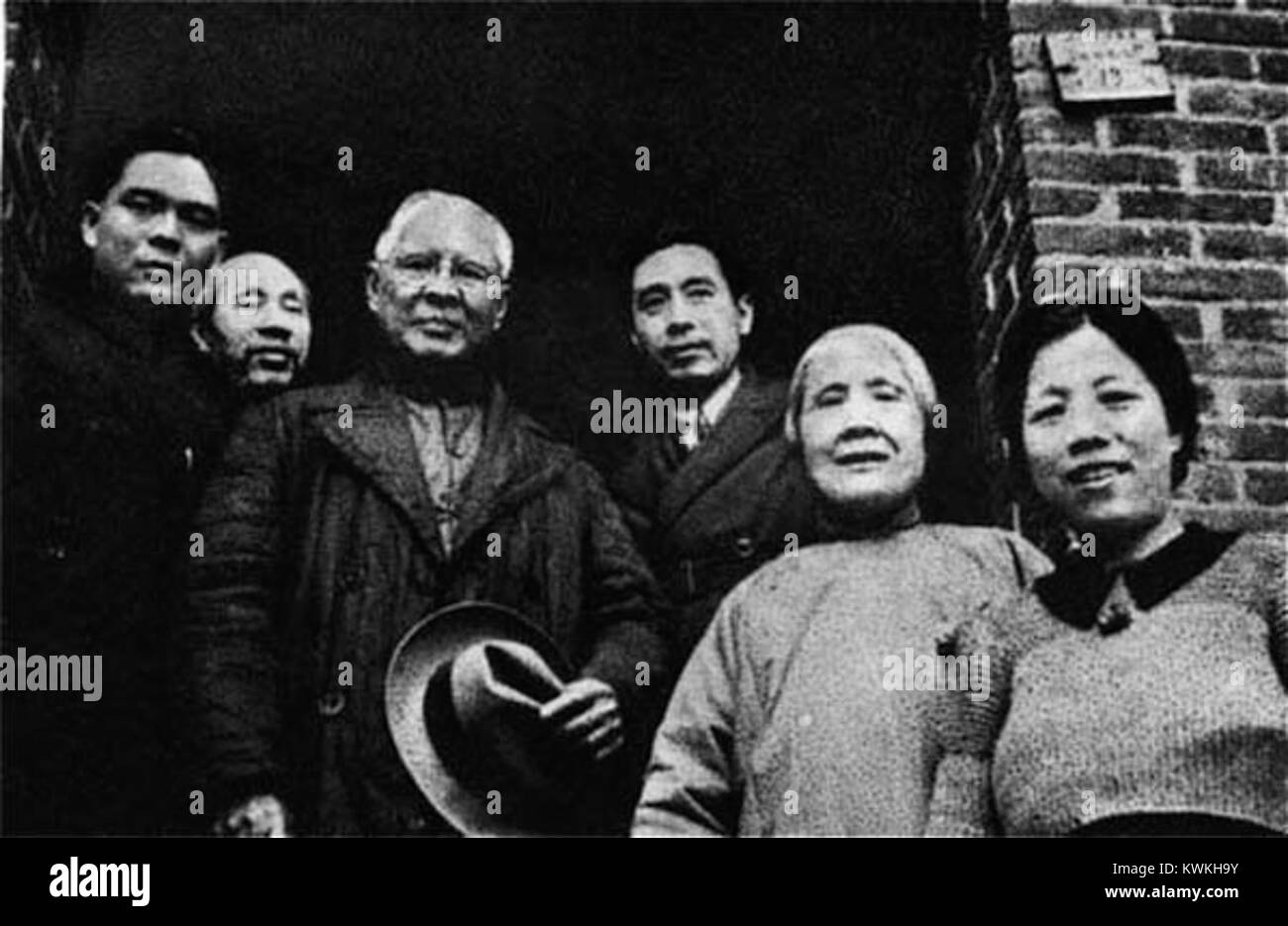
Dong Biwu
 China
ChinaAlso known as: Tung Pi-wu
Birthday
March 5, 1886
Birth Sign
Pisces
Birthplace
Hong'an County, Hubei, China
Age
Died at 89
About
Dong Biwu was a Chinese revolutionary and politician, one of the founding members of the Communist Party of China. He served as acting Chairman of the People's Republic of China from 1972 until his death in 1975, stepping in during a turbulent period in the country's history. Born in 1886 in Hubei Province, he dedicated his life to the communist cause, participating in the Xinhai Revolution and later helping draft the first PRC constitution. His political career spanned over five decades, making him one of the most enduring figures in early Chinese communism. He is remembered as a loyal ally of Mao Zedong and a stabilizing force during the Cultural Revolution. His legacy is commemorated in official histories and state media, and he remains a respected figure in Chinese historical narratives.
Early Life & Background
Dong Biwu was born on March 5, 1886, in Hong'an County, Hubei Province, during the late Qing dynasty. Growing up in a period of intense national transformation, he witnessed the decline of imperial rule and the rise of revolutionary ideas. He joined the Tongmenghui, the revolutionary organization founded by Sun Yat-sen, in 1911, and actively participated in the Xinhai Revolution that toppled the Qing dynasty. This early involvement marked the beginning of his lifelong revolutionary career. After the revolution, he continued his political development, becoming increasingly drawn to Marxist ideology. In 1921, he attended the First National Congress of the Communist Party of China in Shanghai as one of just a dozen delegates, helping to establish the party that would eventually lead the country. His early life and education were shaped by the political turbulence of the era, and he emerged as a dedicated and principled revolutionary.
Career Growth
Dong Biwu's political career spanned over five decades, with several key milestones. After the founding of the CPC in 1921, he held various roles in the party's legal and judicial systems, helping to draft the first constitution of the People's Republic of China in 1954. He served as Chairman of the PRC from October 31, 1968, jointly with Song Qingling, succeeding Liu Shaoqi. In 1972, he assumed the role of acting Chairman, a position he held until his death on April 2, 1975. Throughout his career, he was a close ally of Mao Zedong and a stabilizing force during the Cultural Revolution. His contributions to the legal framework of the PRC were significant, and he is remembered as a great Marxist and proletarian revolutionary. His legacy is commemorated in official histories and state media, and he remains a respected figure in Chinese historical narratives.
Career Timeline
Public Image & Style
Dong Biwu's public image is that of a tireless organizer and legal mind who helped lay the groundwork for modern China. Chinese official sources describe him as "one of the founders of the Communist Party of China" and "a great Marxist, proletarian revolutionary." He is often portrayed as a modest and principled figure, dedicated to the party's cause. His legacy is commemorated through official histories, memorial halls, and state media coverage. The 2021 centennial celebrations of the CPC prominently featured his role as a founding member. Despite his high office, he is rarely depicted in popular culture, and his image remains that of a serious, committed revolutionary rather than a charismatic leader.
Fame & Fandom (iFAMOUS Rankings)
The public relationship with Dong Biwu has never been defined by the chaotic energy of a fandom. There are no fan clubs, no organized streaming parties, and no self-styled moniker for his admirers. The reverence he commands is strictly institutional, a state-sanctioned homage rather than a grassroots movement. While modern celebrities might see their names trend on social media or spark subway ad campaigns funded by devoted followers, Dong's legacy rests entirely within official historical education and government commemorations. His audience is the Chinese populace engaging with state narratives, not an active community organizing around his persona. Consequently, there is no documented fandom name, and no records exist of fan-funded projects or viral rituals associated with him. In August 2026, the iFANN Global Fame Engine evaluated his standing among global figures. Dong Biwu is currently evaluated but holds no placement in the published rankings, including the Global Top 1,000 or any Top-100 scope list. This absence reflects his status as a historical statesman rather than a contemporary celebrity competing for daily attention metrics. The ranking system measures current consumption signals and search volume worldwide, areas where a figure who passed away in 1975 naturally falls outside the active competitive field. He remains a foundational pillar of history without a numerical rank in the modern fame economy.
Interesting Facts and Legends
Dong Biwu stands as one of the rare founding members of the Communist Party of China who witnessed the birth of the People's Republic in 1949. Known affectionately as "the party's legal mind," he championed the rule of law within the organization, a position that often put him at odds with the prevailing currents during the Cultural Revolution. Despite holding high office, he maintained a modest lifestyle that mirrored his revolutionary ideals. In his twilight years, he found solace in writing poetry, though these works were never widely disseminated. His passing in 1975 signaled the close of a specific era, coinciding with the abolition of the presidential role later that year. Historians frequently recount the story of his pivotal role in drafting the first PRC constitution, a document that became the bedrock of the new state's legal framework. Another enduring narrative highlights his quiet resilience during the Cultural Revolution; although sidelined from power, he was never publicly criticized, a reflection of his careful navigation of treacherous political storms. These stories persist not as folklore generated by fans, but as verified historical accounts of a man who helped build modern China.
Family & Personal Life
Details about Dong Biwu's family are scarce in available sources. He was born in Hong'an County, Hubei, to a family of modest means. His parents were not prominent figures, and little is known about his siblings. He married at some point, but the name of his wife and any children are not documented in English-language sources. A 2014 South China Morning Post article referenced "party elders' children" discussing corruption, which may include descendants of Dong Biwu's generation, but he is not named specifically. His personal life remained private, consistent with the era's revolutionary culture that prioritized public service over personal biography.
Notable Connections
Dong Biwu was closely associated with Mao Zedong, his long-time ally, and Liu Shaoqi, whom he succeeded as Chairman. He served jointly with Song Qingling from 1968. Zhu De, another early revolutionary leader, was also a contemporary. The 2014 SCMP article referenced children of party elders discussing corruption, linking the generation of revolutionary leaders to contemporary political discourse.
Relationships & Dating History
No information is available regarding Dong Biwu's romantic relationships or marital status. Given his status as a Chinese revolutionary figure from the early 20th century, such personal details are not prominently documented in available English-language sources. His marital status at death is not specified.
Death & Aftermath
Died
April 2, 1975 (aged 89)
Death Place
Beijing, China
Cause of Death
Natural causes (undisclosed)
Official state tributes marked the passing of Dong Biwu, framing his death as a loss for the revolutionary cause rather than a moment for spontaneous public mourning. The narrative remained tightly controlled by party institutions, emphasizing his ideological legacy over personal grief. Dong Biwu died on April 2, 1975, in Beijing at the age of 89. His final days unfolded under the political turmoil of the Cultural Revolution, shortly before Mao Zedong's own death in September 1976. While he had served as Acting Chairman until January 17, 1975, when the role was abolished, specific details regarding his medical condition or hospital records remain absent from available archives.
The funeral adhered to protocols for senior leaders of the time. He was cremated, and his ashes were interred at Babaoshan Revolutionary Cemetery in Beijing. A memorial service attended by top figures including Zhou Enlai honored his contributions to the founding of the People's Republic. Posthumously, he remains a staple in Chinese revolutionary education, with memorials like the Dong Biwu Memorial Hall and schools bearing his name ensuring his place in national history.
Net Worth (Estate Value)
$0
iFANN Editorial Team estimate
As a revolutionary politician who died in 1975, Dong Biwu did not accumulate personal wealth in the manner of modern celebrities. His income came from government positions, which were modest by design. No estate value or posthumous earnings are documented. His financial legacy is essentially nil, with his true legacy being historical and commemorative. iFANN's editorial analysis currently estimates his net worth at $0.
Awards & Accolades
View 1 records, honours and achievementsKnown For
Acting Chairman of the People's Republic of China
1972-1975 · Head of State
Founding member of the Communist Party of China
1921 · Delegate at First National Congress
Drafted the first PRC constitution
1954 · Legal expert
Keywords
Sources
Quick Facts
- Profession
- politician
- Born
- March 5, 1886
- Birthplace
- Hong'an County, Hubei, China
- Died
- April 2, 1975
- Death Place
- Beijing
- Gender
- Male
- Birth Sign
- Pisces
Frequently Asked Questions
Who was Dong Biwu?
Was Dong Biwu the president of China?
How old was Dong Biwu when he died?
What role did Dong Biwu play in the Chinese Communist Party?
Where was Dong Biwu born?
Similar People
Join the community
fans discussing