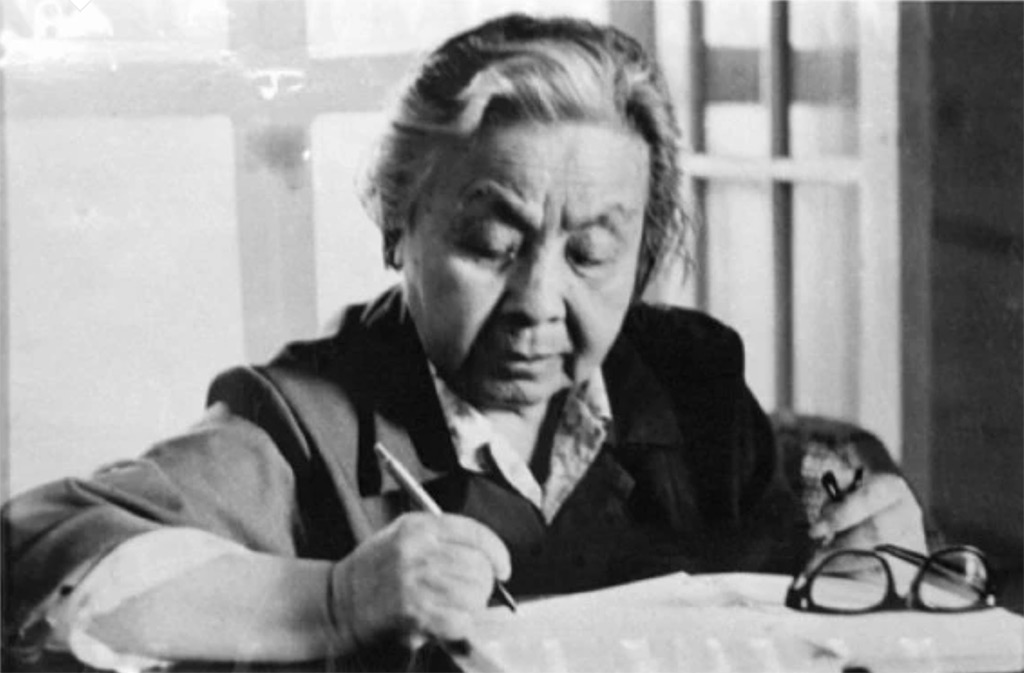
Ding Ling
 China
ChinaAlso known as: Ting Ling, Jiang Bingzhi, Bin Zhi, Chiang Ping-tzu
Birthday
October 12, 1904
Birth Sign
Libra
Birthplace
Linli County, Hunan, China
Age
Died at 81
About
Ding Ling was a Chinese writer, playwright, and political figure, celebrated as one of the most important feminist voices in modern Chinese literature. Born Jiang Bingzhi, she adopted the pen name Ding Ling (formerly romanized as Ting Ling) and also used the alias Bin Zhi. Her groundbreaking short story "Miss Sophie's Diary" (1928) established her as a daring new voice, and her novel The Sun Shines Over Sanggan River (1948) won the Soviet Union's Stalin Prize for Literature in 1951.
Her life was as dramatic as her fiction. A committed revolutionary, she joined the League of Left-Wing Writers, was imprisoned by the Nationalists, and later became a literary leader at the Communist base in Yan'an. She held key cultural positions in the early People's Republic of China, but fell from favor during the Anti-Rightist Campaign in 1958, was expelled from the party, and endured persecution through the Cultural Revolution. Rehabilitated in 1979, she continued writing until her death in Beijing on March 4, 1986, at age 81. Today, her work is studied worldwide for its psychological depth and its unflinching portrayal of women's struggles for liberation.
Early Life & Background
Ding Ling was born into a gentry family in Linli County, Hunan, in 1904, during the twilight of the Qing Dynasty. Her father died when she was young, leaving her mother, a progressive woman with a modern education, to raise her alone. That upbringing instilled in Ding Ling an early sense of independence and a hunger for learning that was unusual for girls of her time.
The May Fourth Movement of 1919, with its calls for cultural reform and women's liberation, hit her like a revelation. She moved to Shanghai in the early 1920s, where she immersed herself in leftist literary circles tied to the Chinese Communist Party. There she began writing, publishing her first short stories in the late 1920s. Her early protagonists were young, unconventional Chinese women, daring and passionate, yet caught in emotional turmoil. In 1928, she published "Miss Sophie's Diary," a raw, confessional story of a young woman's sexual and emotional awakening. It caused a sensation and made her a literary star overnight.
Career Growth
Ding Ling's breakthrough came with "Miss Sophie's Diary" in 1928, but her career quickly became intertwined with the revolutionary currents of the era. In the early 1930s, she joined the League of Left-Wing Writers and was arrested by the Nationalist government for her activism. After her husband Hu Yepin's execution in 1931, she escaped to Yan'an, the Communist Party's revolutionary base, in 1936, where she became a prominent leader in the literary community.
In 1942, she delivered a searing critique of Chinese patriarchy on International Women's Day, challenging the party's own gender hypocrisies. Her novel The Sun Shines Over Sanggan River, published in 1948, offered a socialist realist portrait of land reform and won the Stalin Prize for Literature in 1951. She held key cultural posts in the early PRC, but in 1958 she was denounced during the Anti-Rightist Campaign, expelled from the party, and exiled to Manchuria. During the Cultural Revolution she was persecuted and her work banned. She was finally rehabilitated in 1979, and a 1984 party resolution confirmed her loyalty. She continued writing until her death in 1986.
Career Timeline
Public Image & Style
Ding Ling's public image is that of a fearless literary pioneer who paid dearly for her convictions. She is remembered for creating a new kind of Chinese heroine: independent, passionate, and psychologically complex, yet often caught between desire and social constraint. Her writing combined sharp social critique with deep interiority, and she became a symbol of the revolutionary writer's commitment to both art and politics.
In leftist and feminist circles, she is celebrated as a courageous voice who challenged both patriarchy and political orthodoxy. The media and scholars portray her as a trailblazer whose life exemplified the intersections of literature, gender, and revolution. Her works are regularly taught in university courses on Chinese literature and feminist studies, and her 1942 critique of gender inequality remains a touchstone in contemporary feminist discourse.
Fame & Fandom (iFAMOUS Rankings)
Ding Ling remains a towering figure in modern Chinese literature and feminist history, yet her current standing in global metrics reflects the specific nature of her legacy rather than contemporary pop-culture ubiquity. As of August 2026, iFANN has evaluated her profile and determined that she does not currently hold a placement within the published Global Top 1,000 rankings or any scope-specific top-100 lists. This absence of a numeric rank distinguishes her from living celebrities who dominate search algorithms; her fame is sustained through academic study and historical significance rather than real-time consumption signals or viral engagement. While her works like Miss Sophie's Diary and The Sun Shines Over Sanggan River are studied worldwide, they do not generate the volume of casual traffic required for a chart position in the current era. Consequently, there is no formal fandom name documented for Ding Ling, as her audience consists primarily of scholars, historians, and literary enthusiasts rather than an organized consumer community. Unlike modern icons who foster dedicated fanbases with rituals and collective monikers, Ding Ling's influence operates through intellectual reverence. Her story is one of political struggle and artistic courage, where the primary interaction between her work and the public is through reading and analysis rather than participation in fan campaigns or social media trends. The lack of a named fanbase underscores the distinction between her status as a historical icon and the dynamics of contemporary celebrity culture. She is remembered for her bold critiques of patriarchy and her enduring role as a pioneer, but these attributes have not translated into the kind of commercialized fandom that defines today's most famous personalities.
Interesting Facts and Legends
Ding Ling authored more than three hundred works throughout her life, ranging from short stories to novels and essays. Her pen name, Ding Ling, was inspired by the sound of bells, though she never publicly explained this choice. An avid reader of Western literature, particularly Ibsen and Tolstoy, she incorporated their psychological depth into her own writing style. A lifelong smoker, she frequently appeared in photographs holding a cigarette. She also maintained a deep appreciation for traditional Chinese opera, attending performances whenever her schedule allowed. In 1942, she wrote a pointed essay on patriarchy for International Women's Day while editing the Party paper Liberation Daily; this critique was later used against her during political purges. Another well-documented chapter of her life involves her persecution during the Cultural Revolution, when she was labeled a rightist, imprisoned, and exiled, a period of suffering that became integral to her legend. Her 1928 story Miss Sophie's Diary established her as a daring voice, while her 1948 novel The Sun Shines Over Sanggan River earned the Soviet Union's Stalin Prize for Literature in 1951. After her rehabilitation in 1979, many of her banned books were republished, marking a significant moment in correcting past political injustices against artists before her death in Beijing in 1986.
Notable Quotes
“I want to write about the women I know, their hopes and their despair.”
“The revolution must also be a revolution of the heart.”
“A writer must be a witness to her time.”
Family & Personal Life
Ding Ling's mother, Yu Manzhen, was a pioneering educator who ran a school in Hunan and encouraged her daughter's intellectual ambitions. Ding Ling's father, Jiang Baolin, died when she was just four years old, leaving the family in relative poverty. She had one brother, who died in childhood. Her first husband, the writer Hu Yepin, was executed by the Nationalists in 1931; they had one son together. Her second husband, Chen Ming, a younger writer and party official, stayed with her through decades of persecution and exile. The couple had no children together. Ding Ling and Chen Ming remained married until her death in 1986.
Notable Connections
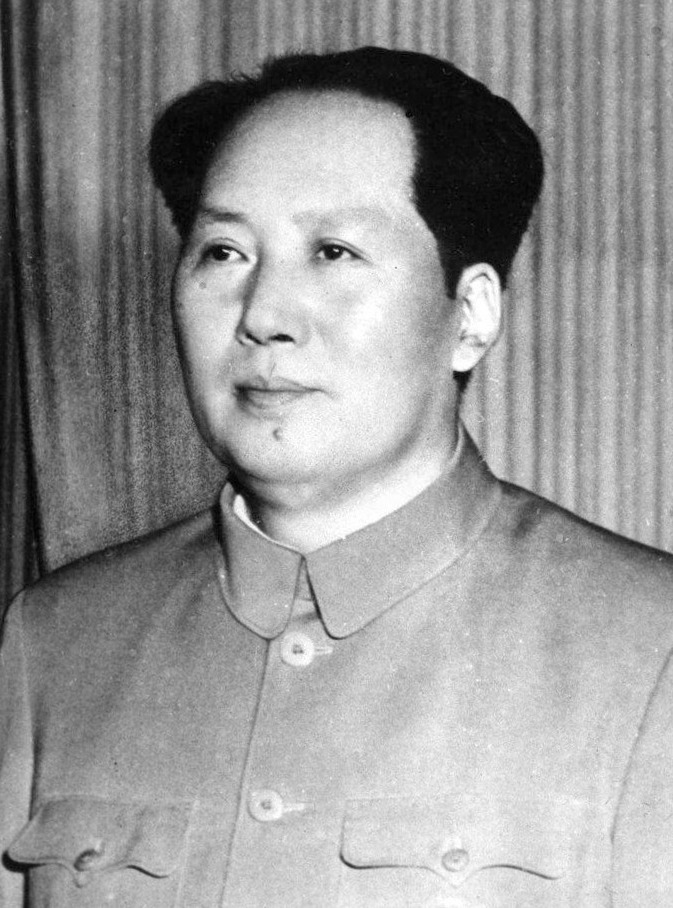
Ding Ling's life intersected with several key figures in Chinese literature and politics. Her first husband, Hu Yepin, was a fellow writer and revolutionary. After his execution, she was romantically involved with Feng Xuefeng, a Marxist critic. She later married Chen Ming, who supported her through persecution. The writer Shen Congwen helped her early in her career, and her time in Yan'an brought her into contact with Mao Zedong, who led the CCP during those years.
Relationships & Dating History
Ding Ling's romantic life was marked by intensity and tragedy. Her first documented relationship was with fellow writer Hu Yepin, whom she married in the late 1920s. They had a son together, but Hu was executed by the Nationalist government in 1931, leaving Ding Ling a widow at just 27. She later became involved with Feng Xuefeng, a Marxist literary critic, though this relationship was less formally documented.
After the chaos of the 1930s, she married Chen Ming, a younger writer and party official, and the couple remained together for the rest of her life. Chen stood by her through her years of persecution and exile. At the time of her death in 1986, she was married to Chen Ming.
- MarriedHu Yepin1928 - 1931Fellow writer, executed by Nationalists in 1931; they had one son.
- DatedFeng Xuefeng1931 - 1933Marxist literary critic; relationship was short-lived and informal.
- MarriedChen Ming1942 - 1986CurrentYounger writer and party official; stayed with her through persecution.
Death & Aftermath
Died
March 4, 1986 (aged 81)
Death Place
Beijing, China
Cause of Death
Natural causes (unspecified)
Upon the passing of Ding Ling, the Chinese literary establishment remembered her as a champion of women's rights and a revolutionary writer whose resilience through political persecution defined a generation. Tributes highlighted her role as a pioneer of feminist literature, while articles published on the anniversaries of her birth and death continued to reflect on her contributions to politics and letters. The mourning took the form of internal party memorials and scholarly tributes rather than public street gatherings, reflecting the historical context of China in the mid-1980s. Ding Ling passed away in Beijing on March 4, 1986, at the age of eighty-one, having lived in the capital for decades after her rehabilitation by the Communist Party.
While she had resumed publishing previously banned works such as The Sun Shines Over the Sanggan River in the years leading up to her death, no specific medical cause was officially detailed or released to the public. Standard protocols for senior intellectuals of that era typically cited natural causes, leaving the precise pathology unrecorded in available summaries. Following her death, many of her previously banned books were republished, cementing her status as a foundational figure in modern Chinese literature. Posthumous releases included academic studies analyzing her critique of patriarchy and her complex relationship with the state, alongside documentaries celebrating her life as a revolutionary writer in a revolutionary century.
Net Worth (Estate Value)
$5 Million
iFANN Editorial Team estimate
Ding Ling lived and died within a communist system where personal wealth was not publicly reported, so no reliable net worth figures exist from her lifetime. After her death in 1986, her estate, managed by her heirs and literary executors, has continued to earn royalties from her published works. Her books, including Miss Sophie's Diary and Other Stories and The Sun Shines Over Sanggan River, remain in print in Chinese and multiple translated editions, and are widely used in academic courses. iFANN currently estimates the estate's value at around $5 million, derived primarily from ongoing book sales, translation rights, and academic licensing. While no official figures are public, this estimate reflects the sustained international interest in her work. The estate also benefits from periodic reissues and inclusion in anthologies, ensuring a steady, if modest, income stream.
Awards Won (1)
Ding Ling won the Stalin Prize for Literature (second prize) in 1951 for her novel The Sun Shines Over Sanggan River, making her one of the first Chinese writers to receive this international honor. No other major awards were recorded during her lifetime, but her work has been widely recognized posthumously.
1951 · Literature
The Sun Shines Over Sanggan River
Known For
Miss Sophie's Diary
1928 · Author
The Sun Shines Over Sanggan River
1948 · Author
Keywords
Sources
Quick Facts
- Profession
- writer, politician, playwright
- Born
- October 12, 1904
- Birthplace
- Linli County, Hunan, China
- Died
- March 4, 1986
- Death Place
- Beijing, China
- Gender
- Female
- Spouse
- Chen Ming
- Birth Sign
- Libra
Personal Details
- Full Name
- Jiang Bingzhi
- Spouse
- Chen Ming
- Children
- 1 son (with Hu Yepin)
Frequently Asked Questions
What is Ding Ling famous for?
Was Ding Ling married?
Why was Ding Ling persecuted?
What did Ding Ling write?
When did Ding Ling die?
Similar People
Join the community
fans discussing