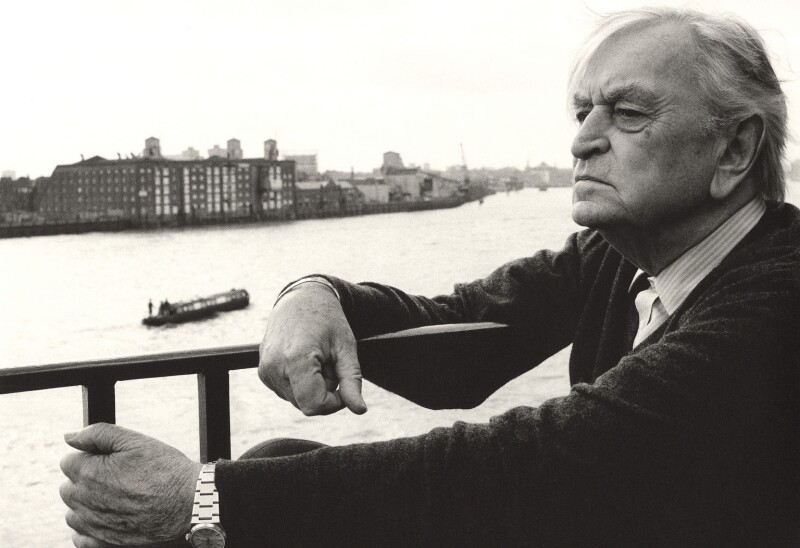
David Lean
 United Kingdom
film director•film producer•film editor
Also known as: Sir David Lean
Birthday
March 25, 1908
Birth Sign
Aries
Birthplace
Croydon, Surrey, England
Age
Died at 83
Height
6 ft 0 in (183 cm)
About
Sir David Lean was an English film director, producer, and editor, widely regarded as one of the most significant figures in British cinema. He was born on March 25, 1908, in Croydon, Surrey, and died on April 16, 1991, in Limehouse, London. Lean is best known for his epic films, including The Bridge on the River Kwai (1957), Lawrence of Arabia (1962), and Doctor Zhivago (1965), which earned him two Academy Awards for Best Director. His other notable works include Brief Encounter (1945), Great Expectations (1946), and A Passage to India (1984).
Lean's career began in the 1930s as a film editor, and he transitioned to directing in 1942 with In Which We Serve. His meticulous visual style and sweeping landscapes set a benchmark for epic filmmaking. He was knighted in 1984 and received the AFI Life Achievement Award in 1990. His films continue to be celebrated for their grandeur and emotional depth, influencing generations of filmmakers. As of 2026, his legacy remains strong, with a documentary about his life premiering at Cannes.
Early Life & Background
David Lean grew up in a strict Quaker household in Croydon, where cinema attendance was forbidden, a prohibition that made his future career all the more striking. His father was a chartered accountant, and the family's religious values shaped his early years, though they did not dampen his curiosity about the world. He attended a Quaker school, where he developed an interest in photography and storytelling.
In the early 1930s, Lean entered the film industry as a film editor, a craft he mastered over the decade. He worked on numerous British productions, honing his technical skills and understanding of narrative rhythm. This editing background would later inform his precise visual style and his ability to control pacing in his epic films. By the early 1940s, he had established a reputation as one of Britain's most skilled editors, which led to his first directorial opportunity.
Career Growth
David Lean's directorial debut came in 1942 with In Which We Serve, the first of four collaborations with playwright Noël Coward. The partnership continued with This Happy Breed (1944), Blithe Spirit (1945), and Brief Encounter (1945), the last becoming a landmark of British romantic cinema. He then adapted Charles Dickens for the screen with Great Expectations (1946) and Oliver Twist (1948), establishing his reputation for literary adaptations.
The 1950s marked Lean's transition to internationally co-produced films. Summertime (1955) was followed by his first major epic, The Bridge on the River Kwai (1957), which won him his first Academy Award for Best Director. Lawrence of Arabia (1962) earned him a second Oscar and is widely regarded as one of the greatest films ever made. Doctor Zhivago (1965) became his biggest commercial success. However, Ryan's Daughter (1970) was critically savaged, leading Lean to step away from filmmaking for fourteen years. He returned with A Passage to India (1984), which earned critical acclaim and marked his final directorial effort.
Career Timeline
Public Image & Style
David Lean's public image is that of a perfectionist and a master of epic cinema. His signature style includes sweeping desert landscapes, meticulous editing, and grand-scale storytelling. He is often described as a "director's director," with peers like Steven Spielberg, Stanley Kubrick, and Martin Scorsese citing his influence. The 2026 documentary Maverick: The Epic Adventures of David Lean portrays him as an innovator and a logistical genius. There is no official fandom name, but his work maintains a devoted following among cinephiles and film students.
Fame & Fandom (iFAMOUS Rankings)
David Lean's admirers are legion, but they've never coalesced into a named fandom. Unlike the devoted followers of Hitchcock or Kubrick, there is no widely recognized term for those who revere the British master of the epic. Instead, his audience is a diffuse community of cinephiles, classic film enthusiasts, and historians who keep his legacy alive through repertory screenings and scholarly retrospectives. The 2026 documentary Maverick: The Epic Adventures of David Lean has sparked renewed interest, but it was produced by the industry, not by grassroots fan organizing.
As of August 2026, iFANN's Global Fame Engine has evaluated David Lean but he does not currently hold a placement in the published rankings, neither the Global Top 1,000 nor any Top-100 scope list. This absence is notable for a director whose films remain staples of cinema history, yet it reflects the engine's current assessment of his global fame signals.
What Lean's fanbase lacks in organization, it makes up for in institutional reverence. The American Film Institute honored him with its 18th Life Achievement Award, and his films are regularly programmed in theaters worldwide, Lawrence of Arabia was scheduled for a 70mm screening in Pennsylvania in August 2026. The British Film Institute preserves his work through restorations, and his official website serves as a digital memorial. The fanbase is defined not by hashtags or rituals, but by a shared, passionate appreciation for his craft.
Interesting Facts and Legends
As a child, David Lean was forbidden from attending the cinema due to his strict Quaker upbringing, a restriction that may have fueled his later obsession with film. He began his career as an editor, a role that honed his precise visual style. Lawrence of Arabia was filmed over two years in Jordan, Spain, and Morocco, with Lean famously waiting months for the perfect cloud formation. After the critical savaging of Ryan's Daughter in 1970, Lean retreated from filmmaking for 14 years, a hiatus the 2026 documentary Maverick frames as a heartbreaking consequence of harsh reviews. He was working on an adaptation of Joseph Conrad's Nostromo when he died in 1991, leaving his final project unfinished. One legend that persists is the unfinished Nostromo, a story of a great director's unfulfilled final vision. Another is the confusion over his cause of death: some sources say cancer, others pneumonia, an unresolved detail that adds to his mystique. His filmography of exactly sixteen features is often treated as a complete, curated canon, with no forgotten or lost works.
Notable Quotes
“I'm able to live through a film as I can't in everyday life.”
“The camera is the instrument of the director's vision.”
“A film is a journey, and the director is the guide.”
Family & Personal Life
David Lean was born to a strict Quaker family in Croydon; his father was a chartered accountant. He had no children from any of his six marriages. His first wife was actress Kay Walsh, whom he married in 1940 and divorced in 1949. His second wife was actress Ann Todd, married from 1949 to 1957. He later married Leila Matkar in 1960, Sandra Hotz, and finally Sandra Lean, who was his wife at the time of his death. Despite his many marriages, Lean maintained a focus on his work, and his family life was often secondary to his filmmaking.
Notable Connections
Relationships & Dating History
- MarriedKay Walsh1940 - 1949Married to actress Kay Walsh; divorced in 1949.
- MarriedAnn Todd1949 - 1957Married to actress Ann Todd; divorced in 1957.
- MarriedLeila Matkar1960 - presentMarried in 1960; details of divorce unclear.
- MarriedSandra Hotz1960 - 1970Married in the 1960s; divorced in the 1970s.
- MarriedSandra Lean1980 - 1991CurrentHis wife at the time of his death.
Death & Aftermath
Died
April 16, 1991 (aged 83)
Death Place
Hampstead, London, England
Cause of Death
Cancer
The American Film Institute honored the late director with its 18th Life Achievement Award, cementing his status in cinema history long before his final breath. Sir David Lean passed away on April 16, 1991, at the age of 83 within his Hampstead home in London. The cause was officially recorded as cancer, a natural end to a life defined by epic scale and meticulous craft. Tributes flowed from major institutions, focusing on the enduring power of films like Lawrence of Arabia and Doctor Zhivago. Decades later, the retrospective documentary Maverick: The Epic Adventures of David Lean premiered at the Cannes Film Festival in May 2026, serving as a passionate clarion call for the preservation of his work. While specific funeral details remain unrecorded in available accounts, the legacy managed by the David Lean Foundation continues to fund film-related charitable efforts. His estate remains a valuable asset through active distribution and streaming royalties.
Net Worth (Estate Value)
$100 Million
iFANN Editorial Team estimate
iFANN currently estimates David Lean's estate at $100 million, a figure that reflects the enduring commercial value of his film catalogue. Revenue flows from royalties and licensing for Lawrence of Arabia, Doctor Zhivago, and The Bridge on the River Kwai, which remain in active distribution and streaming. The David Lean Foundation manages his legacy and funds film-related charitable work. The 2026 documentary Maverick has renewed public interest, likely boosting licensing revenue. His estate has seen steady income from home video, digital distribution, and restoration projects, ensuring that his work continues to generate substantial returns decades after his death.
Awards Won (38)
David Lean won two Academy Awards for Best Director, for The Bridge on the River Kwai (1957) and Lawrence of Arabia (1962). He also received Golden Globe Awards for both films, and multiple BAFTA and Directors Guild of America honors. His other wins include New York Film Critics Circle Awards and a National Board of Review Award.
1963 · Best Director
Lawrence of Arabia
1958 · Best Director
The Bridge on the River Kwai
1963 · Best Director
Lawrence of Arabia
1958 · Best Director
The Bridge on the River Kwai
Known For
Lawrence of Arabia
1962 · Director
The Bridge on the River Kwai
1957 · Director
Doctor Zhivago
1965 · Director
Brief Encounter
1945 · Director
A Passage to India
1984 · Director
Keywords
Sources
Quick Facts
- Profession
- film director, film producer, film editor
- Born
- March 25, 1908
- Birthplace
- Croydon, Surrey, England
- Died
- April 16, 1991
- Death Place
- Limehouse, London, England
- Gender
- Male
- Spouse
- Kay Walsh, Ann Todd, Leila Matkar, Sandra Hotz, Sandra Lean
- Birth Sign
- Aries
- Height
- 6 ft 0 in (183 cm)
Personal Details
- Full Name
- David Lean
- Height
- 6 ft 0 in (183 cm)
- Spouse
- Kay Walsh, Ann Todd, Leila Matkar, Sandra Hotz, Sandra Lean
- Education
- Quaker school
Filmography
16
Total
16
Film
0
TV
Frequently Asked Questions
How many times was David Lean married?
How many Oscars did David Lean win?
Why did David Lean stop making films for 14 years?
What is David Lean's most famous film?
Did David Lean have children?
Join the community
fans discussing