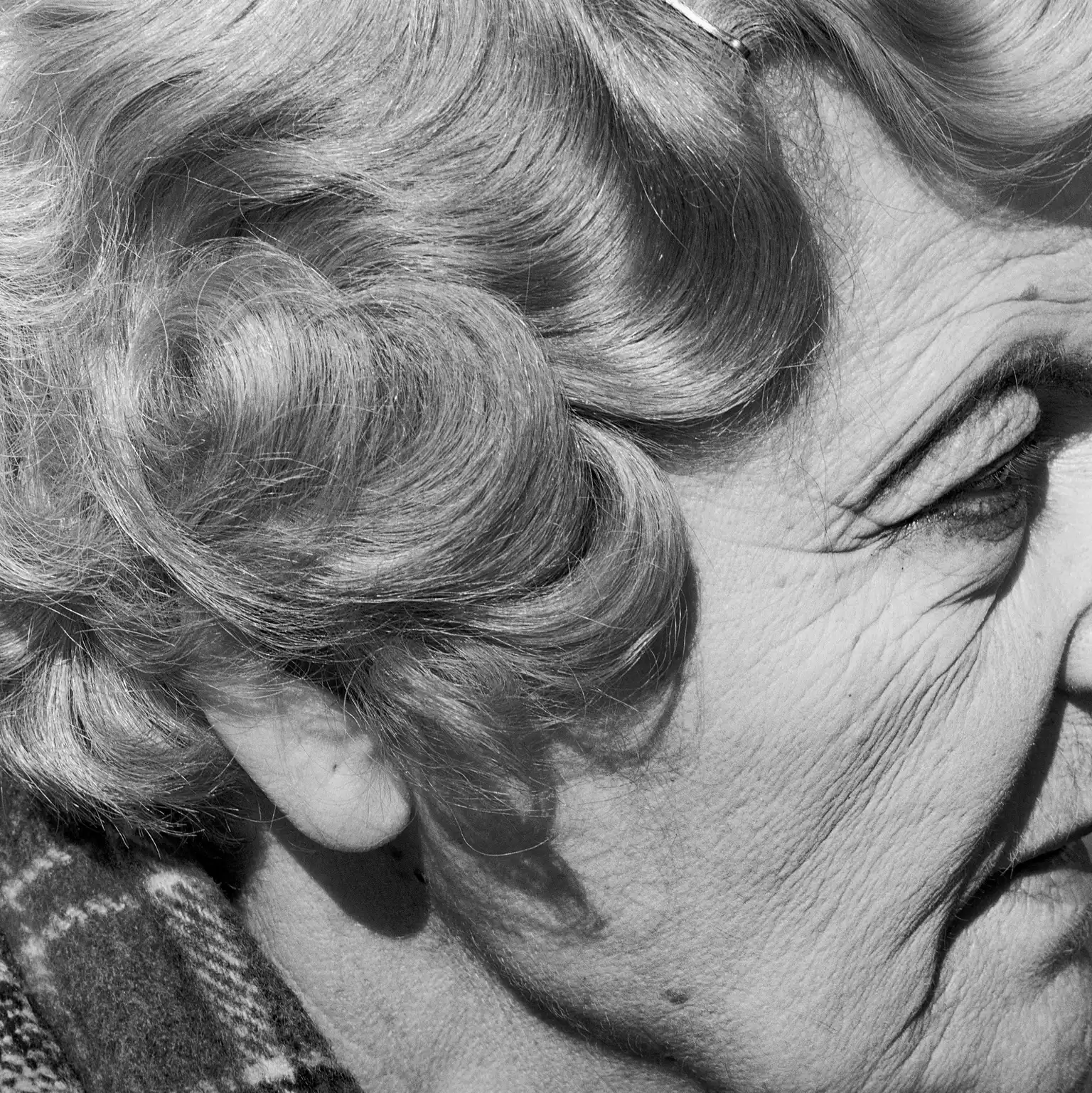
David Goldblatt
 South Africa
Also known as: Lewis David Goldblatt
Birthday
November 29, 1930
Birth Sign
Sagittarius
Birthplace
Randfontein, South Africa
Age
Died at 87
About
David Goldblatt HonFRPS (1930–2018) was a preeminent South African documentary photographer whose seven-decade career chronicled the social, political, and architectural landscapes of his homeland. He is distinct from other public figures sharing his name, such as the British sports writer David Goldblatt born in 1965. Unlike many contemporaries who focused on violent protests or police brutality, Goldblatt adopted a dispassionate observational style, capturing the mundane architecture of segregation: the segregated train stations, the empty streets, and the quiet dignity of black workers. This approach allowed him to reveal the banality of evil inherent in the system without sensationalism.
His work has been exhibited globally, including major retrospectives at the Tate Modern in London, the International Center of Photography in New York, and the Goodman Gallery in Johannesburg. Key milestones include his seminal project The Mines in the 1960s and the publication of landmark books like On the Mines (1973) and South Africa: The Structure of Things Then (1998). He received the Order of Luthuli in 2012 for his contributions to the struggle against apartheid. Goldblatt passed away on 25 June 2018 in Johannesburg, leaving behind an unparalleled visual archive of his country.
Early Life & Background
Lewis David Goldblatt was born on November 29, 1930, in Randfontein, a small mining town located west of Johannesburg. Growing up in a Jewish family within this industrial community, he witnessed the stark racial segregation of the era firsthand, though he later described his childhood as relatively sheltered compared to the harsh realities he would eventually document. The visual culture of the mining town, with its distinct class divisions and labor systems, left an indelible mark on his young mind.
As a teenager, Goldblatt developed a keen interest in photography, influenced by the visual landscape around him. He purchased his first camera, a Rolleiflex twin-lens reflex, in the late 1940s. This device became his primary tool for decades, shaping the square format and intimate perspective of his future work. After completing his secondary education, he enrolled at the University of the Witwatersrand in Johannesburg. There, he studied English literature and history, graduating with a Bachelor of Arts degree in 1952. Before fully committing to photography, he worked briefly in business and advertising, but his passion for the medium quickly took precedence over corporate life.
Career Growth
Goldblatt's professional career truly began in the 1950s, but his defining work emerged in the 1960s when he started systematically documenting the structures of apartheid. He avoided the typical focus on violent clashes, instead choosing to photograph the everyday conditions that made segregation possible. His images of segregated train stations, orderly yet oppressive townships, and the quiet dignity of black workers revealed the banality of the system. In the 1960s, he launched his seminal project The Mines, which documented the lives of black miners and the industrial landscape of the Witwatersrand.
The 1970s saw the publication of his influential book On the Mines in 1973, which solidified his reputation as a serious documentarian. Throughout the 1980s, he continued to photograph daily life under increasing state repression, often working undercover or using subtle equipment to avoid detection. In 1989, he co-founded the Market Photo Workshop in Johannesburg, an institution dedicated to training black photographers and fostering a new generation of visual artists. His major retrospective at the Tate Modern in London in 2012 marked a high point in his international recognition. In the 1990s, he captured the euphoria of the 1994 elections and the dismantling of apartheid infrastructure. His later work in the 2000s and 2010s explored the post-apartheid landscape, examining how the land itself bore the scars of history.
Career Timeline
Public Image & Style
Goldblatt is portrayed in the media as a serious, thoughtful, and morally clear artist. His public image is one of integrity and dedication, reflecting the content of his work. He is often described as "dispassionate" and "observant," terms that align with his photographic philosophy. Unlike many celebrity photographers, he maintained a low profile, letting his images speak for themselves. His modest, unassuming presence in contemporary accounts mirrors the understated nature of his photography. He did not maintain a personal social media presence during his lifetime, though galleries representing his work have significant followings today.
Fame & Fandom (iFAMOUS Rankings)
David Goldblatt does not have a traditional fandom in the conventional sense. There is no documented fandom name, no fan club, no coordinated campaigns or rituals. Instead, his admirers are gallery-goers, photography critics, students of visual history, and art historians who encounter his work in institutions like Tate Modern and the Goodman Gallery. Their engagement is one of contemplation, not celebration. While he does not appear in pop culture rankings like Rolling Stone lists, he is universally ranked among the most important documentary photographers of the 20th century by publications like Artforum and The Guardian. His audience engages with his work through academic study and museum visits rather than viral metrics.
Interesting Facts and Legends
Goldblatt used a Rolleiflex twin-lens reflex camera for most of his career, a choice that influenced the square format and intimate perspective of his photographs. To photograph sensitive areas without drawing attention, he sometimes disguised his camera or used small, inconspicuous equipment. His series Fragments of Fietas, exhibited in 2025, was described by World of Interiors as "an arresting record of Apartheid life." His photographs are permanently displayed at Tate Modern in London, and he was an Honorary Fellow of the Royal Photographic Society. He also wrote extensively on the relationship between space and power, blending his photographic practice with architectural theory. He received the Kodak Lifetime Achievement Award at the World Press Photo awards and honorary doctorates from the University of the Witwatersrand.
Notable Quotes
“I try to avoid easy judgments.”
“The structure of things then was the structure of things now.”
“Photography is a way of seeing, not just a way of recording.”
Family & Personal Life
David Goldblatt was married to Anne Goldblatt (née Cohen), a fellow photographer and activist. They met during their university years at Wits. Their partnership was both personal and professional; they often collaborated on projects and shared a deep commitment to social justice. The couple had two children, though details about their names and careers are kept private by the family. Anne Goldblatt survived her husband and continues to manage aspects of his legacy. There is no public record of divorce or other romantic relationships prior to his marriage; his life was characterized by a steady, long-term partnership.
Notable Connections
Relationships & Dating History
David Goldblatt was married to Anne Goldblatt (née Cohen), a fellow photographer and activist. They met during their university years at the University of the Witwatersrand in Johannesburg. Their partnership was both personal and professional; they often collaborated on projects and shared a deep commitment to social justice. The couple had two children, though details about their names and careers are kept private by the family. There is no public record of divorce or other romantic relationships prior to his marriage; his life was characterized by a steady, long-term partnership. As of his death in 2018, he was widowed by his wife, who continues to manage aspects of his legacy. No other public romantic partners or dating history have been documented in credible sources. Bryan Koen served as a frequent collaborator and editor of his works.
- MarriedAnne Goldblatt1952 - 2018Met at University of the Witwatersrand; collaborated professionally until his death.
Death & Aftermath
Died
June 25, 2018 (aged 87)
Death Place
Johannesburg, South Africa
Cause of Death
Natural causes
On June 25, 2018, the world of photography lost one of its most significant chroniclers when David Goldblatt died in Johannesburg at the age of 87. The official cause of death was not publicly disclosed by his family or medical authorities, though it is widely understood to be natural causes related to his age. His passing was met with a profound sense of loss across South Africa and the international art community, who recognized him not just as an artist but as a vital witness to their nation's history. Tributes poured in from government officials, including then-President Cyril Ramaphosa, and cultural institutions that praised his decades-long commitment to documenting the country without sensationalism. The funeral service held in Johannesburg drew thousands of mourners, ranging from fellow photographers and activists to ordinary citizens who felt his images spoke for them.
Following his death, the legacy of his work continued to grow rather than fade. Posthumous exhibitions such as Fragments of Fietas and Shades of Grey brought renewed attention to his earlier projects, allowing new audiences to engage with his unflinching look at township life and apartheid architecture. His estate, managed by his wife Anne and the Goodman Gallery, has seen sustained activity in auction houses like Christie's and Sotheby's, where individual prints continue to fetch high prices. Licensing deals for educational materials and book royalties ensure that his archive remains financially viable and widely accessible. The Order of Luthuli he received in 2012 stands as a testament to his contribution to the struggle against apartheid, cementing his place in the national narrative long after his final photograph was taken. New editions and catalogues raisonnés continue to be released in 2025 and 2026.
Net Worth (Estate Value)
$2 Million
iFANN Editorial Team estimate
As of 2026, David Goldblatt's net worth is estimated based on the value of his estate, as he passed away in 2018. Estimates vary by source, with some placing the estate value at $1.5 million while others suggest it could be between $2 million and $3 million due to high-profile auction results. The iFANN Editorial Team's analysis of his earnings, ventures and assets points to roughly $2 million. Posthumous earnings since 2018 potentially exceed $5 million according to South African Art Times.
Wealth sources include auction sales of original prints at Christie's, Sotheby's, and Bonhams, where individual prints have sold for $10,000 to $50,000. Licensing deals for use in books, documentaries, and educational materials provide ongoing revenue. The Goodman Gallery and other galleries representing his work continue to earn commissions from sales. Book royalties from his published works, including On the Mines and South Africa: The Structure of Things Then, contribute to the estate's income. Posthumous exhibitions and catalogues raisonnés released in recent years have further boosted the estate's financial trajectory.
Awards Won (3)
David Goldblatt received numerous accolades throughout his lifetime, recognizing his unique contribution to documentary photography. He was awarded the Order of Luthuli in 2012 for his contributions to the struggle against apartheid. He holds the honorific HonFRPS, signifying his status as an Honorary Fellow of the Royal Photographic Society. He also received the Kodak Lifetime Achievement Award at the World Press Photo awards and honorary doctorates from the University of the Witwatersrand and other institutions. His major retrospective at the Tate Modern in 2012 is considered one of the highest honors in the photographic world.
2012 · National Honour
Lifetime achievement
Professional Recognition
Lifetime achievement
Known For
On the Mines
1973 · Author/Photographer
South Africa: The Structure of Things Then
1998 · Author/Photographer
Fragments of Fietas
2025 · Exhibition
Keywords
Sources
Quick Facts
- Profession
- photographer
- Born
- November 29, 1930
- Birthplace
- Randfontein
- Died
- June 25, 2018
- Death Place
- Johannesburg
- Gender
- Male
- Birth Sign
- Sagittarius
Personal Details
- Full Name
- Lewis David Goldblatt
- Spouse
- Anne Goldblatt
- Children
- Two children (names kept private)
- Education
- University of the Witwatersrand (BA, 1952)
Frequently Asked Questions
What is David Goldblatt best known for?
When did David Goldblatt die?
Did David Goldblatt have any children?
What is the difference between David Goldblatt the photographer and David Goldblatt the writer?
Where can I see David Goldblatt's photos today?
Social Media
Similar People
Join the community
fans discussing