Zanele Muholi
 South Africa
visual activist•photographer•video artist
Also known as: ZM, Visual Activist Zanele Muholi
Birthday
July 19, 1972
Birth Sign
Cancer
Birthplace
Umlazi, Durban, South Africa
Age
54 years old
About
Zanele Muholi is a South African visual activist and photographer who has dedicated their career to documenting the lives of Black lesbian, gay, transgender, and intersex communities. Born in Umlazi, a township in Durban, they use they/them pronouns and explicitly identify as a visual activist rather than an artist. Their work serves as a vital counter-narrative to systemic erasure and violence, creating an archive of existence for people often targeted by hate crimes including corrective rape.
Muholi's influence extends far beyond the gallery walls, reaching into human rights advocacy and global policy discussions regarding LGBTQI+ rights. They have received prestigious accolades such as the Infinity Award from the International Center of Photography and the Chevalier de l'Ordre des Arts et des Lettres. In March 2026, they were named the laureate of the Hasselblad Award, cementing their status as one of the most important voices in contemporary photography.
Early Life & Background
Growing up in Umlazi during the height of apartheid, Zanele Muholi witnessed the stark realities of racial segregation firsthand. A defining childhood memory involves being barred from public swimming pools while their mother worked as a domestic helper for white families. These segregated spaces were forbidden to Black children, a trauma that later fueled their exploration of belonging and visibility. This early exposure to exclusion shaped their understanding of how space and representation are used to enforce hierarchy.
After completing their schooling, Muholi sought formal training in visual storytelling at the Market Photo Workshop in Johannesburg. This institution became the crucible for their technical skills and political consciousness. Before gaining international recognition, they co-founded the Forum for the Empowerment of Women (FEW) in 2002. The organization was established to support black lesbians and address the rising tide of hate crimes against them. This period laid the groundwork for their lifelong commitment to using the camera as a tool for social change and community preservation.
Career Growth
The breakthrough moment for Muholi arrived in 2006 with the launch of Faces and Phases, an ongoing series of portraits of Black lesbians and gender-nonconforming individuals. This project functions as both an archive and a celebration, directly countering the invisibility of these subjects in South African media. It remains one of the most significant documentary projects of the 21st century, growing to include hundreds of portraits over two decades.
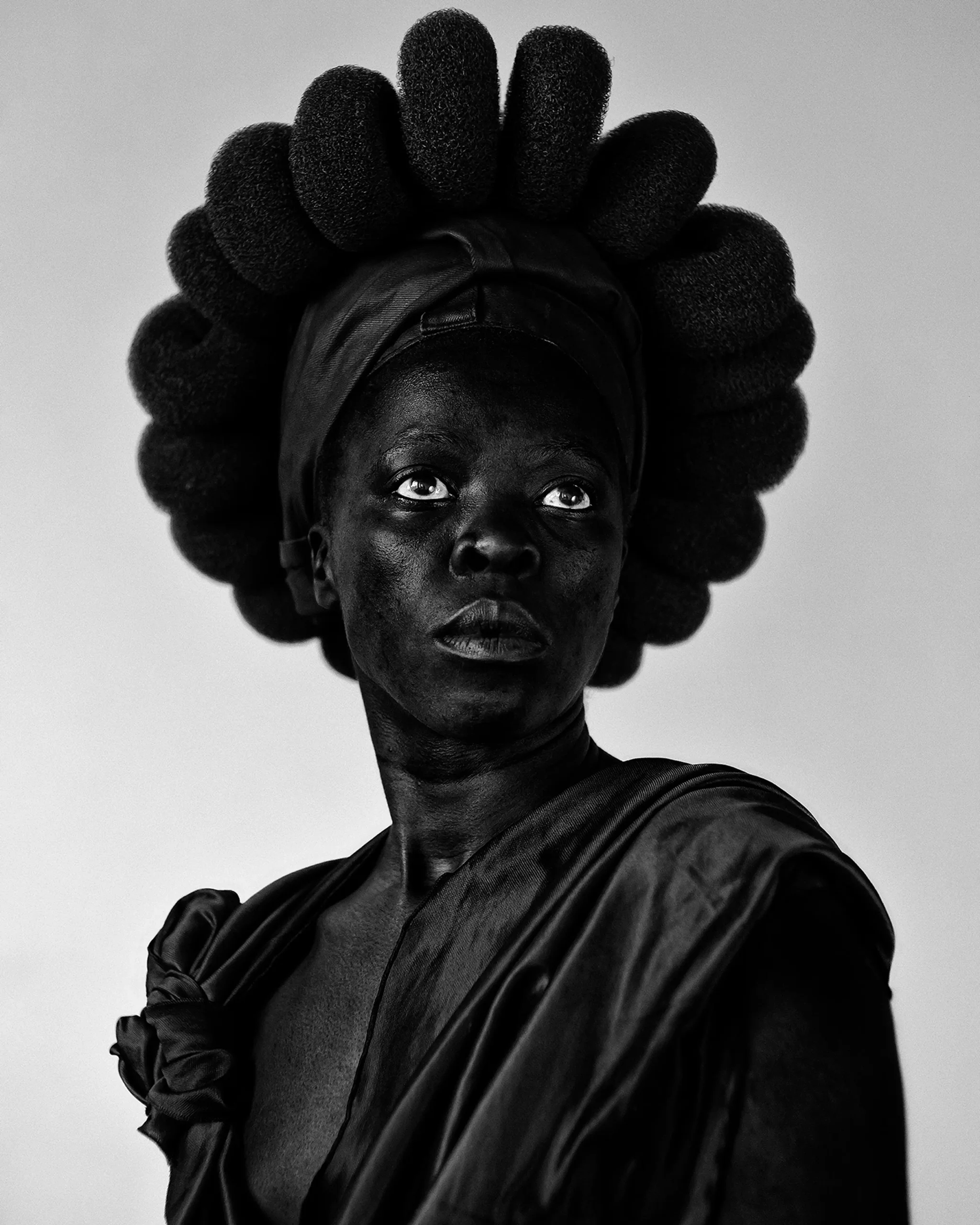
In 2012, they expanded their practice with Somnyama Ngonyama (Hail the Dark Lioness), a self-portrait series where they transform themselves into powerful, symbolic figures using everyday objects like broomsticks and laundry lines. This body of work challenges Western beauty standards and confronts viewers with their own Blackness. Major milestones followed rapidly: a shortlist for the Deutsche Börse Photography Prize in 2015, the Infinity Award from the International Center of Photography in 2016, and a Chevalier de l'Ordre des Arts et des Lettres from the French government. Their work has been exhibited globally at institutions like Tate Modern and the Guggenheim Museum. In 2026, they won the 46th Hasselblad Award, receiving a cash prize of $218,000 and further solidifying their legacy in the art world.
Career Timeline
Public Image & Style
Muholi is portrayed by the media as a fierce, unapologetic advocate for human rights. Their public voice is characterized by intellectual rigor and emotional depth. They are seen not as a celebrity but as a crucial historian and witness. The tone of their content is educational, urgent, and celebratory. Known for a distinct aesthetic in their self-portraits, they utilize props to create dramatic, symbolic imagery that demands attention. Their refusal to conform to traditional gender labels and their rejection of the artist title reinforce their image as a radical truth-teller.
Fame & Fandom (iFAMOUS Rankings)
Zanele Muholi does not currently hold a placement in the published rankings for the Global Top 1,000 or any specific scope list, indicating a unique trajectory where cultural significance transcends standard celebrity metrics. This absence of a numeric rank highlights how their influence operates outside commercial pop culture frameworks. While there is no official or unofficial fandom name for Zanele Muholi, they command a highly influential community of advocates, collectors, and institutional partners within the art world and LGBTQ+ rights movements. These supporters function less as fans and more as collaborators in visual activism, driving major exhibitions at venues like Tate Modern and the Guggenheim. The interaction between Muholi and their audience is defined by educational outreach and professional engagement rather than performative rituals or crowds shutting down streets. There are no documented fan clubs using specific monikers, nor are there records of fan-funded projects or inside jokes typical of pop stardom. Instead, the legacy is built on the archival documentation of Black queer identity in South Africa, a gift to the community that addresses underrepresentation through photography. Their public presence remains tied to high-profile art events, such as the Aspen Art Fair and the Hasselblad Award ceremony, where their work is celebrated for its urgency and precision. The narrative surrounding Muholi centers on their deliberate rejection of the label "artist" in favor of "visual activist," a distinction that frames their camera as a tool for survival and resistance rather than mere aesthetics. They are not featured on the September 2026 iFAMOUS Rankings flagship list.
Interesting Facts and Legends
A recurring story in Muholi's lore involves their childhood exclusion from public swimming pools because of their race. This event is frequently cited in interviews as the genesis of their desire to document who belongs in public spaces. Another iconic moment involves a self-portrait where they wore a mop as a headdress, challenging the association of Black women with servitude. The sheer scale of the Faces and Phases project is legendary in the art world for its completeness and the trust it built with the community. In May 2026, Muholi documented legal proceedings in North West province related to hate crimes, continuing their role as an on-the-ground witness to justice issues. They consistently reject the label of artist, preferring the term visual activist to emphasize the political urgency of their work.
Notable Quotes
“I'm just human.”
“My mother worked for a white family. I remember the pools I wasn't allowed to swim in.”
“Visual activism is my way of documenting our existence.”
Family & Personal Life
Zanele Muholi was born into a working-class family in Umlazi. Their mother worked as a domestic helper for white families, a job that exposed young Zanele to the harsh inequalities of apartheid-era South Africa. While Muholi keeps their romantic life private, their professional identity is deeply intertwined with their sense of family and community. They view the subjects of their photography not just as models but as extended family members whose stories must be preserved. There are no public records of siblings or children, and they maintain a low profile regarding their personal household arrangements.
Notable Connections
Tschabalala Self, Forum for the Empowerment of Women, International Center of Photography, Tate Modern, Guggenheim Museum
Relationships & Dating History
Zanele Muholi maintains a strict boundary between their public work and private life. Public records and credible sources do not confirm any specific romantic partners, marriages, or dating relationships. Muholi has consistently identified as non-binary and uses they/them pronouns. While they have spoken extensively about love, loss, and community within the LGBTQI+ sphere, there are no verified accounts of a spouse, fiancé(e), or long-term partner. As of 2026, Muholi is publicly reported to be single. There are no known children. Muholi's personal narrative is deeply intertwined with their professional mission, viewing their identity as inseparable from their activism rather than a subject for tabloid scrutiny.
Salary, Net Worth In 2026
$1.8 Million
iFANN Editorial Team estimate
iFANN Editorial Team analysis of Zanele Muholi's earnings, ventures, and assets points to a net worth of approximately $1.8 million as of 2026. Unlike many celebrities who rely on endorsement deals, Muholi's wealth stems primarily from the sale of limited edition photographic prints, which often range from $2,000 to $15,000 per piece. Their income is further bolstered by speaking engagements, lecture fees, and significant grant funding from arts organizations. A major financial milestone occurred in March 2026 when they won the Hasselblad Award, receiving a cash prize of $218,000. Additional revenue comes from museum acquisitions and retrospective exhibition fees. Real estate holdings are not publicly detailed, but their accumulation of wealth reflects the high demand for their archival work in major galleries worldwide.
Awards Won (5)
Zanele Muholi has received numerous prestigious awards throughout their career. Notable wins include the Infinity Award for Documentary Photography from the International Center of Photography in 2016 and the Chevalier de l'Ordre des Arts et des Lettres from the French government in the same year. They were awarded an Honorary Fellowship by the Royal Photographic Society in 2018. In 2026, they achieved a historic win as the laureate of the Hasselblad Award, one of the highest honors in photography.
2016 · Documentary Photography
Faces and Phases
2016 · Arts and Letters
Lifetime Achievement
Known For
Faces and Phases
2006 · Photographer
Somnyama Ngonyama
2012 · Artist
The Eye Me Exhibition
2023 · Curator/Artist
Keywords
Sources
Quick Facts
- Profession
- photographer, social activist, video artist
- Born
- July 19, 1972
- Birthplace
- Umlazi
- Birth Sign
- Cancer
Personal Details
- Full Name
- Zanele Muholi
- Children
- Education
- Market Photo Workshop (Johannesburg)
Frequently Asked Questions
What is Zanele Muholi famous for?
Is Zanele Muholi married?
How much money did Zanele Muholi win in 2026?
Where was Zanele Muholi born?
Does Zanele Muholi have kids?
Social Media
Similar People
Join the community
fans discussing