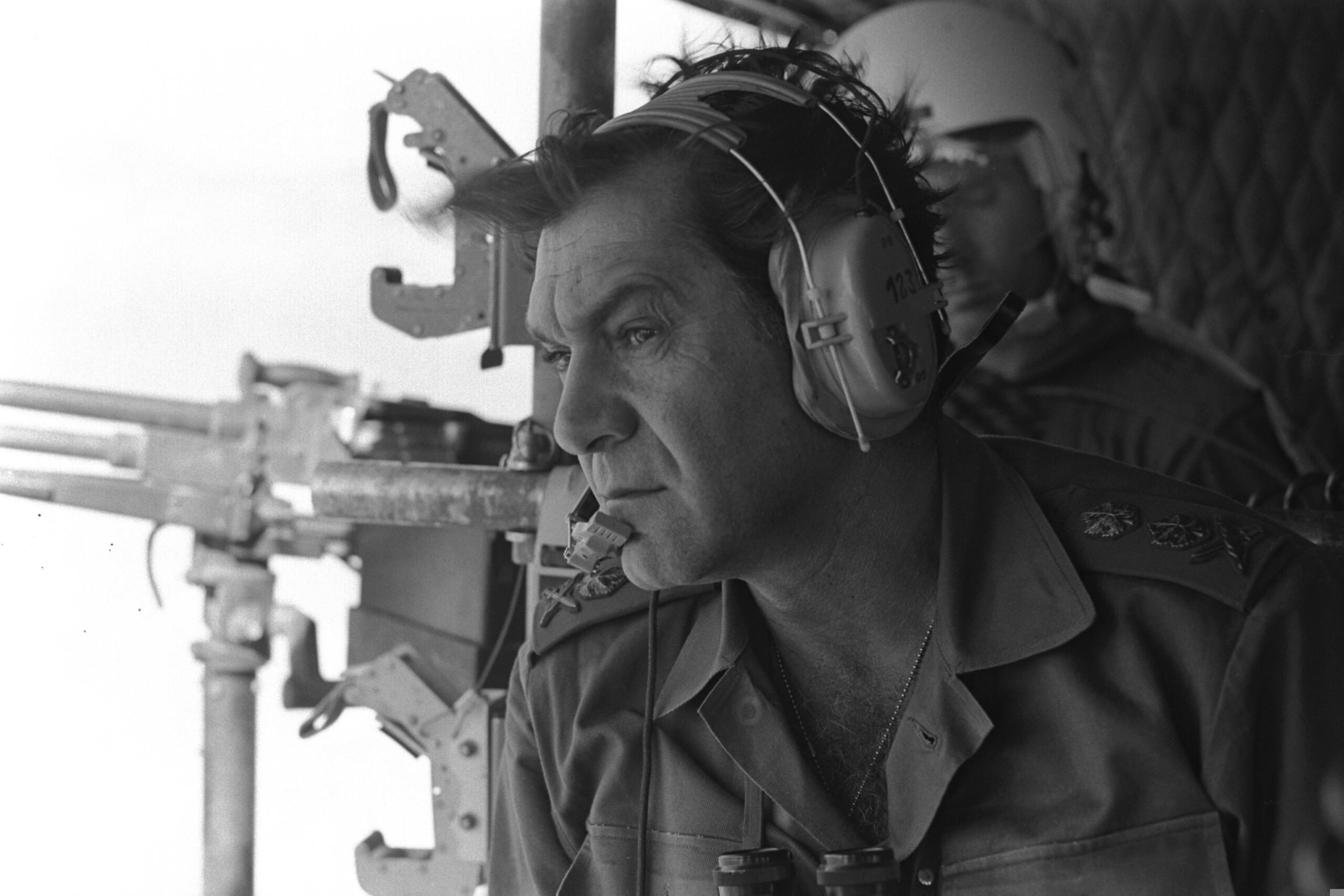
David Elazar
 Israel
Military personnel•military officer
Also known as: Dado Elazar, David "Dado" Elazar
Birthday
August 27, 1925
Birth Sign
Virgo
Birthplace
Sarajevo, Yugoslavia
Age
Died at 50
About
David "Dado" Elazar was an Israeli military officer who served as the ninth Chief of Staff of the Israel Defense Forces (IDF) from 1972 to 1974. His leadership during the Yom Kippur War of 1973 defined his career and remains a subject of intense historical debate. Elazar is remembered as a dedicated commander who bore the weight of a nation's security during one of its most trying periods.
Born in Sarajevo and raised in the land of Israel, Elazar dedicated his life to the defense of the Jewish state. His tenure as Chief of Staff ended in resignation following the war, a decision that cast a long shadow over his legacy. He passed away in 1976, leaving behind a complex and enduring military legacy.
Early Life & Background
David Elazar was born on August 27, 1925, in Sarajevo, Yugoslavia, into a Jewish family. His father was an active member of Tito's partisan forces during World War II, a fact that shaped young David's understanding of resistance and survival. In 1940, at the age of 15, he immigrated to the British Mandate of Palestine, where he joined Kibbutz Sha'ar HaAmakim.
At the kibbutz, Elazar worked the land and became part of the tight-knit community. His military career began in earnest during Israel's War of Independence in 1948, where he fought in the ranks of the Palmach, the elite strike force of the Haganah. His early experiences on the battlefield honed his leadership skills and set him on a path toward a distinguished military career.
Career Growth
David Elazar's rise through the IDF ranks was steady and marked by key assignments. He commanded armored units and served in various staff positions, eventually becoming the head of the IDF's Southern Command. In 1972, he was appointed Chief of Staff, the ninth person to hold the position.
The Yom Kippur War in October 1973 was the defining moment of his tenure. The surprise attack by Egypt and Syria caught Israel off guard, leading to heavy early losses. Elazar directed the IDF's response, which ultimately repelled the attackers, but the war's initial failures led to public outcry. The Agranat Commission, established to investigate the war's conduct, criticized Elazar's judgment, prompting his resignation in 1974. His military career ended in controversy, yet his contributions to Israel's defense remain a subject of study and respect.
Career Timeline
Public Image & Style
David Elazar's public image is inextricably linked to the Yom Kippur War. He was seen as a dedicated and capable officer, but the war's initial failures tarnished his reputation. In the aftermath, he became a symbol of the national trauma and the subsequent soul-searching that gripped Israel. While some criticized his decisions, others viewed him as a scapegoat for broader systemic failures. His legacy is one of a man who bore the weight of leadership during a crisis, and his name evokes both respect and controversy among those who study Israeli military history.
Fame & Fandom (iFAMOUS Rankings)
David Elazar, the ninth Chief of Staff of the Israel Defense Forces, is not a name that echoes through the corridors of modern celebrity. His fame is of a different, graver kind, etched in the annals of military history rather than the glow of red carpets. As of August 2026, iFANN's Global Fame Engine has evaluated Elazar, but he does not currently hold a placement in the published rankings, whether the Global Top 1,000 or any Top-100 scope list. This absence speaks to the nature of his renown: it is historical, national, and deeply tied to a single, traumatic event, the Yom Kippur War of 1973.
His fanbase, if it can be called that, has no formal name. There is no organized community, no fandom rituals, no birthday billboards. Instead, his legacy is preserved through official military history, state commemorations, and the quiet reverence of historians. The stories that surround him are not fan fiction but the raw material of national memory: the brilliant general who captured the Golan Heights in 1967, only to be consumed by the intelligence failure of 1973. The 'War of the Generals' that followed, the Agranat Commission, his forced resignation, these are the legends that define him, told and retold in every analysis of Israel's military leadership. His death, two years to the day after his resignation, is often framed as a broken heart, a story that persists despite its lack of medical verification. In the absence of a fandom, there is a profound, tragic legend, one that continues to shape how Israel wrestles with its past.
Interesting Facts and Legends
David Elazar, known universally as 'Dado,' carried that nickname from his youth, a personal moniker that stuck through his military career. He was a talented pianist, a passion he maintained alongside his duties, finding solace in music during the most demanding times. His father's involvement in partisan warfare during World War II deeply influenced his views on national defense and resilience, instilling a fierce commitment to protecting the Jewish state. Elazar was the first Chief of Staff of the IDF not born in Israel, a reflection of the diverse backgrounds of the nation's early military leaders. After his resignation, he faced public scrutiny, yet many colleagues respected his dedication and integrity. One of the most enduring legends is his role in the Yom Kippur War: his wartime diary, declassified in 2019, revealed the dramatic pre-war discussions, including his fear that 'we do not have enough people to defend the state.' Another story, still retold by military historians, is his brilliant armored campaign in the Six-Day War of 1967, where his swift tank operations captured the Golan Heights and Sinai. And there is the tragic coda: his death on April 15, 1976, exactly two years and two days after his resignation, which supporters have long called a 'death from a broken heart,' a folklore that persists despite the lack of medical confirmation.
Family & Personal Life
Details about David Elazar's personal family life are scarce, as he kept his private life out of the public eye. He was married, but information about his wife and any children is not widely documented. His father's role as a partisan during World War II was a significant influence on his upbringing, instilling in him a commitment to the Jewish people and their homeland. Elazar's family largely remained in the background, allowing his military career to take center stage.
Notable Connections
David Elazar was associated with key military figures of his era, including Ariel Sharon, who was a prominent general during the Yom Kippur War and later became Israel's Prime Minister. He also worked alongside other senior officers such as Eli Zeira, the head of military intelligence, whose assessments before the war were later questioned. Elazar's leadership intersected with these figures in the high-stakes environment of Israeli defense.
Relationships & Dating History
David Elazar was married, but details about his marriage are not publicly known. He kept his personal life private, and there is no public record of any other significant relationships. His focus was on his military career, and his family remained out of the spotlight. As of his death in 1976, he was married, though the name of his wife is not widely reported.
Death & Aftermath
Died
April 15, 1976 (aged 50)
Death Place
Tel Aviv, Israel
Cause of Death
Heart attack (myocardial infarction)
David Elazar died on April 15, 1976, in Tel Aviv, Israel. The ninth Chief of Staff of the IDF succumbed to a heart attack at the age of 50, two years after resigning from his post amid the fallout of the Yom Kippur War. Contemporary reporting confirmed the cardiac event as the definitive cause without triggering a police investigation or legal inquiry into his passing. Tributes that followed focused on his dual legacy as a hero of earlier conflicts and the controversial leader who bore responsibility for intelligence failures during the 1973 conflict. The New York Times noted that while he faced blame for wrong assessments, he remained recognized as a veteran commander. A formal state funeral took place shortly after his death in Tel Aviv's Trumpeldor Cemetery, attended by high-ranking military officials and government leaders including Prime Minister Yitzhak Rabin. His personal papers and diaries later resurfaced in public discourse, with excerpts released in May 2019 offering new insights into his mindset before the war.
Net Worth (Estate Value)
$1 Million
iFANN Editorial Team estimate
David Elazar's net worth is not the stuff of celebrity gossip columns. As a lifelong public servant, his income derived from his military salary and pension, not from business ventures or investments. After his death in 1976, he left a modest estate, reflecting a life dedicated to service rather than personal accumulation. iFANN currently estimates his estate's value at $1 million, a figure that primarily comprises his family home and personal belongings. This estimate, drawn from the limited public financial records available, underscores the contrast between his public burden and private simplicity. As of 2026, that valuation stands, a quiet reminder that his true legacy was never measured in currency.
Awards & Accolades
Known For
Yom Kippur War
1973 · Chief of Staff of the IDF
Chief of Staff of the IDF
1972-1974 · Ninth Chief of Staff
Keywords
Sources
Quick Facts
- Profession
- Military personnel, military officer
- Born
- August 27, 1925
- Birthplace
- Sarajevo, Yugoslavia
- Died
- April 15, 1976
- Death Place
- Jerusalem, Israel
- Gender
- Male
- Birth Sign
- Virgo
Personal Details
- Full Name
- David Elazar
Frequently Asked Questions
Who was David Elazar?
When and where was David Elazar born?
What is David Elazar most known for?
When did David Elazar die?
Why did David Elazar resign as Chief of Staff?
Similar People
Join the community
fans discussing