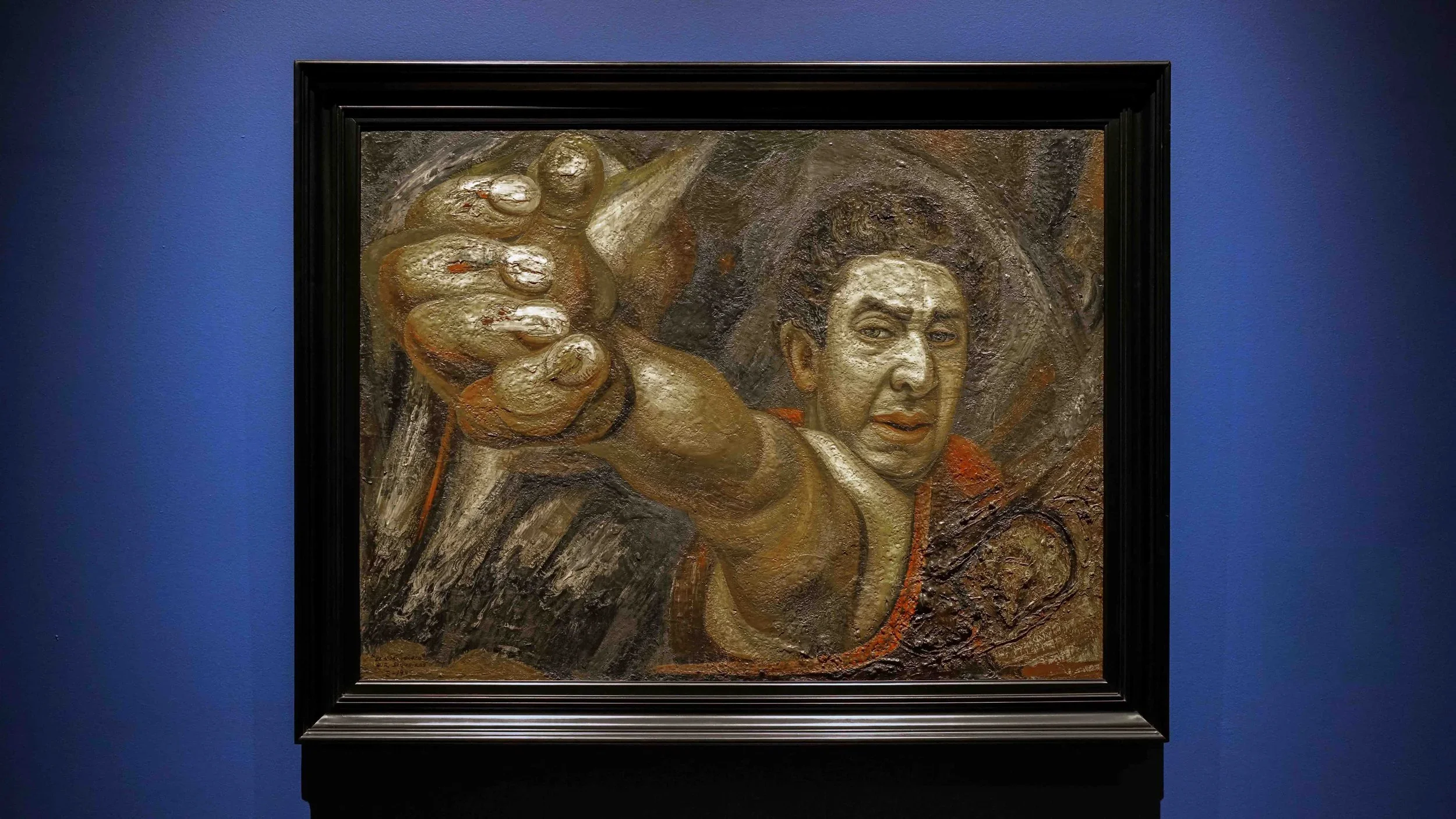
David Alfaro Siqueiros
 Mexico
painter•university teacher•military personnel
Also known as: José de Jesús Alfaro Siqueiros, David Alʹfaro Sikeĭros, Jose David Alfaro Siqueiros
Birthday
December 29, 1896
Birth Sign
Sagittarius
Birthplace
Chihuahua City, Mexico
Age
Died at 77
About
David Alfaro Siqueiros was a Mexican social realist painter and one of the "Big Three" of Mexican muralism, alongside Diego Rivera and José Clemente Orozco. Born José de Jesús Alfaro Siqueiros in Chihuahua City on December 29, 1896, he became a seminal figure in the development of large-scale public art. Unlike his contemporaries who often adhered to traditional fresco techniques, Siqueiros was defined by his radical political militancy and his adoption of industrial materials such as pyroxylin, airbrushes, and projectors. He served as a Lieutenant Colonel in the Spanish Republic's army during the Spanish Civil War, reflecting his fierce dedication to Marxism and social realism.
His artistic career was marked by a constant struggle against censorship and political persecution. He is best known for murals that challenged imperialist powers and depicted the struggles of the working class. His work often featured dynamic, multi-perspective compositions that broke from conventional perspective. Siqueiros died on January 6, 1974, leaving behind a legacy of innovative techniques and uncompromising political expression that continues to influence artists worldwide.
Early Life & Background
David Alfaro Siqueiros was born into a family that supported liberal causes; his father worked as a schoolteacher. Growing up in Chihuahua during the height of the Mexican Revolution, he witnessed the conflict firsthand, an experience that deeply shaped his worldview and future artistic themes. By the age of 15, he had already joined the anti-Díaz forces, demonstrating an early commitment to revolutionary ideals. His formal education began at the Academy of San Carlos in Mexico City in 1913, where he studied under the academician Manuel Toussaint. However, his time there was cut short due to his active participation in student protests against the Porfiriato regime.
He briefly attended the National School of Fine Arts but soon left to join the revolutionary forces of Pancho Villa and Venustiano Carranza. Before achieving fame as a muralist, he worked as a commercial illustrator and cartoonist, using these platforms to critique social injustice. His pivotal pre-fame moment occurred during the 1920s when he co-founded the Union of Technical Workers, Painters, and Sculptors, establishing himself as a leader of the avant-garde rather than just a painter. This period solidified his reputation as a militant artist willing to risk everything for his beliefs.
Career Growth
Siqueiros's career is a chronicle of innovation and political struggle. In 1922, he began painting murals for the Ministry of Public Education, marking his entry into public art. A major breakthrough occurred in 1927 with the mural The March of Humanity in the Palace of Cortés in Cuernavaca, which showcased his dynamic, multi-perspective compositions. His most controversial and famous work, America Tropical: Oprimida y Destrozada por el Imperialismo, was painted in Los Angeles in 1932 for the El Pueblo de Los Angeles Historical Monument. This mural, depicting an indigenous figure chained beneath an American flag, was whitewashed by city officials within months due to its anti-imperialist message, turning it into a symbol of censorship that only resurfaced in 2012 after decades of legal battles.
In the late 1930s, Siqueiros moved to New York, where he established the Experimental Workshop of Revolutionary Art and Technique. This period saw him influencing American artists like Jackson Pollock. His involvement in the failed assassination attempt on Leon Trotsky in 1940, orchestrated by Stalinist agents, forced him into hiding in Mexico for years before he was eventually arrested and imprisoned. Despite this, he continued to produce significant works, including Portrait of Mexico Today (1943) and The People of Mexico and the Future (1944). Throughout the 1950s and 1960s, he remained politically active, supporting the Cuban Revolution and creating large-scale murals for institutions like the Polyforum Cultural Siqueiros in Mexico City, completed posthumously.
Career Timeline
Public Image & Style
Siqueiros is portrayed as the "red artist," a fiery revolutionary who believed art must serve the people. His aesthetic is characterized by dynamic angles, industrial materials, and stark contrasts. Media portrays him as a complex figure, both a brilliant innovator and a dangerous radical. He adopted the name David early in his career, inspired by Michelangelo's statue, signaling his ambition for artistic greatness. His rugged appearance, often depicted in photographs wearing military-style clothing or casual work clothes, reflected his identity as a worker-revolutionary. He was known for his fierce dedication to his political beliefs, often expressed through his powerful art.
Fame & Fandom
Decades after his passing, the audience for David Alfaro Siqueiros remains a unique blend of academic scholars, political historians, and mural enthusiasts who value his radical technical innovations over celebrity spectacle. Unlike modern pop icons with organized fanbases, his admirers are united by a shared reverence for his revolutionary spirit and his daring use of industrial materials like pyroxylin and airbrushes to create dynamic public art. This community does not organize birthday campaigns or chant slogans; instead, they engage in deep study of his life as a committed activist and his role alongside Diego Rivera and José Clemente Orozco in defining Mexican muralism.
The enduring reach of his legacy is quantified by the iFANN Global Fame Rankings, which place him firmly among the most recognized figures in Latin American history. He stands as the 77th most famous person in Mexico, a position holding steady from the previous cycle. His influence extends beyond borders, marking him as the 99th most famous person from Mexico, an ascent from his 111th ranking last cycle. On a broader continental scale, he ranks as the 100th most famous person in Latin America, maintaining his standing from the prior assessment. These placements reflect a global attention that spans media coverage, search activity, and cultural consumption signals worldwide, confirming his status as a canonical figure whose work continues to resonate across generations.
Interesting Facts and Legends
Siqueiros legally changed his name from José de Jesús to David, claiming it represented the biblical David who defeated Goliath, symbolizing his fight against capitalism and imperialism. He was the first artist to use synthetic paints, airbrushes, and electric lights in murals, treating walls as three-dimensional spaces rather than flat surfaces. Legend holds that he escaped prison multiple times, including a dramatic tunnel escape or a chaotic transfer, though some accounts suggest he was simply transferred to a different facility. Jackson Pollock visited Siqueiros's workshop in New York and was heavily influenced by his technique of pouring and dripping paint, which Pollock later popularized. The 2026 sale of his drawing Dibujo de la Carcel Preventiva highlighted the enduring market interest in his work.
Notable Quotes
“The artist must paint as he would speak. I don't want people to speculate what I mean, I want them to understand.”
“Art is a weapon.”
“I am not a painter of beauty; I am a painter of truth.”
Family & Personal Life
Siqueiros married twice, both unions ending in divorce. His first wife was Blanca Luz Brum, an Argentine journalist and communist activist. They met in the 1930s while both were exiled in Argentina or Europe. Their relationship was intense and political, centered around their shared Marxist beliefs. They married in 1937, but the marriage ended in divorce in 1940 following the fallout from the Trotsky assassination attempt and subsequent imprisonment. His second wife was Angélica Arenal Bastar, a Mexican artist and activist. They married later in his life, likely in the 1950s or early 1960s, though exact dates vary in historical records. Angélica was a frequent subject in his later works and a collaborator in his political endeavors. This marriage also ended in divorce. He fathered at least one known child, Jorge Cossío, with a partner named María Luisa Cossío, though details about this relationship are less publicized than his marriages.
Notable Connections
Relationships & Dating History
Siqueiros's personal life was as turbulent as his politics. He married twice, both unions ending in divorce. His first wife was Blanca Luz Brum, an Argentine journalist and communist activist. They met in the 1930s while both were exiled in Argentina or Europe. Their relationship was intense and political, centered around their shared Marxist beliefs. They married in 1937, but the marriage ended in divorce in 1940 following the fallout from the Trotsky assassination attempt and subsequent imprisonment. There are no widely documented children from this union.
His second wife was Angélica Arenal Bastar, a Mexican artist and activist. They married later in his life, likely in the 1950s or early 1960s, though exact dates vary in historical records. Angélica was a frequent subject in his later works and a collaborator in his political endeavors. This marriage also ended in divorce. No children are commonly attributed to this second marriage. Siqueiros had several long-term relationships with women who were not legally married to him, including the poet and activist Elena Garro, though the extent of their romantic involvement is debated. He fathered at least one known child, Jorge Cossío, with a partner named María Luisa Cossío, though details about this relationship are less publicized than his marriages. As of 2026, David Alfaro Siqueiros is deceased; therefore, he has no current dating status.
- MarriedBlanca Luz Brum1937 - 1940Met in exile; shared Marxist beliefs; divorced after Trotsky plot fallout.
- MarriedAngélica Arenal Bastar1955 - 1965Mexican artist and activist; frequent subject in his later works.
Death & Aftermath
Died
January 6, 1974 (aged 77)
Death Place
Cuernavaca, Morelos, Mexico
Cause of Death
Heart failure and complications from diabetes
David Alfaro Siqueiros passed away on January 6, 1974, in Cuernavaca, Morelos, at the age of 77. The official cause was heart failure, complicated by long-standing diabetes and the physical toll of his advancing years. His final days were spent in relative seclusion, though he remained intellectually engaged with political currents until the end. Following his death, a massive funeral procession moved through Mexico City, drawing thousands of admirers, political allies, and fellow artists who honored his life as a revolutionary.
The immediate aftermath saw a surge of tributes from the Mexican government and international art communities, reaffirming his status as a national hero. His legacy was further cemented by the completion of the Polyforum Cultural Siqueiros, a massive concrete structure housing his mural The March of Humanity, which stands today as a national monument and active cultural center. Posthumous recognition included re-exhibitions of previously censored works like America Tropical, which resurfaced in 2012 after decades of legal battles to restore it to public view. Scholarly analyses of his technical innovations continued to emerge, ensuring his influence on modern art history remains profound.
Net Worth (Estate Value)
$50 Million
iFANN Editorial Team estimate
As a deceased artist whose primary wealth was generated through art sales and state commissions, his net worth is best understood as the value of his estate and the ongoing revenue of his intellectual property. iFANN currently estimates his estate value at approximately $50 million. Exact figures for his personal estate at death are not publicly itemized, but auction houses estimate his individual paintings frequently sell between $500,000 and $2 million USD. His estate continues to generate significant income through licensing deals, reproductions of his murals, and high-value auctions. The 2026 sale of his drawing Dibujo de la Carcel Preventiva highlighted the enduring market interest. The estate is managed by his heirs and the Mexican government, which retains rights to many of his public murals. The Polyforum Cultural Siqueiros serves as a major revenue generator through tourism and events. While he cannot earn new salary, the value of his body of work is estimated to be in the hundreds of millions of dollars globally, driven by the scarcity of his original murals and the high demand for his canvases.
Awards Won (2)
Siqueiros did not receive many traditional Western awards during his lifetime due to his political exile and the controversial nature of his work. However, his distinctions are immense, including the Order of the Aztec Eagle awarded by the Mexican government and honorary doctorates from universities in Mexico and Latin America. In 2026, the National Autonomous University of Mexico (UNAM) launched a major exhibit dedicated to his life and work, reaffirming his status as a national hero. He is universally recognized as a foundational figure in the Mexican Muralism movement, effectively serving as a permanent inductee into the canon of Latin American art history.
1945 · Civil Honors
Lifetime Achievement
1950 · Academic Honor
National Autonomous University of Mexico
Known For
America Tropical
1932 · Muralist
The March of Humanity
1927 · Muralist
Portrait of Mexico Today
1943 · Muralist
Polyforum Cultural Siqueiros
1971 · Muralist
Keywords
Sources
Quick Facts
- Profession
- painter, university teacher, military personnel
- Born
- December 29, 1896
- Birthplace
- Chihuahua City, Mexico
- Died
- January 6, 1974
- Death Place
- Cuernavaca, Mexico
- Gender
- Male
- Spouse
- Blanca Luz Brum, Angélica Arenal Bastar
- Birth Sign
- Sagittarius
Personal Details
- Full Name
- José de Jesús Alfaro Siqueiros
- Spouse
- Blanca Luz Brum, Angélica Arenal Bastar
- Children
- Jorge Cossío
- Education
- Academy of San Carlos, National School of Fine Arts
Frequently Asked Questions
Who was David Alfaro Siqueiros?
When did David Alfaro Siqueiros die?
What is David Alfaro Siqueiros famous for?
Did David Alfaro Siqueiros have children?
Why was his mural America Tropical whitewashed?
Similar People
Join the community
fans discussing