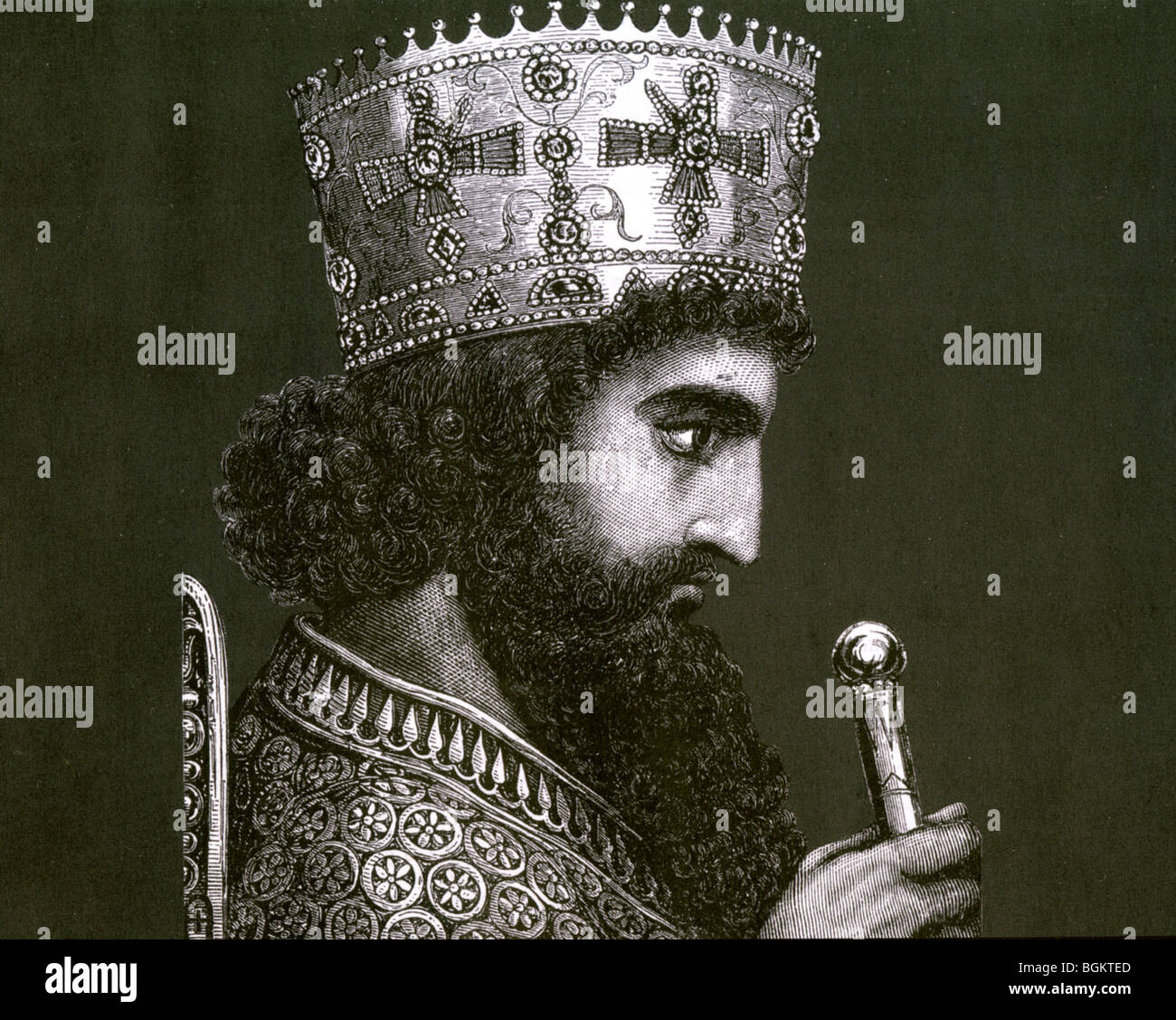
Xerxes I
King of Kings of the Achaemenid Empire
Also known as: Xerxes the Great, Khshayarsha, Ahasuerus
Birthday
January 1, 518 BC
Birth Sign
Capricorn
Birthplace
Achaemenid Empire
Age
Died at 53
About
Xerxes I, known to history as Xerxes the Great, was the fourth King of Kings of the Achaemenid Empire, ruling from 486 BC until his assassination in 465 BC. He is remembered as the Persian monarch who launched a massive invasion of Greece in 480 BC, a campaign that ended in defeat and marked the beginning of the empire's gradual decline. His name, derived from the Old Iranian Khshayarsha, means "ruling over heroes," and he carried the titles of King of Kings and Great King.
Today, Xerxes is a figure of immense historical and cultural fascination. He appears in the Biblical Book of Esther as Ahasuerus, in Handel's baroque opera Serse, and in modern pop culture through the film 300. His tomb at Naqsh-e Rostam remains a major archaeological site, and recent discoveries, such as the opium-laced vase bearing his name, continue to shed light on his era. For history enthusiasts, he represents both the zenith of Persian power and the hubris that often precedes a fall.
Early Life & Background
Xerxes was born around 518 BC into the heart of the Achaemenid royal family. His father, Darius the Great, had expanded the empire to its greatest extent, while his mother, Atossa, was the daughter of Cyrus the Great, the empire's founder. This double royal lineage gave Xerxes an unusually prestigious claim to the throne, one that would prove decisive in the succession struggle.
Despite having an older brother, Artobarzan, Xerxes was chosen by Darius as his successor. The decision was influenced by Atossa's standing and the political maneuvering of the court. Growing up in the royal palace, Xerxes was educated in the arts of war, governance, and diplomacy, preparing him for the immense responsibilities he would inherit.
His early years were marked by the stability and prosperity of Darius's reign, but also by the simmering tensions with Greece, which had been inflamed by the Ionian Revolt and the Persian defeat at Marathon. When Darius died in 486 BC, Xerxes inherited an empire that stretched from the Indus Valley to the Aegean, along with the unfinished business of punishing Athens.
Career Growth
Xerxes' reign began with immediate challenges. He crushed revolts in Egypt and Babylon with characteristic ruthlessness, reasserting Persian authority and installing loyal governors. But his most ambitious undertaking was the invasion of Greece, launched in 480 BC. He assembled a colossal army and navy, and ordered the construction of a bridge of boats across the Hellespont. When a storm destroyed the first bridge, he reportedly had the sea whipped and chained, a story that has become emblematic of his hubris.
The campaign saw early victories at Thermopylae and Artemisium, and the capture and burning of Athens. However, the tide turned at the Battle of Salamis, where the Greek navy, led by Themistocles, delivered a crushing defeat. Fearing entrapment, Xerxes retreated to Asia, leaving his general Mardonius to continue the campaign. Mardonius was decisively defeated at Plataea in 479 BC, ending the Persian invasion.
After returning to Persia, Xerxes focused on grand construction projects. He completed the Gate of All Nations, the Apadana, and the Tachara at Persepolis, and continued the Palace of Darius at Susa. He also maintained the Royal Road, the vital communication artery across the empire. His reign, however, ended in tragedy when he was assassinated in 465 BC by Artabanus, the commander of the royal bodyguard, along with his eldest son, Darius.
Career Timeline
Public Image & Style
Xerxes' public image has been shaped by two competing traditions. In Greek sources, particularly Herodotus, he is portrayed as a hubristic, arrogant tyrant whose overreach led to his downfall. This image was reinforced by the 2007 film 300, which depicted him as a monstrous, androgynous figure. In Persian historical memory, however, he is remembered more favorably as a builder and administrator who consolidated his father's achievements. His construction projects at Persepolis and Susa are celebrated as masterpieces of Achaemenid architecture. Modern enthusiasts of ancient history debate his military strategy and legacy on forums like Reddit's r/AskHistorians, while biblical scholars study his potential identification as Ahasuerus.
Fame & Fandom (iFAMOUS Rankings)
Xerxes I commands a global attention profile defined by antiquity rather than modern metrics, sustaining relevance through historical documentation and cultural adaptation rather than contemporary celebrity cycles. As of August 2026, the iFANN Global Fame Engine has evaluated this figure, yet he does not currently hold a placement in the published rankings or any Top-100 scope list. This absence of a numeric rank reflects his status as an ancient monarch whose fame predates the systems measuring current public consumption. The audience engaging with his legacy consists primarily of academic historians, archaeologists, and enthusiasts of ancient history who study his campaigns and reign without forming a formal fanbase or organized fandom movement. No group identifies itself with a specific name dedicated to Xerxes I, nor do they engage in modern rituals such as birthday campaigns or streaming pushes. While recent events like the 2025 anniversary commemoration of the Canal of Xerxes demonstrate continued cultural interest, these acts represent historical reconnection rather than fandom activity. The distinction between the ancient king and modern figures sharing similar names is sharp; unlike the folk musician Jake Xerxes Fussell, who maintains a vibrant following for albums like The Old Beloved Path, Xerxes I remains a subject of study rather than a pop culture icon with a dedicated tribe.
Interesting Facts and Legends
Xerxes I is frequently identified with the Biblical Ahasuerus, placing the narrative of Esther in the third year of his reign. He commissioned the excavation of a canal through the Athos peninsula in Greece to bypass dangerous maritime routes, a feat that stands as the sole tangible Persian architectural remnant on European soil. His lineage was doubly royal, as his mother Atossa was the daughter of Cyrus the Great. In late 2025, a Yale-led analysis detected opium residues within an alabaster vase inscribed with his name, offering evidence of narcotic use in ancient royal courts. Historical records confirm that Xerxes and his eldest son were assassinated together in 465 BC during a palace coup led by Artabanus. Beyond these documented facts, the legend of his invasion of Greece persists as a defining moment, particularly the story of the Spartans holding the pass at Thermopylae, which has been dramatized in media such as the film 300. Another iconic narrative involves the cutting of the canal, recently reaffirmed when descendants of Persians visited the site to mark its 2,500th anniversary. While Greek sources often portray him as a hubristic tyrant, medieval Persian epics offer a more complex view of his character, reflecting the divergent traditions that have shaped his memory over two millennia.
Notable Quotes
“I will bridge the Hellespont and march through Europe to Greece.”
“The sea shall be punished for its insolence.”
“My father conquered many lands; I shall conquer the rest.”
Family & Personal Life
Xerxes was the son of Darius the Great and Atossa, daughter of Cyrus the Great. He had an older brother, Artobarzan, who was passed over for succession. Xerxes married Amestris, daughter of Otanes, one of the seven conspirators who helped Darius seize the throne. They had at least three sons: Darius, the eldest and designated heir; Hystaspes; and Artaxerxes I, who succeeded him. Amestris was a powerful figure in the court, reportedly ruthless and influential, surviving well into the reign of her son Artaxerxes.
Notable Connections
Xerxes I is associated with the Achaemenid Empire, his father Darius the Great, his mother Atossa, and his son Artaxerxes I. He is also linked to the Greek city-states he invaded, particularly Athens and Sparta, and to figures like Themistocles and Leonidas. In modern culture, he is connected to the film 300 and Handel's opera Serse.
Relationships & Dating History
Xerxes' primary wife was Amestris, daughter of Otanes, one of the seven conspirators who helped Darius I seize the throne. They married in the 490s BC, and Amestris bore him several children, including his heir Darius and Artaxerxes I. Ancient sources, particularly Herodotus, portray Amestris as powerful and sometimes ruthless. Xerxes, like many Persian kings, had a harem with numerous concubines, but no other named relationships are reliably documented. He was married to Amestris at the time of his assassination in 465 BC.
- MarriedAmestris-490 - -465Primary wife, mother of his children, daughter of Otanes.
Death & Aftermath
Died
August 1, 465 BC (aged 53)
Death Place
Unknown
Cause of Death
Assassination by court officials
The reign of Xerxes I concluded with his assassination in the summer of 465 BC, an event orchestrated by Artabanus, the commander of the royal bodyguard. Historical tradition attributes the killing to a conspiracy within the palace that also claimed the life of Darius, the king's eldest son and designated heir. While modern forensic examinations are impossible for events occurring two millennia ago, ancient accounts describe the violence as a sudden coup d'état rather than a natural passing or public execution. Reaction to the monarch's demise was immediate and political, characterized by the swift consolidation of power rather than public mourning or vigils.
Artabanus initially seized control of the court, but the succession eventually passed to Artaxerxes I, who later eliminated the usurper to secure his own throne. Burial arrangements followed standard Achaemenid protocol, placing the King of Kings in a monumental rock-cut tomb at Naqsh-e Rostam. This structure remains a significant archaeological site today, serving as a silent reflection of the empire's grandeur rather than a focal point for modern religious pilgrimage or secular memorial services.
Net Worth (Estate Value)
$0
iFANN Editorial Team estimate
Per iFANN's editorial analysis, the net worth of Xerxes I is recorded as $0. As a historical figure who died in 465 BC, he possesses no modern financial standing, posthumous earnings, royalties, or estate-managed businesses. The treasury of the Achaemenid Empire passed directly to his successors, notably Artaxerxes I, leaving no personal fortune to be managed today. The only value attributed to his legacy is cultural and archaeological, exemplified by ongoing preservation efforts such as the restoration of his tomb at Naqsh-e Rostam, which is funded by Iranian heritage authorities.
Awards & Accolades
View 4 records, honours and achievementsKnown For
Invasion of Greece
480 BC · Leader of the Achaemenid Empire
Battle of Thermopylae
480 BC · Persian King
Battle of Salamis
480 BC · Persian King
Construction at Persepolis
c. 470s BC · Patron
Keywords
Sources
Quick Facts
- Profession
- King of Kings
- Born
- c. 518 BC
- Birthplace
- Achaemenid Empire
- Died
- 465 BC
- Death Place
- Persis
- Gender
- Male
- Spouse
- Amestris
Personal Details
- Full Name
- Khshayarsha
- Spouse
- Amestris
- Children
- Darius, Hystaspes, Artaxerxes I
Frequently Asked Questions
Who was Xerxes I?
How did Xerxes I die?
What is Xerxes I best known for?
Was Xerxes I married?
What was Xerxes I's net worth?
Similar People
Join the community
fans discussing