
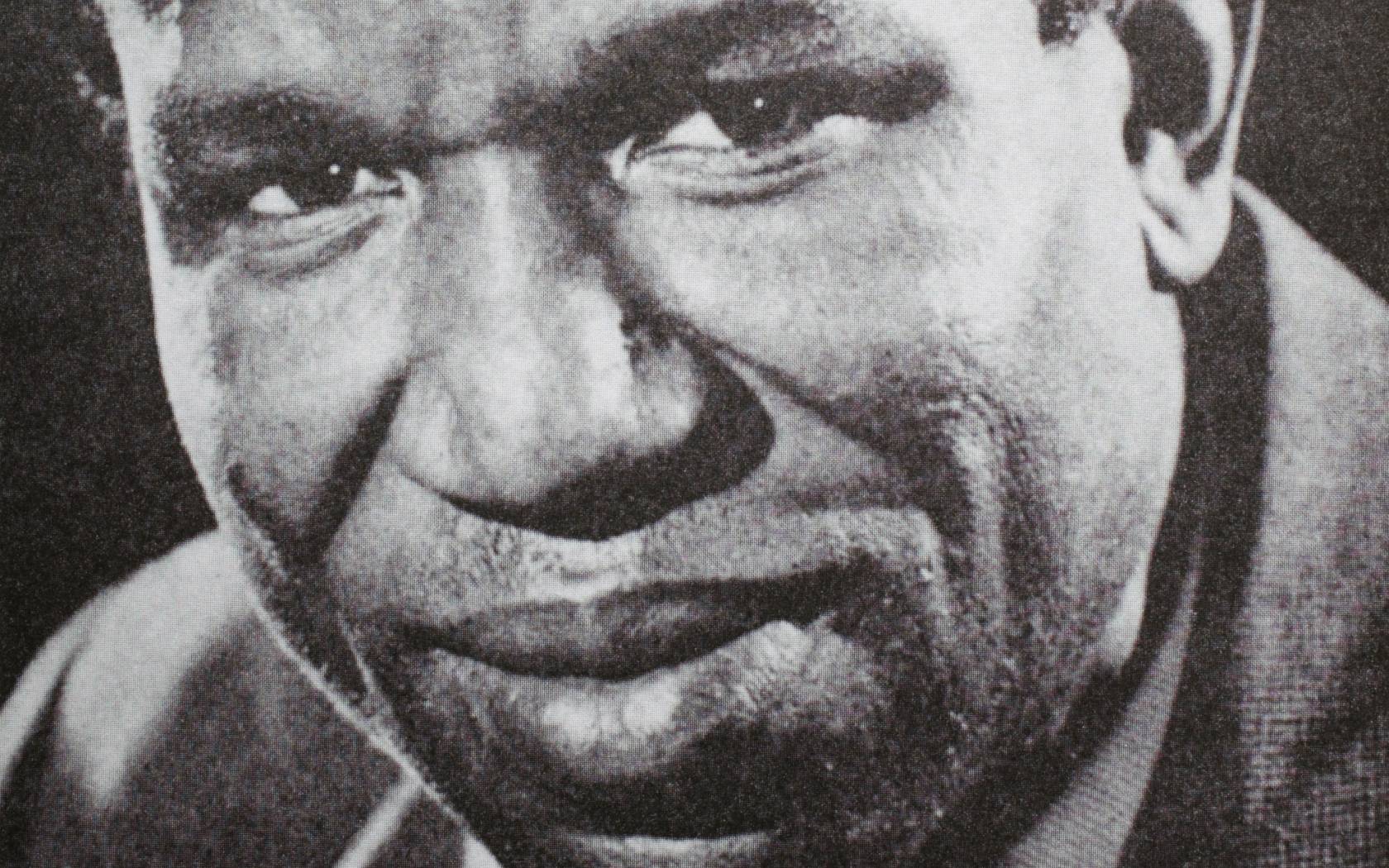
Cyprian Ekwensi
 Nigeria
Author•Broadcaster•Civil Servant
Also known as: C.O.D. Ekwensi, Chief Cyprian Ekwensi
Birthday
September 26, 1921
Birth Sign
Sagittarius
Birthplace
Minna, Niger State, Nigeria
Age
Died at 86
About
Chief Cyprian Odiatu Duaka Ekwensi was a Nigerian author, broadcaster, and civil servant whose work defined the chronicle of urban African life. He is widely recognized as the first major chronicler of Lagos, capturing the raw energy, social fragmentation, and colonial tensions of the city in his debut novel People of the City (1954). His career was uniquely multifaceted; before achieving global literary fame, he worked as a forestry officer and a pharmacist, professions that grounded his observational writing in the realities of ordinary Nigerians.
Ekwensi served as Nigeria's Director of Information during the Biafran War, a role that placed him at the center of the nation's political turmoil. Over his lifetime, he authored over forty books across various genres, including novels, short stories, and children's literature. His work extended beyond print; he was a prolific writer for radio and television, contributing significantly to the development of Nigerian broadcasting. Even decades after his passing, his estate continues to manage a growing catalog of intellectual property that remains essential reading for understanding post-colonial Africa.
Early Life & Background
Cyprian Ekwensi was born on September 26, 1921, in Minna, the capital of present-day Niger State, Nigeria. He was the son of an elephant hunter, a detail that imbued his biography with a mythic quality often reflected in his storytelling. Raised in the rural southwest of Nigeria, Ekwensi attended St. Gregory's College in Lagos for his secondary education. He pursued higher education at Ibadan University College (now the University of Ibadan), where he studied pharmacy.
Before turning to literature full-time, he practiced as a pharmacist and worked as a forestry officer in Nigeria. These early careers provided him with deep insights into the diverse strata of Nigerian society, from the rural hinterlands to the bustling urban centers. The experience of moving between these worlds gave him a unique perspective on the disconnect between traditional rural life and the rapidly modernizing cities. He began writing short stories while working as a pharmacist, using his spare time to observe the lives of people around him. This period of observation laid the groundwork for his future success, allowing him to craft narratives that felt authentic to the common man rather than the elite few.
Career Growth
Ekwensi's literary career began in earnest in the early 1950s. His breakthrough came with the publication of People of the City in 1954, which became a bestseller and established him as a voice for the masses. The novel offered an unflinching critique of colonial ideology and the rapid urbanization of Lagos, depicting the lives of migrants struggling to adapt to city life. Over his lifetime, he authored over forty books across various genres, including novels, short stories, and children's literature.
His work extended beyond print; he was a prolific writer for radio and television, contributing significantly to the development of Nigerian broadcasting. During the Nigerian Civil War (Biafran War), Ekwensi served as the Director of Information for the Federal Government, a high-stakes role involving propaganda and public communication during a period of national crisis. This tenure highlighted his versatility and deep commitment to his country's narrative. In the 1970s and 1980s, he continued to publish extensively, focusing on historical fiction and cultural themes. By the 1990s and 2000s, he remained an active literary figure, mentoring younger writers and participating in literary festivals. His influence on Nigerian literature is profound, often cited alongside giants like Chinua Achebe and Wole Soyinka as a foundational figure in African literature.
Career Timeline
Public Image & Style
Ekwensi stood as a representative of the 'writer for the masses.' His public image was that of a serious, observant intellectual who was deeply connected to the streets of Lagos. He did not cultivate a celebrity aesthetic; rather, his persona was built on his prose and his role as a documentarian of African life. He is often described as having a keen, almost journalistic eye for detail, which allowed him to capture the nuances of urban migration and social change.
His reputation was that of a man who understood the complexities of his country without needing to preach to it. He was respected by both the government and the literary establishment, serving in high office while maintaining his independence as a writer. This dual identity allowed him to navigate the political landscape of Nigeria with a level of authority that few authors possessed.
Fame & Fandom (iFAMOUS Rankings)
Cyprian Ekwensi's readership has never taken a formal name. There is no 'Beyhive' or 'Arianators' equivalent for the man who brought Lagos to life in prose. Instead, his fans are the students, academics, and devoted readers who keep his work in print and in curricula. They are the ones who, in August 2025, saw his autobiography and first novella finally released, decades after his death. They are the ones who watched the trailer for the $2 million animation adaptation of his work, a project that feels like the modern, estate-driven version of a fan campaign.
iFANN's Global Fame Engine has evaluated Ekwensi but he does not currently hold a placement in the published rankings, whether the Global Top 1,000 or any Top-100 scope list. That absence says less about his legacy and more about the nature of his fame: it is institutional and literary, not viral or spectacle-driven. No streets shut down when he spoke. No fainting fans. His iconic moments are textual, like the raw energy of People of the City or the colonial critique that still resonates.
What fame he has is the kind that endures in libraries and lecture halls, not in trending charts. His posthumous projects and the ongoing critical reassessments, such as the 2025 essay 'Echoes of the city, whispers of the soul,' show that his cultural weight is still growing, even if the rankings have not yet caught up.
Interesting Facts and Legends
Cyprian Ekwensi's life reads like one of his own novels. He was the son of an elephant hunter, a detail that adds a mythic quality to his biography. Before he became a writer, he worked as a forestry officer and later as a pharmacist, professions that seem far removed from the literary world but informed his keen observation of people and places. His training as a pharmacist gave him a unique perspective on health and medicine, which occasionally influenced his character development.
A story that fans still retell is the 2025 announcement of his autobiography and first novella, posthumously released. The idea of a lost early work surfacing decades later carries an almost romantic quality, as if a time capsule from a foundational author had been unearthed. Another significant moment came in August 2025, when a $2 million animation adaptation of his work was announced, with a trailer released to the public. This marked a major milestone in African literary adaptation, bringing his stories to a new generation in a fresh medium.
Ekwensi's legacy is built on his role as 'a writer for the masses,' a title that has stuck since his debut novel People of the City captured the raw energy of Lagos life. His work remains a touchstone for understanding urban Africa and colonial critique. Beyond his famous adult novels, he wrote extensively for children, a genre often overlooked in discussions of his 'serious' literary contributions.
Notable Quotes
“I wrote for the masses... I wanted to tell the story of the people who were moving to the city.”
Family & Personal Life
Public records regarding Cyprian Ekwensi's romantic relationships are sparse compared to modern celebrity profiles. Unlike contemporary figures whose dating histories are meticulously tracked by tabloids, Ekwensi maintained a relatively private personal life, consistent with the cultural norms of his generation and region. There are no widely documented accounts of multiple marriages, engagements, or high-profile flings in the public domain. Biographical sources focus primarily on his professional contributions and his identity as a father and community leader rather than his romantic history.
Consequently, specific details regarding partners' names, dates of marriage, or divorces are not available in credible biographical databases or news archives. He is known to have had children, though their identities and the specifics of his domestic life remain largely out of the public eye. As he passed away in 2007, his relationship status at the time of death was deceased.
Notable Connections
Relationships & Dating History
Public records regarding Cyprian Ekwensi's romantic relationships are sparse compared to modern celebrity profiles. Unlike contemporary figures whose dating histories are meticulously tracked by tabloids, Ekwensi maintained a relatively private personal life, consistent with the cultural norms of his generation and region. There are no widely documented accounts of multiple marriages, engagements, or high-profile flings in the public domain. Biographical sources focus primarily on his professional contributions and his identity as a father and community leader rather than his romantic history. Consequently, specific details regarding partners' names, dates of marriage, or divorces are not available in credible biographical databases or news archives. He is known to have had children, though their identities and the specifics of his domestic life remain largely out of the public eye. As he passed away in 2007, his relationship status at the time of death was deceased.
Death & Aftermath
Died
November 4, 2007 (aged 86)
Death Place
Enugu, Nigeria
Cause of Death
Natural causes
Chief Cyprian Odiatu Duaka Ekwensi passed away on November 4, 2007, in Enugu, Nigeria, at the age of 86. The cause of death was attributed to natural causes associated with old age, though specific medical details were not widely publicized by his family or official records. Tributes flowed immediately from literary peers who remembered his unique chronicle of African urban life, with Chinua Achebe notably championing his debut novel People of the City decades earlier. Although specific details of vigils or fan gatherings remain undocumented, his status as a giant of African literature ensured his legacy was celebrated in subsequent retrospectives for capturing the vibrant streets of the continent.
In the years following his death, his estate has remained active in preserving his contributions through Watson Little, who manages his publishing rights and literary assets. Notable developments include the announcement in August 2025 of a posthumous release of his autobiography and a first novella. His classic novel The Passport of Mallam Ilia is also set for a major animated film adaptation by Magic Carpet Studios, with a trailer released in August 2025 and investment opportunities highlighted earlier that year. These projects ensure that the works which defined a generation continue to reach new audiences long after the author's final days.
Net Worth (Estate Value)
$1.5 Million
iFANN Editorial Team estimate
As Ekwensi passed away in 2007, his net worth is now represented by the value of his estate. Specific financial figures for his personal wealth at the time of death are not publicly disclosed. However, the current value of his estate is driven by ongoing royalties, licensing deals, and new adaptations. The iFANN Editorial Team estimates the estate's value at approximately $1.5 million based on recent commercial activity.
Estate management is handled by Watson Little, who oversees his publishing rights and literary assets. Revenue streams include royalties from over 40 published books, rights sales for The Passport of Mallam Ilia (including the $2 million animation deal), and potential future releases of his autobiography. The involvement of a $2 million production deal suggests significant commercial viability. The estate is considered a valuable intellectual property asset in the African literary market, with continued critical reassessment driving interest in his work.
Awards Won (1)
While Ekwensi did not receive the specific international awards common to Western pop culture (such as Oscars or Grammys), he was highly decorated within Nigeria and the literary world. He was conferred the MFR (Member of the Order of the Federal Republic), a prestigious national honour by the Nigerian government, signifying his immense contribution to the nation's culture and literature. His work has been adopted into university curricula globally, serving as a primary text for understanding post-colonial African urbanism.
1970 · National Honour
Contribution to Literature and National Service
Known For
People of the City
1954 · Author
The Passport of Mallam Ilia
1962 · Author
Jagua Nana
1963 · Author
Keywords
Sources
Quick Facts
- Profession
- writer, publisher, children's writer
- Born
- September 26, 1921
- Birthplace
- Minna, Niger State, Nigeria
- Died
- November 4, 2007
- Death Place
- Enugu, Nigeria
- Gender
- Male
- Birth Sign
- Sagittarius
Personal Details
- Full Name
- Chief Cyprian Odiatu Duaka Ekwensi
- Education
- St. Gregory's College; University of Ibadan (Pharmacy)
Frequently Asked Questions
Who was Cyprian Ekwensi?
When did Cyprian Ekwensi die?
What is Cyprian Ekwensi's most famous book?
Did Cyprian Ekwensi have any children?
Are there any new projects about Cyprian Ekwensi?
Join the community
fans discussing