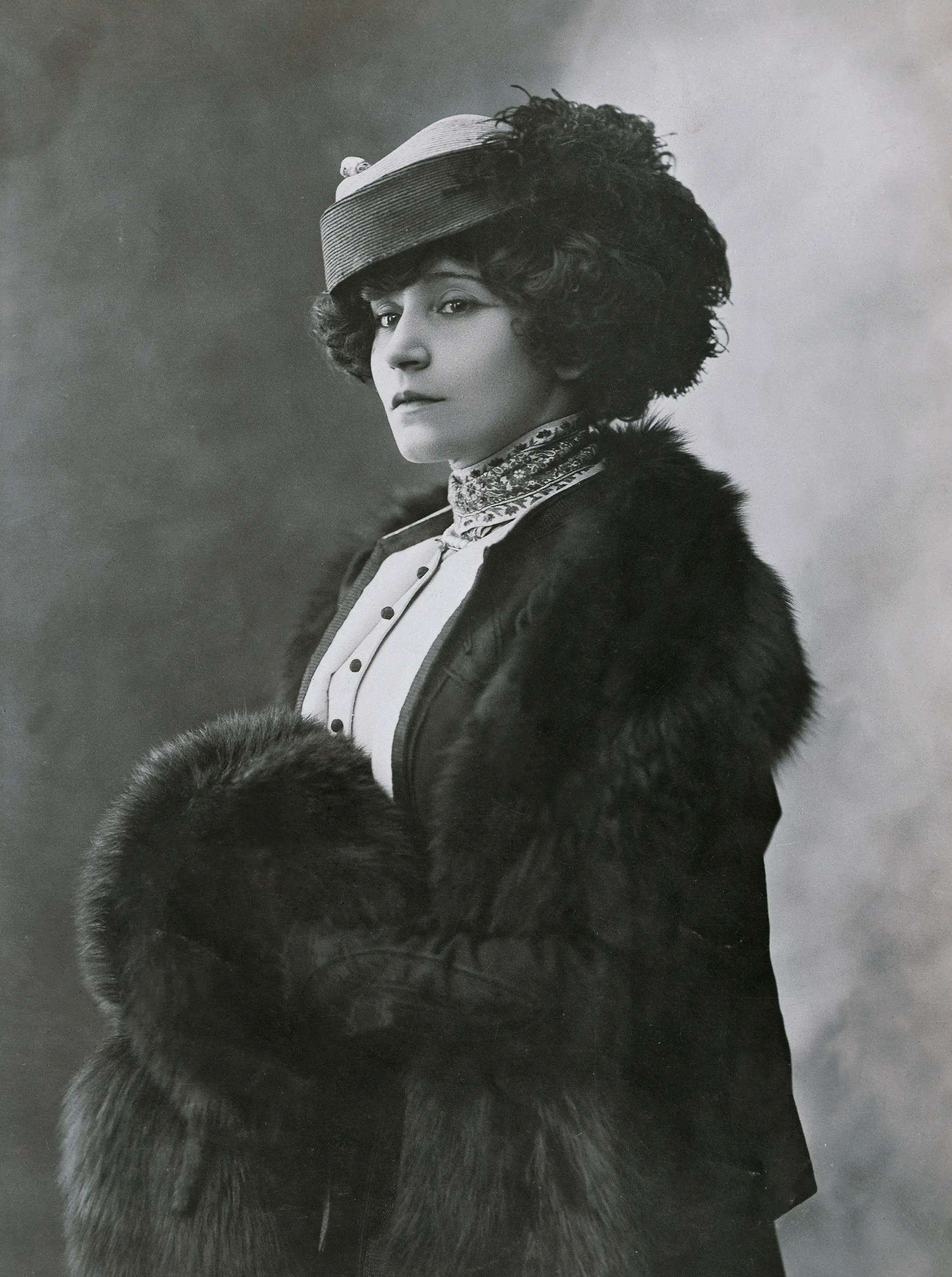
Colette
 France
Also known as: Sidonie-Gabrielle Colette, Sidonie Gabrielle Colette, Sidonie-Gabrielle-Claudine Colette, Colette Willy
Birthday
January 28, 1873
Birth Sign
Sagittarius
Birthplace
Saint-Sauveur-en-Puisaye, Yonne, France
Age
Died at 81
Height
5 ft 6 in (168 cm)
About
Sidonie-Gabrielle Colette was a pioneering French novelist, journalist, and performer whose work redefined the boundaries of female expression in the early 20th century. Born in 1873, she rose to prominence through her sensual prose and unflinching exploration of human desire, aging, and independence. Her most internationally renowned work is the novella Gigi, which became a global phenomenon after its adaptation into an Academy Award-winning film in 1958 and a hit Broadway musical in 1973. In France, she remains a cornerstone of literature, celebrated for her sensory-rich writing style that drew heavily from her rural upbringing.
Colette was also a trailblazer in claiming authorial autonomy. After spending her early career ghostwriting for her husband Willy, she fought to publish under her own name, becoming a symbol of female artistic independence. Her life was marked by three marriages and numerous high-profile relationships, reflecting the unconventional nature of her personal life. She died in 1954 at the age of 81, leaving behind a vast body of work that continues to influence modern storytelling and feminist literature.
Early Life & Background
Sidonie-Gabrielle Colette grew up on her family's estate in Saint-Sauveur-en-Puisaye, a rural village in the Burgundy region of France. Her childhood was defined by the natural world, where she spent hours exploring the countryside, an experience that would later infuse her fiction with vivid, earthy details. Her mother, Delphine, was a strict and traditional woman, while her father, Abel Colette, was more lenient but financially unstable. Colette received little formal education beyond primary school, relying instead on her father's extensive library and the local environment to shape her intellect and imagination.
Her path to a literary career began unexpectedly through marriage. In 1893, at the age of twenty, she wed Henry Gauthier-Villars, a music critic and publisher known by the pen name "Willy." Willy encouraged her to write, but he also exploited her talent, publishing her first four novels under his own name. From 1900 to 1906, Colette produced the wildly successful Claudine series, Claudine à l'école, Claudine à Paris, Claudine en ménage, and Claudine s'en va, all credited solely to Willy. During this period of ghostwriting, she also began performing as a mime and actress in music halls, adopting the stage name "La Vagabonde" (The Vagabond). This persona allowed her to explore themes of independence and female desire that were considered scandalous for the era, setting the stage for her future struggle for authorial recognition.
Career Growth
Colette's professional life was defined by a fierce struggle for artistic autonomy and innovation. After divorcing Willy in 1910, she reclaimed her name and published works under her own identity, starting with La Vagabonde (1910), a semi-autobiographical novel about a traveling performer. This was followed by Chéri (1920), a poignant exploration of an older woman's relationship with a younger man, and Le Blé en herbe (1923), which tackled adolescent sexuality. Her literary output continued to flourish throughout the 1920s and 1930s, establishing her as a leading voice in French literature.
In 1931, she achieved a historic milestone by becoming the first woman elected to the Académie Goncourt. Her most internationally renowned work, the novella Gigi (1944), tells the story of a young girl groomed to become a courtesan who eventually rejects that fate to marry her lover. Gigi was adapted into a highly successful Broadway musical in 1973 and an Academy Award-winning film in 1958, cementing her global legacy. Throughout her career, she also worked as a journalist, writing for various newspapers and magazines, and served as a correspondent during World War I. Her contributions to literature were recognized with the Grand Prix National des Lettres in 1946.
Career Timeline
Public Image & Style
Colette is portrayed as a bold, independent, and sensual writer who challenged societal norms. Her public image is one of resilience and creativity, often associated with the "New Woman" of the early 20th century. Her writing style is celebrated for its vivid descriptions and unflinching exploration of human emotions. She was known for her distinctive fashion sense, blending bohemian chic with classic French elegance, often seen wearing tailored suits and hats. Her public persona was one of a woman who refused to be confined by traditional roles, whether as a wife, mother, or artist.
Fame & Fandom (iFAMOUS Rankings)
Colette's afterlife is not measured in fan clubs or streaming campaigns, but in the quiet devotion of readers who still find her voice startlingly modern. There is no formal fandom name, no 'Coletterie' or 'Colette Crew', and no organized rallies or birthday billboards. Instead, her legacy lives in the pages of her novels and the academic conferences that dissect them. The BBC once called her 'the most beloved French writer of all time,' a title that resonates in every reprint of Gigi or The Tendrils of the Vine. Her readership is a diffuse but passionate congregation, united by a shared discovery of her sensual, unflinching prose.
As of September 2026, iFANN's Global Fame Engine has evaluated Colette, but she does not currently hold a placement in the published rankings, neither in the Global Top 1,000 nor in any Top-100 scope list. This absence says less about her cultural weight than about the engine's focus on living pop-culture figures; Colette's fame is of a different, more enduring kind. She is a cornerstone of French literature, a feminist icon whose ghostwriting battle with her husband Willy became the stuff of legend, dramatized in the 2018 film starring Keira Knightley. That story, of a woman forced to write under a man's name, then fighting to reclaim her own, has become the defining narrative of her life, retold in classrooms and biographies alike. No fainting crowds, no viral moments; just a steady, unshakeable presence in the literary canon.
Interesting Facts and Legends
Colette's life was as vivid as her prose. She was born in 1873 in Saint-Sauveur-en-Puisaye, and her first novels were published under her husband's pen name, 'Willy,' a deception she later fought to overturn. She worked as a mime and actress, scandalizing Paris with her on-stage kisses with another woman. Her 1944 novella Gigi inspired the 1958 film and the 1973 stage musical, cementing her international fame.
One of the most retold stories from her life involves her first husband, Henry Gauthier-Villars, who locked her in a room to force her to write. She later described the experience with wry humor, turning literary theft into a badge of resilience. Another legend holds that she was nominated for the Nobel Prize in Literature multiple times, though she never won, a fact her admirers still cite as a glaring oversight. Her final years were spent in a wheelchair, but she continued writing until her death in 1954, at 81. Today, her Paris apartment is a museum, and fans still leave notes and flowers at her door.
Notable Quotes
“I am a woman, and I know what it means to be a woman.”
“Love is the only thing that matters.”
“The past is never dead. It's not even past.”
Family & Personal Life
Colette's family dynamics played a significant role in shaping her life and work. She was the daughter of Delphine Colette and Abel Colette, living in a household where her mother's strictness contrasted with her father's financial instability. She had one child, Michel de Jouvenel, born in 1907 from her first marriage to Henry Gauthier-Villars. Michel later became a prominent writer and politician himself. Colette's relationship with her son was complex, particularly regarding his inheritance and the management of her estate after her death. She lived in Paris for much of her adult life, maintaining a residence that became a gathering place for intellectuals and artists. Her later years were spent in the company of her third husband, Maurice Goudeket, who cared for her as her health declined.
Notable Connections
Henry Gauthier-Villars, Henry de Jouvenel, Maurice Goudeket, Michel de Jouvenel, Jane Marnac, Suzanne Lenger
Relationships & Dating History
Colette's personal life was as dramatic and unconventional as her writing, characterized by three marriages and numerous high-profile relationships. Her first marriage was to Henry Gauthier-Villars, known as "Willy," from 1893 to 1910. They met through mutual friends in Paris. Their relationship was tumultuous; Willy was a dominant figure who controlled her early writing, locking her in rooms to force productivity. He also had affairs, including one with Colette's sister-in-law, which contributed to their separation. They divorced in 1910 after Colette realized she could no longer tolerate his control and infidelity. They had one son together, Michel de Jouvenel (born 1907).
Following her divorce from Willy, Colette married Henry de Jouvenel, a prominent politician and writer, in 1912. Their relationship was passionate but short-lived, ending in divorce in 1925 due to incompatibility and political differences. De Jouvenel remained a close friend and supporter of Colette's work. In 1935, she married Maurice Goudeket, a former naval officer and art dealer. Their marriage was stable and supportive, providing her with companionship during her final years. Goudeket managed her business affairs and cared for her as her health declined. There were no children from this marriage. Throughout these marriages, Colette was known for her open relationships with women, including the dancer Jane Marnac and the writer Suzanne Lenger. These relationships were often public knowledge and caused scandals. As of her death in 1954, she was widowed, having been married to Maurice Goudeket for nearly two decades.
- MarriedHenry Gauthier-Villars1893 - 1910First husband; co-wrote Claudine series; had one son.
- MarriedHenry de Jouvenel1912 - 1925Second husband; politician and writer; divorced due to incompatibility.
- MarriedMaurice Goudeket1935 - 1954Third husband; managed her affairs; married until her death.
Death & Aftermath
Died
August 3, 1954 (aged 81)
Death Place
Paris, France
Cause of Death
Declining health exacerbated by arthritis and vision loss
Sidonie-Gabrielle Colette passed away on August 3, 1954, at her home in the 1st arrondissement of Paris. For years prior to her death, she had withdrawn from public life as arthritis and severe vision loss limited her mobility and ability to write. Her final days were spent in quiet seclusion with her husband Maurice Goudeket, who managed her affairs and provided care during her decline. The literary community reacted with immediate and profound grief; tributes poured in from French institutions and fellow writers who honored her role in redefining female expression in literature.
Her funeral was a rare state event, granting her a distinction usually reserved for heads of state or national heroes. This honor reflected her immense cultural impact as the first woman elected to the Académie Goncourt. She was buried in the Cimetière de Montmartre, resting among other notable French figures. Following her death, her estate, initially managed by her son Michel de Jouvenel, ensured the protection of her intellectual property rights. The estate continues to generate revenue through book royalties, film adaptations like the 1958 Gigi, and stage productions, maintaining her legacy for new generations. No major estate disputes have marred her posthumous history, allowing her works to remain accessible and celebrated globally.
Net Worth (Estate Value)
$50 Million
iFANN Editorial Team estimate
As a historical figure deceased since 1954, Colette does not have a current net worth in the traditional sense. However, her estate continues to generate revenue. The Colette estate, managed initially by her son Michel de Jouvenel and subsequently by professional executors, has earned millions from book royalties, film and stage adaptations, and merchandise sales. Estimates suggest the estate generates between $1 million and $2 million annually, with a total accumulated value likely exceeding $50 million when adjusted for inflation and long-term licensing deals. The estate is managed by the Société des Auteurs et Compositeurs Dramatiques (SACD) in conjunction with her heirs. iFANN currently estimates Colette's estate value at approximately $50 Million.
Awards Won (4)
Colette received numerous distinctions throughout her career, including election to the Académie Goncourt in 1931, making her the first woman to hold this position. She was appointed Chevalier of the Légion d'honneur in 1926 and promoted to Officier in 1934. She won the Prix Femina in 1904 for Le Blé en herbe and received the Grand Prix National des Lettres in 1946. In 1954, she was granted a rare state funeral, a distinction usually reserved for heads of state or national heroes.
1931 · Member
Lifetime Achievement
1934 · Officer
Lifetime Achievement
Known For
Gigi
1944 · Novella Author
Chéri
1920 · Novel Author
La Vagabonde
1910 · Novel Author
Keywords
Sources
Quick Facts
- Profession
- novelist, ghostwriter, journalist
- Born
- January 28, 1873
- Birthplace
- Saint-Sauveur-en-Puisaye
- Died
- August 3, 1954
- Death Place
- 1st arrondissement of Paris
- Gender
- Female
- Spouse
- Maurice Goudeket, Henry Gauthier-Villars, Henry de Jouvenel
- Birth Sign
- Sagittarius
Personal Details
- Full Name
- Sidonie-Gabrielle Colette
- Height
- 5 ft 6 in (168 cm)
- Spouse
- Maurice Goudeket, Henry Gauthier-Villars, Henry de Jouvenel
- Children
- Michel de Jouvenel
- Education
- Primary school; self-educated via father's library
Frequently Asked Questions
What is Colette best known for?
Did Colette ever win the Nobel Prize?
How many times was Colette married?
What was Colette's real name?
Where did Colette die?
Similar People
Join the community
fans discussing