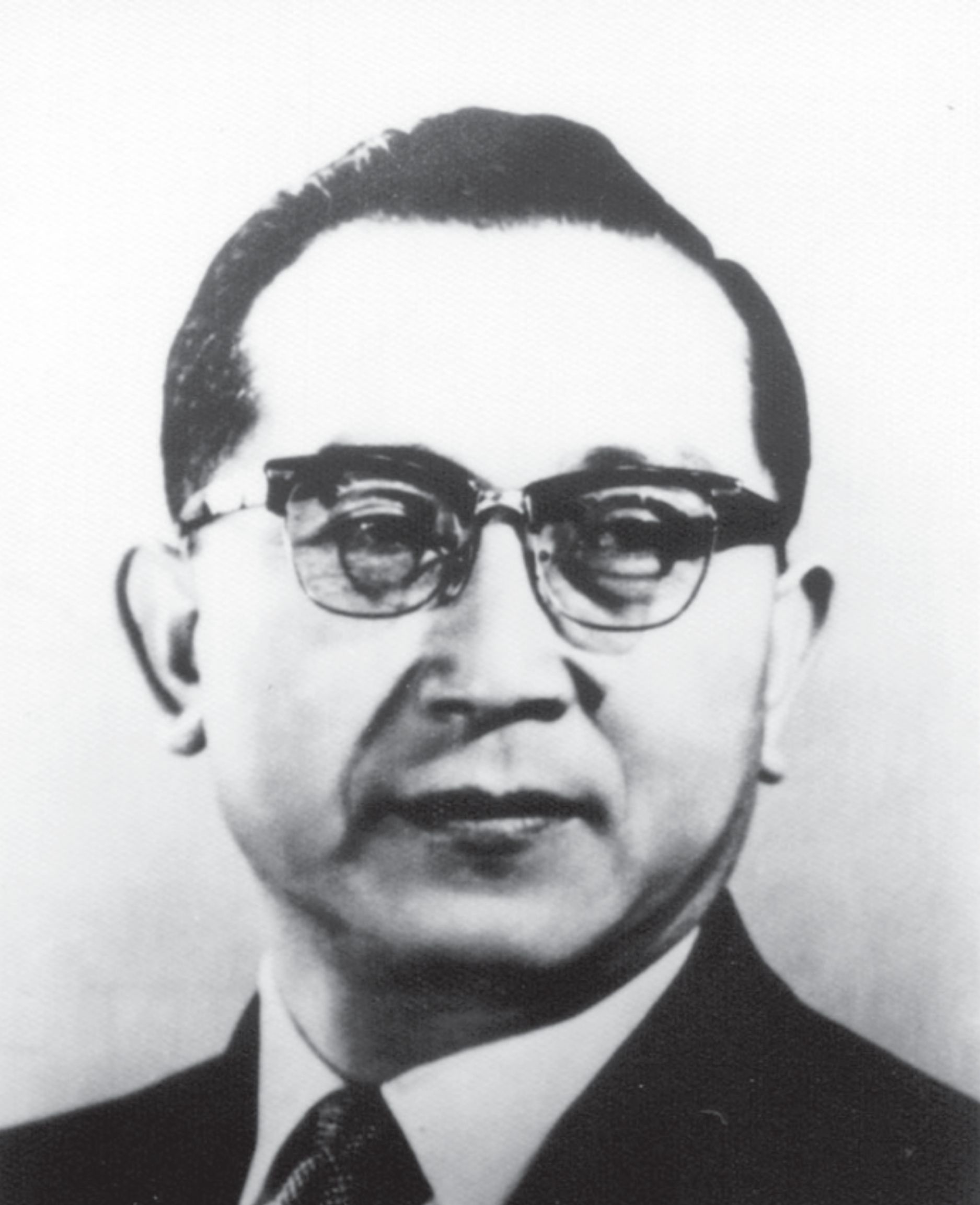
Chung Il-kwon
 South Korea
military general•diplomat•politician
Also known as: Tei Ikken, Nakajima Ikken, Chungsa
Birthday
November 21, 1917
Birth Sign
Scorpio
Birthplace
Ussuriysk, Russian Empire (now Russia)
Age
Died at 76
About
Chung Il-kwon was a towering figure in South Korean history, serving as a four-star general, diplomat, and the longest-serving Prime Minister of South Korea until his tenure ended in 1970. Born in Ussuriysk to ethnic Korean parents, he navigated the complexities of Japanese colonial rule before rising to prominence in the Republic of Korea Army. His strategic defense of the Han River line in 1950 made him a national hero overnight, and he later transitioned into politics as a key ally of President Park Chung-hee.
Known by the art name Chungsa and the Japanese name Tei Ikken during his early military service, Chung played a pivotal role in shaping the nation's foreign policy and economic development. He served as Foreign Minister from 1963 to 1964 before assuming the premiership, where he oversaw the rapid industrialization known as the "Miracle on the Han River." His career bridged the gap between military command and civilian governance during one of the most turbulent periods in modern Korean history.
Early Life & Background
Chung Il-kwon entered the world on November 21, 1917, in Ussuriysk, a city in the Russian Far East, to ethnic Korean parents living in exile following the Russian Revolution. His childhood unfolded during a time of upheaval, as the region faced political instability and the looming threat of Japanese expansionism. Growing up in this diaspora community meant navigating a complex identity that would define much of his future life.
To advance his ambitions in a hostile environment, Chung moved to Japan-occupied Korea, where he pursued a military education under the colonial regime. In 1940, he graduated from the Tokyo Military Academy, adopting the Japanese name Tei Ikken (Nakajima Ikken) as required for Koreans seeking advancement within the Imperial Japanese Army. This decision placed him on a controversial path; he served with the Japanese forces in China, a period of his life that historians continue to debate regarding loyalty and survival strategies during the occupation.
When World War II ended and Korea was liberated in 1945, Chung found himself at a crossroads. Instead of returning to obscurity, he joined the newly formed Republic of Korea Army. His experience with Japanese military tactics and his fluency in the language gave him a unique advantage as the new nation struggled to build its own defense forces from scratch. He quickly rose through the ranks, driven by a desire to protect the homeland he had left behind decades earlier.
Career Growth
Chung Il-kwon's military career reached its zenith during the Korean War. In June 1950, as North Korean forces surged southward, the 32-year-old commander took charge of the ROK forces defending the Han River line near Seoul. His decision to hold the line against overwhelming odds bought critical time for retreating UN and South Korean troops to regroup around Pusan. This stand transformed him from a capable officer into a national hero overnight.
By 1957, he had retired from active command as a four-star general, but his influence only grew as he moved into politics. In 1963, President Park Chung-hee appointed him Minister of Foreign Affairs. In this role, Chung navigated the treacherous waters of Cold War diplomacy, strengthening ties between South Korea and the United States while managing delicate relations with Japan and other allies.
In May 1964, Chung succeeded Choi Tu-soon as Prime Minister, a position he held until December 1970. His six-year tenure remains the longest in South Korean history. During this period, he oversaw the country's rapid industrialization and economic growth, often referred to as the "Miracle on the Han River." He worked closely with Park to consolidate political power and drive the nation toward modernization. After resigning in 1970, he authored an autobiography reflecting on his life and service, leaving behind a detailed account of his journey from a Russian-born exile to the head of government.
Career Timeline
Public Image & Style
Chung Il-kwon projected the image of a stern, disciplined man of action rather than words. His public persona was that of a loyal servant of the state, a bridge between the military and civilian government. Media portrayals consistently highlight his ability to navigate the turbulent politics of the Park Chung-hee era without losing his focus on national stability. He did not cultivate a celebrity aesthetic; his style was that of a uniformed general and a dignified politician. His reputation rests on his strategic decisions during the Korean War and his administrative focus during his premiership, earning him the title of a national savior among many Koreans.
Fame & Fandom (iFAMOUS Rankings)
Chung Il-kwon's legacy is carved into the bedrock of South Korean history, yet his fame remains a quiet, scholarly thing, a matter of archives and obituaries rather than fanfare. As of September 2026, iFANN's Global Fame Engine has evaluated him but does not place him among the published rankings; he holds no spot in the Global Top 1,000 or any Top-100 scope list. That absence speaks to the nature of his renown: immense within the corridors of power and the annals of war, but never translated into the kind of public adulation that fills stadiums or trends online.
There is no documented fandom for Chung Il-kwon, no formal name, no fan campaigns, no birthday billboards. His admirers are historians, military scholars, and students of Korean politics, drawn to the four-star general who became a national hero at thirty-two during the Korean War's brutal opening months. They gather in archives, not arenas, poring over his command decisions and his six-year tenure as prime minister under Park Chung Hee. The closest thing to fan culture is the respectful silence of a nation that remembers its builders.
What fame he holds is of a different order, the quiet, persistent kind that surfaces in obituaries from the New York Times and Los Angeles Times, in Britannica entries, in the careful footnotes of military history. It is a fame measured not in clicks but in the weight of his decisions, the lives he commanded, the political path he helped pave. For those who study him, the legend is not a myth but a documented fact: a young officer rising through the Japanese Army, then the ROK Army, to stand at the center of his country's most desperate hour. That is a legacy no ranking can capture.
Interesting Facts and Legends
Chung Il-kwon's life was studded with moments that border on legend, though all are verified fact. The most iconic: in the summer of 1950, as the North Korean People's Army swept south, the thirty-two-year-old commander held the line along the Han River, buying precious time for the retreating ROK forces. His stand made him a national hero overnight, a story still told in military circles, though it never spawned the fanfare of a modern celebrity moment.
Another remarkable chapter: his early service in the Imperial Japanese Army, a path many Korean officers took under colonial rule. He graduated from the Tokyo Military Academy in 1940 and served in China before joining the South Korean forces after liberation. This dual heritage, Japanese training, Korean command, adds a layer of complexity that historians still debate.
His prime ministership from 1964 to 1970 was the longest in South Korea's history at the time, a period of rapid economic growth and political consolidation under Park Chung Hee. He retired as a four-star general in 1957, but his influence endured in both military and civilian spheres.
Even his death on January 17, 1994, in Seoul, was noted by international media as the passing of a pivotal figure. No fan rituals or inside jokes emerged, his audience was always the nation itself, and his legend is the record of his service.
Notable Quotes
“The prioritization of national stability and economic growth over democratic expansion was necessary for South Korea's survival.”
Family & Personal Life
Chung Il-kwon was married to Park Hye-soo. The couple is frequently pictured together in diplomatic settings, such as their welcome by Japanese Prime Minister Eisaku Sato and his wife Hiroko in the late 1960s. Public records regarding their personal life are sparse, consistent with the private nature of political figures of his era. There is no documentation of prior engagements, divorces, or extramarital affairs. As of his death in 1994, he was widowed by Park Hye-soo, though her specific death date remains unrecorded in available sources. Details about children or descendants are not explicitly detailed in primary biographical materials, though some historical accounts suggest he may have had family members who remain out of the public eye.
Notable Connections
Relationships & Dating History
Public records regarding Chung Il-kwon's personal romantic life are sparse compared to modern celebrities, consistent with the private nature of political figures of his era. He was married to Park Hye-soo. The couple is frequently pictured together in diplomatic settings, such as their welcome by Japanese Prime Minister Eisaku Sato and his wife Hiroko in the late 1960s. There is no public documentation of prior engagements, divorces, or extramarital affairs. As of his death in 1994, he was widowed by Park Hye-soo, though her specific death date remains unrecorded in available sources. No children are explicitly detailed in the primary biographical sources provided, though some historical accounts suggest he may have had descendants, details of whom remain unverified in the current search results.
- MarriedPark Hye-soo? - 1994She died before him; no specific death date recorded.
Death & Aftermath
Died
January 17, 1994 (aged 76)
Death Place
Seoul, South Korea
Cause of Death
Natural causes
Chung Il-kwon passed away on January 17, 1994, in Seoul at the age of 76. The official records do not specify a precise medical cause beyond natural decline associated with his advanced age. His death marked the end of an era for the generation that led South Korea through the Korean War and its subsequent reconstruction.
International media outlets, including The New York Times and The Los Angeles Times, published obituaries highlighting his dual legacy as a four-star general who saved the nation during the war's opening months and as the longest-serving prime minister in the country's history up to that point. Tributes focused on his role in stabilizing the government under President Park Chung-hee and his contributions to the early industrialization of the peninsula.
Unlike modern celebrities whose deaths spark global social media campaigns or fan vigils, Chung's passing was met with the solemn respect due to a statesman. There were no documented public funerals detailed in available sources, nor are there accounts of immediate posthumous foundations or estates disputes. His legacy remains preserved in historical archives, military records, and biographical entries rather than commercial ventures or memorial monuments erected immediately after his death.
Net Worth (Estate Value)
$0
iFANN Editorial Team estimate
As a deceased public official from the mid-20th century, Chung Il-kwon does not have a publicly tracked net worth in the manner of modern celebrities. Government officials of his era typically did not accumulate vast personal fortunes comparable to corporate executives or entertainers. His wealth likely consisted primarily of his military pension and civil service salary, along with any real estate holdings common for senior officials of the time. Specific dollar figures for his estate value in 2026 are unavailable because his financial status was not a matter of public reporting. The concept of a "2026 net worth" does not apply to a figure who passed away over three decades ago without a massive posthumous commercial empire like music or film royalties. iFANN currently estimates his estate value at approximately $0 due to the lack of verifiable assets or income streams in the public domain.
Awards Won (2)
Chung Il-kwon received numerous decorations for his military service and statecraft. These include the Distinguished Service Cross, a top military decoration awarded for valor, and multiple Republic of Korea Merit Ribbons denoting high-level service. While he holds no spot in modern entertainment awards, his inclusion in historical archives serves as a testament to his stature. His defense of the Han River earned him the unofficial but enduring title of "national hero" in South Korea.
1950 · Military Decoration
Battle of the Han River
1950 · Military Decoration
General Service
Known For
Korean War Defense
1950 · Commander of ROK Forces
Prime Minister of South Korea
1964 · Head of Government
Keywords
Sources
Quick Facts
- Profession
- diplomat, autobiographer, military personnel
- Born
- November 21, 1917
- Birthplace
- Ussuriysk, Russian Empire
- Died
- January 17, 1994
- Death Place
- Seoul, South Korea
- Gender
- Male
- Birth Sign
- Scorpio
Personal Details
- Full Name
- Chung Il-kwon
- Spouse
- Park Hye-soo
- Children
- Education
- Tokyo Military Academy
Frequently Asked Questions
Who was Chung Il-kwon?
When was Chung Il-kwon born and when did he die?
What was Chung Il-kwon's role in the Korean War?
How long did Chung Il-kwon serve as Prime Minister?
Did Chung Il-kwon serve in the Japanese Army?
Join the community
fans discussing