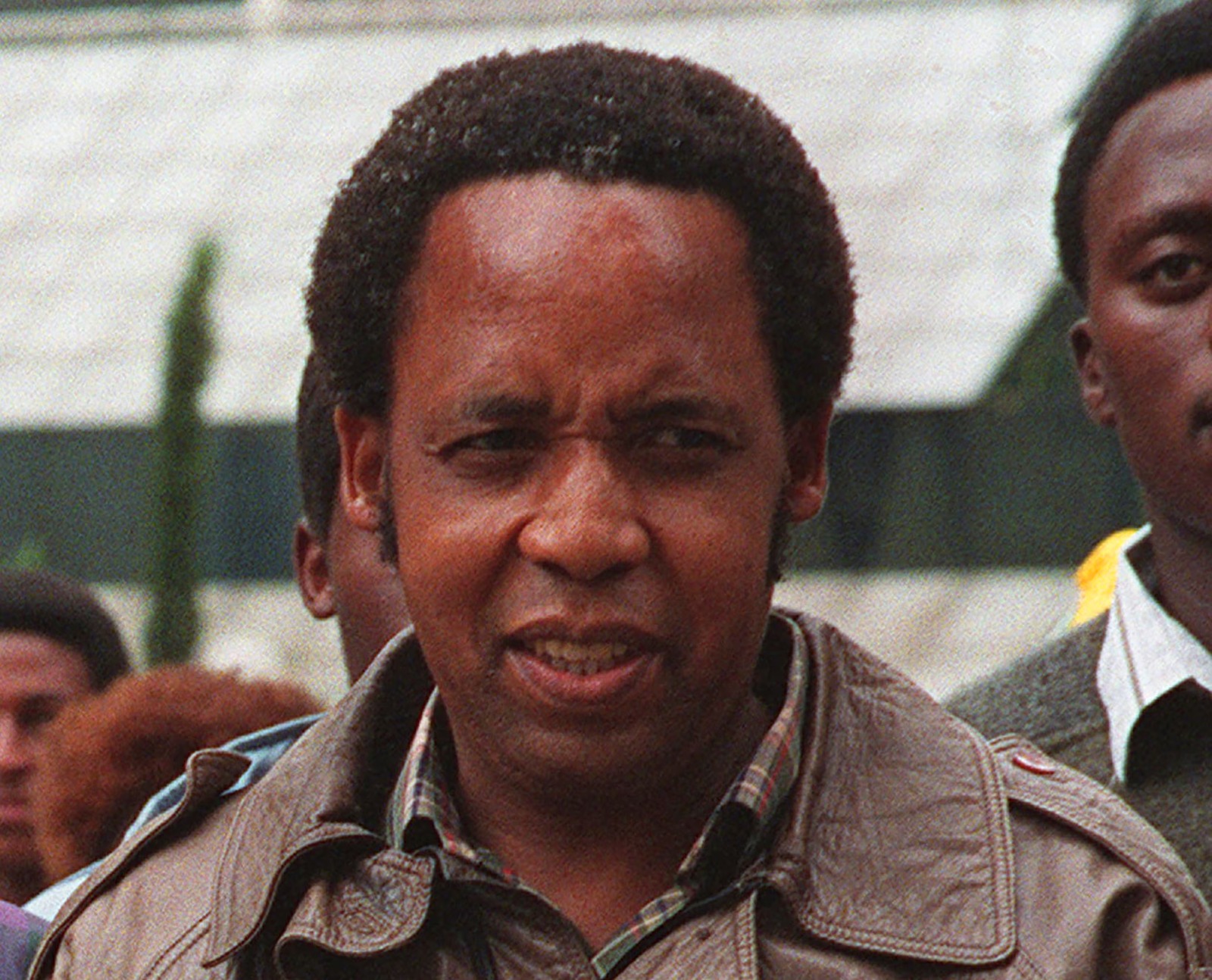
Chris Hani
 South Africa
politician•revolutionary•military commander
Also known as: Martin Thembisile Hani, Martin Tembisile Hani
Birthday
June 28, 1942
Birth Sign
Sagittarius
Birthplace
Sabalele, Cofimvaba, Transkei (now Eastern Cape), South Africa
Age
Died at 50
About
Chris Hani was a South African revolutionary, military commander, and politician who became one of the most iconic figures in the struggle against apartheid. Born Martin Thembisile Hani on June 28, 1942, in the rural village of Sabalele, he dedicated his life to dismantling the oppressive system. He held significant leadership positions, notably serving as the leader of the South African Communist Party (SACP) and as chief of staff for uMkhonto we Sizwe (MK), the armed wing of the African National Congress (ANC). His unwavering opposition to apartheid made him a powerful symbol of resistance for many South Africans.
Hani was assassinated on April 10, 1993, leaving behind a legacy that accelerated negotiations toward the 1994 democratic elections. His charisma and direct approach made him a bridge between the militant youth and the broader population, often cited as second only to Nelson Mandela in public support during the early 1990s. He remains a central figure in South African history, remembered for his strategic acumen and deep commitment to Black Marxism.
Early Life & Background
Chris Hani grew up in the rural village of Sabalele, located in the Cofimvaba district of the Transkei. His childhood was marked by the harsh realities of apartheid segregation, with his father working as a migrant laborer, leading to periods of separation that shaped his understanding of economic exploitation. At Lovedale School, a historic institution known for producing black leaders, he was exposed to radical political ideas and began organizing protests against pass laws. His time at the University of Fort Hare further solidified his ideological stance, where he earned a BA in Latin and English before his studies were interrupted by activism.
In 1963, Hani was expelled from Fort Hare due to his refusal to accept the university's compromise with the apartheid government. This expulsion forced him into underground activities, marking the beginning of his life as a fugitive and revolutionary. Following the Sharpeville Massacre in 1960, he joined the African National Congress (ANC) and its armed wing, uMkhonto we Sizwe (MK), eventually fleeing South Africa to avoid arrest. He underwent military training in Tanzania and the Soviet Union, rising through the ranks to become a key strategist in the liberation movement.
Career Growth
Hani's career was defined by his dual role as a military strategist and a political leader. In 1969, he was appointed Chief of Staff of uMkhonto we Sizwe, becoming the youngest person to hold this position. He reorganized MK's structures and expanded its operational capacity, leading sabotage campaigns and guerrilla warfare against the apartheid regime throughout the 1970s and 1980s. His leadership was characterized by strategic acumen and a deep commitment to Black Marxism, which he articulated as essential for the liberation movement's renewal.
In 1991, Hani returned to South Africa as part of the ANC's unbanning process. He played a crucial role in negotiating the transition to democracy and emerged as one of the most popular leaders within the Congress Alliance. By 1992-1993, he was widely regarded as a bridge between the militant youth and the broader population, often cited as second only to Nelson Mandela in public support. His assassination in 1993 transformed him into a national martyr, galvanizing the final push for liberation and accelerating the path to the 1994 democratic elections.
Career Timeline
Public Image & Style
Chris Hani is portrayed as a charismatic, principled, and fearless leader. Media coverage emphasizes his commitment to justice, his strategic mind, and his willingness to sacrifice his life for the cause. His image is often associated with the struggle for freedom and equality. He was known for his direct approach and ability to connect with young activists, earning him the nickname "Comrade Chris." His speeches were legendary for their passion and clarity, often inspiring crowds to action.
Fame & Fandom (iFAMOUS Rankings)
Global attention to Martin Thembisile Hani remains a measured but enduring phenomenon, tracked across decades of historical memory and contemporary political discourse. As documented in the September 2026 cycle of the iFANN Global Fame Rankings, which monitors worldwide visibility through media coverage and consumption patterns, Hani holds specific standing among notable figures. He is currently ranked as the 57th most famous person in South Africa, a position he has maintained from the previous cycle, and stands as the 63rd most famous person from South Africa. These placements reflect his status not as a transient celebrity but as a permanent fixture in national consciousness.
Regarding his audience, there is no formal fandom name or organized fan club structure associated with him; instead, his legacy is sustained by institutional commemoration within the African National Congress, the South African Communist Party, and the Congress of South African Trade Unions. This following engages in annual remembrances on April 10th and June 28th rather than commercial campaigns or digital rituals, maintaining a reverence that transcends typical pop culture engagement.
Interesting Facts and Legends
Chris Hani was a proponent of Black Marxism, advocating for a synthesis of Marxist theory with the specific needs of the African liberation struggle. For many years, he operated in total secrecy, using aliases and moving frequently to evade capture. Despite his high profile, he was known for his ability to connect with young activists, earning him the nickname "Comrade Chris." His speeches were legendary for their passion and clarity, often inspiring crowds to action. One notable speech at a rally in Soweto in 1992 is remembered for its call for unity and resistance. His image and words continue to inspire generations of activists, making him a symbol of sacrifice and dedication.
Notable Quotes
“The people shall govern.”
“We must unite the masses to overthrow the apartheid regime.”
“The struggle is not over; it is just beginning.”
Family & Personal Life
Chris Hani was married to Dimpho Hani (née Dimpho Mthethwa). They met during his early days in the struggle, and their marriage was a partnership rooted in shared political ideals. The couple had five children together: Thembekile, Zwelakhe, Lungisa, Ntsiki, and Lindiwe. Dimpho Hani has remained a prominent figure in South African society, continuing her husband's legacy through various advocacy roles. There is no public record of any other romantic relationships or marriages prior to his union with Dimpho; their relationship is widely documented as a lifelong commitment.
Notable Connections
Nelson Mandela, Oliver Tambo, Joe Slovo, Dimpho Hani, Janusz Waluś, Clive Derby-Lewis
Relationships & Dating History
Chris Hani was married to Dimpho Hani (née Dimpho Mthethwa). They met during his early days in the struggle, and their marriage was a partnership rooted in shared political ideals. The couple had five children together: Thembekile, Zwelakhe, Lungisa, Ntsiki, and Lindiwe. Dimpho Hani has remained a prominent figure in South African society, continuing her husband's legacy through various advocacy roles. There is no public record of any other romantic relationships or marriages prior to his union with Dimpho; their relationship is widely documented as a lifelong commitment. The relationship ended with his assassination in 1993.
- MarriedDimpho Hani1968 - 1993Met during the anti-apartheid struggle; raised five children together.
Death & Aftermath
Died
April 10, 1993 (aged 50)
Death Place
Boksburg, Gauteng, South Africa
Cause of Death
Homicide by gunshot wounds
Chris Hani died on April 10, 1993, in the driveway of his home in Dawn Park, Boksburg, Johannesburg. The General Secretary of the South African Communist Party and Chief of Staff of Umkhonto we Sizwe was shot dead by Janusz Waluś at approximately 10:00 AM after arriving from work. The cause of death was ruled homicide due to gunshot wounds, with an immediate arrest of the shooter and a subsequent investigation confirming that Clive Derby-Lewis provided the weapon and address for the premeditated plot. Following the assassination, riots erupted across major cities including Soweto, Cape Town, and Durban, prompting Nelson Mandela to appeal for calm on national television. A formal inquest led to the conviction of both perpetrators in 1993, resulting in death sentences that were later commuted to life imprisonment following the abolition of capital punishment in 1995.
Their parole applications faced decades of litigation, culminating in a 2017 High Court ruling that was overturned by the Constitutional Court in 2019. Millions attended Hani's funeral on April 14, 1993, at Soccer City stadium, where he was buried at Orlando West Cemetery under flags of the ANC, SACP, and MK. Posthumous honors include the renaming of Chris Hani Baragwanath Hospital and the establishment of the Chris Hani District Municipality, while the annual Day of Remembrance is observed on April 10 to mark his legacy.
Net Worth (Estate Value)
$0
iFANN Editorial Team estimate
As a political activist and revolutionary, Chris Hani did not accumulate personal wealth in the traditional sense. His estate value is not applicable in terms of liquid assets, as he lived a life of modest means dedicated to the cause. Any financial resources were directed toward the movement. Posthumous earnings from licensing deals, book royalties, or merchandise are managed by the state or family trusts, but no significant private net worth exists. iFANN currently estimates Chris Hani's net worth at approximately $0, reflecting his dedication to public service over personal accumulation.
Awards Won (2)
Chris Hani received posthumous honors including the Order of Luthuli in Silver (2008) and recognition as a National Hero of South Africa. Various universities have conferred honorary degrees upon him posthumously, though specific details are often tied to institutional commemorations rather than formal award ceremonies.
2008 · National Honor
Contribution to the struggle against apartheid
Posthumous · State Recognition
Pivotal role in the liberation movement
Known For
Struggle Against Apartheid
1960-1993 · Revolutionary Leader
uMkhonto we Sizwe
1969-1993 · Chief of Staff
South African Communist Party
1991-1993 · General Secretary
Keywords
Sources
Quick Facts
- Profession
- politician, revolutionary, military commander
- Born
- June 28, 1942
- Birthplace
- Sabalele, Cofimvaba, Transkei
- Died
- April 10, 1993
- Death Place
- Boksburg, Gauteng
- Gender
- Male
- Spouse
- Dimpho Hani
- Birth Sign
- Sagittarius
Personal Details
- Full Name
- Martin Thembisile Hani
- Spouse
- Dimpho Hani
- Children
- Thembekile Hani · Zwelakhe Hani · Lungisa Hani · Ntsiki Hani · Lindiwe Hani
- Education
- Lovedale School; University of Fort Hare (BA in Latin and English)
Frequently Asked Questions
Who was Chris Hani?
How did Chris Hani die?
What was Chris Hani's role in the ANC?
Why is Chris Hani important today?
Does Chris Hani have a family?
Similar People
Join the community
fans discussing