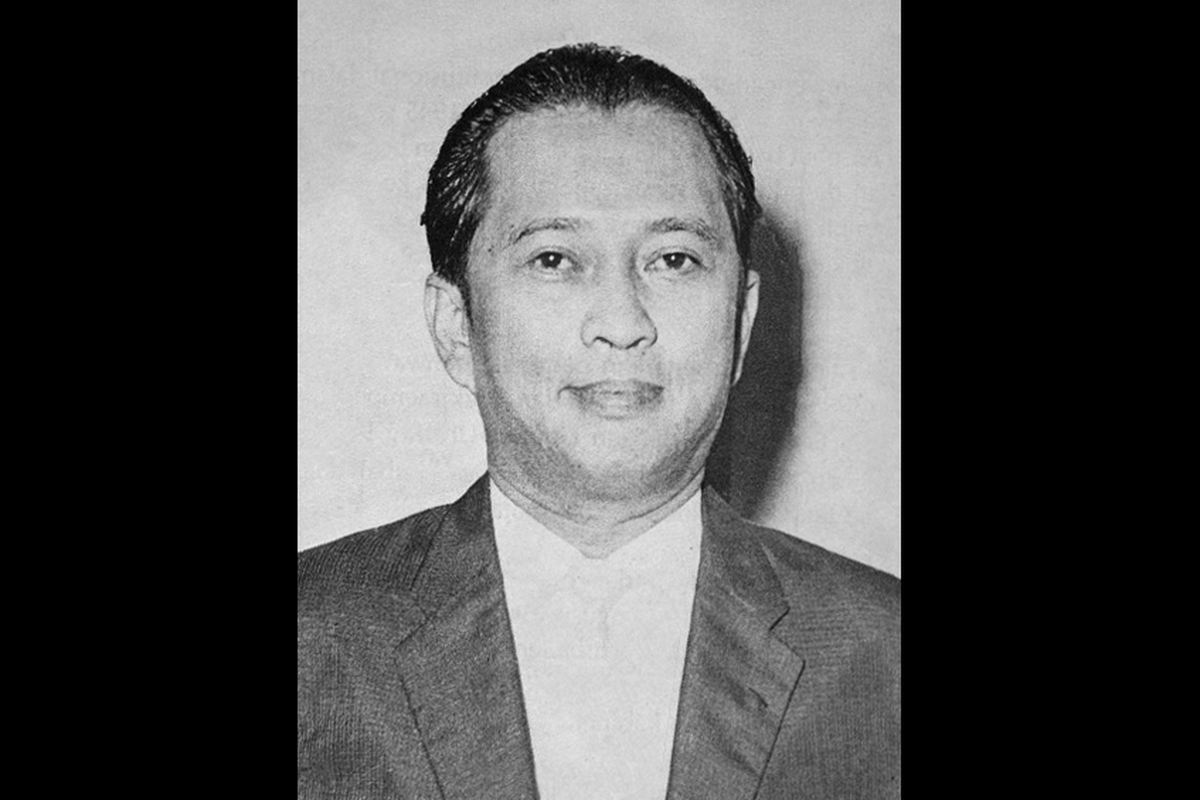
Chairul Saleh
 Indonesia
Also known as: Chaerul Saleh, Datuk Paduko Rajo
Birthday
September 13, 1916
Birth Sign
Virgo
Birthplace
West Sumatra
Age
Died at 50
About
Chairul Saleh was an Indonesian politician and jurist who served as deputy prime minister under President Sukarno. Born on September 13, 1916, in West Sumatra, he carried the traditional Minangkabau title Datuk Paduko Rajo. Saleh is remembered as a fiery nationalist who helped push the older generation toward independence in 1945.
His political career peaked during the 1950s and early 1960s as one of Sukarno's most trusted confidants. He advocated for building Indonesia's heavy industry and petroleum sector, earning later recognition as a hero of national oil mining. Saleh's fortunes declined after the September 30, 1965 coup attempt, and he died on February 8, 1967, at age 50. He is buried at Karet Bivak Cemetery in Central Jakarta.
Early Life & Background
Chairul Saleh grew up in the Minangkabau heartland of West Sumatra, a region known for producing many of Indonesia's political leaders. His honorific Datuk Paduko Rajo signals his family's standing in the matrilineal customary system. He studied law, training as a jurist, and became active in the nationalist movement during the late colonial era.
In the 1930s and 1940s, Saleh aligned with the radical wing of the independence movement. After Japan's surrender in 1945, he joined the young activists who believed independence had to be declared immediately. On August 16, 1945, he participated in the Rengasdengklok Incident, in which Sukarno and Hatta were taken to Rengasdengklok to pressure them into action. Saleh was among those who urged Sukarno to proclaim independence the next day.
Career Growth
After independence, Saleh played an active role in the Indonesian National Revolution from 1945 to 1949. He lived in the Netherlands from 1952 to 1953, but was expelled and returned to Indonesia. In 1955, he joined Sukarno's inner circle of advisers.
Saleh rose to the position of deputy prime minister, handling economic and political affairs during a turbulent period that included the West New Guinea dispute and the Malaysia confrontation. He was a vocal proponent of developing Indonesia's oil industry as the financial foundation for heavy industry. In late September 1965, he led a 45-person delegation to China for that country's national day celebrations. The September 30 coup attempt soon after triggered his political decline, and he was sidelined as Suharto's New Order took hold.
Career Timeline
Public Image & Style
Chairul Saleh is remembered in Indonesian historiography as a fiery nationalist and revolutionary, one of the young activists who pushed the older generation toward independence in 1945. His public image is that of a Sukarno loyalist and radical nationalist who fell with the old order after 1965. Indonesian historical discourse treats him as a patriot whose contributions to independence are acknowledged despite his later political eclipse. He is not a figure with a commercial fandom or signature aesthetic; his legacy is civic and historical.
Fame & Fandom (iFAMOUS Rankings)
Chairul Saleh has no fandom in the modern sense, no fan clubs, no hashtag campaigns, no birthday billboards. He was a mid-century Indonesian revolutionary, not a pop star, and the crowds he moved were political, not cultural. His audience today is a narrow one: historians, students of Indonesian nationalism, and the occasional reader of independence-era biographies. They do not gather under a banner or a name; they simply remember.
In August 2026, iFANN's Global Fame Engine evaluated Chairul Saleh and found that he does not currently hold a placement in the published rankings. He is neither in the Global Top 1,000 nor in any Top-100 scope list. That is a quiet verdict for a man who once helped force a nation into existence. His fame is archival, not metric, preserved in state records and commemorative ceremonies rather than in search traffic or social media buzz.
What fame he retains is historical and specific. In Indonesia, he is a name in the founding story, a face in the pantheon of independence heroes. But the engine that measures global renown, scanning media coverage and consumption signals worldwide, finds no lasting echo. He is not a figure who trends or resurfaces in cultural memory; he is a footnote in a revolution, remembered by those who study the footnote.
Interesting Facts and Legends
Chairul Saleh was one of the young radicals behind the Rengasdengklok Incident, the bold move that saw Sukarno and Hatta spirited away to force an immediate declaration of independence. His honorific, Datuk Paduko Rajo, is a traditional Minangkabau title marking his high standing in West Sumatran customary society.
He championed Indonesia's petroleum industry as the bedrock for heavy industry, a prescient vision given the nation's later oil wealth. With political ally Hasjim Ning, he co-founded a media outlet to counter communist influence, a reflection of his ideological battles during the Sukarno era.
Saleh died at just 50, having witnessed the collapse of the political order he helped build. His death in 1967 came after the September 30, 1965 coup attempt, which ended his career and his world. A story still told about him is his insistence, as a fiery youth, that Indonesia must declare independence without delay, pushing the older generation toward the proclamation that changed everything.
Notable Quotes
“To build heavy industry there must be capital, and the foundations of that capital must be obtained.”
Family & Personal Life
Chairul Saleh was married to Yohana Siti Menara Saidah. The couple was married at the time of his death in 1967. Details about his children and extended family are not widely documented, but his traditional Minangkabau background and status as a national figure would have placed his family within Indonesia's revolutionary-era political elite.
Notable Connections
Chairul Saleh was closely associated with President Sukarno, serving as his deputy prime minister and trusted adviser. He also worked alongside Mohammad Hatta, whom he urged to declare independence in 1945. His political ally Hasjim Ning co-founded a media outlet with him to counter communist influence.
Relationships & Dating History
Historical records from mid-20th century Indonesia do not provide the detailed romantic chronology common in contemporary celebrity coverage. The only documented relationship is his marriage to Yohana Siti Menara Saidah, who was his spouse at the time of his death on February 8, 1967. Details about how they met and their courtship are not available in sourced materials.
- MarriedYohana Siti Menara Saidah? - 1967Married at the time of Saleh's death in 1967.
Death & Aftermath
Died
February 8, 1967 (aged 50)
Death Place
Unknown
Cause of Death
Unknown
The official record confirms that Chairul Saleh passed away on February 8, 1967. He was fifty years old at the time of his death, having been born on September 13, 1916. His political standing had already collapsed following the September 30 coup attempt, which marked the end of his influence under President Sukarno. The transition to Suharto's New Order left him politically sidelined before his final days.
Public reaction in Indonesia focused more on the broader political shifts than on individual tributes for Saleh himself. The details surrounding his funeral service and burial site have not been preserved in the public record. Posthumous awards or dedications created specifically after 1967 are not listed in current sources, and information regarding how his estate was handled is not available in the provided text.
Historical accounts continue to focus primarily on his birth, political career, and role in the Indonesian independence movement rather than the circumstances of his end.
Net Worth (Estate Value)
$1 Million
iFANN Editorial Team estimate
As a government official in a developing nation during the 1950s and 1960s, Chairul Saleh's personal wealth was modest by contemporary standards. iFANN currently estimates his net worth at the time of his death in 1967 at $1 million, though no reliable contemporary figures exist. His estate has no documented posthumous earnings, royalties, or licensing revenue, as he left no commercial intellectual property. His historical legacy is preserved through Indonesian state archives and national commemoration rather than commercial estate activity.
Awards & Accolades
View 3 records, honours and achievementsKnown For
Rengasdengklok Incident
1945 · Participant
Deputy Prime Minister of Indonesia
1950s-1960s · Deputy Prime Minister
Keywords
Sources
Quick Facts
- Profession
- politician, jurist
- Born
- September 13, 1916
- Birthplace
- West Sumatra
- Died
- February 8, 1967
- Death Place
- Jakarta
- Gender
- Male
- Spouse
- Yohana Siti Menara Saidah
- Birth Sign
- Virgo
- Education
- Law degree
Personal Details
- Spouse
- Yohana Siti Menara Saidah
- Education
- Law degree
Frequently Asked Questions
Who was Chairul Saleh?
What did Chairul Saleh do in 1945?
Was Chairul Saleh a deputy prime minister?
How did Chairul Saleh die?
Who was Chairul Saleh's wife?
Similar People
Join the community
fans discussing