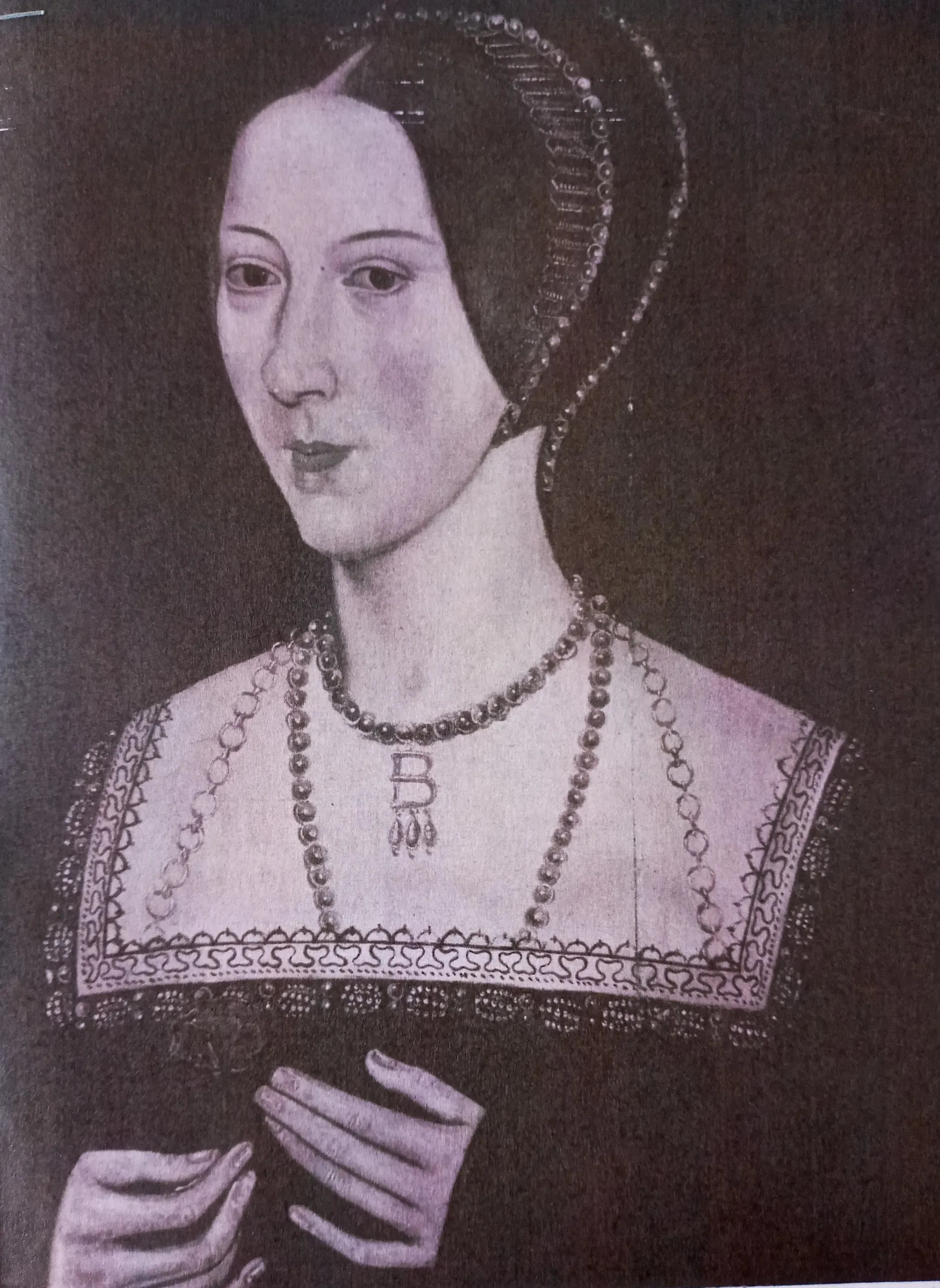
Anne Boleyn
 United Kingdom
Also known as: Anne Bullen, Queen Anne Boleyn
Birthday
1501
Birth Sign
Capricorn
Birthplace
Norfolk, England (possibly Hever Castle, Kent)
Age
Died at 35
Height
5 ft 2 in (157 cm)
About
Anne Boleyn was an English noblewoman who became Queen of England from 1533 to 1536 as the second wife of King Henry VIII. Her marriage to Henry and her refusal to remain his mistress were central to the English Reformation, the break with the Catholic Church, and the establishment of the Church of England. Anne was crowned queen on 1 June 1533 and gave birth to the future Elizabeth I later that year. She was executed by beheading at the Tower of London on 19 May 1536 on charges of treason, adultery, and incest, charges widely believed to be politically motivated.
Today Anne Boleyn is remembered as a pivotal and tragic figure in English history, a woman of intelligence, ambition, and faith whose downfall was as swift as her rise. Her story continues to fascinate historians, writers, and the public, inspiring countless books, films, and plays. She remains one of the most studied and debated queens consort in history, with her influence on the English church and monarchy still a subject of scholarly discussion.
Early Life & Background
Anne Boleyn was born around 1501, though the exact date is unknown, with historians placing it between 1500 and 1507. She was the daughter of Thomas Boleyn, a successful diplomat and courtier, and Elizabeth Howard, a noblewoman. Her birthplace is debated; it may have been Blickling Hall in Norfolk or Hever Castle in Kent, the family seat.
Anne's early education was exceptional for a woman of her time. Around 1513, she was sent to the court of Margaret of Austria in the Netherlands, where she learned languages, music, and courtly manners. She then moved to France, serving Queen Claude, and spent several years at the French court, which further refined her education and polished her courtly skills. She returned to England around 1522 and became a lady-in-waiting to Catherine of Aragon, Henry VIII's wife at the time.
Before her relationship with Henry, Anne was briefly betrothed to James Butler, an Irish cousin, in a match arranged to settle a property dispute, but the engagement never led to marriage. She also attracted the romantic attention of the poet Thomas Wyatt, who wrote verses about her, though the exact nature of their relationship remains unclear. These early experiences shaped her into a sophisticated, clever woman who would later captivate a king.
Career Growth
Anne Boleyn's rise began when Henry VIII became infatuated with her around 1526. Henry pursued her relentlessly, but Anne refused to become his mistress, a refusal that set the stage for the annulment of his marriage to Catherine of Aragon. This led to the break with Rome and the creation of the Church of England, with Henry as its Supreme Head.
On 1 September 1532, Anne was created Marquess of Pembroke, a peerage in her own right, a rare honour for a woman. She married Henry secretly in January 1533, and was crowned queen on 1 June 1533 in a lavish ceremony at Westminster Abbey. Her only surviving child, Elizabeth, was born on 7 September 1533, a disappointment to Henry who desperately wanted a male heir.
Anne's inability to produce a son, combined with court intrigue and Henry's growing interest in Jane Seymour, led to her downfall. She was arrested on 2 May 1536, tried and convicted of treason, adultery, and incest, and executed on 19 May 1536. Despite her short reign, her legacy was immense: her daughter Elizabeth later became one of England's greatest monarchs, and her role in the Reformation reshaped the nation's religious identity.
Career Timeline
Public Image & Style
Anne Boleyn's public persona was that of a bold, intelligent, and ambitious woman, often portrayed as a seductress or a victim, depending on the historian. In her own time, she was admired for her style and wit, but also criticized for her influence over Henry and her role in the Reformation. Today, she is a figure of intense fascination, with a large online fandom of Tudor history enthusiasts. Her image is often associated with the iconic Holbein portrait, and her story is a staple of historical fiction and drama. Fans engage with her life through books, films, and visits to Hever Castle and the Tower of London, and she remains a symbol of both female power and tragic downfall.
Fame & Fandom (iFAMOUS Rankings)
Anne Boleyn holds the 25th most famous person in British Drama according to the iFANN Global Fame Rankings, a position she has maintained steadily from the previous cycle. This standing reflects her enduring presence across media coverage, search trends, and consumption signals worldwide. While she lacks a formal, unified fandom name typical of modern pop stars, her legacy thrives through a vibrant community of Tudor enthusiasts and fans of the musical Six: The Musical. Unlike contemporary celebrities who engage in birthday billboards or streaming chart pushes, Anne's admirers channel their enthusiasm into academic history, tourism, and the broader Tudor revival. The musical has introduced a new layer of lore where fans discuss her sassy personality and leadership among the queens, turning her execution into a pop anthem with the song "Don't Lose Ur Head". This reinterpretation has revitalized interest among younger generations without altering the historical record of her life and death. Fan interaction remains centered on public tours of sites associated with her, such as Hever Castle and the Tower of London, where visitors leave tributes or participate in guided storytelling rather than organized fan club rituals.
Interesting Facts and Legends
Anne Boleyn was the last queen consort of England to be crowned separately from her husband, marking a unique moment in royal protocol. Her personal motto was "The most happy," accompanied by an emblem featuring a white falcon. Contemporary accounts suggest she possessed a sixth finger on her left hand, though modern historians debate the accuracy of this detail. Known for her stylish fashion sense, she introduced French hoods to the English court and remained a patron of the arts while supporting religious reform. She was an accomplished musician and dancer whose intelligence and wit were frequently noted by those at court. Beyond these facts, persistent folklore surrounds her final moments; a widely retold story claims she was beheaded by a skilled French swordsman in a single blow, contrasting with other executions despite some historical ambiguity regarding her fear or the blade's condition. Another enduring legend involves accusations of witchcraft, specifically the notion that she had six fingers, which recent analysis suggests may have been a deliberate political smear altered in portraits rather than a physical reality. Additionally, the love letter sent by Henry VIII to Hever Castle in 1526 serves as a verified historical artifact symbolizing the beginning of their affair, often cited as the romantic catalyst for the English Reformation.
Notable Quotes
“Good Christian people, I am come hither to die, for according to the law, and by the law I am judged to die, and therefore I will speak nothing against it. I am come hither to accuse no man, nor to speak anything of that whereof I am accused and condemned to die, but I pray God save the king and send him long to reign over you, for a gentler nor a more merciful prince was there never.”
Family & Personal Life
Anne Boleyn was the daughter of Thomas Boleyn, a diplomat and courtier, and Elizabeth Howard, the daughter of the Duke of Norfolk. She had two siblings: George Boleyn, who was executed alongside her, and Mary Boleyn, who had a previous affair with Henry VIII. Anne married Henry VIII in 1533, and their marriage produced one surviving child, Elizabeth, born in 1533. Anne also suffered at least two miscarriages, in 1534 and 1536. Her family's fortunes rose and fell dramatically with her, and her father and brother were both caught up in her downfall.
Notable Connections
Anne Boleyn is associated with Henry VIII, her husband, and her daughter Elizabeth I. Her brother George Boleyn was executed with her. Cardinal Thomas Wolsey and Thomas Cromwell were key political figures in her story, with Cromwell orchestrating her fall. The poet Thomas Wyatt wrote about her, and she had an early romance with Henry Percy. She is also linked to Catherine of Aragon, her predecessor as queen, and to the broader movement of the English Reformation, alongside figures like Martin Luther.
Relationships & Dating History
Anne Boleyn's romantic history before Henry VIII included an informal betrothal to James Butler, an Irish cousin, arranged to settle a property dispute, but it was broken off. In the early 1520s, she had a secret engagement to Henry Percy, heir to the Earl of Northumberland, but Cardinal Wolsey and Percy's family broke it off, likely at Henry VIII's instigation. She was also the subject of courtly admiration from the poet Thomas Wyatt, though the relationship was largely platonic and expressed through poetry.
Her marriage to Henry VIII began secretly in January 1533, and she was crowned queen in June. The marriage produced one surviving child, Elizabeth, but also two miscarriages, in 1534 and 1536. Henry's desire for a male heir and his interest in Jane Seymour led to Anne's arrest and execution in May 1536. At the time of her death, she was still married to Henry, who had her executed. As of 2026, she is deceased.
- EngagedJames Butler1509 - 1515Informal betrothal arranged to settle a property dispute; broken off.
- DatedHenry Percy1520 - 1523Secret engagement broken off by Cardinal Wolsey and Percy's family, likely at Henry VIII's instigation.
- MarriedHenry VIII1533 - 1536Marriage ended with her execution; she was convicted of treason and beheaded.
Death & Aftermath
Died
May 19, 1536 (aged 35)
Death Place
London, England
Cause of Death
Judicial execution by beheading
Anne Boleyn spent her final days imprisoned within the Tower of London, a period marked by intense isolation following her arrest. Her last public appearance occurred during the trial before a jury of peers including her uncle Edward Howard, where she delivered a speech maintaining her innocence until the moment of execution. On May 19, 1536, she was beheaded on Tower Green by a French swordsman in a single stroke, ending a life cut short at approximately twenty-eight years old. The cause of death was judicial execution resulting from convictions for high treason, adultery, and incest based on testimonies that modern historians widely consider fabricated or politically motivated to facilitate Henry VIII's desire for a male heir.
Public reaction in the immediate aftermath was complex, as open mourning for a convicted traitor remained dangerous and prohibited, though some courtiers reportedly expressed sympathy privately. A private funeral took place five days later on May 24, 1536, within the Chapel Royal of St Peter ad Vincula, attended only by the chaplain and guards. She was buried in an unmarked grave inside the chapel, a practice common for those deemed unworthy of a marked tomb, leaving her exact resting place unidentified to this day. Over centuries, perception shifted dramatically as Anne became a cultural icon through productions like The Tudors, Wolf Hall, and the musical Six, which generated global chart success and renewed fascination with the Tudor period.
Posthumously, her daughter Elizabeth I eventually restored her mother's name and reputation, though she never publicly acknowledged Anne as a martyr during her own reign. The Crown confiscated all lands and titles immediately upon her attainder, distributing personal property among the royal household or selling it off.
Net Worth (Estate Value)
$10 Million
iFANN Editorial Team estimate
As a historical figure who died in 1536, Anne Boleyn's net worth cannot be calculated in modern financial terms. Her estate at death was confiscated by the Crown. However, her posthumous cultural estate is significant and continues to generate revenue. Hever Castle, her childhood home, is now a major tourist attraction operated by a private foundation. The Tower of London, where she was imprisoned and executed, is a UNESCO World Heritage Site and a major revenue-generating heritage attraction, with Anne Boleyn's story being a central part of its visitor experience. Her image and story are licensed for countless books, films, television series, and merchandise, though no public figures exist for the total estate value. The estate's managers are effectively the heritage bodies (Historic Royal Palaces) and the private owners of Hever Castle, along with the authors and production companies who hold rights to their own creative works about her. Per iFANN's editorial analysis, the cultural and tourism value of her legacy is estimated at around $10 million as of 2026, reflecting her enduring appeal and the revenue from heritage sites, books, and media.
Awards & Accolades
View 4 records, honours and achievementsKnown For
Queen of England
1533-1536 · Queen Consort
Keywords
Sources
Quick Facts
- Born
- c. 1501
- Died
- May 19, 1536
- Birthplace
- Norfolk, England (possibly Hever Castle, Kent)
- Reign
- 1533-1536
- Spouse
- Henry VIII
- Children
- Elizabeth I
Personal Details
- Full Name
- Anne Boleyn
- Height
- 5 ft 2 in (157 cm)
- Spouse
- Henry VIII
- Children
- Elizabeth I
- Education
- Educated at the courts of Margaret of Austria and Queen Claude of France
Frequently Asked Questions
How old was Anne Boleyn when she died?
Why was Anne Boleyn executed?
Did Anne Boleyn have children?
Where is Anne Boleyn buried?
What is Anne Boleyn's net worth?
Similar People
Join the community
fans discussing