
 Mexico
About
María del Carmen Mondragón Valseca, universally known by her adopted name Nahui Olin, was a pioneering Mexican painter, poet, writer, and artist's model whose life became a central pillar of the Mexican avant-garde. Born in 1893 into a wealthy military family, she rejected her aristocratic upbringing to embrace a life of radical independence, unapologetic sexuality, and political activism. She is best known today not only for her visual art but also for her role as a muse to some of Mexico's most famous artists and for her dramatic personal life.
Mondragón's influence extended far beyond her canvas. In the 1920s and 1930s, she emerged as a cultural icon who posed for renowned photographers like Edward Weston, Tina Modotti, and Gertrude Kasebier. Her own artistic output featured bold colors and expressive forms that explored themes of identity, the female form, and social critique. Though she published poetry and wrote extensively, her public persona as a provocateur often defined her legacy more than her specific body of work during her lifetime.
Early Life & Background
Born on July 8, 1893, in Tacubaya, a district of Mexico City, María del Carmen Mondragón Valseca entered the world as the fifth of eight children to a wealthy military family. Her childhood was marked by privilege and strict Catholic discipline. She attended a Spanish convent school where she received a traditional education designed to prepare young women for conventional roles in society. Despite this structured environment, she displayed precocious talent, beginning to write poetry while still a schoolgirl.
At age 17, her parents sent her to Paris to study art and refine her manners, hoping to mold her into a proper lady of high society. However, she quickly rebelled against these conservative expectations. Upon returning to Mexico, she married Manuel Rodríguez Lozano in 1915. This union produced one daughter, but the infant died shortly after birth. This tragedy deeply traumatized Mondragón and catalyzed a complete rejection of bourgeois society. Following this loss, she divorced her husband and reinvented herself as Nahui Olin, shedding her aristocratic identity to pursue a life of artistic freedom and radical independence.
Career Growth
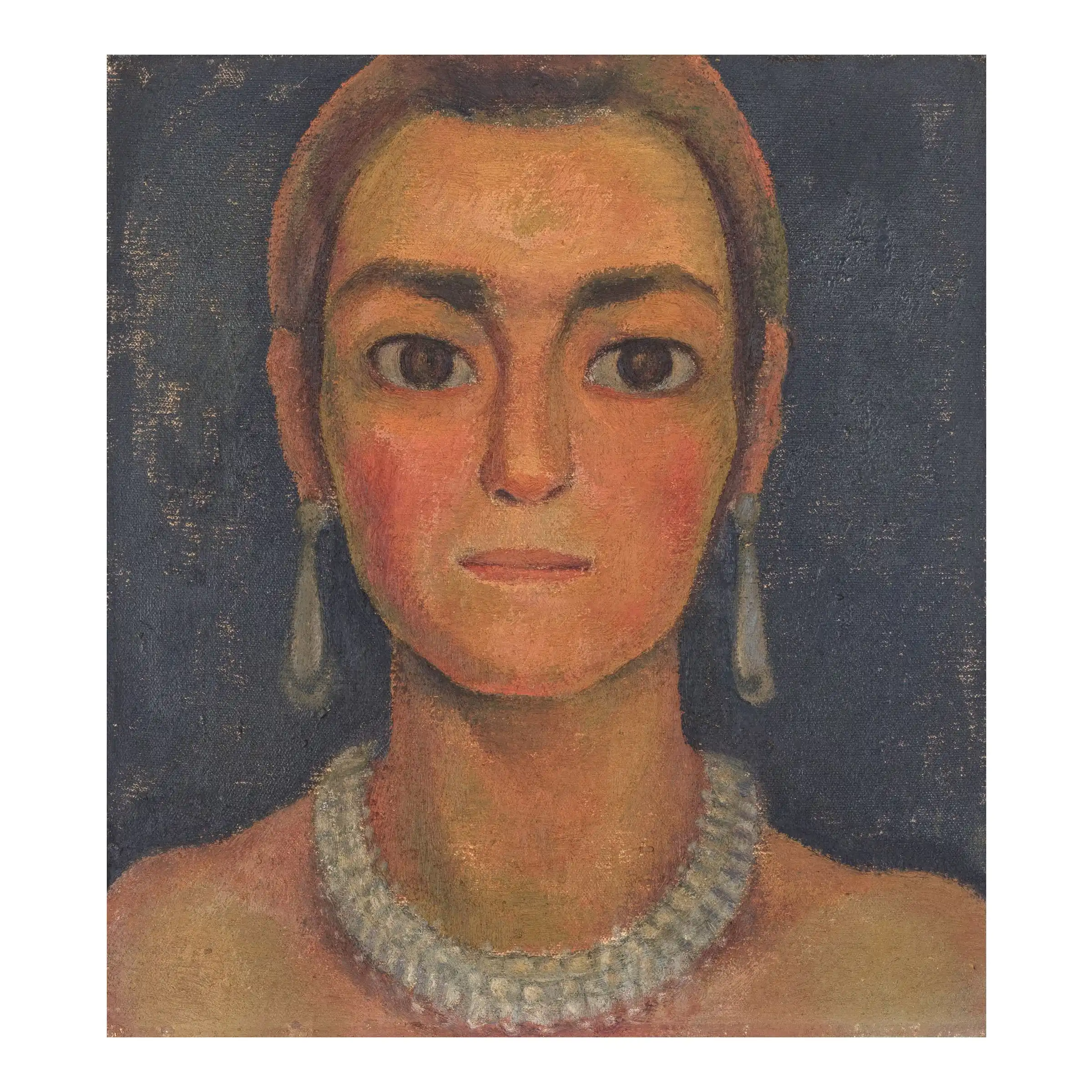
Mondragón's career is defined by her dual role as a creative force and a cultural icon. In the 1920s and 1930s, she emerged as a central muse and provocateur in the post-revolutionary Mexican art scene. She posed for renowned photographers such as Edward Weston, Tina Modotti, and Gertrude Kasebier, becoming the most photographed woman in Mexico during that era. Her own paintings were characterized by bold colors and expressive forms, often exploring themes of identity and the female form.
She published her first book of poems, Canto a la Primavera (Song to Spring), in 1928. Throughout the 1930s, she remained active in the circles surrounding the Mexican muralist movement, associating with figures like Diego Rivera and Dr. Atl. By the 1940s and 1950s, she gradually retreated from public life, continuing to paint and write in relative obscurity. Her legacy saw a major resurgence in 2018 with the retrospective Nahui Olin: La mirada infinita at the Museo Nacional de Arte (MUNAL). This exhibition revitalized interest in her work, leading to further recognition including the 2022 release of Chloe Aridjis's novel Portraits in Four Movements.
Career Timeline
Public Image & Style
Mondragón cultivated a public image as a tragic, defiant, and sexually liberated figure. She was known for her provocative appearance, often walking barefoot through Mexico City streets and wearing minimal clothing that defied societal norms. Media portrayals of her focus heavily on her role as a precursor to the feminist movement in Mexico and a symbol of the chaotic energy of the post-revolutionary era. Her persona was one of intense passion and suffering, cementing her status as a bohemian icon whose life story rivaled her art in its drama.
Fame & Fandom (iFAMOUS Rankings)
Carmen Mondragón's following is not the stuff of fan clubs or coordinated campaigns; it is a diffuse, scholarly affection that persists through the art-historical record and the quiet curation of her image on digital platforms. Her admirers, chiefly Mexican art historians, feminist scholars, and devotees of early twentieth-century avant-garde culture, have no formal name, no organized community, no shared rituals. What binds them is a common fascination with her transformation from a wealthy daughter of the Porfiriato into Nahui Olin, a bohemian provocateur who scandalized and enchanted Mexico City in equal measure.
Institutional efforts, rather than grassroots activism, have kept her memory alive. The 2018 exhibition 'Nahui Olin: La Mirada Infinita' at the Museo Nacional de Arte marked a significant reclamation of her legacy, and her inclusion in a 2024 list of '5 Mexican female artists who are not Frida Kahlo' signals her ongoing cultural relevance. Yet the fanbase remains modest, its energy channeled into Pinterest boards and Instagram tributes that celebrate her iconic photographs by Tina Modotti and portraits by artists like Antonio Garduño.
As of August 2026, iFANN's Global Fame Engine has evaluated Carmen Mondragón, but she does not currently hold a placement in the published rankings, neither the Global Top 1,000 nor any Top-100 scope list. Her fame, while enduring in certain circles, has not translated into a measurable global ranking. That absence, however, does not diminish the intensity of her legend; it simply places her among those whose renown is cultivated by the few rather than the many.
Interesting Facts and Legends
The name Nahui Olin translates to "Four Movement" in Nahuatl, representing the four suns or eras of creation in Aztec cosmology. This choice symbolized her cosmic nature and her desire to break free from the constraints of her past. One of the most persistent legends surrounding her life involves an alleged acid attack by her lover, Dr. Atl. While some accounts suggest it was an accident involving chemicals in his studio, the story has become a central part of her mythos as a survivor of violence.
Mondragón was famous for walking barefoot through the streets of Mexico City, dressed in revealing attire. This deliberate act of rebellion shocked conservative society and declared her absolute freedom. Contemporary accounts confirm she was a deliberate provocateur, earning her the reputation as the most painted and photographed woman in Mexico during her prime. Her poses for Edward Weston are considered some of the most striking examples of early 20th-century photography, influencing how the female body was depicted in art.
Notable Quotes
“I want to be free as the wind.”
“I seek to burn with the sun.”
Family & Personal Life
She was the fifth of eight children born to a wealthy military family. Her father's profession provided the family with the means for a privileged upbringing. She had one daughter with her first husband, Manuel Rodríguez Lozano, but the child died in infancy, a loss that profoundly shaped her future decisions. Her siblings are not widely documented in historical records, though she maintained close ties to her mother, Celia de Mondragón, until her death. Later in life, she lived alone in Mexico City, rejecting the institution of marriage and maintaining a household centered around her art and writing.
Notable Connections
Manuel Rodríguez Lozano, Dr. Atl (Gerardo Murillo), Diego Rivera, Edward Weston, Tina Modotti, Antonio Garduño, Chloe Aridjis
Relationships & Dating History
Carmen Mondragón's romantic life was as legendary as her art, characterized by intense, turbulent relationships with some of Mexico's most famous male figures. She married Manuel Rodríguez Lozano in 1915. This union was short-lived and ended tragically with the death of their infant daughter in 1916. The grief drove Mondragón to divorce and reinvent herself, marking the beginning of her bohemian era.
Her most infamous relationship was with the painter Dr. Atl (Gerardo Murillo) during the 1920s. Their partnership was marked by jealousy and violence, culminating in an incident where Atl allegedly threw acid on Mondragón's face. While some accounts suggest it was an accident, the story has become a central part of her mythos as a survivor of violence. They had no children together, and the relationship ended acrimoniously.
Like Frida Kahlo, Mondragón had a brief, fiery connection with the muralist Diego Rivera in the late 1920s. Sources indicate they were lovers for a short period, though Rivera later moved on to Kahlo. This relationship is often cited in comparisons between Mondragón and Kahlo as the "original" couple of Mexican art history. She lived as a single woman for much of her later life, rejecting the institution of marriage after her divorce.
- MarriedManuel Rodríguez Lozano1915 - 1916Marriage ended with the death of their infant daughter; she divorced him shortly after.
- DatedDr. Atl (Gerardo Murillo)1920 - 1928Long-term partner involved in the alleged acid attack incident; relationship ended acrimoniously.
- DatedDiego Rivera1928 - 1929Brief affair before Rivera turned his attention to Frida Kahlo.
Death & Aftermath
Died
January 23, 1978 (aged 84)
Death Place
Mexico City, Mexico
Cause of Death
Natural causes
María del Carmen Mondragón Valseca lived her final years in quiet seclusion within Mexico City, having long withdrawn from the boisterous circles of the Mexican avant-garde that once celebrated her as Nahui Olin. The end came without fanfare on January 23, 1978, when she passed away at the age of eighty-four, reportedly dying naturally in her sleep at her home. Historical records do not provide detailed accounts of a formal funeral service or public attendance, suggesting her interment was handled privately within the capital city.
For decades following her death, her legacy remained overshadowed by the dramatic narratives of her relationships with giants like Dr. Atl and Diego Rivera. A significant institutional reappraisal began in the 21st century to reclaim her standing as an artist in her own right. The 2018 exhibition Nahui Olin: La mirada infinita at the Museo Nacional de Arte (MUNAL) served as a major tribute, highlighting her work as a painter and poet independent of her status as a muse. Interest surged further in 2022 with the publication of Chloe Aridjis's novel Portraits in Four Movements, which retold her biography and cemented her reputation as a pioneering feminist artist. Her estate and works are managed through academic curation rather than commercial channels, preserving her artistic contributions for scholars and historians.
Net Worth (Estate Value)
$0
iFANN Editorial Team estimate
As a deceased artist from the early 20th century, Carmen Mondragón's net worth is not calculated in the same manner as living celebrities. Her estate has not generated significant commercial revenue through endorsements or modern licensing deals comparable to contemporary stars. During her life, she relied on family wealth from her father's military career and modest income from writing and occasional art sales. She did not accumulate significant personal wealth in the modern sense.
Her estate and works are managed through academic curation rather than commercial channels. While her paintings are held in private collections and museums like the Museo Nacional de Arte, there are no reports of massive posthumous sales or estate valuations. iFANN Editorial Team research indicates that her financial legacy is measured in cultural impact rather than monetary value, with no quantified estate value reported in public financial terms.
Awards & Accolades
View 2 records, honours and achievementsKnown For
Nahui Olin: La mirada infinita
2018 · Subject of retrospective
Portraits in Four Movements
2022 · Subject of novel
Edward Weston Photography
1920 · Model
Keywords
Sources
Quick Facts
- Profession
- painter, poet, writer
- Born
- July 8, 1893
- Birthplace
- Tacubaya, Mexico City
- Died
- January 23, 1978
- Death Place
- Mexico City
- Gender
- Female
- Spouse
- Manuel Rodríguez Lozano
- Birth Sign
- Cancer
Personal Details
- Full Name
- María del Carmen Mondragón Valseca
- Spouse
- Manuel Rodríguez Lozano
- Children
- One daughter (deceased in infancy)
- Education
- Spanish convent school; Art studies in Paris
Frequently Asked Questions
What is Carmen Mondragón's real name?
Did Carmen Mondragón have children?
What happened to Carmen Mondragón's face?
Is Carmen Mondragón related to Frida Kahlo?
When did Carmen Mondragón die?
Social Media
Similar People
Join the community
fans discussing