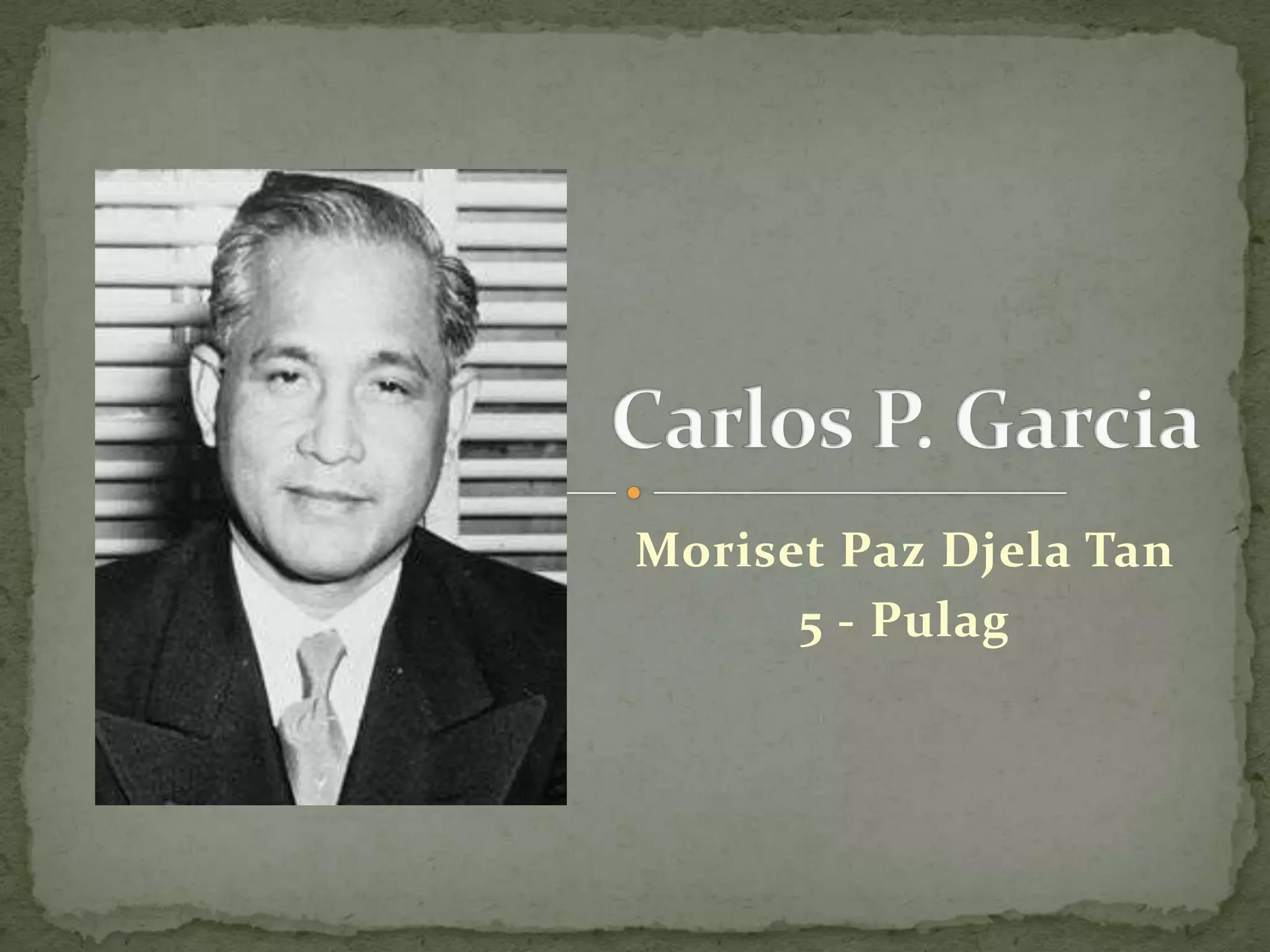
Carlos P. Garcia
 Philippines
Also known as: CPG, Carlos García y Polístico, Carlos Polístico García, Carlos Polistico Garcia, Carlos Polestico Garcia
Birthday
November 4, 1896
Birth Sign
Scorpio
Birthplace
Talibon, Bohol
Age
Died at 74
About
Carlos Polestico García, universally known as Carlos P. Garcia, was the eighth President of the Philippines, serving from April 17, 1957, to December 30, 1961. A lawyer, diplomat, poet, and orator, he is historically revered as the "Poet-President" for articulating the "Filipino First" policy, a doctrine of economic nationalism that prioritized local industries over foreign interests. He was the first Visayan president of the Third Republic, hailing from Bohol, and his legacy remains a cornerstone of Philippine political identity regarding sovereignty and self-reliance. His influence extends beyond his tenure, with his name adorning major infrastructure projects like the C.P. Garcia Highway in Davao City and the prestigious CPG Awards continuing to recognize excellence in the Visayas region. In 2026, his enduring relevance is highlighted by annual commemorations of his death and ongoing discussions on economic nationalism in academic circles.
Early Life & Background
Carlos Polestico García entered the world on November 4, 1896, in Talibon, Bohol, a coastal municipality in the Visayas region. He was born into a prominent political family; his father, Policarpo García, served as the municipal mayor of Talibon for four consecutive terms, while his mother, Leonila Polístico, came from a respected local family. This environment immersed him early in public service and governance. As a child, Garcia displayed an aptitude for literature and languages, skills that would later define his reputation as a poet. His upbringing in Bohol, then a smaller province compared to the dominant Luzon-centric politics, instilled in him a deep sense of regional identity and national unity.
Garcia's education began locally before he moved to Cebu City to attend high school at Cebu Normal School, where he honed his poetic talents. He later pursued higher education at the University of the Philippines College of Law, graduating with a degree in law in 1923. Before entering full-time politics, he worked as a teacher and a practicing lawyer. His legal career saw him serve as a prosecutor and eventually as a municipal judge. His early interest in poetry flourished during this period; he wrote verses in both English and Hiligaynon (Visayan), earning the moniker "Poet-President" long before he held the presidency. His entry into public office began with his election as a representative for Bohol's third district in the House of Representatives in 1931. During World War II, he served as a guerrilla leader and a Commonwealth military official, further solidifying his reputation as a nationalist and patriot. He was also known to publish poetry under his own name prior to his legislative career, blending literary art with political messaging in public gatherings.
Career Growth
Garcia's political ascent was marked by a series of significant milestones beginning in 1931 when he was elected as a Representative for Bohol's 3rd District. During the Japanese occupation from 1941 to 1945, he served as a guerrilla leader contributing to Allied resistance efforts. In 1945, he was elected as a Senator of the Philippines, representing Bohol. During his tenure from 1945 to 1953, he became renowned for his eloquence and advocacy for Filipino economic independence. In 1953, he was selected as the running mate of Ramon Magsaysay for the vice-presidential slot. The ticket won, and Garcia became the fourth Vice President of the Philippines.
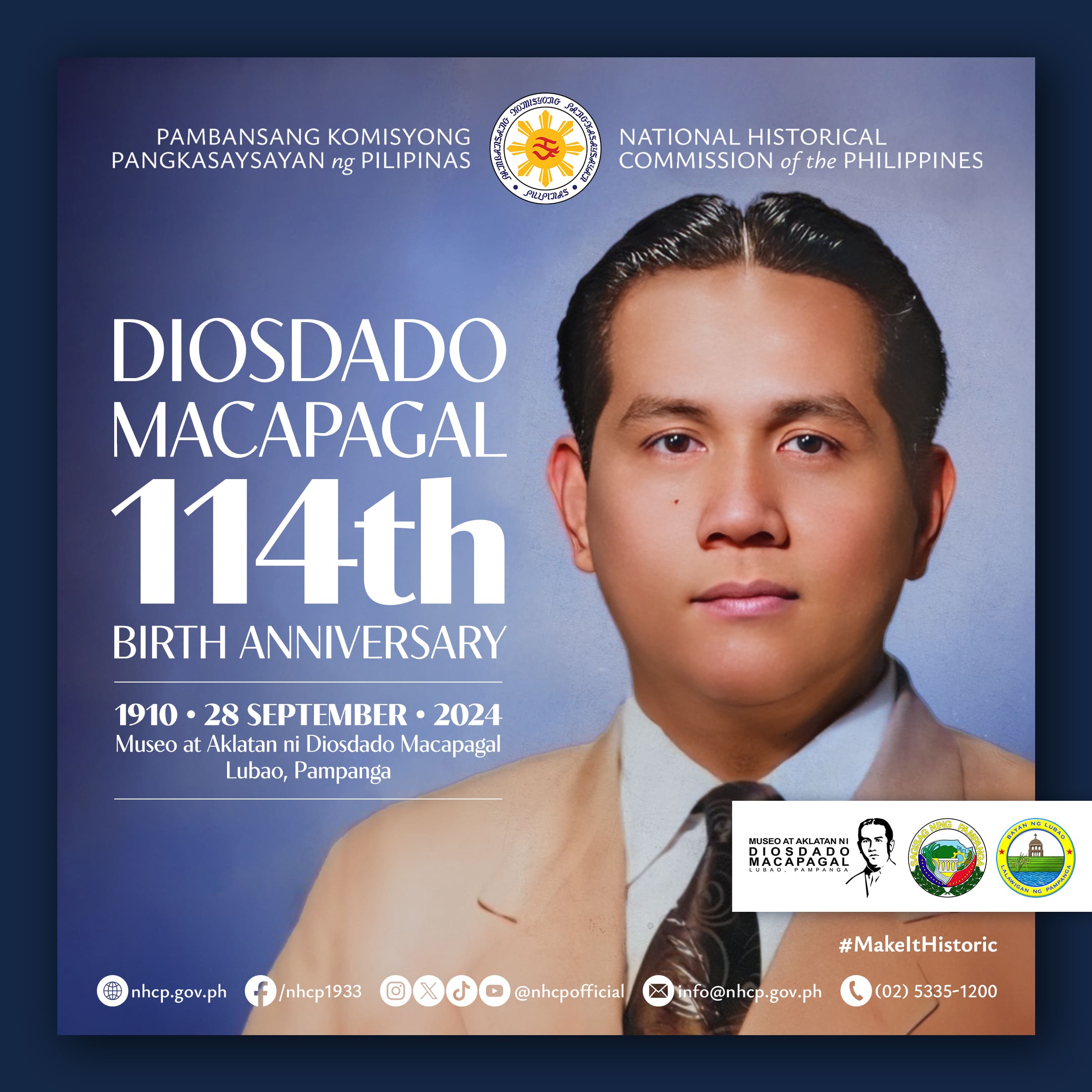
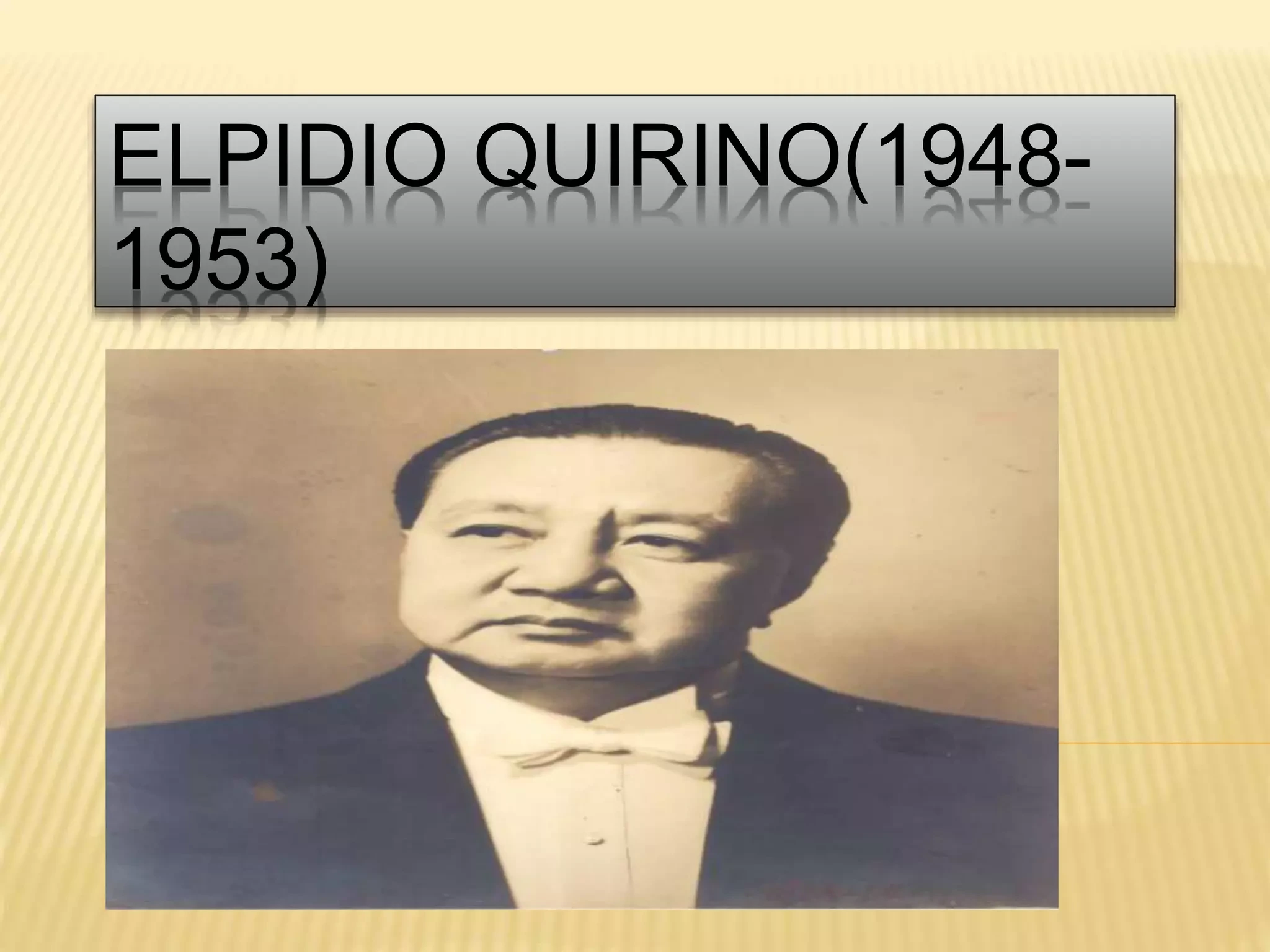
In March 1957, following the death of President Ramon Magsaysay in a plane crash, Garcia ascended to the presidency, becoming the eighth President of the Philippines. He won the presidential election in his own right in November 1957, defeating Liberal Party candidate Elpidio Quirino. In 1958, he enacted the "Filipino First" policy, a sweeping economic strategy requiring government agencies to prioritize Filipino goods and services. This policy reshaped the nation's approach to trade and investment, fostering a generation of local entrepreneurs and reducing dependence on American imports. He lost his bid for re-election to Diosdado Macapagal, his former Vice President, in December 1961, ending his term.
After leaving the presidency, he continued to serve as a delegate to the Constitutional Convention in 1971, working to draft a new charter for the country. His career success is defined not by commercial metrics but by his profound impact on Philippine economic policy. He is credited with stabilizing the economy post-WWII and promoting a distinct Filipino identity in governance. His speeches are legendary for their poetic structure, particularly his 1958 address which used metaphors of national dignity that became part of the national curriculum.
Career Timeline
Public Image & Style
Carlos P. Garcia is portrayed in the media and public consciousness as a man of principle, integrity, and quiet strength. He is the embodiment of the "humble servant-leader." His image is one of the serious, thoughtful statesman, often depicted in formal attire with a gentle but firm expression. The tone of his content (speeches, writings) is patriotic, reflective, and educational. He is remembered for his eloquence and the poetic flair he brought to political discourse, distinguishing him from other leaders of his time. Photographs and historical accounts describe him as having a dignified, average-to-tall stature typical of men of his generation and class, with a composed and intellectual bearing. His legacy is maintained through official government pages and historical societies that share his quotes and photos.
Fame & Fandom (iFAMOUS Rankings)
Carlos P. Garcia commands a unique form of reverence that transcends the fleeting nature of modern celebrity fandom. He is not worshipped through social media trends or organized fan clubs, but rather honored as a foundational pillar of Philippine history and a literary figure whose words still echo in political discourse. His 'supporters' are historians, students, and citizens who view his life as a moral benchmark, particularly those who trace their own values to his "Filipino First" doctrine. While he lacks a formal fandom name or grassroots campaigns like birthday billboards, his legacy persists through state-sponsored commemorations in Bohol and academic study that keeps his memory alive decades after his passing.
The scale of his enduring influence is measured by how deeply his specific brand of economic nationalism remains woven into the national consciousness, a quiet power that outlasts the noise of contemporary pop culture. This sustained attention across generations places him firmly within the global pantheon of historical figures. According to recent data in 2026, Carlos P. Garcia is ranked as the 66th most famous person from the Philippines, a position reflecting his status as a defining voice of his era. He is consistently listed among the top ten presidents of the Philippines in historical surveys due to the longevity of his policies. His presence in periodicals like Time magazine and Newsweek during his administration cemented his international profile as a key Asian leader.
Interesting Facts and Legends
Before entering politics, Carlos P. Garcia published poetry under his own name, and his verses were often read aloud in public gatherings, blending literary art with political messaging. He broke the Luzon-dominated political paradigm by being the first president from the Visayas region to lead the country, a fact that resonates deeply with non-Luzon Filipinos. During World War II, he was not just a politician but an active guerrilla fighter, a detail often overshadowed by his later presidency. Even after losing the presidency, he remained influential enough to be a key delegate in the 1971 Constitutional Convention, showing his continued respect in the political arena.
Garcia's speeches are legendary for their poetic structure and emotional resonance. One iconic moment was his 1958 address where he declared the "Filipino First" policy, using metaphors of national dignity that became part of the national curriculum. The story of how a lawyer and politician could also be a celebrated poet is a central piece of his lore, often cited as proof of his multifaceted intellect. The narrative of his loss to his own Vice President, Diosdado Macapagal, is a dramatic chapter in Philippine political history, often told as a lesson in the shifting tides of popularity versus principle. Additionally, he did not appear on covers of modern lifestyle magazines like Vogue or GQ, but his image appeared primarily in Time magazine, Newsweek, and Philippine publications like The Manila Times during his presidency. Specific cover dates are not widely cataloged, but his presence in periodicals was significant.
Notable Quotes
“The Filipino must be the master of his own destiny.”
“We must be Filipinos first, and Americans second, if we are to be truly free.”
“The true measure of a man is not what he has, but what he gives.”
Family & Personal Life
Carlos P. Garcia was married to Leonila Garcia (née Leonila Polístico). Their union was a strategic and emotional alliance between two prominent families, symbolizing the unity of the Visayan islands. They met through their shared roots in the Visayas; she was a Cebuana, and he was from Bohol. The marriage lasted until his death in 1971. There are no publicly documented romantic relationships prior to or outside of this marriage; historical records focus exclusively on his devotion to Leonila and their family life. They had several children, though specific names and details of their offspring are less frequently highlighted in general biographies compared to his political achievements. Garcia was known for his quiet, dignified personal demeanor, often retreating from the public eye after his presidency to focus on writing and family. Leonila supported his political career and remained his constant companion throughout their decades together.
Notable Connections
Relationships & Dating History
Carlos P. Garcia's sole documented romantic relationship was his marriage to Leonila Garcia. They met through their shared roots in the Visayas; she was a Cebuana, and he was from Bohol. Their union was a strategic and emotional alliance between two prominent families, symbolizing the unity of the Visayan islands. The marriage lasted until his death on June 14, 1971. There are no publicly documented romantic relationships prior to or outside of this marriage; historical records focus exclusively on his devotion to Leonila and their family life. They had several children, though specific names and details of their offspring are less frequently highlighted in general biographies compared to his political achievements. Leonila supported his political career and remained his constant companion. As of 2026, he is deceased and widowed since 1971. The exact start year of their marriage varies by source but occurred well before his political rise.
- MarriedLeonila GarciaUnknown - 1971Married until his death; they had several children.
Death & Aftermath
Died
June 14, 1971 (aged 74)
Death Place
Quezon City, Metro Manila
Cause of Death
Myocardial infarction (heart attack)
By the summer of 1971, Carlos P. Garcia had retreated from the daily grind of statecraft to his quiet residence in Quezon City, where he spent his final days engaging in political commentary and reflecting on a career that championed Filipino economic independence. The former president passed away peacefully at home on June 14, 1971, at the age of seventy-four, bringing an end to a life defined by his oratory skills and his tenure as the eighth head of state. Official reports immediately identified the cause as a myocardial infarction (heart attack), a conclusion confirmed by contemporary accounts including a New York Times report from the following day which noted his sudden passing without any indication of foul play or disputed medical circumstances. He had been recovering from health issues and had stepped back from active daily governance following his defeat in the 1961 election.
The nation responded with solemn reverence, observing moments of silence to honor the man who famously advocated for the "Filipino First" policy. The government and institutions paid homage through official tributes that highlighted his dual legacy as a statesman and a poet. His funeral was conducted with the full honors befitting a former president, taking place in Manila before his body was transported to his beloved hometown of Bohol for burial. High-ranking dignitaries and peers attended the service to recognize his contribution to the republic, including then-President Diosdado Macapagal.
Decades after his death, Garcia's influence remains woven into the fabric of Philippine public life and culture. The province of Bohol continues to mark his birthday annually, and the prestigious CPG Awards are still conferred to recognize excellence in sports, arts, and public service across the region. His name adorns significant infrastructure projects, including the C.P. Garcia Highway in Davao City, while his poetry and speeches endure within the national curriculum. In August 2026, the opening of the KOJC King Dome along this highway drew large crowds, with traffic authorities ensuring smooth flow along the road named after him. In May 2026, the Department of Agrarian Reform in Bohol announced livelihood support programs for the island of Pres. CPG, continuing the tradition of honoring his connection to the agricultural sector. On June 13, 2026, social media outlets and news pages commemorated the 55th anniversary of his death, recalling his role as the eighth president and his passing from a heart attack. Though his personal estate was handled according to standard presidential protocols, the true measure of his aftermath is found in these enduring dedications that keep his vision of economic sovereignty alive.
Net Worth (Estate Value)
$0
iFANN Editorial Team estimate
As a deceased public official from the mid-20th century, Carlos P. Garcia does not have a modern "net worth" calculated in the style of contemporary celebrities. His wealth was derived from his salary as a lawyer, legislator, and president, which was modest by today's standards but sufficient for his time. No public records exist detailing a specific dollar value for his estate at the time of his death. Presidential estates in the Philippines during that era were typically managed by the government or immediate family without public accounting of liquid assets. Unlike modern entertainers, Garcia's estate does not generate royalties from music, films, or merchandise. His "value" is symbolic and cultural. The concept of a 2026 net worth for a historical figure who died in 1971 is inapplicable. His legacy is measured in political influence, not financial accumulation. His sources of income included his salary as a lawyer, Representative, Senator, Vice President, and President.
Awards & Accolades
View 5 records, honours and achievementsKnown For
President of the Philippines
1957-1961 · 8th President
Filipino First Policy
1958 · Legislation
Keywords
Sources
Quick Facts
- Profession
- diplomat, politician, lawyer
- Born
- November 4, 1896
- Birthplace
- Talibon, Bohol
- Died
- June 14, 1971
- Death Place
- Quezon City, Metro Manila
- Gender
- Male
- Spouse
- Leonila Garcia
- Birth Sign
- Scorpio
Personal Details
- Full Name
- Carlos Polestico García
- Spouse
- Leonila Garcia
- Children
- Multiple children (names not widely publicized)
- Education
- University of the Philippines College of Law (LL.B., 1923)
Frequently Asked Questions
Who was Carlos P. Garcia?
When did Carlos P. Garcia die?
What is the "Filipino First" policy?
Where was Carlos P. Garcia born?
Was Carlos P. Garcia married?
Join the community
fans discussing