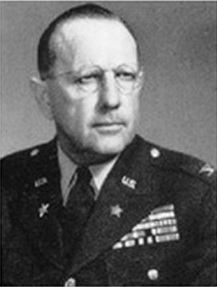
Boris Pash
Also known as: Boris Fyodorovich Pashkovsky
Birthday
June 20, 1900
Birth Sign
Gemini
Birthplace
San Francisco, California
Age
Died at 94
Height
5 ft 10 in (178 cm)
About
Boris Pash was an American military intelligence officer, most famous for commanding the secret Alsos Mission during World War II, which located Nazi atomic bomb research. His work significantly shaped the nuclear race and the early Cold War. After a distinguished military career spanning over three decades, he retired as a colonel in 1957, having been awarded the Legion of Merit, Bronze Star Medal, Army Commendation Medal, and the Order of the British Empire. Following his military service, Pash consulted for the Lawrence Livermore National Laboratory and published his memoir, The Alsos Mission, in 1980. His legacy is that of a pivotal figure in 20th-century intelligence and nuclear history.
Early Life & Background
Boris Fyodorovich Pashkovsky was born in San Francisco, California, on June 20, 1900. His father, Theodore, was a Russian Orthodox priest and later bishop who fled Russia after the Bolshevik Revolution, settling his family in the United States. From a young age, Pash was shaped by his family's deep-seated convictions; he grew up in a household fiercely opposed to communism, a view that profoundly shaped his perspective and would guide his entire career. As anti-Russian sentiment rose during World War I, the family made the pragmatic decision to change their surname from Pashkovsky to Pash to avoid prejudice.
Pash's early life also included military service and a strong focus on education. He first served in World War I from 1918 to 1919, though the conflict concluded before he saw combat. Academically, he pursued higher education, earning a degree in physical education from Springfield College in Massachusetts and later continuing his studies at the University of Southern California. Before committing to full-time military service, Pash applied his educational background as a teacher and coach at Hollywood High School in Los Angeles, where some of his students would later achieve celebrity status. Throughout the 1920s and 1930s, he maintained his connection to the armed forces by serving in the Army Reserve. This foundation of education, early military experience, and civilian leadership culminated in 1940 when he was called to active duty as a captain, marking the beginning of his distinguished wartime intelligence work.
Career Growth
Pash's big break came in 1943 when he was put in charge of the Alsos Mission, the Allied effort to investigate enemy atomic research. The mission swept through Italy, France, and Germany, capturing nuclear scientists and materials. In December 1944, Pash personally interrogated Werner Heisenberg in a farmhouse in France. The mission seized tons of uranium and helped secure the German nuclear program before the Soviets could get it. In 1945, he participated in Operation Harborage, securing German nuclear facilities and materials before Soviet forces could reach them.
After the war, Pash served as chief of intelligence for the Far East Command in Tokyo from 1946 to 1947 and later as a liaison to the newly formed CIA from 1947 to 1949. From 1949 to 1951, he worked on Project Paperclip, bringing German scientists like Wernher von Braun to the United States. He testified in the 1951 Rosenberg espionage trial, providing evidence on Soviet atomic spying. From 1953 to 1957, he served as chief of the Intelligence Division at U.S. Army Europe headquarters in Heidelberg, Germany. He retired in 1957 but stayed involved in defense work as a consultant for Lawrence Livermore National Laboratory and other defense contractors. His 1980 memoir The Alsos Mission remains a key source for historians. He was posthumously inducted into the Military Intelligence Hall of Fame.
Career Timeline
Public Image & Style
Pash is remembered as a sharp, determined intelligence officer who played a hidden but vital role in World War II. Historians highlight his leadership under pressure and his ability to get results in chaotic situations. His anti-communist convictions were a driving force throughout his career. Media portrayals focus on the Alsos Mission and his interrogation of Heisenberg. His involvement in Project Paperclip has drawn ethical questions in later years. There is no fan culture around him, but military history enthusiasts hold his work in high regard. The 75th anniversary of the Alsos Mission's capture of German nuclear scientists was commemorated in historical publications in 2020, and new declassified documents about the mission were released in 2023 by the U.S. National Archives, referencing Pash's role. A 2024 documentary series on the Manhattan Project featured interviews with historians discussing Pash's work.
Fame & Fandom (iFAMOUS Rankings)
Boris Pash may not have a formal fandom, but he has earned a devoted following among military history buffs, World War II intelligence enthusiasts, and nuclear history aficionados. These communities celebrate his role as the commander of the Alsos Mission, a top-secret operation that raced to uncover Nazi Germany's atomic bomb research. The 2023 film Oppenheimer, in which Casey Affleck portrayed Pash, brought him to a wider audience, sparking renewed curiosity about his life and career. Yet, despite this interest, there is no organized fanbase, no collective name, and no fan campaigns, just a shared fascination with a man who lived a remarkable life.
According to iFANN's Global Fame Engine, as of August 2026, Pash has been evaluated but does not currently hold a placement in the published rankings, including the Global Top 1,000 or any Top-100 scope list. This means he is not ranked among the world's most famous individuals, a status that reflects his relatively low public profile compared to celebrities or political leaders. While he may not top global fame charts, his legacy endures in historical circles, and his story continues to be told through archives and scholarly works.
For those who do follow his story, engagement happens primarily through archival materials. The Hoover Institution has made film footage from the Boris Pash Papers available for streaming, and the Boris T. Pash papers, spanning 1892–1989, are preserved and accessible through the Online Archive of California. These resources allow modern enthusiasts to connect with his life and work, ensuring that his contributions are not forgotten.
Interesting Facts and Legends
Boris Pash was born Boris Fyodorovich Pashkovsky. He was awarded an honorary OBE by the United Kingdom for his intelligence work. He also received the World War I Victory Medal, American Defense Service Medal, American Campaign Medal, European-African-Middle Eastern Campaign Medal with two campaign stars, World War II Victory Medal, Army of Occupation Medal (Germany and Japan), and National Defense Service Medal. His height is estimated at approximately 5 feet 10 inches based on period photographs.
A notable quote from his memoir: "The Alsos Mission was the most important intelligence operation of the war because it prevented the enemy from developing the ultimate weapon." He also stated in a 1985 interview: "I knew from the beginning that the race for the atomic bomb was the most critical contest of the century."
A popular story, often retold by fans, claims that Pash "killed Communists with his bare hands." While he did fight against the Bolsheviks during the Russian Civil War, this specific detail is likely an embellishment that has become part of his legendary reputation. Another iconic moment is his interrogation of J. Robert Oppenheimer, dramatized in the 2023 film Oppenheimer, which remains a pivotal scene in his legacy.
Notable Quotes
“The Alsos Mission was the most important intelligence operation of the war because it prevented the enemy from developing the ultimate weapon.”
“I knew from the beginning that the race for the atomic bomb was the most critical contest of the century.”
“We had to get there before the Russians. The stakes were nothing less than the future of the free world.”
Family & Personal Life
Pash's father, Theodore Pashkovsky, was a Russian Orthodox priest who later became Metropolitan Theophilus, a senior bishop of the Russian Orthodox Church Outside Russia. His mother was Ella Dabovich. The family fled Russia after the Bolshevik Revolution and settled in San Francisco. Pash married Lydia Ivanova in the 1920s; she was of Russian descent. They had two children: a son, Theodore, and a daughter, Elena. Lydia predeceased him. Pash lived modestly in Greenbrae, California, after retirement. His estate, managed by his children, is estimated to be modest, primarily consisting of his home and personal effects.
Notable Connections
Pash worked closely with General Leslie Groves, the military head of the Manhattan Project, and coordinated with J. Robert Oppenheimer. He interrogated Werner Heisenberg and captured Otto Hahn and Carl von Weizsäcker. Later, he helped bring Wernher von Braun to the U.S. through Project Paperclip. He also testified in the trial of Julius and Ethel Rosenberg.
Relationships & Dating History
Pash married Lydia Ivanova in the 1920s. She was of Russian descent, and the couple had two children: Theodore and Elena. Lydia predeceased him, and Pash did not remarry. As of 2026, he is deceased and was widowed at the time of his death.
- MarriedLydia Ivanova1925 - presentMarried in the 1920s; had two children together; she predeceased him.
Death & Aftermath
Died
May 11, 1995 (aged 94)
Death Place
Unknown
Cause of Death
Unknown
Decades after his passing, Boris Pash re-entered the public consciousness when Christopher Nolan's film Oppenheimer brought renewed attention to his role as commander of the Alsos Mission, with Casey Affleck portraying him. This cinematic revival coincided with the Hoover Institution releasing an article titled "I Lived Hard and Fast but Good," which highlighted his papers and his status as a nemesis of Robert Oppenheimer while making film footage from his archives available for streaming. These posthumous acknowledgments cemented his legacy long before he left this world. Boris Theodore Pash died on May 11, 1995, at the age of 94. Consequently, it remains unconfirmed whether his death was natural, sudden, or due to illness, nor are there accounts of his last public appearance or events leading up to his passing. Posthumously, his papers remain a subject of historical study maintained by the Atomic Heritage Foundation and the Hoover Institution. The estate handling of Boris Pash is not described in the available information.
Net Worth (Estate Value)
$500 Thousand
iFANN Editorial Team estimate
As a career military officer who retired as a colonel, Pash's lifetime earnings came from his Army salary and pension. After retiring in 1957, he worked as a consultant for the Lawrence Livermore National Laboratory and other defense contractors, which added to his income. He also earned royalties from his 1980 memoir The Alsos Mission. As of 2026, iFANN currently estimates his net worth at $500 Thousand, reflecting his frugal lifestyle and lack of major assets beyond his home in Greenbrae, California. No publicly available sources provide a specific dollar figure for his estate, but it is presumed to be managed by his surviving descendants.
Awards Won (4)
Pash received the Legion of Merit for leading the Alsos Mission, the Bronze Star Medal, and the Army Commendation Medal. He was also made an Honorary Officer of the Order of the British Empire by the United Kingdom. His other decorations include the World War I Victory Medal, American Defense Service Medal, and multiple campaign medals.
1945 · Military
Alsos Mission
1945 · Military
World War II service
Known For
Alsos Mission
1943 · Commander
Interrogation of Werner Heisenberg
1944 · Intelligence officer
Operation Harborage
1945 · Participant
Project Paperclip
1949 · Intelligence officer
Rosenberg espionage case
1951 · Witness
Keywords
Quick Facts
- Profession
- military personnel
- Born
- +1900-06-20
- Birthplace
- San Francisco
- Died
- +1995-05-11
- Death Place
- Greenbrae
- Gender
- Male
- Birth Sign
- Gemini
Personal Details
- Full Name
- Boris Fyodorovich Pashkovsky
- Height
- 5 ft 10 in (178 cm)
- Spouse
- Lydia Ivanova
- Children
- Theodore Pash, Elena Pash
- Education
- Springfield College (degree in physical education), University of Southern California
Frequently Asked Questions
Who was Boris Pash?
What did Boris Pash do in the Alsos Mission?
Was Boris Pash involved in Project Paperclip?
How old was Boris Pash when he died?
Did Boris Pash have children?
Similar People
Join the community
fans discussing