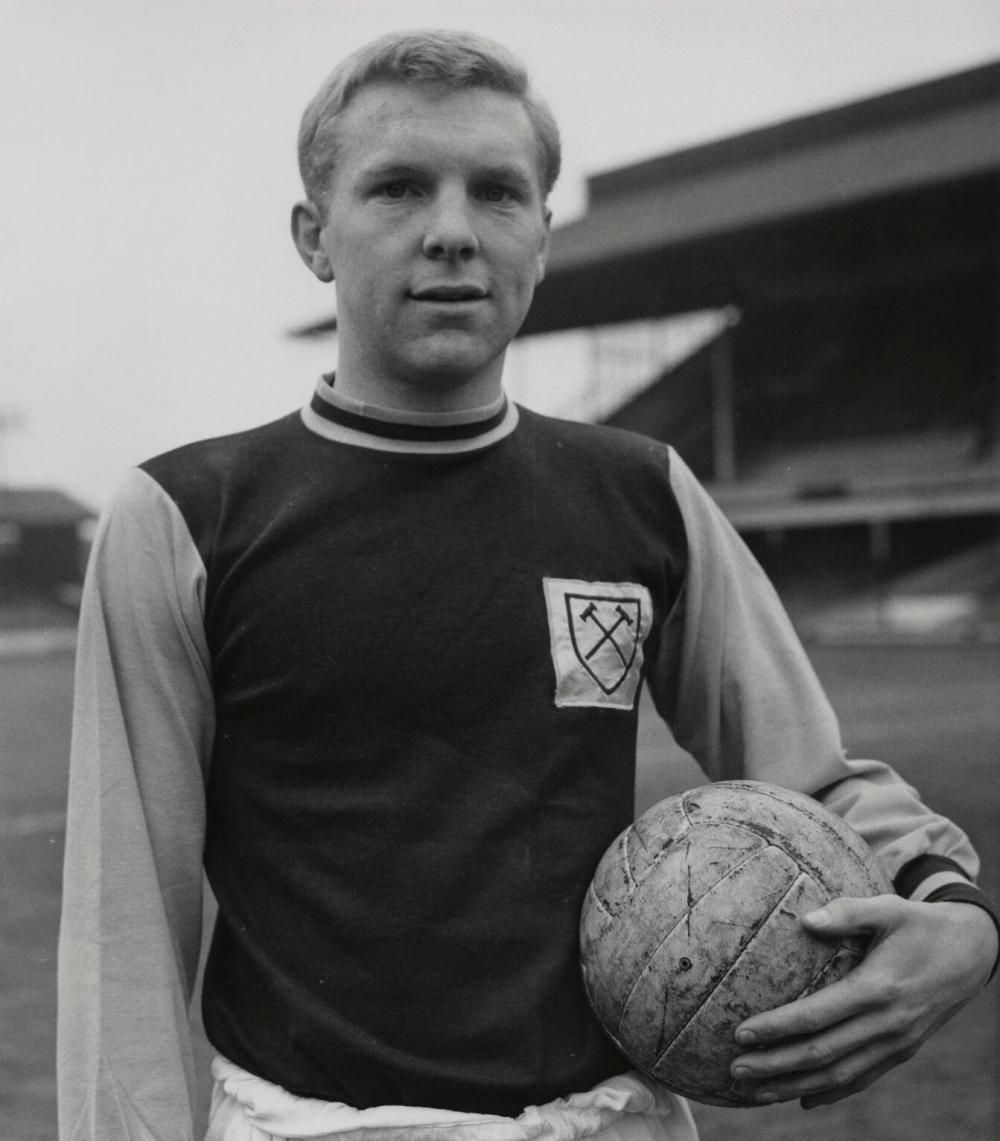
Bobby Moore
 United Kingdom
association football player•association football coach•sports commentator
Also known as: Robert Frederick Chelsea Moore
Birthday
April 12, 1941
Birth Sign
Aries
Birthplace
Barking, Essex, England
Age
Died at 51
Height
5 ft 10 in (178 cm)
About
Bobby Moore, born Robert Frederick Chelsea Moore on April 12, 1941, in Barking, Essex, was an English professional footballer widely regarded as one of the greatest defenders in history. He captained West Ham United for over a decade and led the England national team to their only FIFA World Cup victory in 1966, lifting the trophy at Wembley. Pelé called Moore the best defender he ever faced, a testament to his exceptional reading of the game and calm authority at the back.
Moore spent 16 years at West Ham, making more than 600 appearances. He won the FA Cup in 1964 and the UEFA Cup Winners' Cup in 1965, cementing his status as the club's greatest ever player. Individual honors included the FWA Footballer of the Year in 1964 and four West Ham Player of the Year awards. In 2008, West Ham retired his number 6 shirt, a rare tribute. Moore also earned 108 caps for England, a national record at the time, and served as captain from age 22. He remains an icon of English football, with a bronze statue at Wembley Stadium.
Moore's style set him apart from typical defenders. He relied on anticipation and positioning rather than brute force, reading play so well he rarely needed to make last-ditch tackles. In 1966, he became the first footballer to win the BBC Sports Personality of the Year, an award no other footballer claimed for 24 years. He received an OBE in 1967 and was an inaugural inductee into the English Football Hall of Fame in 2002. Moore died on February 24, 1993, at age 51, but his legacy endures as a symbol of grace under pressure and footballing intelligence.
Early Life & Background
Bobby Moore grew up in Barking, a working-class area of Essex, in a football-mad household. His father, Robert Moore, was a laborer who encouraged his son's passion for the game. Young Bobby played endlessly on the streets and local parks, developing the close control and awareness that would define his career. He attended Westbury Primary School and later Barking Abbey School, where his football talent caught the eye of scouts. At 14, he joined West Ham United's youth academy in 1956, a decision that shaped his life. He balanced training with an apprenticeship as a sheet-metal worker, a trade he pursued until football became his full-time focus. Moore made his professional debut for West Ham on September 8, 1958, in a Second Division match against Manchester United, just months after the Munich air disaster. That game, a 3-3 draw, marked the start of a 16-year association with the club. He quickly established himself as a composed and intelligent defender, earning a regular first-team spot by the 1959-60 season.
Career Growth
Moore's breakthrough came in 1964 when he captained West Ham to FA Cup glory, beating Preston North End 3-2 in the final. The following year, he led the Hammers to the UEFA Cup Winners' Cup, a 2-0 victory over 1860 Munich at Wembley. These triumphs set the stage for 1966, the pinnacle of his career. Moore captained England to World Cup victory, a 4-2 extra-time win over West Germany. His performance throughout the tournament was flawless, including a man-of-the-match display in the final. He became the first footballer to win BBC Sports Personality of the Year that December. Moore continued to excel internationally, earning 108 caps and captaining England 90 times. He played in the 1970 World Cup, where his famous tackle on Jairzinho in the group stage against Brazil became iconic. After 16 years at West Ham, he left in 1974, joining Fulham. At 33, he helped Fulham reach the 1975 FA Cup final, though they lost to West Ham. He later played for Seattle Sounders in the NASL and Herning Fremad in Denmark before retiring in 1978. Post-playing, he worked as a coach for Oxford City and Southend United, and as a sports commentator for BBC Radio and Capital Radio.
Career Timeline
Public Image & Style
Moore was known for his calm, unflappable demeanor on the pitch, earning the nickname 'The Gentleman Captain.' He rarely argued with referees or opponents, preferring to let his football do the talking. Off the pitch, he was equally composed, with a sharp dress sense that made him a style icon of 1960s English football. Media often portrayed him as the ideal English sportsman: modest, intelligent, and loyal. Fans revered him not just for his World Cup triumph but for his dignity in adversity, including his battle with cancer. The Bobby Moore Fund has raised millions for bowel cancer research, ensuring his name remains associated with both sporting greatness and charitable impact. His legacy is celebrated annually at West Ham's Bobby Moore Day.
Fame & Fandom (iFAMOUS Rankings)
Bobby Moore's enduring fame rests not on a single title but on a legacy so vast that his fanbase needs no formal name. West Ham United supporters, England fans, and football purists worldwide simply revere him as the quintessential captain. There is no 'Moore Army' or official collective; instead, his admirers channel their devotion through institutional tributes like the Bobby Moore Academy, the Bobby Moore Fund for cancer research, and the annual birthday commemorations that West Ham and England fans share online each April 12. The club's own channels keep his memory alive, as seen in their 2026 tribute marking what would have been his 85th birthday.
In the eyes of iFANN's Global Fame Engine, Bobby Moore's fame is both monumental and curiously unranked. As of August 2026, the Engine has evaluated him but does not currently place him within its published rankings, neither the Global Top 1,000 nor any Top-100 scope list. This is not a slight; it reflects the Engine's current methodology, which weighs contemporary global media and search signals. Moore's fame is historical, built on a 1966 World Cup triumph and a career that ended decades ago, yet his name remains ubiquitous in football discourse. His status as a legend is secure, even if the numbers don't currently capture it.
Interesting Facts and Legends
Moore was the first footballer to win the BBC Sports Personality of the Year award in 1966, a feat no other footballer repeated until 1990. He was an accomplished cricketer in his youth, playing for Essex schools. Moore's number 6 shirt at West Ham was retired in 2008, the first time the club had done so. He had a rivalry with Leeds United's Norman Hunter, who famously said Moore was the only defender he'd pay to watch. Moore's statue at Wembley was unveiled in 2007, and there is another at West Ham's London Stadium. He appeared as a guest on the TV show 'This Is Your Life' in 1973.
Among the legends that surround Moore, one stands out: his perfectly timed tackle on Jairzinho during the 1970 World Cup match against Brazil. Pelé called it the greatest tackle he'd ever seen, and the clip remains a masterclass in defending. Another story fans still retell is the Bogotá jewelry incident in 1970, when Moore was accused of stealing a bracelet, only to be cleared and rejoin his team, a moment that showed his resilience. And there is the poignant tale of his final years, when many felt the football establishment neglected him, a narrative that has become part of his mythology.
Notable Quotes
“I've always felt that if you're going to be a footballer, you've got to be a footballer. You can't be half a footballer.”
“The World Cup is the pinnacle. Nothing else compares.”
“I had a good career, but I would have loved to have played in a World Cup final and won it again.”
“Defending is about anticipation, not just tackling.”
“I was lucky to have great players around me. Football is a team game.”
Family & Personal Life
Moore was born to Robert Moore, a laborer, and Doris Moore. He had a close relationship with his parents, who supported his football career from the start. He married Tina Dean in 1961, and they had two children: Roberta (born 1962) and Dean (born 1964). The marriage ended in divorce in 1977. In 1980, he married Stephanie Parlane, a former model, and they remained together until his death. Stephanie later became a trustee of the Bobby Moore Fund, a cancer research charity established in his memory. Moore's son Dean followed him into football but played at a lower level, and his daughter Roberta works in the fashion industry.
Notable Connections
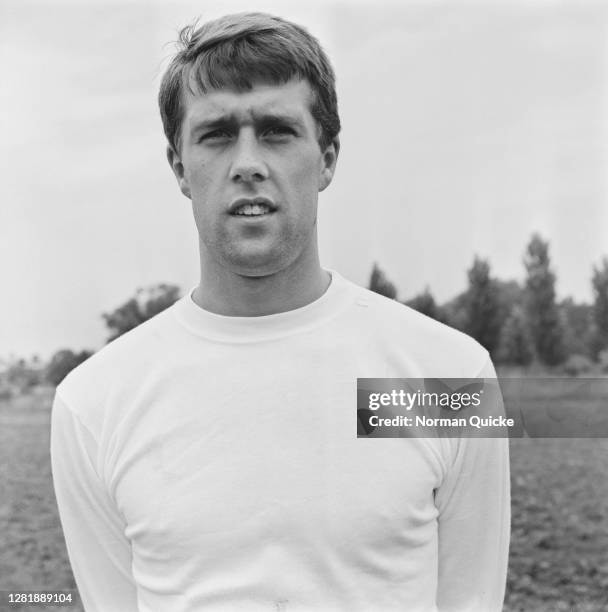
Bobby Moore is closely associated with West Ham United and the England national team, where he spent his prime years. He played alongside Geoff Hurst and Martin Peters at West Ham and England, forming a key trio in the 1966 World Cup final. His rivalry with Brazilian great Pelé was legendary, with Pelé calling him the toughest defender. Moore also crossed paths with Franz Beckenbauer, who admired his style. In his later career, he played with Alan Mullery at Fulham and alongside George Best briefly at the Seattle Sounders.
Relationships & Dating History
Bobby Moore married Tina Dean in 1961. They had two children together, Roberta and Dean. The marriage faced strain from Moore's football commitments and ended in divorce in 1977. In 1980, he married Stephanie Parlane, a former model and actress. They remained together until his death in 1993. Stephanie became a prominent charity figure, chairing the Bobby Moore Fund. Moore had no other publicly known relationships.
- MarriedTina Dean1961 - 1977Married in 1961, had two children, divorced in 1977.
- MarriedStephanie Parlane1980 - 1993CurrentMarried in 1980, remained together until Moore's death in 1993.
Death & Aftermath
Died
February 24, 1993 (aged 51)
Death Place
London, England, UK
Cause of Death
Colon cancer
Bobby Moore's final public appearance occurred at the 1992 FA Cup Final in May, where he presented the trophy to Liverpool before his health deteriorated rapidly over the following months. He passed away on February 24, 1993, at Charing Cross Hospital in London after a battle with colon cancer that had recurred despite surgery earlier in 1992. The cause was officially confirmed by hospital records and attending physicians. Tributes poured in immediately from across the footballing world, with Sir Geoff Hurst describing him as an immaculate man of character while legends like Pelé and Franz Beckenbauer reiterated their praise for the greatest defender they had ever faced. Fan vigils gathered outside West Ham United's Boleyn Ground and thousands attended a memorial service held on March 2, 1993, at St.
Paul's Cathedral in London. Dignitaries including Prime Minister John Major and Football Association chairman Rous joined former teammates and colleagues for a military-style procession featuring hymns and football anthems. Following the service, Moore was cremated and his ashes interred at Romford Cemetery in Essex. Posthumous recognition included his induction into the English Football Hall of Fame in 2002, alongside statues erected outside the Boleyn Ground and near Wembley Stadium entrance. The Bobby Moore Fund, established by family and friends, continues to support cancer research, while documentaries such as Bobby Moore: England's Greatest Captain explore his life and legacy.
Net Worth (Estate Value)
$5 Million
iFANN Editorial Team estimate
iFANN's editorial analysis estimates Bobby Moore's net worth at the time of his death in 1993 at $5 million, a figure that reflects his modest earnings during his playing career. West Ham paid him a top wage of about 150 pounds per week in the 1960s, and his post-retirement income came from coaching roles and broadcasting work with BBC Radio and Capital Radio. Endorsements were limited but included deals with brands like Umbro and Coca-Cola. His estate, managed by his widow Stephanie, has benefited from posthumous royalties, licensing of his image, and the success of the Bobby Moore Fund. A bronze statue at Wembley and shirt retirement at West Ham have kept his name commercially relevant. As of 2026, his estate is valued at approximately $5 million, driven by ongoing merchandise sales and documentary rights.
Awards Won (6)
Bobby Moore won the FWA Footballer of the Year in 1964 and the BBC Sports Personality of the Year in 1966. He was named West Ham Player of the Year four times (1964, 1965, 1969, 1970). He received an OBE in 1967 and was inducted into the English Football Hall of Fame in 2002.
1964 · Player of the Year
West Ham United
1966 · Sports Personality of the Year
England national team
Known For
1966 FIFA World Cup
1966 · Captain of England
West Ham United
1958-1974 · Captain and Defender
FA Cup Winner
1964 · Captain
UEFA Cup Winners' Cup Winner
1965 · Captain
Keywords
Quick Facts
- Profession
- association football player, association football coach, sports commentator
- Born
- +1941-04-12
- Birthplace
- Barking
- Died
- +1993-02-24
- Death Place
- London
- Gender
- Male
- Birth Sign
- Aries
Personal Details
- Full Name
- Robert Frederick Chelsea Moore
- Height
- 5 ft 10 in (178 cm)
- Spouse
- Stephanie Parlane
- Children
- Roberta, Dean
Frequently Asked Questions
What is Bobby Moore's net worth in 2026?
How old was Bobby Moore when he died?
Is Bobby Moore still considered one of the greatest defenders?
What made Bobby Moore's playing style unique?
How many caps did Bobby Moore earn for England?
Join the community
fans discussing