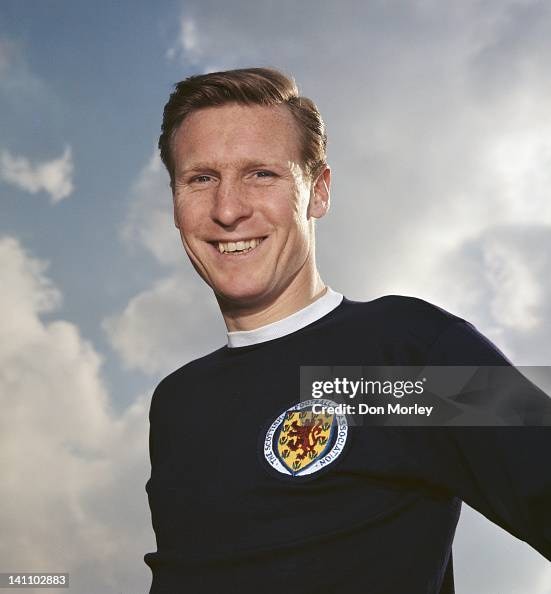
Billy McNeill
 United Kingdom
association football player•association football coach
Also known as: William McNeill, Cesar, Caesar
Birthday
March 2, 1940
Birth Sign
Pisces
Birthplace
Bellshill, Lanarkshire, Scotland
Age
Died at 79
About
Billy McNeill was a Scottish footballer and manager whose long association with Celtic made him one of the most revered figures in Scottish football history. A commanding central defender and inspirational captain, he spent his entire playing career at Celtic, setting the club's all-time appearance record and captaining the side through an era of unprecedented dominance. His crowning moment came in 1967, when he lifted the European Cup as captain of the Lisbon Lions, the first British club to win the trophy. After retiring, he became a successful manager, leading Celtic to further league titles across two spells, including a memorable double in the club's centenary season. Honored with a statue outside Celtic Park and beloved by supporters, he remained a treasured figure until his death in 2019.
Early Life & Background
McNeill was born in Mossend, Bellshill, to Jimmy McNeill, a soldier in the Black Watch, and Nellie, whose parents were Lithuanian immigrants. For his early childhood the extended family lived in a miners' row cottage. When he was nine, his father was posted to Hereford, England, where McNeill attended a rugby-playing school and showed promise as a winger. After two and a half years the family returned to Scotland, and he completed his schooling at Our Lady's High School in Motherwell, a noted breeding ground for footballers. He began playing football with junior side Blantyre Victoria. In 1957, Jock Stein, then Celtic's youth coach, saw him play for Scotland schoolboys against England and immediately sought his signature. Stein asked McNeill's mother: 'If he steps out of line, is it OK if I give him a skelp?' He signed for Celtic on 2 August 1957 for a £250 fee. His senior debut came on 23 August 1958 in a 2-0 win against Clyde.
Career Growth
McNeill developed into a commanding centre-half under Jock Stein, who made him captain in 1965. That same year he was named Scottish Player of the Year. His leadership culminated on 25 May 1967, when he captained Celtic to a 2-1 victory over Inter Milan in the European Cup final in Lisbon, making Celtic the first British club to win the trophy. Over his playing career he won nine consecutive Scottish league titles (1965-66 through 1973-74), seven Scottish Cups, and six League Cups. He made 822 appearances across all competitions, a club record, and was never once substituted. After retiring in 1975, he managed Clyde, Aberdeen, Manchester City, Aston Villa, and Celtic in two spells (1978-1983 and 1987-1991), winning four league championships. At Aberdeen he signed Gordon Strachan from Dundee in 1977, a landmark transfer. His second Celtic spell brought a league and cup double in 1987-88, the club's centenary season. In 2009 he became Celtic's first official club ambassador.
Career Timeline
Public Image & Style
McNeill was revered as a commanding central defender whose leadership and authority defined Celtic's golden era. Known universally as 'Cesar' among supporters, his iconic image is holding the European Cup aloft in Lisbon. The media portrayed him as intelligent, articulate, and possessing strong leadership qualities that enhanced the image of an exceptional sportsman and role model. His statue outside Celtic Park, unveiled in 2015, is a pilgrimage site for fans, who regularly pay tribute before matches. His name is chanted and celebrated in Celtic fan culture, and he was widely regarded as the embodiment of the club's spirit and values.
Fame & Fandom (iFAMOUS Rankings)
Billy McNeill stands as the definitive embodiment of Celtic FC's identity, revered not by a singular organized fandom bearing his name, but as the moral and tactical architect of the club's greatest era. While the general supporter base is known as the Bhoys, they collectively view McNeill as 'The Captain' or 'Big Billy,' maintaining his legacy through institutional reverence rather than subgroups. His influence remains profound; he is the standard-bearer for the Lisbon Lions generation, with fans treating the annual commemoration of the 1967 victory as a primary ritual of their heritage. Following his passing in 2019, an unprecedented outpouring of grief saw thousands line the streets of Glasgow, cementing his status as a cultural icon whose memory is preserved through digital campaigns, statues, and the retirement of his number 6 jersey in spirit. The narrative surrounding him is anchored in verified history: on May 25, 1967, he lifted the European Cup, becoming the first British footballer to hold the trophy, a feat celebrated globally and defining the mythology of Scottish football. Stories of his demanding leadership style during the Double Treble season and his later role as a manager who stabilized the club after relegation are widely retold, painting a portrait of a stoic authority figure who commanded absolute respect. Although recent coverage has highlighted his battle with dementia and his mentorship of future generations like Sir Alex Ferguson, the core of his fame remains the Lisbon Lions achievement. According to the August 2026 evaluation by iFANN, Billy McNeill is currently evaluated but holds no placement in the published rankings.
Interesting Facts and Legends
Teammates bestowed the nickname 'Cesar' upon McNeill following Cesar Romero, the getaway driver in the original 1960 film Ocean's 11, though the spelling later evolved to 'Caesar' to better suit his imperious bearing. He was one of the few players of his era to own a car, which made him the designated driver for the squad. Remarkably, he played every single minute of his 822 games for Celtic without ever being substituted. Before returning to football, he showed promise as a winger while playing rugby union during his childhood in Hereford. His debut for Scotland occurred in the infamous 9–3 defeat against England at Wembley in 1961. His maternal grandparents were Lithuanian immigrants. All members of the 1967 European Cup-winning team were Scottish, and all but one were born within 10 miles of Celtic Park. A widely retold story from his career highlights his role as the only man to captain Celtic to nine consecutive league titles, a feat often cited as the pinnacle of his leadership. Fans continue to gather annually to commemorate the 1967 Lisbon Lions victory, treating the event as a primary ritual of their heritage. Another pervasive legend involves his leadership during the 'Double Treble' season, where Celtic won the League, Scottish Cup, and League Cup in a single campaign, a feat only achieved once in British football history. Anecdotes from the 1980s describe him as a manager who demanded absolute discipline, with stories circulating about him confronting players for poor performance, reinforcing his reputation as a no-nonsense leader who commanded respect through sheer presence.
Notable Quotes
“If he steps out of line, is it OK if I give him a skelp?, Jock Stein to Billy McNeill's mother, as recalled by McNeill.”
Family & Personal Life
McNeill married Liz Callaghan in 1963 in what was described as Scotland's 'wedding of the year.' Liz was a dancer on the television variety show The White Heather Club. They had five children: Susan, Carol, Libby, Paula, and Martyn, and eight grandchildren. The family lived in Newton Mearns, where McNeill died. His father Jimmy served in the Black Watch and later the Army Physical Training Corps. His mother Nellie's parents were Lithuanian immigrants. During McNeill's childhood the extended family lived in a miners' row cottage in Mossend.
Notable Connections
McNeill's career was closely tied to Jock Stein, who signed him and made him captain. He also managed Gordon Strachan at Aberdeen in a landmark transfer. Fellow Lisbon Lions included Bobby Lennox, Jimmy Johnstone, and Billy McNeill's defensive partner John Clark. His wife Liz Callaghan was a dancer on The White Heather Club.
Relationships & Dating History
McNeill married Liz Callaghan in 1963 in what was described as Scotland's 'wedding of the year.' Liz was a dancer on the television variety show The White Heather Club. They remained married until McNeill's death on 22 April 2019. They had five children together. No other public romantic relationships have been documented.
- MarriedLiz Callaghan1963 - 2019Met through her work as a dancer on The White Heather Club; married in 1963 and had five children together.
Death & Aftermath
Died
April 22, 2019 (aged 79)
Death Place
Scotland
Cause of Death
dementia (reported by family)
Tributes poured in from peers and institutions, with Sir Alex Ferguson noting the legendary captain's fierce competitiveness while Celtic FC mourned the loss of the 'Caesar' of the Lisbon Lions. Fan vigils gathered at Celtic Park as supporters paid their respects to the club icon who had served as an ambassador until his final days. Billy McNeill passed away on April 22, 2019, at the age of 79. His death followed a long decline attributed to dementia, a condition his family confirmed in February 2017. While specific details regarding the funeral service remain unconfirmed in available records, the immediate reaction saw widespread recognition across the football world, including statements from the Scottish FA and major media outlets like the BBC and The Guardian. Posthumously, his legacy has been maintained through historical recognition, such as his induction into the Scottish Sports Hall of Fame, alongside retrospectives and documentaries revisiting his career and the 1967 triumph.
Net Worth (Estate Value)
As Billy McNeill died in 2019, his estate value is not publicly documented. During his lifetime, his wealth derived from his playing salary at Celtic (1957-1975), managerial salaries at Clyde, Aberdeen, Manchester City, Aston Villa, and Celtic, and his later role as Celtic's club ambassador from 2009. Posthumous revenue may come from licensing of his image, merchandise related to his statue, and any book royalties. The estate is managed by his surviving wife Liz Callaghan and their five children.
Awards Won (24)
McNeill won 31 major trophies with Celtic as a player and manager combined. As a player he won the European Cup, nine Scottish league titles, seven Scottish Cups, and six League Cups. He was named Scottish Player of the Year in 1965. As a manager he won four Scottish league titles, one Scottish Cup, and one League Cup.
1974 · League Title
Celtic
1973 · League Title
Celtic
1972 · League Title
Celtic
1971 · League Title
Celtic
1970 · League Title
Celtic
1969 · League Title
Celtic
1968 · League Title
Celtic
1967 · League Title
Celtic
1966 · League Title
Celtic
1967 · Continental Trophy
Celtic
Known For
Captaining Celtic to European Cup victory (1967)
1967 · Captain
Most appearances for Celtic (822)
1975 · Player
Winning nine consecutive Scottish league titles
1966-1974 · Player
Managing Celtic to centenary double (1988)
1988 · Manager
Keywords
Sources
Quick Facts
- Profession
- association football player, association football coach
- Born
- +1940-03-02
- Birthplace
- Bellshill
- Died
- +2019-04-22
- Death Place
- Newton Mearns
- Gender
- Male
- Birth Sign
- Pisces
Personal Details
- Full Name
- William McNeill
- Spouse
- Liz Callaghan
- Children
- 5 (Susan, Carol, Libby, Paula, Martyn)
- Education
- Our Lady's High School, Motherwell
Frequently Asked Questions
How many appearances did Billy McNeill make for Celtic?
Did Billy McNeill ever play for another club?
How many trophies did Billy McNeill win?
Was Billy McNeill ever a manager?
Why was Billy McNeill called Cesar?
Similar People
Join the community
fans discussing