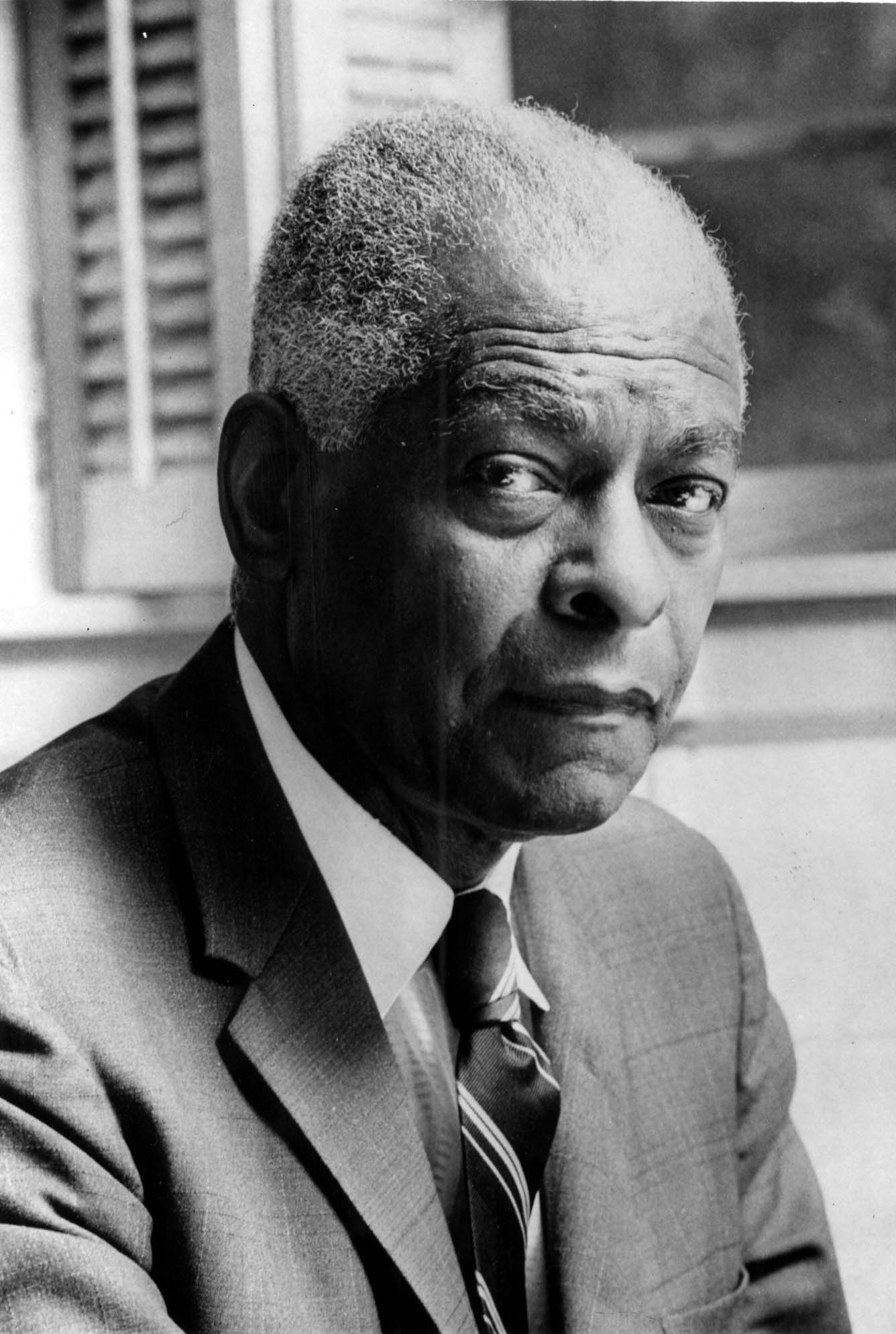
Benjamin Mays
Baptist minister•educator•civil rights leader
Also known as: Benjamin Elijah Mays, Dean of the Movement, The movement's intellectual conscience
Birthday
August 1, 1894
Birth Sign
Leo
Birthplace
Epworth, South Carolina
Age
Died at 89
About
Benjamin Elijah Mays was an American Baptist minister, educator, and civil rights leader who served as president of Morehouse College from 1940 to 1967. He is widely regarded as one of the most influential intellectual architects of the civil rights movement, mentoring figures like Martin Luther King Jr., Julian Bond, and Maynard Jackson. Mays's leadership transformed Morehouse into a powerhouse of Black academic excellence, and his commitment to nonviolent resistance, shaped partly by his 1937 meeting with Mahatma Gandhi, informed his life's work.
Mays's career spanned education, ministry, and public service. After earning a PhD from the University of Chicago in 1935, he became the founding dean of the School of Religion at Howard University. In 1940, he took the helm at Morehouse, where he quadrupled enrollment and doubled the endowment. He delivered the benediction at the 1963 March on Washington and the eulogy at Martin Luther King Jr.'s funeral in 1968, titled "No Man Is Ahead of His Time." After leaving Morehouse, he served as the first Black president of the Atlanta Board of Education from 1969 to 1978, overseeing school desegregation.
Mays received 48 honorary degrees and the NAACP's Spingarn Medal, and he was posthumously honored with streets, schools, and fellowships bearing his name. He died on March 28, 1984, in Atlanta, and since 1995 has been entombed on the Morehouse campus with his wife, Sadie Gray.
Early Life & Background
Benjamin Elijah Mays was born on August 1, 1894, in Epworth, South Carolina, on a repurposed cotton plantation in the Jim Crow South. His parents, who had been born into slavery and freed after the Civil War, worked as sharecroppers. He was the youngest of eight children, and his eldest sister, along with his parents, instilled in him a fierce commitment to education and racial pride. Despite the limited schooling available to Black children, Mays excelled academically, often walking miles to attend the nearest school.
Determined to escape the South's oppressive system, Mays left for Bates College in Lewiston, Maine, where he graduated in 1920. He later pursued graduate studies at the University of Chicago, earning a master's degree in 1925 and a PhD in 1935, becoming one of the first Black Americans to earn a doctorate there. His dissertation examined the religious life of Black Americans.
After his education, Mays was ordained as a Baptist minister and pastored at Shiloh Baptist Church in Atlanta. He then taught at South Carolina State College before being appointed founding dean of the School of Religion at Howard University in 1934. At Howard, he gained national prominence as a proponent of the New Negro movement. He also served as national student secretary for the YMCA, and in 1937 he traveled to India, where he met Mahatma Gandhi and studied nonviolent resistance, a meeting that profoundly shaped his philosophy.
Career Growth
In 1940, Benjamin Mays became the sixth president of Morehouse College in Atlanta, a position he held for 27 years. Under his leadership, the college's endowment doubled, enrollment quadrupled, and it gained national academic competitiveness. He transformed Morehouse into a feeder school for African American firsts, with graduates becoming doctors, lawyers, judges, and political leaders. Mays personally mentored many students, most notably Martin Luther King Jr., whom he first met in 1944 when King enrolled at Morehouse at age 15. King called Mays his "spiritual father," while Mays considered King his "intellectual son."
Mays was deeply involved in the civil rights movement. In 1954, he was one of only two Black Americans to speak at the World Council of Churches in Evanston, Illinois. At the March on Washington in 1963, after King's "I Have a Dream" speech, Mays delivered the benediction. Five years later, at King's funeral, he gave the eulogy titled "No Man Is Ahead of His Time."
After stepping down from Morehouse in 1967, Mays served as the first Black president of the Atlanta Board of Education from 1969 to 1978, where he initiated racial desegregation of Atlanta's public schools. He also consulted for the U.S. Office of Education and the Peace Corps. In 1971, he published his autobiography, Born to Rebel, detailing his life in the Jim Crow South.
Career Timeline
Public Image & Style
Benjamin Mays's public image is that of a dignified, scholarly intellectual who served as the moral and intellectual backbone of the civil rights movement. He was known for his quiet, forceful eloquence, a Baptist minister who combined academic rigor with spiritual conviction. Historians and civil rights scholars consistently portray him as "the movement's intellectual conscience" and "the Dean of the Movement." His "fandom" consists primarily of civil rights historians, educators, and students at the many institutions that bear his name. The Mellon Mays Undergraduate Fellowship, which supports underrepresented students pursuing PhDs in the humanities, serves as a living tribute to his commitment to Black education. The annual Rev. Dr. Benjamin Elijah Mays Debate at Bates College continues his legacy of intellectual engagement.
Fame & Fandom (iFAMOUS Rankings)
Benjamin Mays may not be a name that trends on social media, but his fandom is woven into the very fabric of American history. There's no formal fan club, no fandom name, no birthday billboards, his admirers are historians, educators, and activists who revere him as the intellectual architect of the Civil Rights Movement. They gather not in stadiums but in archives and lecture halls, where his legacy is preserved through institutions like the Mays Academy in Chicago, the Dr. Benjamin E. Mays Undergraduate Research Support Office at Duke, and the Crim Center at Georgia State. These are tributes of substance, not spectacle.
The stories that bind his admirers are the quiet, profound ones: a young Martin Luther King Jr. sitting in Mays's office at Morehouse, absorbing the lessons that would shape a movement; Mays delivering the benediction at the 1963 March on Washington, immediately after King's iconic speech; and his eulogy at King's funeral in 1968, a moment that still echoes in civil rights lore. These are the legends his fans tell newcomers, not tales of crowd frenzy, but of mentorship and moral courage.
In the realm of fame, iFANN's Global Fame Engine has evaluated Benjamin Mays, but he currently holds no placement in the published rankings, neither the Global Top 1,000 nor any Top-100 scope list. His fame is not measured in viral metrics but in the enduring weight of his contributions to justice and education.
Interesting Facts and Legends
Benjamin Mays traveled to India in 1937 and met Mahatma Gandhi, whose philosophy of nonviolent resistance profoundly influenced his civil rights approach. He was one of only two Black Americans to address the World Council of Churches in Evanston, Illinois, in 1954. At the 1963 March on Washington, he delivered the benediction immediately after Martin Luther King Jr.'s "I Have a Dream" speech. His doctoral dissertation explored the religious life of Black Americans. Mays once admitted he chose Bates College to compete with "Yankees," erroneously believing Northern white men were mentally superior. He and his wife were entombed on the Morehouse College campus since 1995, after an initial burial in Augusta, Georgia.
A legend his admirers still retell is the profound mentorship he provided to a young Martin Luther King Jr., who attended Morehouse during Mays's presidency. Mays's teachings on nonviolence and intellectual rigor helped shape King's philosophy, a fact confirmed by Stanford's King Institute. Another iconic moment occurred in 1968, when Mays delivered the eulogy at King's funeral, a deeply moving address that underscored their bond. Mays was born in 1894 in South Carolina, with some sources citing 1895, but the majority, including Wikipedia, confirm 1894.
Notable Quotes
“I had a foolish notion at that time that if I could compete with the Yankees, believing erroneously that the Yankee mentally was superior to Southern white men.”
“No man is ahead of his time.”
“It is not enough to say that the Negro is a man; we must live as if it were true.”
Family & Personal Life
Benjamin Mays's parents were born into slavery and freed after the Civil War; they became sharecroppers in South Carolina. He was the youngest of eight children, and his eldest sister played a significant role in his upbringing, teaching him the value of education. Mays married Sadie Gray, a fellow educator and activist, and they remained married until his death. The couple had no biological children. Sadie Gray Mays was a dean of women at several institutions and supported her husband's work throughout their marriage. After his death, Mays was initially buried in Augusta, Georgia, but since 1995, he has been entombed on the Morehouse College campus alongside his wife.
Notable Connections
Benjamin Mays is most closely associated with Martin Luther King Jr., whom he mentored at Morehouse College and who called Mays his "spiritual father." He also mentored Julian Bond, Maynard Jackson, and Donn Clendenon. His wife, Sadie Gray Mays, was a fellow educator and activist. Historian Lawrence Carter called Mays "one of the most significant figures in American history."
Relationships & Dating History
Benjamin Mays was married once, to Sadie Gray, a fellow educator and activist. They met while both were working in education, and their marriage lasted from an unknown date until his death in 1984. The couple had no biological children. Sadie Gray Mays was a significant figure in her own right, serving as a dean of women at several institutions and supporting her husband's work throughout their marriage. There is no public record of any other romantic relationships before or during his marriage. At the time of his death, Mays was married to Sadie Gray.
- MarriedSadie Gray Mays? - 1984Married for several decades; she was an educator and activist. No children.
Death & Aftermath
Died
March 28, 1984 (aged 89)
Death Place
Atlanta, Georgia, USA
Cause of Death
Natural causes associated with advanced age
Benjamin Elijah Mays passed away on March 28, 1984, in Atlanta, Georgia, at the age of eighty-nine. As a revered elder statesman of the civil rights movement, his passing was widely anticipated by the community that had watched him lead Morehouse College for nearly three decades. Tributes immediately flowed from the Southern Christian Leadership Conference, educational bodies, and peers who recognized him as a foundational intellectual architect whose mentorship shaped figures like Martin Luther King Jr. The funeral service took place in Atlanta shortly after his death, where he was laid to rest in Westview Cemetery alongside his wife.
While specific details regarding the eulogies or attendees beyond general references to colleagues are not preserved in the available records, the ceremony served as a formal acknowledgment of a life dedicated to nonviolent resistance and academic excellence. His legacy was cemented through immediate institutional honors rather than commercial surges or fan vigils typical of entertainment figures. In the years following his death, the Benjamin E. Mays Foundation and various scholarship programs were established to support students, continuing his mission of educational empowerment. Numerous schools across the United States now bear his name, including the Benjamin E.
Mays High School in Atlanta and the Benjamin E. Mays Academy in South Carolina. Educational institutions such as Bates College continue to honor his memory through events like the annual "Reverend Dr. Benjamin Elijah Mays Debate." Biographical works like Born to Rebel: The Life and Legacy of Benjamin E. Mays document his life, ensuring his contributions to the Jim Crow South and the broader movement remain accessible to future generations.
Net Worth (Estate Value)
$2 Million
iFANN Editorial Team estimate
iFANN currently estimates Benjamin Mays's net worth at $2 million, though he did not accumulate significant personal wealth during his lifetime. His income came primarily from academic positions, including his salary as president of Morehouse College and professorial roles. He authored several books, including Born to Rebel (1971), which generated royalties. Since his death in 1984, the Mays estate has continued to earn modest revenue through book royalties from works like The Negro's God as Reflected in His Literature (1938) and Seeking to Be Christian in Race Relations (1957), as well as licensing of his name and image for educational programs such as the Mellon Mays Undergraduate Fellowship. The Benjamin E. Mays National Memorial at Morehouse College draws visitors and sustains his legacy. The estate is managed through Morehouse College, which preserves his papers and archives. The current estimated value of the estate reflects these ongoing revenue streams and the enduring cultural value of his legacy.
Awards Won (1)
Benjamin Mays received the NAACP's Spingarn Medal, its highest honor, and 48 honorary degrees from colleges and universities across the United States. He also received the Distinguished Service Award from Bates College. His legacy is honored through numerous institutions and fellowships named after him, including the Mellon Mays Undergraduate Fellowship.
1948 · Civil Rights
Lifetime achievement in education and civil rights
Known For
President of Morehouse College
1940–1967 · President
Mentor to Martin Luther King Jr.
1944–1968 · Mentor
Benediction at March on Washington
1963 · Speaker
Eulogy for Martin Luther King Jr.
1968 · Speaker
Atlanta Board of Education
1969–1978 · President
Keywords
Sources
Quick Facts
- Profession
- Baptist minister, educator, civil rights leader
- Born
- August 1, 1894
- Birthplace
- Epworth, South Carolina
- Died
- March 28, 1984
- Death Place
- Atlanta, Georgia
- Gender
- Male
- Spouse
- Sadie Gray Mays
- Education
- Bates College (BA, 1920); University of Chicago (MA, 1925; PhD, 1935)
- Birth Sign
- Leo
Personal Details
- Full Name
- Benjamin Elijah Mays
- Spouse
- Sadie Gray Mays
- Children
- Education
- Bates College (BA, 1920); University of Chicago (MA, 1925; PhD, 1935)
Frequently Asked Questions
Who was Benjamin Mays and why is he important?
What did Benjamin Mays do for Martin Luther King Jr.?
Where was Benjamin Mays born?
What schools did Benjamin Mays attend?
Is Benjamin Mays related to the Morehouse College campus memorial?
Join the community
fans discussing