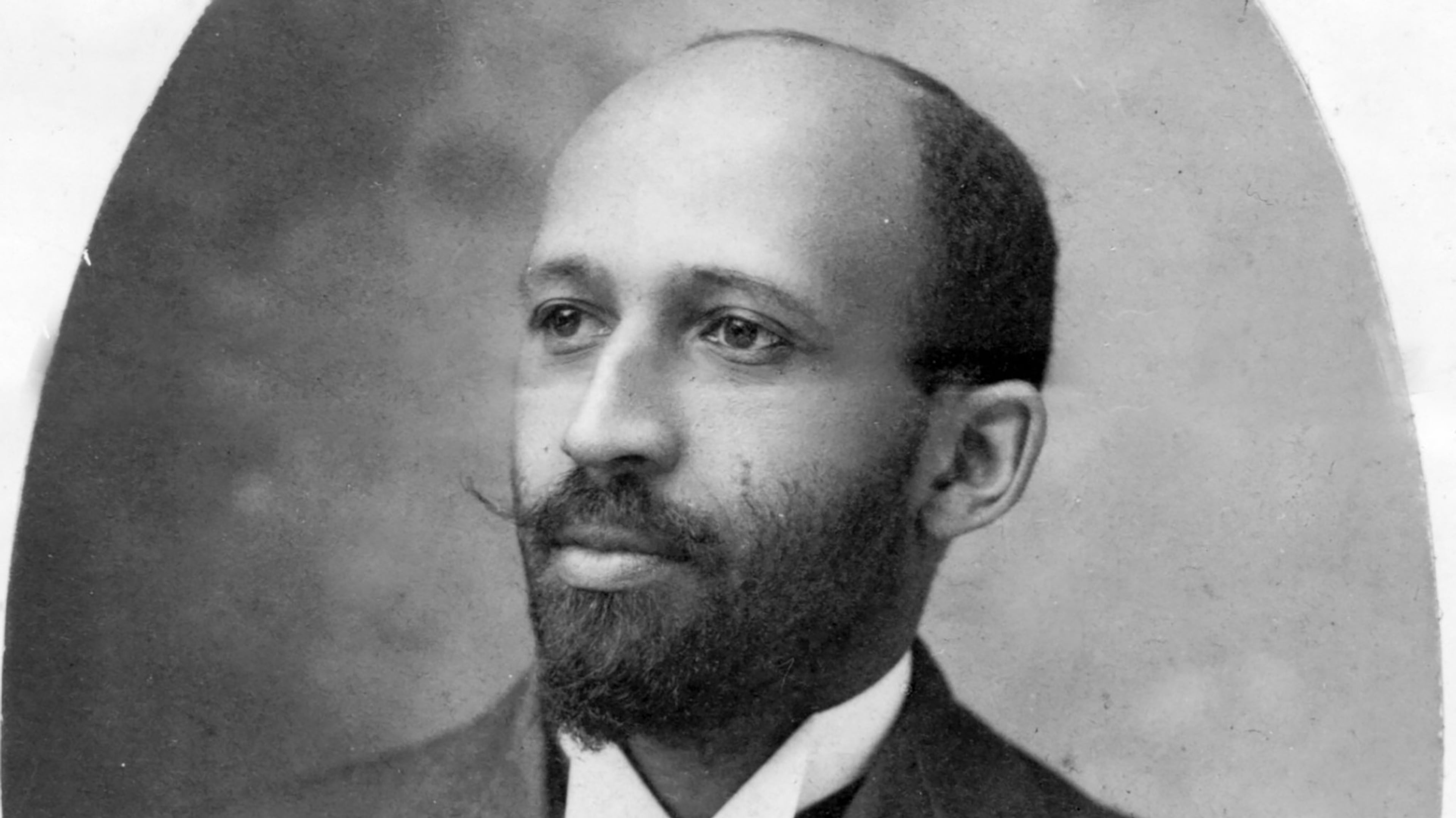
W. E. B. Du Bois
 United States
sociologist•historian•author•editor•civil rights activist
Also known as: W.E.B. Du Bois, William Edward Burghardt Du Bois, Du Bois
Birthday
February 23, 1868
Birth Sign
Sagittarius
Birthplace
Great Barrington, Massachusetts, United States
Age
Died at 95
Height
5 ft 10 in (178 cm)
About
William Edward Burghardt Du Bois was a preeminent American sociologist, historian, author, editor, and Pan-Africanist civil rights activist who dedicated his life to the fight against racial injustice. Born in Great Barrington, Massachusetts, he became the first African American to earn a doctorate from Harvard University in 1895. His career spanned nearly seven decades of scholarship and activism, during which he co-founded the National Association for the Advancement of Colored People (NAACP) and edited its magazine The Crisis. He is best known for his seminal works including The Souls of Black Folk and Black Reconstruction in America, which fundamentally altered the understanding of American history and the role of Black people within it.
Du Bois championed Pan-Africanism and organized multiple international congresses to demand self-determination for African colonies. In his later years, he embraced socialism and moved to Accra, Ghana, where he died at the age of 95. His death occurred just days before the passage of the U.S. Civil Rights Act of 1964. Throughout his life, he faced intense scrutiny from the FBI and was blacklisted by mainstream academic circles due to his political views. As of 2026, his legacy remains vibrant with new documentaries airing on PBS American Masters and renewed academic focus on his socialist theories and data visualization techniques. Recent publications in journals like Jacobin and Bomb Magazine continue to highlight his status as a visionary whose ideas on race and globalization are more relevant than ever. He is frequently cited in lists of the top 100 sociologists of the 20th century and named one of the 100 Most Important People of the 20th Century by TIME.
Early Life & Background
William Edward Burghardt Du Bois entered the world on February 23, 1868, in Great Barrington, Massachusetts. His father, Alfred Du Bois, was a laborer of mixed African and Dutch ancestry who abandoned the family when William was three years old. His mother, Mary Silvina Burghardt, worked as a domestic servant to support her son despite their poverty. The town of Great Barrington was notable for its relative racial tolerance compared to other parts of the country, allowing young William to attend school with white children and participate in community events without the immediate stigma of segregation that defined much of the South.
His academic potential was recognized early, and he attended Fisk University in Nashville, Tennessee, on a scholarship. It was here that he encountered the harsh realities of Jim Crow segregation for the first time, an experience that radicalized his political views and set the course for his future activism. After graduating in 1888, he returned to the North to study at Harvard University. He earned a second bachelor's degree in 1890 and continued his graduate work focusing on history and sociology. In 1895, he made history by becoming the first African American to receive a Ph.D. from Harvard, writing a dissertation titled The Suppression of the African Slave-Trade to the United States of America, 1638–1870.
Following his doctorate, Du Bois pursued postgraduate studies at the University of Berlin, where he was influenced by German historical methods and social theory. This rigorous academic training provided the foundation for his later sociological studies. Before his rise to national prominence, he taught at Wilberforce University in Ohio and began his extensive research into Black life in the South. These early years of scholarship and teaching established him as a serious intellectual before he would go on to lead major civil rights movements. He also spent time studying in Europe, absorbing the latest European social theories that would shape his unique perspective on the color line.
Career Growth
After completing his doctorate, Du Bois taught at Wilberforce University in Ohio before accepting a position as a professor of history, economics, and sociology at Atlanta University in 1897. During his tenure there until 1910, he conducted extensive sociological studies on Black life in the South, publishing The Philadelphia Negro in 1899. This work stands as the first scientific study of a Black community in the United States. Frustrated by the accommodationist philosophy of Booker T. Washington, Du Bois helped organize the Niagara Movement in Fort Erie, Canada, in 1905. The movement demanded full civil rights, voting rights, and an end to segregation, marking a shift toward a more confrontational approach to racial justice.
A pivotal moment in his career occurred in 1909 when he co-founded the NAACP alongside Mary White Ovington and Oswald Garrison Villard. He served as the director of publicity and research and became the editor of the organization's monthly journal, The Crisis. Under his editorship from 1910 to 1934, the publication became the most influential voice for African Americans, featuring essays, poetry, and investigative journalism on lynching and discrimination. In 1915, he published Black Reconstruction in America, a groundbreaking historical analysis that challenged the prevailing Dunning School narrative which blamed Black people for the failure of Reconstruction.
In 1919, Du Bois organized the first Pan-African Congress in Paris, advocating for the self-determination of African colonies. He resigned from the NAACP in 1934 after disagreements over the organization's direction and founded the journal Phylon. As the Cold War intensified, his socialist views drew the attention of the FBI. In 1951, he was indicted under the Foreign Agents Registration Act for acting as an agent of a foreign power. The case was dismissed in 1952, but the indictment effectively blacklisted him from mainstream academic and publishing circles. At age 90, he joined the Communist Party USA, viewing it as the only viable path to true equality. In 1961, he moved to Ghana at the invitation of President Kwame Nkrumah to edit the Encyclopedia Africana. His work earned him the Spingarn Medal in 1920 and the Order of Lenin posthumously in 1963.
Career Timeline
Public Image & Style
Du Bois is portrayed as a towering intellectual, a fierce critic of injustice, and a visionary who saw the interconnectedness of race, class, and global politics. Media coverage in 2026 continues to emphasize his relevance to contemporary issues of systemic racism and inequality. His aesthetic is one of dignity and intellect, often depicted in formal attire. Known for his sharp suits, bow ties, and distinguished appearance, he believed in presenting a respectable image to challenge racist stereotypes. His public persona was defined by an unwavering commitment to truth and justice, even when it meant facing legal persecution or social ostracization. Standing approximately 5 feet 10 inches tall with a slender build, he projected an air of authority and grace that commanded respect in any room. His image has been immortalized in modern media, appearing on digital covers of Jacobin and special editions of Bomb Magazine in 2026, cementing his status as a cultural icon for a new generation.
Fame & Fandom (iFAMOUS Rankings)
iFANN has not yet collected fame data for this person. While he is not currently ranked in the iFANN Global Fame Rankings engine, his influence remains profound across academic and activist circles globally. There is no single, unified fandom name for Du Bois in the pop culture sense. Instead, he is revered by scholars, activists, and students who often refer to themselves as advocates for his legacy or simply as Du Boisians. Fan campaigns include efforts to rename streets and build statues in his honor across the U.S. and globally. Schools and universities often host Du Bois Days or lecture series to commemorate his contributions. Social media users frequently share his quotes and data visualizations, creating a grassroots following that keeps his ideas current for younger generations. Recent documentaries released in 2026, such as W.E.B. Du Bois: Rebel with a Cause, have sparked renewed interest among film enthusiasts and history buffs, further expanding his reach beyond traditional academic boundaries.
Interesting Facts and Legends
W. E. B. Du Bois was a pioneer in using infographics to present sociological data. His exhibits at the 1900 Paris Exposition, known as the Georgia Series, used charts and maps to visually demonstrate the conditions of Black Americans, challenging prevailing stereotypes with empirical evidence. This work won a gold medal and is considered a landmark in the history of graphic design and sociology. He was one of the most heavily surveilled individuals in American history, with the FBI maintaining a file on him that exceeded 2,000 pages.
Du Bois coined the term "talented tenth" to describe the idea that the top 10% of the Black population should receive higher education to lead the race toward progress. Upon moving to Ghana, he was granted citizenship, and his funeral was a state occasion attended by President Kwame Nkrumah. His willingness to be labeled a communist and face legal persecution for his beliefs, even in his 90s, remains a central part of his legend. Recent documentaries released in 2026 continue to highlight his contributions to constitutional thought and his use of art as activism. He also received numerous honorary degrees from prestigious institutions including Howard University, Lincoln University, and Yale University, reflecting the high regard in which he was held by academia despite the controversies of his later years.
Notable Quotes
“The problem of the twentieth century is the problem of the color line.”
“I am an American citizen, and I claim my rights.”
“Children learn more from what you are than what you teach.”
“We are all equal before God, and we are all equal before the law.”
Family & Personal Life
W. E. B. Du Bois was married twice. His first wife was Nina Gomer, whom he met while teaching at Wilberforce University. She was a teacher and the daughter of a prominent minister. They married in 1896 and had two children: Yolande Du Bois, born in 1899, and Burghardt Du Bois, who died in infancy. Nina managed the household and supported Du Bois's demanding schedule until her death in 1950, ending their 54-year marriage. Du Bois did not have any other publicly documented romantic relationships or flings.
In 1951, shortly after Nina's death, Du Bois married Shirley Graham, a playwright, biographer, and activist. They met through mutual connections in the leftist intellectual circle. Shirley accompanied Du Bois to Ghana in 1961 and remained a vital partner in his final years, continuing his work on the Encyclopedia Africana. She survived him by several years, passing away in 1977. The couple shared a deep devotion to their families and intellectual pursuits throughout their lives. Du Bois was also known for his close relationship with his daughter Yolande, who became a prominent writer and educator in her own right, carrying on the family's intellectual legacy.
Notable Connections
Booker T. Washington; Mary White Ovington; Oswald Garrison Villard; Kwame Nkrumah; Shirley Graham Du Bois; Walter White.
Relationships & Dating History
W. E. B. Du Bois was married twice, and his personal life was marked by deep devotion to his families and his intellectual pursuits. His first marriage was to Nina Gomer, whom he met while teaching at Wilberforce University. She was a teacher and the daughter of a prominent minister. They married in 1896, and the couple had two children: Yolande Du Bois, born in 1899, and Burghardt Du Bois, who died in infancy. Nina managed the household and supported Du Bois's demanding schedule for 54 years until her death in 1950. Following her passing, Du Bois remained widowed for a brief period.
In 1951, he married Shirley Graham, a playwright, biographer, and activist. They met through mutual connections in the leftist intellectual circle. Shirley accompanied Du Bois to Ghana in 1961 and remained a vital partner in his final years, continuing his work on the Encyclopedia Africana. She survived him by several years, passing away in 1977. Du Bois did not have any other publicly documented romantic relationships or flings. He was widowed in 1950 and remarried in 1951, remaining married until his death in 1963. His relationship with Shirley was particularly significant as she not only supported him personally but also actively collaborated on his final major project, ensuring the continuity of his life's work after his passing.
- MarriedNina Gomer Du Bois1896 - 1950Met at Wilberforce University; two children together; she died in 1950.
- MarriedShirley Graham Du Bois1951 - 1963Playwright and activist; accompanied him to Ghana; survived him by several years.
Death & Aftermath
Died
August 27, 1963 (aged 95)
Death Place
Accra, Greater Accra Region, Ghana
Cause of Death
Heart attack (myocardial infarction)
In a small apartment in Accra, Ghana, W. E. B. Du Bois worked on his final manuscript just days before the sixth Pan-African Congress was set to convene. He suffered a fatal heart attack on August 27, 1963, while preparing for the gathering that would have marked the culmination of his life's work in Pan-Africanism. The official cause of death was a myocardial infarction, confirmed by the attending physician. His passing occurred as a citizen of Ghana, having been denied a U.S. passport renewal years earlier due to his political activities and alleged communist ties.
Tributes poured in from across the globe, though immediate reactions in the United States were muted by Cold War tensions. Martin Luther King Jr. and other civil rights leaders acknowledged his foundational role in the struggle for equality, while the NAACP honored the co-founder who had dedicated seventy years to racial justice. President Kwame Nkrumah declared a day of national mourning, and the funeral service became a public ceremony attended by diplomats, Pan-African congress members, and local Ghanaians who revered him as a hero of the Black liberation movement.
Du Bois was cremated, and his ashes were interred in the mausoleum of the Kwame Nkrumah Mausoleum alongside the first President of Ghana. In the decades since, his legacy has expanded through new documentaries like W.E.B. Du Bois: Rebel with a Cause and numerous academic dedications, including the W. E. B. Du Bois Department of Sociology at the University of Massachusetts Amherst. His granddaughter Sharon Austin continues to advocate for the repatriation of his remains to the United States.
Net Worth (Estate Value)
$15 Million
iFANN Editorial Team estimate
As W. E. B. Du Bois passed away in 1963, he left no significant personal fortune in cash, having lived modestly and spent much of his income on activism and travel. The estate value at the time of his death was negligible, though his intellectual property and legacy generate substantial revenue today. Research by the iFANN Editorial Team puts his estate's current value at around $15 million, derived primarily from book royalties, licensing deals for his writings, and merchandise related to his legacy. Major publishers continue to sell his works, particularly The Souls of Black Folk and Black Reconstruction, generating millions annually through global sales and educational use.
The estate is managed by the W. E. B. Du Bois Foundation and various academic institutions, including the University of Massachusetts Amherst and the Library of Congress, which hold his papers. Posthumous releases, licensing agreements, and the enduring demand for his scholarly work ensure that his financial impact continues to grow. The trajectory of the estate has been steady, with a consistent increase in revenue as interest in his socialist theories and data visualization techniques has surged in recent years. While he never accumulated wealth during his lifetime, his posthumous economic impact rivals that of many contemporary celebrities, driven by the timeless nature of his critiques on race and capitalism.
Awards Won (2)
While Du Bois lived during an era when formal awards for Black activists were rare, his legacy has been recognized posthumously with numerous honors. He received the Spingarn Medal in 1920 from the NAACP for his leadership in the fight for civil rights and his scholarly work. He was awarded the Order of Lenin in 1963 by the Soviet Union, making him one of the few non-Soviets to receive this honor. He also received numerous honorary degrees from prestigious institutions including Howard University, Lincoln University, and Yale University. His induction into the New York State Hall of Fame and the National Women's Hall of Fame further cements his status as a foundational figure in American history.
1920 · Civil Rights Achievement
Leadership in the fight for civil rights
1963 · Peace and Anti-Imperialism
Contributions to peace and anti-imperialism
Known For
The Souls of Black Folk
1903 · Author
Black Reconstruction in America
1935 · Author
The Philadelphia Negro
1899 · Author
Dusk of Dawn
1940 · Author
Keywords
Sources
Quick Facts
- Profession
- sociologist, historian, author, editor, civil rights activist
- Born
- February 23, 1868
- Birthplace
- Great Barrington, Massachusetts
- Died
- August 27, 1963
- Death Place
- Accra, Ghana
- Gender
- Male
- Spouse
- Nina Gomer Du Bois; Shirley Graham Du Bois
- Birth Sign
- Sagittarius
- Height
- 5 ft 10 in (178 cm)
Personal Details
- Full Name
- William Edward Burghardt Du Bois
- Height
- 5 ft 10 in (178 cm)
- Spouse
- Nina Gomer Du Bois; Shirley Graham Du Bois
- Children
- Yolande Du Bois
- Education
- Fisk University; Harvard University; University of Berlin
Frequently Asked Questions
What was W. E. B. Du Bois famous for?
How old was W. E. B. Du Bois when he died?
Where did W. E. B. Du Bois die?
Did W. E. B. Du Bois have children?
What is W. E. B. Du Bois net worth estimated at in 2026?
Similar People
Join the community
fans discussing