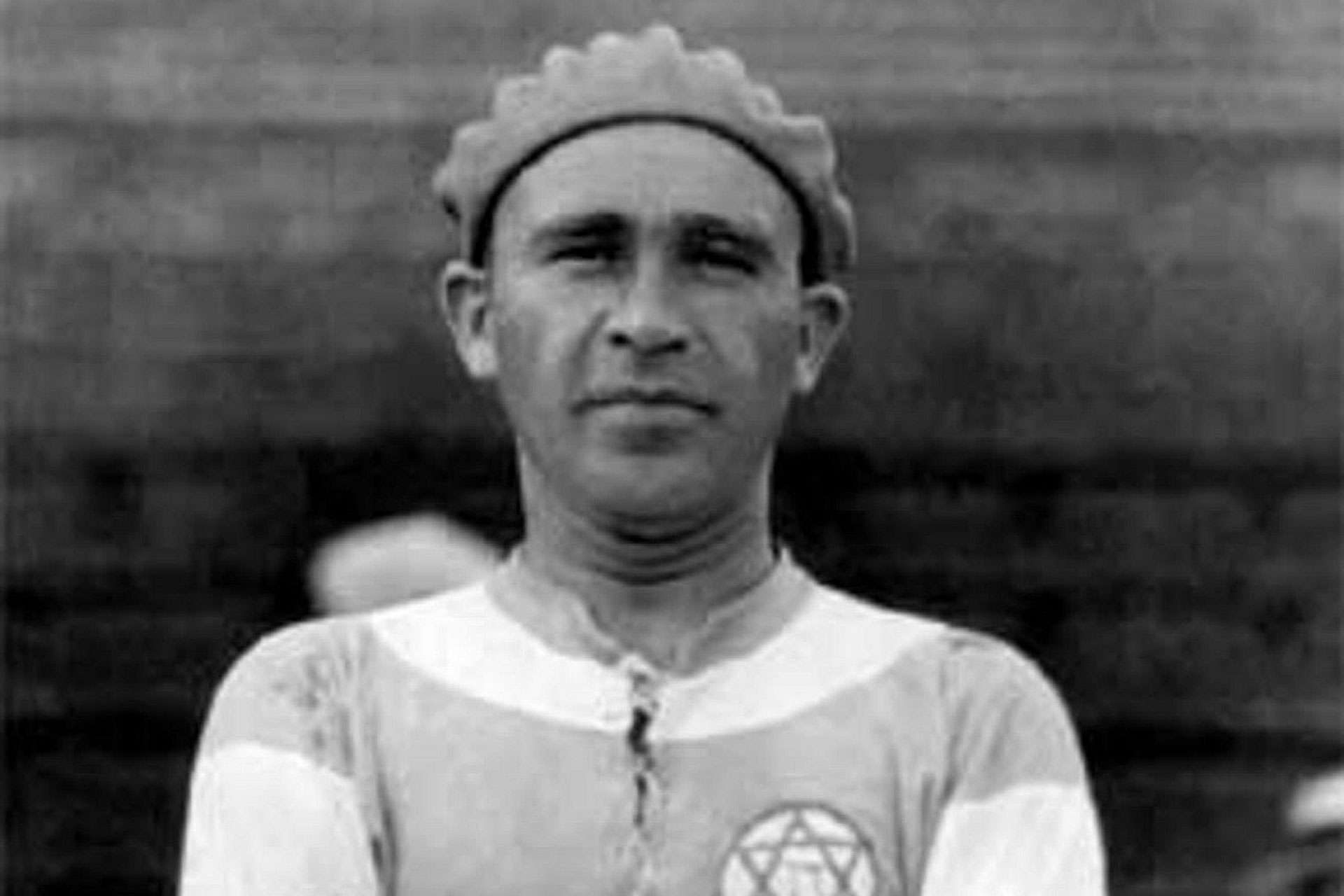
Béla Guttmann
 Hungary
Association football player and coach
Also known as: Béla Guttmann, Gárdos Béla
Birthday
January 27, 1899
Birth Sign
Aquarius
Birthplace
Budapest, Austria-Hungary (now Hungary)
Age
Died at 82
About
Béla Guttmann was a Hungarian footballer and coach, best known for his managerial achievements at S.L. Benfica, where he won two consecutive European Cups. Born in Budapest on January 27, 1899, he played as a midfielder for MTK Hungária, Hakoah Wien, and several clubs in the United States before World War II. He also represented Hungary at the 1924 Olympic Games. During the Nazi occupation of Hungary, Guttmann, who was Jewish, was deported to a slave labor camp where he endured torture but survived the Holocaust. He passed away on August 28, 1981, at the age of 82.
Guttmann's coaching career spanned ten countries from 1933 to 1974, during which he won ten national championships and two consecutive European Cups with Benfica. He also managed the national teams of Hungary and Austria. His greatest triumphs came with Benfica, guiding them to European Cup victories in 1961 and 1962. He is also credited with mentoring a young Eusébio, who became one of the game's greats.
Alongside Márton Bukovi and Gusztáv Sebes, Guttmann pioneered the 4-2-4 formation, a tactical innovation that influenced football worldwide. Known for his restless nature, he rarely stayed at a club longer than two seasons, famously saying "the third season is fatal." His career was marked by controversy: he was sacked by Milan while they topped Serie A, and he walked out on Benfica after a pay dispute, allegedly leaving a curse on the club. That curse, which some believe prevented Benfica from winning European finals for decades, became part of football lore. Guttmann's legacy is a mix of tactical genius, wanderlust, and a sharp tongue that made him one of football's most fascinating figures.
Early Life & Background
Béla Guttmann grew up in Budapest, the son of Abraham and Ester Guttmann, both dancing instructors. By age 16, he had already become a qualified dance instructor himself, a skill that honed his agility and coordination. His early life was steeped in the coffee house culture of Hungarian football, where radical tacticians and coaches gathered to exchange ideas. That atmosphere shaped his forward-thinking approach to the game.
Football was still in its infancy in Hungary when Guttmann was a child; the national league was only established two years after his birth. He began playing for a youth team before being spotted by MTK Hungária, the predominantly Jewish club whose name translates roughly to "Circle of Hungarian Fitness Enthusiasts." His senior career started with Törekvés SE in 1919, where he made 17 appearances. He then moved to MTK Hungária for the 1921–1922 season, helping them win back-to-back Hungarian League titles in 1920 and 1921.
Rising antisemitism in Hungary pushed Guttmann to move to Austria, where he joined Hakoah Wien, a Jewish Zionist club whose shirts were blue and white with a large Star of David badge. His time there marked the pinnacle of his playing career, culminating in the Austrian League Championship in 1925. That success made him a celebrity. In 1926, he crossed the Atlantic to play in the United States, turning out for Brooklyn Wanderers, New York Giants, New York Hakoah, New York Soccer Club, and Hakoah All-Stars over the next six years. He also earned four caps for Hungary and represented his country at the 1924 Olympic Games.
Career Growth
Guttmann's coaching career began in 1933 and took him across ten countries. His first major success came with Újpest FC, where he won the Mitropa Cup in 1939, though he left within days of the victory due to hostile Hungarian politics toward Jews. After the war, he returned to Hungary to coach Vasas SC and then Újpest again, winning the Hungarian championship in 1947. At Kispesti AC, he replaced Ferenc Puskás's father as coach and once walked out at half-time after a dispute with the young Puskás, not returning to Hungary for almost a decade.
He then moved to Italy, where he managed Padova, Triestina, and Milan. At Milan, he was sacked while the club topped Serie A. He also had a brief spell with APOEL Nicosia in Cyprus before his greatest triumph: Benfica. Guttmann signed with Benfica in 1959 and immediately set about rebuilding the squad, sacking 20 players in his first season. He promoted the legendary Eusébio to the first team and guided Benfica to European Cup victories in 1961 and 1962, breaking the dominance of Real Madrid. He also won three Portuguese championships and one Portuguese cup.
After leaving Benfica in 1962 following a pay dispute, he coached Peñarol in Uruguay and later returned to Benfica for one more season. He ended his coaching career in 1974, having won ten national championships and two European Cups. His tactical innovations, developed alongside Márton Bukovi and Gusztáv Sebes, included the 4-2-4 formation and an early version of the false 9, which laid foundations for Total Football.
Career Timeline
Public Image & Style
Béla Guttmann's public image is dominated by the Benfica curse narrative, which has become more famous than his considerable achievements. He is remembered as a nomad, journeyman, and wanderer whose career spanned three continents. His eccentricity and ability to fall out with people often overshadowed his tactical genius. At Hakoah Wien, he was a celebrity after winning the Austrian League in 1925. His legacy is that of a man who foreshadowed modern football while living a life that would seem implausible in fiction. No official fandom name or fan-culture rituals are documented in the available sources.
Fame & Fandom (iFAMOUS Rankings)
The community surrounding Béla Guttmann lacks a formal moniker or organized rituals, consisting instead of football historians, Benfica supporters, and scholars who revere his tactical legacy rather than a distinct group with interactive traditions. His fame is anchored by the "Curse of Benfica," a narrative so deeply embedded in Portuguese culture that it serves as a recurring cautionary tale whenever the club competes in Europe. While he commanded respect through authority during his active years, modern attention focuses on this folklore and his survival of the Holocaust. According to the iFANN Global Fame Rankings, Guttmann holds a steady position as the 12th most famous person from Hungary. This placement reflects global attention across media coverage, search trends, and consumption signals worldwide, maintaining the standing established in previous cycles. The ranking acknowledges his status not merely as a historical figure but as a central character in one of sports' most enduring myths. His story remains a primary reference point for discussions on managerial influence and the intersection of sport and superstition.
Interesting Facts and Legends
Guttmann was born Gárdos Béla and qualified as a dance instructor by age sixteen, a skill that enhanced his agility on the pitch. He thrived in Austria's radical "coffee house" scene, which fostered his forward-thinking tactical approach. Known for his restless nature, he rarely stayed at a club longer than two seasons due to a belief that "the third season is fatal." Contemporary accounts noted his dominating temperament, with one magazine stating he fought to the end with clenched teeth. Beyond his playing career, the legend of the "Curse of Benfica" defines his posthumous reputation. After leading the club to back-to-back European Cup victories in 1961 and 1962, Guttmann departed following a contract dispute, declaring the club would never win the trophy again. While the subsequent sixty-year drought is factual, the causal link to his words remains popular folklore. The 1962 final against Real Madrid, ending in a historic 5–3 victory, stands as the peak moment of his strategic genius. His survival of the Holocaust, having endured torture in a slave labor camp before rebuilding his life across ten countries, adds a layer of resilience to his biography.
Notable Quotes
“The third season is fatal.”
“Not in the next one hundred years will Benfica ever be European champions!”
“His temperament dominated the team more than any other… he was fighting to the end with clenched teeth.”
Family & Personal Life
Béla Guttmann was born to Abraham and Ester Guttmann, both dancing instructors. His Jewish heritage played a significant role in his life, especially during the Holocaust. He was deported to a Nazi slave labor camp during the German occupation of Hungary in 1944, where he was tortured but survived. Some of his family members were killed. After the war, he continued his coaching career across Europe and South America. Detailed records of his personal relationships, including marriages and romantic partnerships, are not documented in the available sources. He passed away on August 28, 1981, in Vienna, Austria.
Notable Connections
Béla Guttmann's career intersected with several notable football figures. He mentored Eusébio at Benfica, promoting him to the first-team squad. He replaced Ferenc Puskás's father as coach of Kispest and had a fiery half-time dispute with the young Puskás. His tactical innovations were developed alongside Márton Bukovi and Gusztáv Sebes. He coached at Milan, then one of Italy's top clubs, and at Peñarol in Uruguay.
Relationships & Dating History
Very little is documented about Béla Guttmann's personal relationships. He was born to Abraham and Ester Guttmann and survived the Holocaust, but details about his romantic life, marriages, or partnerships are not available in the sources. As of 2026, he is deceased, and no surviving spouse or partner is known.
Death & Aftermath
Died
August 28, 1981 (aged 82)
Death Place
Unknown
Cause of Death
Unknown
In the final years of his life, Béla Guttmann resided in Portugal, having long since concluded his active coaching tenure which had spanned a decade and ten nations. On August 28, 1981, at the age of 82, he passed away, though the specific location of his death and the medical circumstances surrounding his final days remain unrecorded in available historical documents. While immediate tributes such as vigils or moments of silence are not documented in the sources from that period, his legacy endured through the persistent folklore of the football world. The narrative of his departure became inextricably linked with the legend known as the Curse of Béla Guttmann, a superstition regarding S.L.
Benfica that persisted for decades after his passing. His story continued to be explored in modern literature, including David Bolchover's work Digging Deep: Unearthing the Stories of Eleven Murdered Jewish Footballing Greats, which highlighted his survival of the Holocaust and his tactical innovations. Details regarding his funeral, burial, or the handling of his estate were not reported in the records, yet his reputation as a revolutionary manager who introduced the 4-2-4 formation remained firmly established in football history.
Net Worth (Estate Value)
$1 Million
iFANN Editorial Team estimate
Béla Guttmann passed away in 1981, and while specific details of his estate are scarce, research by the iFANN Editorial Team puts his net worth at $1 Million as of 2026. During his coaching career, he earned salaries from clubs across ten countries, including Benfica, Milan, and Peñarol. Although figures from his active years are modest by modern standards, the valuation now primarily stems from historical memorabilia and the enduring legacy of his curse, which keeps his name alive in football lore.
Awards Won (8)
Béla Guttmann won numerous titles as both a player and coach. As a player, he won Hungarian League titles with MTK Hungária in 1920 and 1921, and the Austrian League Championship with Hakoah Wien in 1925. As a coach, he won the Mitropa Cup with Újpest FC in 1939, the Hungarian championship with Újpest in 1947, and two consecutive European Cups with Benfica in 1961 and 1962. He also won three Portuguese championships and one Portuguese cup with Benfica.
1962 · Club Competition
Benfica
1961 · Club Competition
Benfica
1960 · League
Benfica
Known For
Benfica European Cup wins
1961 · Manager
Benfica European Cup wins
1962 · Manager
The curse of Benfica
1962 · Coach
Pioneer of 4-2-4 formation
1950 · Tactician
Keywords
Sources
Quick Facts
- Profession
- Association football player and coach
- Born
- January 27, 1899
- Birthplace
- Budapest, Austria-Hungary
- Died
- August 28, 1981
- Death Place
- Vienna, Austria
- Gender
- Male
- Birth Sign
- Aquarius
- Nationality
- Hungarian
Personal Details
- Full Name
- Gárdos Béla
Frequently Asked Questions
What was the curse of Béla Guttmann?
Why did Béla Guttmann leave Benfica?
Did Béla Guttmann survive the Holocaust?
What formation did Béla Guttmann pioneer?
Who did Béla Guttmann manage?
Similar People
Join the community
fans discussing