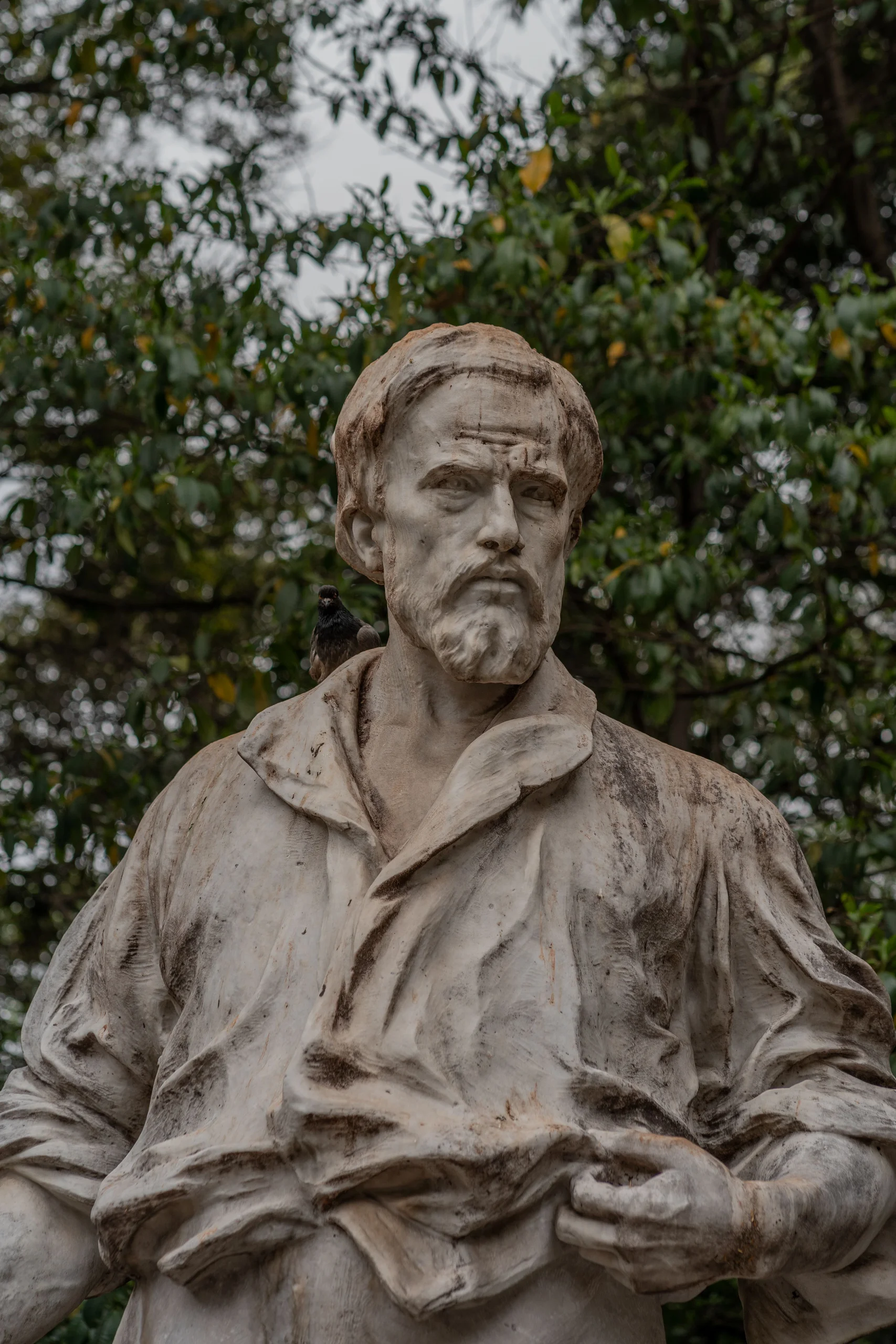
Bartolomeu Dias
 Portugal
Also known as: Bartolomeu Peres Dias
Birthday
c. 1450
Birth Sign
Capricorn
Birthplace
Algarve, Portugal
Age
Died at 50
About
Bartolomeu Dias was a Portuguese mariner and explorer who fundamentally altered global geography by becoming the first European to round the southern tip of Africa. Born around 1450 in the Algarve region, he spent his career navigating the treacherous waters off the African coast under the service of King John II. His voyage proved that the Atlantic and Indian Oceans were connected, shattering the belief that Africa extended infinitely south or that the ocean was impassable.
His breakthrough occurred in February 1488 when a violent storm drove his fleet far southwest into the open ocean. When the weather cleared, Dias realized he had passed the continent's end. He initially named the cape "Cape of Storms," but the king later renamed it the "Cape of Good Hope" to reflect the promise of a new trade route to India. This discovery paved the way for Vasco da Gama's successful journey to Asia just nine years later.
Early Life & Background
Born circa 1450 in the Algarve region of Portugal, Bartolomeu Dias came from a family deeply entrenched in maritime life. His father, also named Bartolomeu Dias, served as a navigator and royal treasurer, which likely provided the young man with early exposure to navigation techniques and ship management. The exact details of his childhood education remain lost to history, but his upbringing placed him at the center of Portugal's growing ambition to expand its reach beyond Europe.
Before his historic voyage, Dias worked as a royal treasurer for the Casa da Guiné e Mina. This institution managed Portugal's African trade and expeditions, placing Dias at the heart of the kingdom's logistical operations. In this role, he honed the administrative and navigational skills necessary for long-distance exploration. He gained a reputation for reliability and competence, which eventually led King John II to entrust him with the command of a secret expedition aimed at finding a sea route to India.
Career Growth
Dias's career reached its zenith on August 12, 1487, when he departed Lisbon with a fleet of three caravels: the São Cristóvão, the São Pantaleão, and the supply ship Bérrio. His orders were shrouded in secrecy; even his crew did not know their true destination until they had rounded the cape. In February 1488, a fierce storm pushed his ships far south and west, out of sight of land. When the skies cleared, Dias discovered he had successfully rounded the southern tip of Africa, proving the connection between the Atlantic and Indian Oceans.
After landing briefly at what is now Mossel Bay, Dias turned back due to crew mutiny and dwindling supplies. He arrived in Lisbon in December 1488, bringing news that revolutionized European understanding of the world. Following this success, Dias played a crucial supporting role in Vasco da Gama's 1497 expedition to India. Appointed as a pilot and advisor, he used his knowledge of the Atlantic currents to guide da Gama's fleet safely past the Cape. Tragically, his own exploratory career ended in May 1500 when his ship sank during a storm while accompanying Pedro Álvares Cabral's fleet to India.
Career Timeline
Public Image & Style
Dias is portrayed as a courageous, pragmatic, and skilled navigator who pushed the boundaries of known geography. His story is often told as one of perseverance against nature's fury and the skepticism of contemporaries. He is remembered for his technical mastery of navigation and his willingness to sail into the unknown rather than stick to safe coastal routes. The image of Dias stands as a symbol of the Age of Discovery, representing the shift from cautious coastal exploration to bold open-ocean navigation.
Fame & Fandom
iFANN has not yet collected fame data for this person. As a historical figure from the 15th century, Bartolomeu Dias does not have a modern fandom name or organized fanbase. However, historians, maritime enthusiasts, and educational institutions maintain a strong interest in his life and work. The Dias Museum in Mossel Bay serves as a focal point for those interested in his legacy, hosting exhibits and educational programs that keep his story alive for new generations.
Interesting Facts and Legends
The cape Dias discovered was originally named "Cape of Storms" (*Cabo das Tormentas*) by the explorer himself, reflecting the terrifying reality of the weather conditions he faced. King John II later renamed it the "Cape of Good Hope" (*Cabo da Boa Esperança*) as a political move to encourage further investment in the voyage. Dias's ability to navigate using the South Atlantic gyre was a pivotal innovation; instead of hugging the dangerous African coastline, he sailed far southwest into the open ocean to catch favorable winds. The ship Bérrio, which Dias commanded on his return journey, became famous for its role in the expedition and was later used by Vasco da Gama. Historical records do not confirm if Dias had any children or a wife, leaving his personal legacy entirely tied to his professional achievements.
Notable Quotes
“We have found the way.”
Family & Personal Life
Bartolomeu Dias was born into a family of navigators in the Algarve region of Portugal. His father, also named Bartolomeu Dias, served as a navigator and royal treasurer, providing the young explorer with early exposure to maritime life. While specific details about his siblings are scarce, historical accounts mention his brother-in-law, João Infante, who may have accompanied him on some voyages. Dias died without leaving behind a documented family line known to posterity, and no records exist of a spouse or children.
Notable Connections
King John II of Portugal, Vasco da Gama, Pedro Álvares Cabral, João Infante
Relationships & Dating History
Bartolomeu Dias lived in an era where detailed public records of romantic relationships were not kept for explorers in the same way they are for modern celebrities. There are no historical records confirming he had a wife, children, or a documented dating history. He died without leaving behind a known family line, and his personal life remains largely a mystery compared to his monumental professional achievements.
Death & Aftermath
Died
1500-05-29 (aged 50)
Death Place
Cape of Good Hope, South Africa
Cause of Death
Drowning in a storm
While serving as a pilot for Pedro Álvares Cabral's return expedition to India in May 1500, Bartolomeu Dias commanded his vessel near the southern coast of Africa when a violent tempest struck the fleet. The storm drove his ship, the São Pantaleão, against the treacherous rocks off the Cape of Good Hope alongside three other vessels, resulting in a catastrophic wreck where no survivors were recovered from his command. He perished in the surf while attempting to navigate the chaotic waters, marking the abrupt end of a career that had fundamentally altered European geography by proving the connection between the Atlantic and Indian Oceans.
The loss was recorded in the royal correspondence and navigational logs of the Portuguese court rather than through any modern forensic inquiry or legal inquest, as maritime disasters caused by storms were historically treated as acts of God. Contemporary chronicles noted the event with solemnity, reporting the death of the celebrated mariner to King Manuel I upon the arrival of the surviving ships. Immediate reaction in Portugal consisted of royal mourning and strategic concern regarding the loss of experienced leadership, devoid of the public vigils or chart surges characteristic of modern commemoration. His legacy has since been preserved through institutional memorials rather than personal estate management, which remains unrecorded due to the era's lack of probate procedures for sailors lost at sea.
The primary tribute is the Bartolomeu Dias Museum in Mossel Bay, South Africa, which opened in 1989 to celebrate his life, while the Portuguese Navy continues to honor his name with the frigate NRP Bartolomeu Dias (F 333). Historical accounts maintain that he died without leaving a documented family line, and no specific funeral service or private inheritance proceedings are known to posterity.
Net Worth (Estate Value)
$0
iFANN Editorial Team estimate
As a historical figure from the 15th and 16th centuries, Bartolomeu Dias did not possess a modern net worth or personal fortune. His wealth was measured in the strategic value of his discoveries to the Portuguese Crown. The discovery of the sea route around Africa led to immense wealth for Portugal through the spice trade, but Dias himself received no posthumous financial estate management. The concept of a celebrity estate did not exist, and his legacy rests entirely on his professional achievements as an explorer.
Awards & Accolades
View 4 records, honours and achievementsKnown For
First European to Round the Cape of Good Hope
1488 · Explorer
Keywords
Sources
Quick Facts
- Profession
- explorer
- Born
- c. 1450
- Birthplace
- Algarve, Portugal
- Died
- May 29, 1500
- Death Place
- Cape of Good Hope
- Gender
- Male
Personal Details
- Full Name
- Bartolomeu Peres Dias
- Children
- Education
- N/A
Frequently Asked Questions
Who was Bartolomeu Dias?
When did Bartolomeu Dias die?
What was Bartolomeu Dias's biggest achievement?
Did Bartolomeu Dias have any children?
Why is the Cape of Good Hope named so?
Similar People
Join the community
fans discussing