 Portugal
About
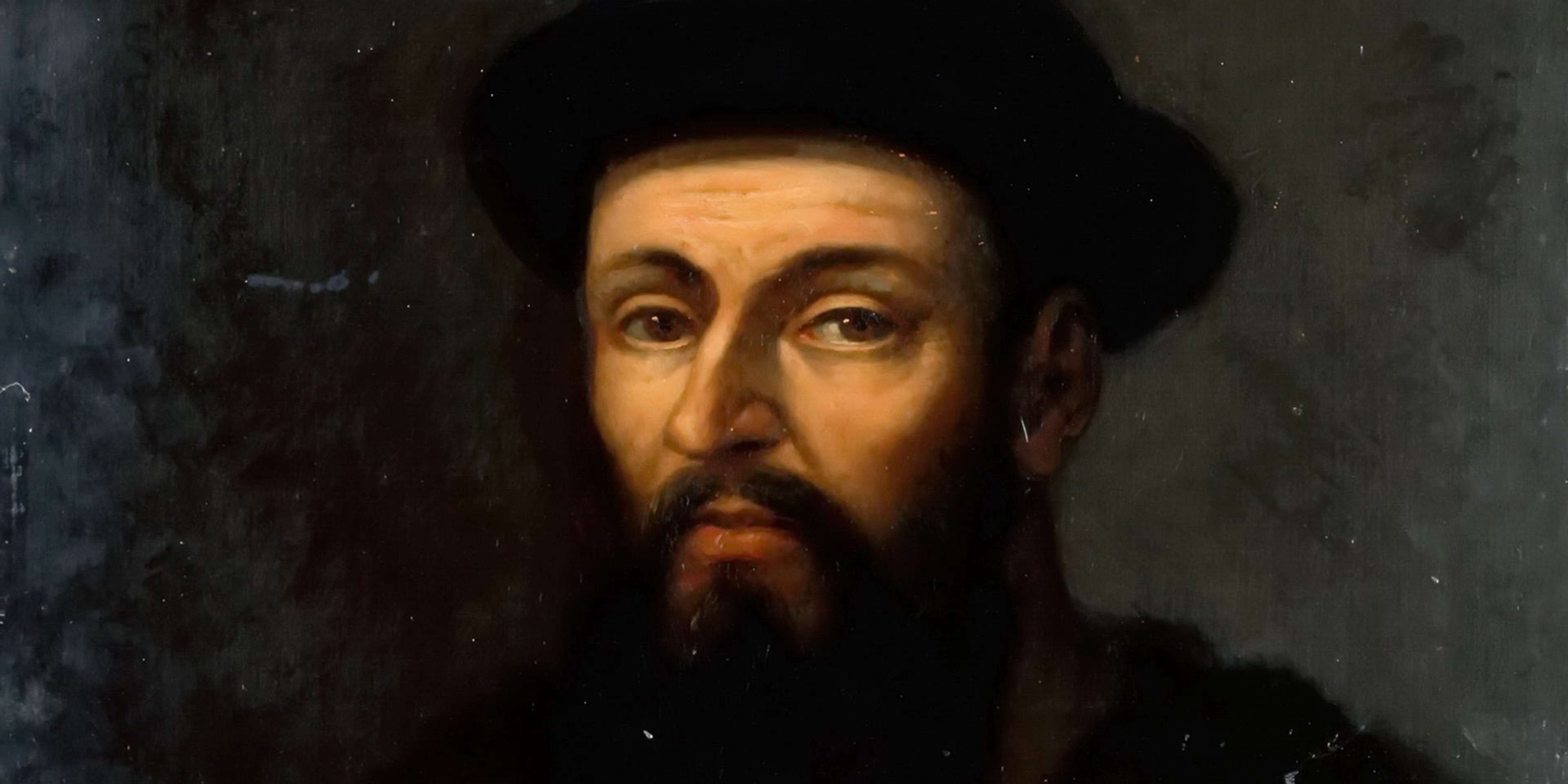
Ferdinand Magellan stands as a monumental figure in maritime history, best known for orchestrating and leading the 1519–1522 Spanish expedition that achieved the first circumnavigation of the Earth. Born into a family of minor nobility around 1480 in Portugal, he entered royal service as a young man, serving Queen Leonor and later King Manuel I. His early career involved extensive travel to Africa and Asia, where he gained crucial knowledge of trade routes and naval warfare, notably participating in the Portuguese conquest of Malacca in 1511. After falling out of favor with the Portuguese king due to accusations of illegal trading, he moved to Spain and convinced Charles I to fund his ambitious plan to reach the Spice Islands by sailing west.
Magellan departed from Sanlúcar de Barrameda in 1519 with five ships: the Trinidad, San Antonio, Concepción, Santiago, and Victoria. The voyage faced mutinies, storms, and starvation before discovering the strait at the southern tip of South America, which now bears his name. Although Magellan died in the Philippines in 1521, his crew completed the journey under Juan Sebastián Elcano, proving the planet was round and connecting two major oceans. He is frequently listed among the top 10 explorers in history by institutions like National Geographic and Britannica, cementing his legacy as a visionary who fundamentally altered global geography and trade routes through his relentless pursuit of a western passage.
Early Life & Background
Ferdinand Magellan was born around 1480 in either Ponte da Barca or Vila Nova de Cerveira in northern Portugal. He came from a family of minor nobility, a status that secured him a place at the royal court as a page to Queen Leonor. This early position exposed him to the political intrigues of the Portuguese monarchy and provided the foundation for his future naval career. As a young man, he joined the Portuguese navy, participating in expeditions to Africa and the Indian Ocean. His military service took him to India and Morocco, where he distinguished himself in battle but also suffered significant injuries. During a conflict in Morocco in 1513, Magellan lost the use of one eye and sustained a leg wound that would affect him for the rest of his life. These injuries earned him the nickname "Tude," meaning the one-eyed man.
While serving in Africa, he was accused of illegal trading with Moors, a charge that damaged his reputation and led to his dismissal from the Portuguese royal service. Seeking new opportunities, Magellan traveled to Spain in 1517. There he married Isabel de Barbosa, the daughter of a Portuguese nobleman living in Seville. The couple had two sons, Rodrigo and Carlos. While raising his family, Magellan developed his plan for a western route to the Moluccas (Spice Islands). He argued that the islands lay within the Spanish sphere of influence according to the Treaty of Tordesillas, despite the Portuguese claim. His persistence eventually won over King Charles I of Spain, who appointed him admiral of the fleet and granted him the title of Commander of the Order of Santiago. Before this breakthrough, he spent time in the Spice Islands between 1505 and 1512, gaining crucial knowledge of Asian trade routes that would later define his ambition.
Career Growth
The defining moment of Magellan's career began on September 20, 1519, when the Armada de Molucca set sail from Sanlúcar de Barrameda. The fleet consisted of five ships and roughly 270 men. The journey was fraught with danger, including a mutiny near Patagonia that Magellan suppressed with decisive action. In October 1520, his fleet discovered and navigated the treacherous strait at the southern tip of South America, now known as the Strait of Magellan. Upon entering the calm waters beyond, he named the Pacific Ocean due to its unusually serene conditions compared to the Atlantic. The crossing of the Pacific lasted over three months and tested the crew to their limits. They survived extreme hunger, scurvy, and dehydration before finally sighting land at Guam in March 1521. From there, they reached the Philippines, marking the first European contact with the archipelago. Magellan allied with Rajah Humabon of Cebu and attempted to convert the locals to Christianity.
Despite his death in the Philippines in 1521, his crew completed the journey under Juan Sebastián Elcano, proving the planet was round and connecting two major oceans. The surviving ships reached the Spice Islands, loaded with cloves, and the Victoria returned to Spain on September 6, 1522. This successful completion of the voyage validated Magellan's vision and revolutionized global trade and geography. The Victoria returned with a cargo of cloves worth approximately six times the cost of the entire expedition. Only 18 of the original 265 men survived the journey, yet their return established the first continuous link between the Atlantic and Pacific Oceans, changing the course of human history forever.
Career Timeline
Public Image & Style
Magellan is remembered as a determined and skilled navigator whose ambition drove him to find a western route to the Spice Islands. His leadership was marked by both strategic brilliance and ruthless decisiveness, particularly during the suppression of mutinies. He is often depicted as a tragic figure, a visionary who died before seeing his dream fully realized. His physical appearance, characterized by the loss of an eye and a limp, added to his image as a hardened veteran of naval conflicts. Modern perceptions of Magellan vary significantly depending on the cultural context. In Western historiography, he is often celebrated as a pioneer of global exploration. In the Philippines and parts of Latin America, he is viewed more critically as a symbol of colonial aggression. This duality reflects the complex legacy of European expansion and the impact of his voyages on indigenous populations.
In 1921, the centenary of his death, the United States and the Philippines commemorated his landing with major events. A Smithsonian event in March 2026 focused on his first sighting of the Philippines, highlighting his enduring cultural impact. A documentary titled "Magellan" reviewed in early 2026 further explored his historical recreation. The ongoing debate about his legacy as a hero or a tyrant keeps his story relevant in modern discourse, with statues and geographic features worldwide bearing his name, though historians continue to refine the narrative of his role as an explorer versus a conqueror.
Fame & Fandom
iFANN has not yet collected fame data for this person. As a historical figure from the 16th century, Magellan does not have a modern fanbase in the traditional sense. His fame is derived from his historical significance rather than contemporary celebrity culture. The narrative surrounding him is maintained through educational institutions, museums, and historical societies rather than organized fan groups. There is no formal fandom name documented in current records. The story of Magellan's voyage continues to captivate audiences interested in maritime history and exploration. His discovery of the Strait of Magellan and the first crossing of the Pacific Ocean remain iconic moments in human history. While there is no formal fandom name or fan rituals, the public interest in his life persists through documentaries, reenactments, and academic research. The ongoing debate about his legacy as a hero or a tyrant keeps his story relevant in modern discourse, with re-enactments of his landing in Guam taking place recently to honor his pathfinding spirit.
Interesting Facts and Legends
Magellan's expedition carried pigs, chickens, and dogs, which were the first European animals introduced to the Philippines. The crew also encountered potatoes and other New World crops, though these were not immediately recognized as such. The Victoria, the only ship to complete the circumnavigation, was so damaged upon its return to Spain that it was deemed unserviceable and scrapped. Another fascinating detail is the presence of Enrique, an enslaved interpreter who accompanied Magellan. Enrique was believed to be the first person to sail around the world, having previously been taken to the East Indies by Portuguese traders years earlier. Associated people include Rui Faleiro, a mathematician who helped plan the route, and Lapu-Lapu, the chieftain who killed Magellan.
A widely retold legend involves the renaming of the Pacific Ocean. Magellan chose the name because of the unusually calm waters he encountered after passing through the stormy strait, contrasting sharply with the turbulent Atlantic. This name stuck despite the ocean's notorious typhoons. The incident at Mactan remains a pivotal moment in Philippine history, symbolizing resistance against colonialism. Today, Lapu-Lapu is revered as the first national hero, and his victory over Magellan is celebrated annually on April 27 as "Lapu-Lapu Day." The myth of Magellan as the "first to sail around the world" is technically inaccurate, as he died before the journey's completion, but this distinction is often overlooked in popular culture.
Notable Quotes
“I seek a western route to the Spice Islands.”
“The earth is round, and we shall prove it.”
Family & Personal Life
Magellan was born into a family of minor nobility in Portugal. His parents are not widely recorded by name, but his upbringing in a noble household shaped his early education and access to royal service. He married Isabel de Barbosa in Seville, Spain, in 1517. She was the daughter of a Portuguese nobleman living in exile. The couple had two sons, Rodrigo and Carlos. Isabel remained in Spain while Magellan embarked on his historic voyage. Historical records suggest she remarried after his death and managed the family affairs. Magellan's relationship with his children was limited by his long absences at sea and his eventual death. The family line did not produce any notable descendants who continued his work, though his legacy lived on through the geographical discoveries made during his lifetime. His personal life was defined by his service to crowns and his quest for exploration rather than deep domestic involvement, leaving his family behind in Spain while he pursued his grand ambitions across the globe.
Notable Connections
Relationships & Dating History
Ferdinand Magellan's romantic life was relatively brief and centered around his marriage to Isabel de Barbosa. He met Isabel in Seville, Spain, after moving there in 1517. She was the daughter of a Portuguese nobleman living in exile. The couple married shortly after Magellan's arrival and had two sons, Rodrigo and Carlos. Isabel remained in Spain while Magellan prepared for and undertook his historic voyage. Historical records indicate that she managed the family affairs during his absence and later remarried after his death. There are no documented romantic relationships prior to his marriage, as biographical sources focus primarily on his naval career and political ambitions. Magellan's life was defined by his service to crowns and his quest for exploration rather than personal relationships. His partnership with Isabel was practical and familial, providing a stable base in Spain while he pursued his dangerous and transformative voyages across the oceans.
- MarriedIsabel de Barbosa1517 - 1521Mother of his two sons, Rodrigo and Carlos; remained in Spain after his departure.
Death & Aftermath
Died
April 27, 1521 (aged 41)
Death Place
Mactan, Philippines
Cause of Death
Killed in the Battle of Mactan
Ferdinand Magellan died on April 27, 1521, during a skirmish on the island of Mactan in the Philippines. He had intervened in a local conflict between Rajah Humabon of Cebu and Lapu-Lapu, the chieftain who refused to submit to Spanish authority or convert to Christianity. Magellan led a small force of roughly 49 men equipped with steel armor and muskets against thousands of Filipino warriors armed with spears and swords. Despite his technological advantage, the terrain favored the defenders, and the Spanish were overwhelmed. Magellan was struck by a poisoned arrow and then hacked to death by the warriors. His body was never recovered by his crew, leaving only the accounts of survivors like Juan Sebastián Elcano as proof of his demise. The immediate aftermath saw the remaining fleet fall into disarray until Duarte Barbosa and later Elcano took command.
The expedition continued without its leader, eventually losing another ship and suffering from scurvy before reaching the Spice Islands. Only the Victoria, carrying 18 survivors out of the original 265, managed to return to Spain on September 6, 1522, completing the first circumnavigation of the globe. This achievement proved the Earth was round and connected the Atlantic and Pacific Oceans, fundamentally altering global geography and trade routes. In the centuries following his death, Magellan's legacy became a subject of intense debate and commemoration. In the Philippines, he is often viewed through the lens of colonial invasion, while Lapu-Lapu is celebrated as a national hero. Annual events like Lapu-Lapu Day on April 27 honor the resistance against Magellan's forces. Modern commemorations include re-enactments of his landing in Guam and academic discussions at institutions like the Smithsonian. Statues and geographic features worldwide, such as the Strait of Magellan, bear his name, though historians continue to refine the narrative of his role as an explorer versus a conqueror. A re-enactment of his landing on Guam was held in 2024 and discussed in 2026, highlighting his enduring cultural impact.
Net Worth (Estate Value)
$0
iFANN Editorial Team estimate
As Ferdinand Magellan lived in the 16th century, concepts of personal net worth do not apply to him in the modern sense. He received a salary and shares of profit from the Spanish Crown for his services as an explorer and navigator. The expedition itself was funded by the Spanish government and private investors, with Magellan receiving a portion of the profits from the spice trade. Following his death, the value of his estate was likely minimal compared to modern standards. The primary financial legacy of his life was the wealth generated by the successful completion of his expedition, which brought immense riches to Spain in the form of spices. The Victoria returned with a cargo of cloves worth approximately six times the cost of the entire expedition.
This windfall demonstrated the economic potential of the new trade routes Magellan helped establish, though the direct financial benefit to his family was limited by his early death and the subsequent redistribution of assets. While Magellan did not receive posthumous awards in the modern sense, such as Oscars or Grammys, his legacy has been honored through numerous statues, monuments, and the naming of geographic features worldwide. The expedition proved the Earth was round and connected, revolutionizing global geography and trade, ensuring that his name remains synonymous with the age of exploration and the immense economic shifts that followed.
Awards & Accolades
View 10 records, honours and achievementsKnown For
First Circumnavigation of the Earth
1519-1522 · Leader of the expedition
Discovery of the Strait of Magellan
1520 · Navigator
First European Contact with the Philippines
1521 · Explorer
Keywords
Sources
Quick Facts
- Profession
- explorer, sailor, seafarer
- Born
- c. 1480
- Birthplace
- Ponte da Barca, Portugal
- Died
- April 27, 1521
- Death Place
- Mactan, Philippines
- Gender
- Male
- Spouse
- Isabel de Barbosa
Personal Details
- Full Name
- Fernão de Magalhães
- Spouse
- Isabel de Barbosa
- Children
- Rodrigo, Carlos
- Education
- Royal page to Queen Leonor; self-taught navigation
Frequently Asked Questions
Who was Ferdinand Magellan?
Did Ferdinand Magellan die during his voyage?
What was the significance of Magellan's expedition?
How did Ferdinand Magellan die?
Was Ferdinand Magellan the first to sail around the world?
Similar People
Join the community
fans discussing