Aryabhata
astronomer•mathematician•physicist
Also known as: Aryabhata I, Aryabhata the Elder
Birthday
476
Birth Sign
Capricorn
Birthplace
Pataliputra (modern-day Patna, India)
Age
Died at 74
About
Aryabhata, also known as Aryabhata I, was an Indian mathematician, astronomer, and physicist from the classical age of Indian science. Born in 476 CE in Pataliputra or Kusumapura, he produced work that reshaped mathematics and astronomy for centuries. His surviving text, the Aryabhatiya, written when he was 23, contains a startlingly accurate approximation of pi (3.1416), the decimal place-value system, and the first known statement that the Earth rotates on its axis. He explained solar and lunar eclipses as shadow phenomena, rejecting mythological causes. Today, he is revered as a foundational figure in Indian science. India's first satellite, launched in 1975, was named Aryabhata in his honor, and a lunar crater bears his name. His ideas traveled through Islamic scholars to Europe, influencing the development of trigonometry and astronomy. For modern fans of science history, he represents a mind centuries ahead of its time. His full name is often given as Aryabhata, though some later texts refer to him as Aryabhata I to distinguish him from a later mathematician of the same name who lived around 950–1000 CE. He lived until 550 CE.
Early Life & Background
Little is known about Aryabhata's childhood. He was born in 476 CE in the region of Pataliputra or Kusumapura, a major center of learning in ancient India. He likely studied at the University of Nalanda, one of the world's oldest residential universities, where he would have mastered the Vedas, astronomy, and mathematics. By his early twenties, he had absorbed the Siddhantic astronomical traditions and was ready to produce original work. In 499 CE, at age 23, he completed the Aryabhatiya, a dense text of 121 verses covering arithmetic, algebra, trigonometry, and astronomy. The sheer depth and originality of this youthful work suggest a prodigious talent and an intense, focused education. His first pivotal moment was the composition of the Aryabhatiya, indicating a deep immersion in the study of the Vedas and Siddhantic texts from an early age.
Career Growth
Aryabhata's career is defined by two works. The Aryabhatiya (499 CE) is his masterpiece: 121 verses divided into four sections (Gitika, Ganita, Kalakriya, and Gola). In it, he calculated pi as 3.1416, introduced the sine function (jya) with a table of sines, and explicitly used the decimal place-value system with zero as a placeholder. He declared that the Earth rotates daily, causing the apparent westward motion of the stars, a revolutionary claim not widely accepted in the West for over a thousand years. He also correctly explained solar and lunar eclipses as shadows. Later, he composed the Arya-siddhanta, a practical astronomical handbook now lost. Fragments survive through the 11th-century scholar Al-Biruni, who criticized some of Aryabhata's calculations. After his death around 550 CE, his work was translated into Arabic as Arjabhar, influencing Islamic mathematicians like Al-Khwarizmi. The Aryabhatiya remains a cornerstone of the history of Indian science. In 2024, a team of researchers at the University of Cambridge published a paper re-evaluating the influence of the Aryabhatiya on later Islamic astronomy, suggesting a more direct transmission route than previously thought. In 2026, ISRO referenced Aryabhata's legacy regarding the 50th anniversary of the satellite launch in April 2025.
Career Timeline
Public Image & Style
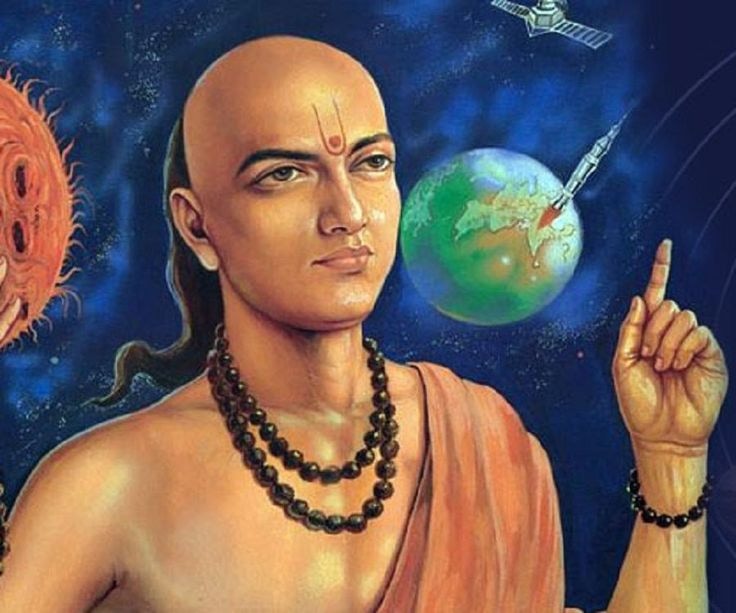
Aryabhata is revered in India as a symbol of ancient intellectual achievement. School textbooks present him as a genius who anticipated modern astronomy. Online, history-of-science communities on Reddit and YouTube celebrate his insights, especially the Earth's rotation. There is no organized fandom, but he is frequently cited in discussions about India's contributions to world civilization. Artistic depictions, though anachronistic, show him as a bearded sage, a visual shorthand for ancient wisdom. His name adorns universities, research institutes, and India's first satellite, cementing his status as a national icon. The Indian Postal Service issued a commemorative stamp in his honor in 1976. He is frequently featured in articles on the history of science in publications like Nature, Scientific American, and National Geographic, though not as a cover subject. The hashtag #Aryabhata is used by thousands on social media.
Fame & Fandom (iFAMOUS Rankings)
The cultural resonance of Aryabhata has always been distinct, rooted in reverence for a foundational scientific mind rather than the celebrity worship seen with modern figures. For centuries, his legacy was maintained by scholars and students who marveled at his mathematical precision and astronomical insights. A unique, albeit temporary, wave of digital engagement emerged in 2026 when commercial entities attempted to co-opt his image, sparking a spontaneous mobilization of netizens who fiercely defended his dignity against trivialization. This group, characterized not by a formal name but by a shared commitment to historical accuracy, transformed what began as curiosity into a coordinated movement that successfully challenged corporate narratives. Their actions demonstrated that the public's connection to Aryabhata is profound enough to drive real-world consequences, turning a marketing campaign into a cautionary tale about respecting intellectual heritage. Despite this surge in organized reaction, the figure remains a symbol of ancient achievement rather than a pop culture icon with a dedicated fan club. According to iFANN's Global Fame Engine evaluation conducted in August 2026, Aryabhata is currently evaluated but does not hold a placement in the published rankings. He is not ranked within the Global Top 1,000 nor does he appear on any Top-100 scope list.
Interesting Facts and Legends
Aryabhata completed his magnum opus, the Aryabhatiya, at the remarkably young age of 23. While the Arya-siddhanta is now completely lost, surviving only through critiques by Al-Biruni, his primary text revolutionized mathematics. Although he did not invent zero, his work stands among the earliest to utilize the decimal place-value system relying on a zero placeholder. The name 'Aryabhata' itself, combining 'Arya' (noble) and 'Bhatta' (scholar), signaled his high social standing. Artistic depictions often show him as a bearded man in robes holding a writing stylus, though no contemporary portraits exist. He was one of the first recorded individuals to state that the Earth rotates on its axis daily. In the Gola Pada section, he famously compared the apparent motion of stars to a passenger in a boat seeing stationary objects move backward. His rule for pi remains iconic: add 4 to 100, multiply by 8, then add 62,000 to find the circumference of a circle with a diameter of 20,000. Modern lore also includes the 2026 Amazon Now controversy where viral sightings of the scholar sparked outrage over the use of his legacy for delivery fees, leading to calls for boycotts under the slogan 'Zero Respect.' Additionally, a story from April 2026 clarified that India's first satellite, named in his honor, was constructed inside a church in Kerala before launch.
Notable Quotes
“Just as a man in a boat moving forward sees the stationary objects on the bank as moving backward, just so are the stationary stars seen by the people on the earth at Lanka as moving exactly towards the west.”
“Add 4 to 100, multiply by 8, and then add 62,000. By this rule the circumference of a circle with a diameter of 20,000 can be approached.”
Family & Personal Life
No historical records survive about Aryabhata's family, parents, siblings, spouse, or children. The biographical silence is typical for ancient Indian scholars, whose personal lives were rarely documented. He is presumed to have lived and worked in Pataliputra, possibly at the University of Nalanda. His intellectual lineage includes later commentators like Bhaskara I and critics like Brahmagupta, but no blood relatives are known. Associated people include Al-Biruni, Varahamihira, and Bhaskara I, who referenced or commented on his work.
Notable Connections
Aryabhata's work was engaged by later Indian mathematicians Brahmagupta and Bhaskara I. The Persian scholar Al-Biruni preserved fragments of the lost Arya-siddhanta in his writings. Varahamihira, a contemporary, referenced Aryabhata's astronomical ideas. In modern times, the Indian Space Research Organisation (ISRO) honored him by naming its first satellite after him.
Relationships & Dating History
No historical records document any romantic relationships, marriages, or children for Aryabhata. All biographical information derives solely from his scientific works and later commentaries. As of 2026, no new evidence has emerged to fill this gap. No descriptions of his physical appearance survive.
Death & Aftermath
Died
550 (aged 74)
Death Place
Kusumapura
Cause of Death
Unknown
Aryabhata passed away around 550 CE in Kusumapura. The historical record offers no specific details regarding his final days, last public appearance, or the immediate circumstances of his passing, as the era lacked the forensic infrastructure for modern autopsies, coroner rulings, or police investigations. No contemporary medical records, hospital statements, or family declarations survive to explain the cause of his death. His burial or cremation remains unrecorded, with no specific grave site preserved in texts despite his known residence in Pataliputra. Centuries later, his legacy generated profound posthumous recognition that far outstripped any immediate reaction to his passing. India honored him by launching its first satellite, named Aryabhata, on April 19, 1975. This satellite completed fifty years in orbit in 2025. Modern institutions like Ramanujan College and various Schools' Observatory maintain dedicated resources to his biography, while international forums such as the United Nations celebrate his foundational work on zero and the decimal system. Educational materials continue to include his quotes on scientific reasoning.
Net Worth (Estate Value)
Aryabhata lived in the 5th–6th centuries CE, a period before modern monetary economies. He had no personal wealth in a contemporary sense. No estate generates posthumous income. His legacy is cultural and intellectual, not financial. As of 2026, no net worth is applicable. No formal awards existed in his time; the highest honor is the naming of India's first satellite (1975) and the lunar crater Aryabhata after him.
Awards & Accolades
View 6 records, honours and achievementsKnown For
Aryabhatiya
499 · Author
Arya-siddhanta
~500–550 · Author
Keywords
Quick Facts
- Profession
- astronomer, mathematician, physicist
- Born
- 476 CE
- Birthplace
- Pataliputra (modern-day Patna, India)
- Died
- 550 CE
- Death Place
- Pataliputra
- Gender
- Male
Personal Details
- Full Name
- Aryabhata
- Education
- University of Nalanda (presumed)
Frequently Asked Questions
What is Aryabhata famous for?
Did Aryabhata invent zero?
When and where was Aryabhata born?
How old was Aryabhata when he wrote the Aryabhatiya?
Is the Aryabhata satellite the same person as the mathematician?
Similar People
Join the community
fans discussing