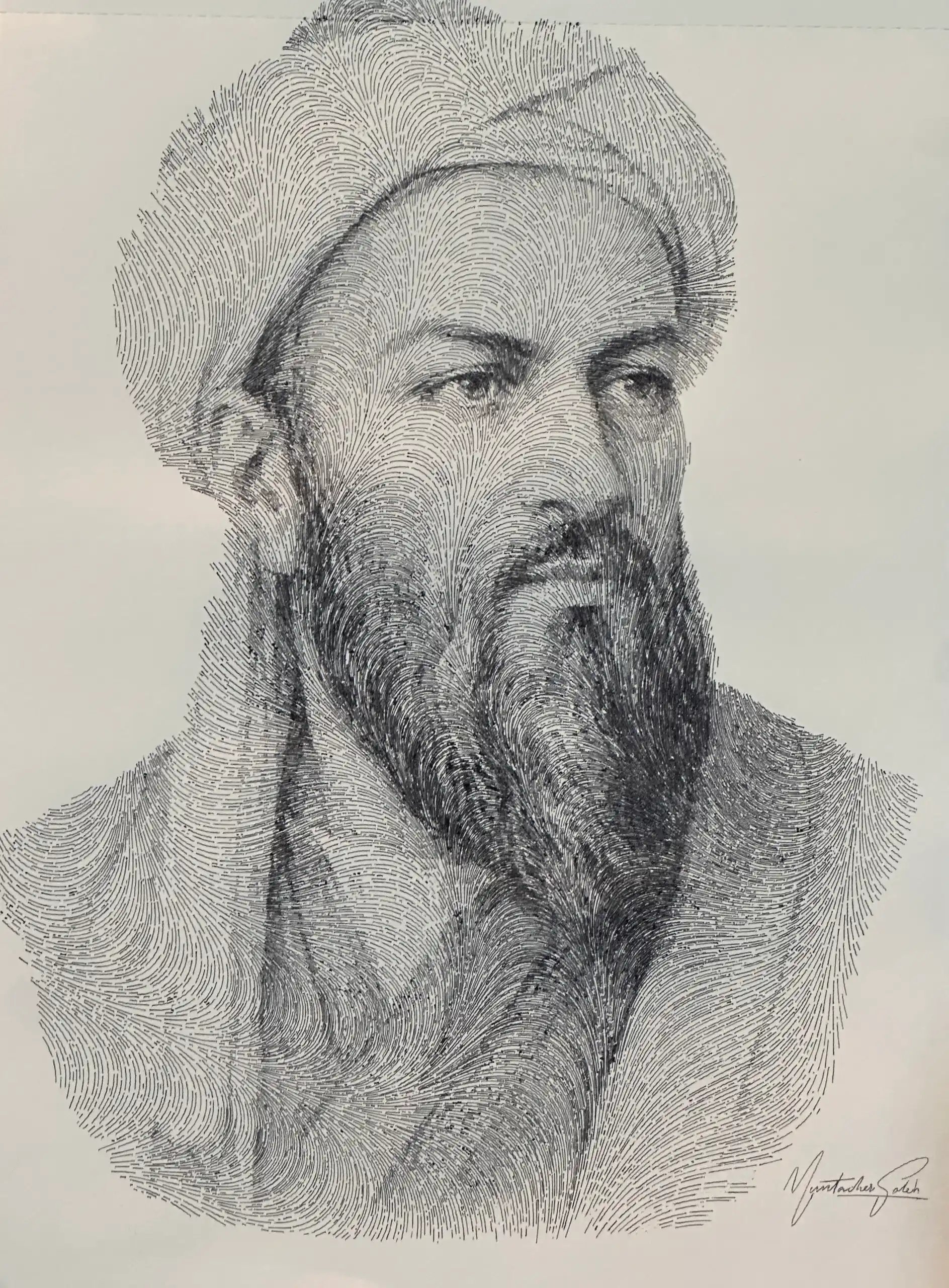
Al-Biruni
polymath•astronomer•mathematician•geographer•historian•anthropologist
Also known as: Abu Rayhan Muhammad ibn Ahmad al-Biruni, Biruni, al-Ustadh
Birthday
September 4, 973
Birth Sign
Virgo
Birthplace
Kath, Khwarazm (present-day Uzbekistan)
Age
Died at 75
About
Abu Reyhan Muhammad ibn Ahmad al-Biruni was an Iranian Khwarazmian polymath of the Islamic Golden Age who lived from 973 to 1048. He is celebrated as one of the most original scholars in human history, making foundational contributions to astronomy, mathematics, geodesy, anthropology, and comparative religion. Unlike modern celebrities whose fame relies on commercial metrics, Al-Biruni's reputation rests on over 140 surviving works that revolutionized scientific understanding in the medieval world. He earned the title al-Ustadh, meaning "The Master," for his unparalleled scholarly objectivity and breadth of knowledge.
Born in Kath, the capital of the Afrighid dynasty, Al-Biruni demonstrated exceptional intellect from a young age. By seventeen, he had already mastered complex systems of astronomy and mathematics. His career reached its zenith after 1017 when he moved to Ghazni to serve Sultan Mahmud of Ghazni. He accompanied military campaigns into the Indian subcontinent, using these travels to conduct unprecedented ethnographic research that resulted in his definitive work, Tārīkh al-Hind. This text remains the primary source for understanding 11th-century Indian culture, religion, and science. He died in Ghazni while still intellectually active, leaving behind a legacy that continues to influence fields ranging from medical diagnostics to historical linguistics.
Early Life & Background
Abu Rayhan Muhammad ibn Ahmad al-Biruni was born on September 4, 973, in the city of Kath, located in the Khwarazm region of present-day Uzbekistan. His early years were defined by the political instability of Central Asia. The ruling Afrighid dynasty fell in 995, forcing the young scholar to flee his hometown. Between 995 and 1000, he traveled between the courts of Bukhara, Tabaristan, and Gurganj, seeking patronage from various rulers who could support his studies. This period of displacement shaped his worldview, exposing him to diverse cultures and political systems before he ever established a permanent base.
Despite the turbulence, Al-Biruni received rigorous education under the local court. By the age of seventeen, he had already mastered the sciences of his day, including astronomy and mathematics. A pivotal moment in his pre-fame life occurred around 1000 CE when he completed his first major treatise, al-Āthār al-bāqiya ʿan al-qurūn al-khāliya (The Remaining Signs of Past Centuries). This comprehensive work on historical chronology and calendar systems established his reputation as a meticulous historian and astronomer before he left Khwarazm. His linguistic talents were evident early on; he became conversant in Persian, Arabic, and his native Khwarezmian. These skills would later allow him to master Sanskrit, Greek, Hebrew, and Syriac, setting the stage for his future role as a bridge between civilizations.
Career Growth
Al-Biruni's career transformed after 1017 when he moved to Ghazni to enter the service of Sultan Mahmud of Ghazni. Unlike many scholars confined to libraries, he accompanied Mahmud on military campaigns into the Indian subcontinent. This unique access allowed him to conduct field research that no other scholar of his time could match. From 1017 to 1030, he studied Indian geography, religion, and society, culminating in the completion of Tārīkh al-Hind (History of India) around 1030. This work remains the definitive account of 11th-century India, offering an ethnographic analysis that avoided the ethnocentrism common among his contemporaries.
His output during this period was staggering. In the 1020s, he wrote Kitab al-Tafhim (The Elements of Astrology) and Al-Qanun al-Mas'udi (The Mas'udic Canon), a massive astronomical treatise that synthesized existing knowledge with his own observations. He introduced rigorous empirical methods to the study of cultures, famously asserting that one must learn the language of a people to understand their customs. His work in geodesy included calculating the Earth's radius with remarkable accuracy using trigonometric methods involving the angle of dip from a mountain. This calculation yielded approximately 6,339.6 kilometers, a figure remarkably close to the modern value of 6,371 kilometers. Even after Sultan Mahmud's death, he continued his research under Mahmud's son, Mas'ud I, until his own death in 1048.
Career Timeline
Public Image & Style
Al-Biruni is traditionally depicted as the ultimate intellectual: impartial, objective, and deeply curious. Media portrayals emphasize his role as a bridge between civilizations, particularly his ability to analyze Hindu culture without the bias common among his contemporaries. He is often described as having a distinctive appearance, possibly due to his intense study habits, though detailed physical descriptions are scarce. His public image is that of a man who prioritized truth over authority, famously stating that "truth is the daughter of time, not of authority." This commitment to empirical observation and linguistic competence defines his legacy as a scholar who sought to understand the world as it was, not as others wished it to be.
Fame & Fandom (iFAMOUS Rankings)
iFANN has not yet collected fame data for this person. As of the October 2026 evaluation window, Al-Biruni does not hold a published placement in the Global Fame Rankings. He is not featured on the September 2026 iFAMOUS Rankings flagship list. While he lacks the modern trappings of pop-culture fandom, such as social media followings or merchandise, he possesses a vast academic community dedicated to his work. This "fanbase" consists of historians, scientists, and students of Islamic studies organized through universities and research institutions worldwide. Notable behaviors include the annual commemoration of his birthday on September 4 by astronomers and mathematicians globally. The reconstruction of his globe in 2025 drew significant attention from educational groups, demonstrating how his legacy continues to inspire new generations of scholars and enthusiasts.
Interesting Facts and Legends
Al-Biruni was fluent in four languages by the time he was a teenager and eventually mastered five more, including Sanskrit and Greek. He is widely considered the first anthropologist because he applied scientific methods to the study of human societies, refusing to rely on second-hand translations. His work Kitab al-Tafhim includes a diagram of the universe that predates similar European models by centuries. Despite living in a time of constant warfare, he maintained a neutral stance, writing objectively about the religions of those he fought against. Recent studies in 2026 continue to apply his mathematical algorithms, such as the "Al-Biruni Earth Radius metaheuristic optimizer," to modern medical diagnostics like knee osteoarthritis prediction. He also proposed theories about the attraction of bodies towards the center of the Earth, anticipating concepts later formalized by Newton.
Notable Quotes
“To know a people, one must speak their language.”
“Truth is the daughter of time, not of authority.”
“I am not a man of words, but of deeds.”
Family & Personal Life
Historical records regarding Al-Biruni's family are sparse, focusing almost exclusively on his intellectual output rather than domestic life. There are no credible sources indicating marriages, children, or romantic partners. In the context of the 11th century, scholars of his stature often dedicated their lives entirely to their work, and biographical details regarding household members are absent from the historical record. He is known to have corresponded with contemporary scholars like Avicenna (Ibn Sina) and Al-Khwarizmi, but these were professional relationships rather than familial ones. His primary attachments were to his patrons, Sultan Mahmud of Ghazni and his son Mas'ud, who provided the resources necessary for his extensive research.
Notable Connections
Mahmud of Ghazni, Mas'ud I, Avicenna (Ibn Sina), Al-Khwarizmi
Relationships & Dating History
As a medieval scholar, Al-Biruni did not have a public dating history, romantic relationships, or a family structure documented in the manner of modern celebrities. Historical records focus exclusively on his intellectual output and his relationship with his patrons, specifically Sultan Mahmud of Ghazni and his son Mas'ud. There are no credible sources indicating marriages, children, or romantic partners. In the context of the 11th century, scholars of his stature often dedicated their lives entirely to their work, and biographical details regarding domestic life are absent from the historical record. Therefore, there is no reported status regarding relationships; he died a lifelong scholar without recorded marital ties.
Death & Aftermath
Died
December 13, 1048 (aged 75)
Death Place
Ghazni, Afghanistan
Cause of Death
Unknown
Abu Rayhan Muhammad ibn Ahmad al-Biruni died on December 13, 1048 CE in the city of Ghazni, where he had spent the final thirty years of his life as a court scholar. He was approximately seventy-five years old at the time of his passing. Historical records from the medieval Islamic world do not preserve specific details regarding the circumstances of his death or an official cause, leaving it to be recorded simply as unknown. Unlike modern figures whose deaths trigger immediate global vigils and media coverage, Al-Biruni's end was marked by the quiet cessation of a brilliant mind within a scholarly circle that valued his presence but left no public fanfare.
The aftermath of his death unfolded over centuries rather than days. There were no immediate funerals documented in surviving chronicles, nor were there commercial surges in book sales or streaming numbers, concepts that did not exist in the eleventh century. His legacy, however, was immediately secured through the preservation of his manuscripts by students and patrons who recognized their immense value. Over the following millennium, his works became foundational texts for science and history across the Islamic world and eventually Europe. Modern commemorations have surged in recent decades, reflecting a renewed global appreciation for his contributions. In 2025, Uzbekistan reconstructed his historic globe to honor his work in cartography, while in 2026, the Al-Biruni Hospital in Damascus opened with advanced medical technology bearing his name. UNESCO continues to list him as a symbol of the Islamic Golden Age, ensuring his intellectual estate remains active in academic curricula worldwide.
Net Worth (Estate Value)
$0
iFANN Editorial Team estimate
As a historical figure who died in 1048, Al-Biruni had no personal net worth in the modern sense. However, his intellectual estate generates incalculable value annually through academic publications, licensing, and educational materials. The economic impact of his works is vast, forming the basis of curricula in universities globally and driving cultural heritage tourism in Uzbekistan and Afghanistan. His books are translated into dozens of languages and remain essential reading in fields ranging from astronomy to anthropology. The management of his legacy is overseen by organizations like UNESCO, national academies of sciences, and the governments of Uzbekistan and Iran. Recent projects, such as the reconstruction of his globe in 2025 and the inauguration of the Al-Biruni Hospital in Damascus in 2026, demonstrate the ongoing financial and cultural investment in preserving his memory. While no single dollar figure can represent his fortune, the revenue streams from his intellectual property ensure his legacy remains financially relevant today.
Awards & Accolades
View 9 records, honours and achievementsKnown For
Tārīkh al-Hind
1030 · Author
Al-Qanun al-Mas'udi
1025 · Astronomer
al-Āthār al-bāqiya ʿan al-qurūn al-khāliya
1000 · Chronologist
Keywords
Sources
Quick Facts
- Profession
- philosopher, chemist, geographer, astronomer, mathematician
- Born
- September 4, 973
- Birthplace
- Kath, Khwarazm
- Died
- December 13, 1048
- Death Place
- Ghazni
- Gender
- Male
- Birth Sign
- Virgo
Personal Details
- Full Name
- Abu Reyhan Muhammad ibn Ahmad al-Biruni
- Children
- Education
- Self-taught under local patronage; mastered astronomy and mathematics by age 17
Frequently Asked Questions
What was Al-Biruni known for?
Did Al-Biruni discover gravity?
What did Al-Biruni discover?
Who did Al-Biruni come to India with?
When did Al-Biruni die?
Similar People
Join the community
fans discussing