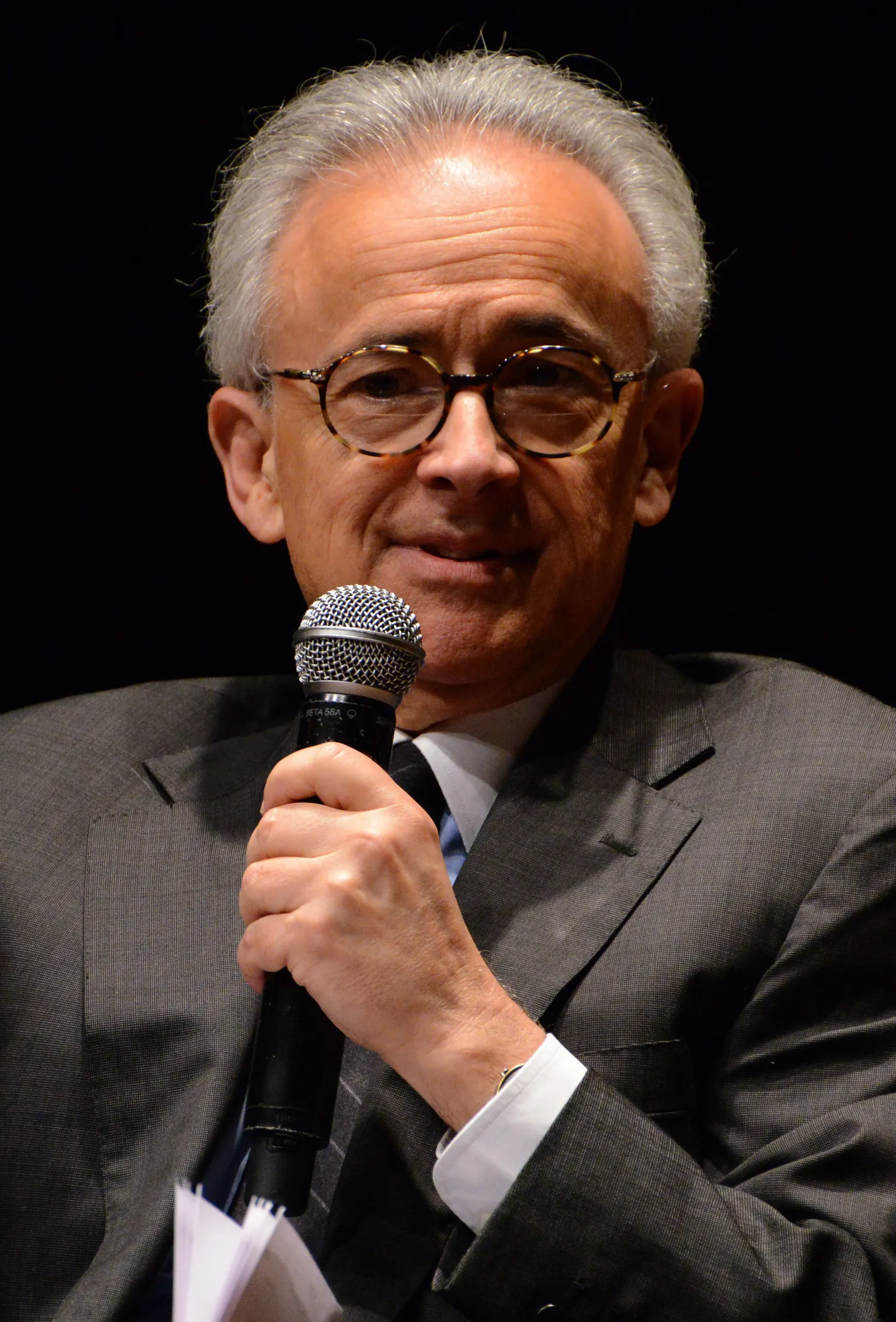
Antonio Damasio
 Portugal
neurologist•psychologist•non-fiction writer
Also known as: António Rosa Damásio, Antonio Rosa Damasio
Birthday
February 25, 1944
Birth Sign
Pisces
Birthplace
Lisbon, Portugal
Age
82 years old
About
António Damásio is a Portuguese neuroscientist whose research has fundamentally changed how we think about emotions and rationality. He holds the David Dornsife Chair in Neuroscience and serves as a professor of psychology, philosophy, and neurology at the University of Southern California, where he also directs the Brain and Creativity Institute. His work shows that feelings are not just side effects of thought but essential guides for decision-making. Damásio's books, including Descartes' Error and The Strange Order of Things, have reached readers far beyond academia, making him one of the most influential voices in the field of consciousness studies.
Today, Damásio continues to explore the biological roots of mind and culture, collaborating with artists and musicians through the Brain and Creativity Institute. His most recent book, Natural Intelligence and the Logic of Consciousness, was published in 2026. He is married to fellow neuroscientist Hanna Damásio, and together they received the 2026 Public Value Award for Lifetime Achievement from USC Dornsife.
Early Life & Background
António Rosa Damásio was born in Lisbon, Portugal, on February 25, 1944, during the authoritarian Estado Novo regime. Growing up in this politically constrained environment, he developed an early interest in how the brain shapes human behavior. He pursued medicine at the University of Lisbon, earning his medical degree and specializing in neurology. His clinical work there exposed him to patients with brain lesions, sparking his curiosity about the link between brain damage and behavior.
Damásio completed a doctorate and postdoctoral training in neurophysiology, then moved to the United States in 1975. He joined the University of Iowa, where he eventually chaired the neurology department for two decades. It was there that he studied patients with damage to the ventromedial prefrontal cortex, discovering that they could retain full intellectual capacity yet lose the ability to make sound decisions. This observation became the seed of his somatic marker hypothesis, which argues that bodily emotional signals are essential for rational thinking.
Career Growth
Damásio's breakthrough came in 1994 with the publication of Descartes' Error, a book that argued emotions are integral to reason, not obstacles to it. The book became a crossover success, reaching audiences far beyond neuroscience. He followed with The Feeling of What Happens in 1999, exploring the neural basis of consciousness, and Looking for Spinoza in 2003, which examined the philosophy and neuroscience of feelings.
In 2005, Damásio moved to the University of Southern California, where he became University Professor and founded the Brain and Creativity Institute. He continued to publish influential works: Self Comes to Mind (2010), The Strange Order of Things (2018), and Feeling & Knowing (2021). In 2026, he released Natural Intelligence and the Logic of Consciousness, proposing a new framework linking natural intelligence with conscious experience. His research has reshaped neuroscience, psychology, and philosophy, establishing feelings as central to rational behavior.
Career Timeline
Public Image & Style
Damásio is widely regarded as a rigorous, humanistic scientist who bridges laboratory research with philosophical questions about consciousness, self, and culture. His writing style is accessible and narrative-driven, helping his books reach general audiences. He is frequently described as an award-winning neuroscientist in speaker bios. He has no official fandom name, but his audience includes academics, students, and intellectually curious general readers who appreciate his ability to make complex ideas understandable.
Fame & Fandom
Antonio Damasio commands a following defined not by screaming crowds or viral memes, but by the quiet intensity of minds grappling with the biology of consciousness. His audience consists of academics, students, and intellectually curious readers who find resonance in his narrative-driven exploration of how feelings guide rationality. There is no organized fanbase, no unofficial nicknames, and no fan-funded projects; his influence is measured strictly through the adoption of his theories in classrooms and laboratories worldwide. The community that engages with his work does so through professional channels, university lectures, TED talks, and deep-dive interviews like *Finding Mastery*, rather than through social media cults or birthday billboards. This lack of formal fandom reflects his status as a rigorous scientist rather than a pop culture icon, yet his reach extends far beyond the ivory tower into the global imagination. Despite the absence of a specific name for his supporters, the collective impact of his books and research has created a lasting legacy among those seeking to understand the intersection of biology, psychology, and culture. While he does not have a dedicated legion of fans, his ideas have permeated public discourse, challenging centuries of philosophical separation between emotion and reason. In August 2026, this enduring intellectual presence secured him a notable position in the iFANN Global Fame Rankings, placing him as the 80th most famous person in Portugal and the 64th most famous person from Portugal, holding steady from the previous cycle.
Interesting Facts and Legends
Antonio Damásio's somatic marker theory emerged from clinical observations of patients with ventromedial prefrontal cortex damage who retained intact intelligence and memory yet could not make decisions. This discovery bridged neuroscience and philosophy, engaging deeply with thinkers like Spinoza as reflected in his book *Looking for Spinoza*. He leads the Brain and Creativity Institute at USC, an unusual hub for a neuroscientist dedicated to studying creativity through collaboration with artists and musicians. His books have been translated into dozens of languages, cementing his global influence. A 2014 MIT Technology Review profile highlighted how Damásio demonstrated that emotions are central to understanding biological and cognitive processes, overturning decades of scientific neglect of feeling. Beyond his academic contributions, a widely retold story in the field concerns the development of his somatic marker hypothesis, which posits that bodily signals play a central role in decision-making before conscious reasoning occurs. This theory is supported by documented case studies of patients with damaged emotional circuits who lost the ability to make sound decisions despite their intellect. In early 2026, controversy arose when reports revealed he had asked Jeffrey Epstein for private funding in 2013, years after the financier's guilty plea. Despite this scrutiny, he was awarded the Public Value Award for Lifetime Achievement by USC Dornsife in February 2026 alongside his wife, Dr. Hanna Damásio. New works such as *Natural Intelligence & the Logic of Consciousness* were discussed in mid-2026, keeping his intellectual footprint active.
Notable Quotes
“The three are completely interconnected: feelings, reason, and the body.”
“Emotions are not obstacles to reason but essential components of it.”
Family & Personal Life
Damásio is married to Hanna Damásio, a prominent neuroscientist specializing in neuroimaging and brain mapping. The couple has collaborated professionally for decades, co-founding the Brain and Creativity Institute and co-authoring numerous studies. They received the 2026 Public Value Award for Lifetime Achievement jointly. No public information is available about children or other family members.
Notable Connections
Hanna Damásio, his wife and scientific collaborator, with whom he co-founded the Brain and Creativity Institute and co-received the 2026 Public Value Award. He also collaborated with colleagues at the University of Iowa during his 20-year tenure there, and with artists and musicians at USC's Brain and Creativity Institute.
Relationships & Dating History
Public information about Damásio's romantic history is extremely limited, consistent with his private personal life. He is married to Hanna Damásio, a fellow neuroscientist and longtime collaborator. The couple has worked together for decades on brain mapping and neuroimaging research, co-founding the Brain and Creativity Institute at USC. They received the 2026 Public Value Award for Lifetime Achievement jointly. No public information exists about any prior relationships, engagements, or marriages. As of 2026, Damásio is married to Hanna Damásio.
- MarriedHanna DamasioCurrentWife and scientific collaborator for decades.
Salary, Net Worth In 2026
$10 Million
iFANN Editorial Team estimate
As an academic rather than a commercial entertainer, Damásio's income comes primarily from his university salary, book royalties, and speaking fees. As University Professor and David Dornsife Chair at USC, his salary is estimated in the low-to-mid six figures annually. His books, published by major houses like Pantheon and Penguin Random House, have sold widely across multiple translations. He also commands professional speaking fees as a TED speaker and invited lecturer. Per iFANN's editorial analysis, as of 2026, his net worth is estimated at around $10 Million, built over decades of academic work and influential publications.
Awards Won (2)
Damásio has received numerous honors for his scientific contributions. He won the Prince of Asturias Award for Technical and Scientific Research and, in 2026, he and his wife Hanna received the Public Value Award for Lifetime Achievement from USC Dornsife's Department of Psychology.
2026 · Lifetime Achievement
Lifetime scientific contributions
Technical and Scientific Research
Scientific research
Known For
Descartes' Error
1994 · Author
The Feeling of What Happens
1999 · Author
The Strange Order of Things
2018 · Author
Feeling & Knowing
2021 · Author
Keywords
Sources
Quick Facts
- Profession
- neurologist, psychologist, non-fiction writer
- Born
- February 25, 1944
- Birthplace
- Lisbon, Portugal
- Gender
- Male
- Spouse
- Hanna Damasio
- Birth Sign
- Pisces
Personal Details
- Full Name
- António Rosa Damásio
- Spouse
- Hanna Damasio
- Education
- Medical degree from the University of Lisbon; doctorate in neurophysiology
Frequently Asked Questions
What is Antonio Damasio known for?
How old is Antonio Damasio?
Is Antonio Damasio married?
Where does Antonio Damasio work?
Did Antonio Damasio accept money from Jeffrey Epstein?
Similar People

Join the community
fans discussing