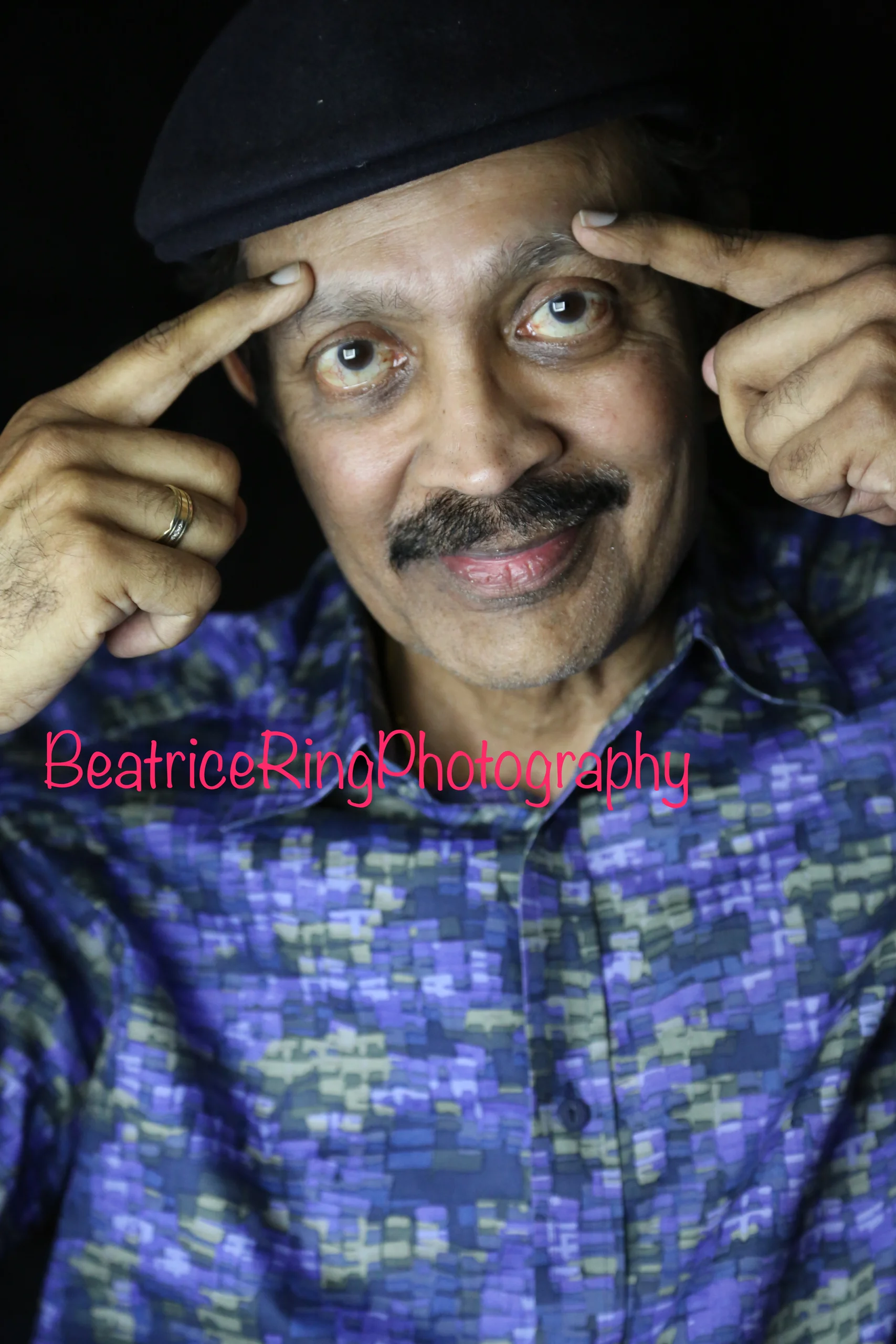
V. S. Ramachandran
 India
IndiaNeuroscientist•psychologist•author
Also known as: Rama, Vilayanur Ramachandran, V. S. Ramachandran
Birthday
August 10, 1951
Birth Sign
Leo
Birthplace
Tamil Nadu, India
Age
75 years old
About
Vilayanur Subramanian Ramachandran is an Indian-American neuroscientist whose work has reshaped how we think about the brain and the self. As a distinguished professor at the University of California, San Diego, and director of its Center for Brain and Cognition, he has spent decades probing the strangest corners of perception, from phantom limbs to synesthesia. His best-known invention, the mirror box, uses a few dollars' worth of mirrors to trick the brain into relieving phantom limb pain, a breakthrough that has helped countless amputees and stroke patients.
Ramachandran's influence extends far beyond the lab. His books, including Phantoms in the Brain (1998) and The Tell-Tale Brain (2010), have brought neurological mysteries to a wide readership, and his two TED talks have gathered millions of views. He is widely regarded as one of the most accessible and imaginative scientists of his generation, known for elegant, low-cost experiments that reveal deep truths about consciousness.
Early Life & Background
Ramachandran was born in Tamil Nadu, India, into a Tamil family. He completed his medical degree in India before heading to England, where he earned a PhD in experimental neuroscience from Trinity College, Cambridge, in 1978. His early research centered on human vision and visual psychophysics, but he soon became fascinated by how the brain constructs the body and why it sometimes generates false sensations.
His pivotal early work involved patients with phantom limbs, synesthesia, and Capgras syndrome, conditions that would come to define his career. Ramachandran's approach was distinctive from the start: he favored simple, clever experiments over expensive brain imaging, a philosophy that would become his signature. By the time he joined UC San Diego in the 1980s, he had already developed the ideas that would lead to the mirror box and his broader theories about brain function.
Career Growth
Ramachandran's breakthrough came with the invention of the mirror box in the early 1990s. The device, made of a mirror and a box, creates the illusion that a missing limb is present, which helps relieve phantom limb pain by tricking the brain into 'unclenching' the phantom. The technique proved remarkably effective and has since been used in stroke rehabilitation as well. This simple, inexpensive innovation brought him international acclaim and remains his most celebrated contribution.
He followed with a series of influential studies on synesthesia, Capgras syndrome, and other neurological oddities, often publishing in top journals. His 1998 book Phantoms in the Brain, written with Sandra Blakeslee, became a bestseller and was adapted into a PBS special. A second book, The Tell-Tale Brain, appeared in 2010. Ramachandran delivered two official TED talks, including '3 clues to understanding your brain,' and has appeared on Charlie Rose and other programs. In 2014, the ARCS Foundation named him Scientist of the Year.
More recently, in 2026, Ramachandran found himself at the center of controversy after DOJ documents revealed that Jeffrey Epstein had funded a study on an autistic savant, with the money channeled through Deepak Chopra. Emails showed Ramachandran had sought the funding, writing 'I don't have a problem with my lab being funded by Epstein.' The revelations sparked significant media scrutiny and raised ethical questions about his acceptance of Epstein's money.
Career Timeline
Public Image & Style
Ramachandran is regarded as one of the most accessible and engaging voices in modern neuroscience. His public persona is that of a curious, empirically driven scientist who favors elegant, low-cost experiments over high-tech approaches. He has a dedicated following among neuroscience enthusiasts and students of consciousness studies. His signature approach combines clinical observation with bold theorizing about the nature of consciousness and self. Media coverage often highlights his ability to explain complex brain science to general audiences through books, TED talks, and interviews.
Fame & Fandom
V. S. Ramachandran commands a distinct audience composed of neuroscience students, psychology scholars, and readers of popular science rather than an organized community with self-designated rituals or formal membership structures. His influence circulates through academic channels, book sales, and viral educational lectures, creating a diffuse following that lacks the structured campaigns or fan clubs typical of pop culture icons. While casual shorthand like "Rama" appears on author profiles, no official fandom name exists to unify his supporters, nor are there documented birthday billboards, charity drives, or fan-funded projects bearing his name. The public narrative surrounding him is defined by intellectual breakthroughs, specifically the mirror box therapy for phantom limb pain and his 2003 TED talk, which serve as gateway moments for new audiences interested in the nature of consciousness. More recently, verified reports from 2025 and 2026 regarding Epstein funding have added a complex layer to his legacy, shifting discussions from pure scientific acclaim to scrutiny within academic and legal circles. Despite his global recognition as a leading neuroscientist, iFANN's Global Fame Engine has evaluated this person, but they do not currently hold a placement in the published rankings (Global Top 1,000 or a Top-100 scope list).
Interesting Facts and Legends
Ramachandran is known for conducting experiments with remarkably simple, inexpensive equipment rather than expensive brain imaging technology. His mirror box costs only a few dollars to construct but has had a profound impact on pain management. He is a member of the Edge Foundation, a community of scientists and thinkers. His research has explored unusual phenomena including people who see time, synesthesia, and impostor syndrome. He has been featured at the Liberty Science Center as part of their 'Celebrate All Scientists' series. His lab maintains an official Instagram account, @_vsramachandran, where students present their research at conferences such as the Society for Neuroscience. A widely retold story involves his development of the mirror box therapy in the mid-1990s, where amputees report immediate relief from phantom pain when viewing a reflection of their intact limb. Another iconic moment is his 2003 TED talk, which introduced millions to concepts of remapping and empathy through mirror neurons. Recent public records from 2026 also document that his center received funding from Jeffrey Epstein, complicating his reputation with verified financial ties revealed in Department of Justice releases.
Notable Quotes
“I don't have a problem with my lab being funded by Epstein.”
“Go with an objective mind.”
Family & Personal Life
Ramachandran is married to Diane Rogers-Ramachandran, a neuroscientist who has collaborated with him on phantom limb research and visual illusions. The couple has worked together on studies involving mirror box therapy. His family connections extend to the literary world: his nephew, Suchitra Ramachandran, is a prominent Indian writer and translator who has published criticism and translation work, including on the Tamil author Jeyamohan. Details about his children or other extended family are not publicly documented, as he keeps his personal life private.
Notable Connections
Ramachandran's wife, Diane Rogers-Ramachandran, is a neuroscientist and frequent collaborator on phantom limb studies. Deepak Chopra facilitated Epstein's funding for Ramachandran's autism research. Jeffrey Epstein funded a study on an autistic savant. His nephew, Suchitra Ramachandran, is a writer and translator known for work on Tamil literature, including Jeyamohan.
Relationships & Dating History
Public information about Ramachandran's romantic relationships is extremely limited, as he has maintained a private personal life. His known long-term relationship is with his wife, Diane Rogers-Ramachandran, a fellow neuroscientist. They have been married for several decades and have collaborated professionally on research into phantom limbs and visual perception. No other public romantic relationships, engagements, or high-profile romances have been documented in credible sources. As of 2026, Ramachandran is married to Diane Rogers-Ramachandran; there is no evidence of divorce, separation, or any other relationship status change.
- MarriedDiane Rogers-RamachandranCurrentNeuroscientist and collaborator on phantom limb research.
Salary, Net Worth In 2026
$10 Million
iFANN Editorial Team estimate
As an academic neuroscientist, Ramachandran's income derives primarily from his university salary at UC San Diego, book royalties from his popular science publications, and speaking fees from lectures and TED appearances. Unlike celebrities or athletes, his financial details are not tracked by celebrity net worth databases. Per iFANN's editorial analysis, his net worth in 2026 is estimated at around $10 Million. The bulk of his wealth likely comes from the long-running royalties of Phantoms in the Brain and The Tell-Tale Brain, both of which have sold well internationally, along with fees for lectures and media appearances.
Awards Won (1)
Ramachandran has received numerous awards and honors throughout his career. In 2014, the ARCS Foundation named him Scientist of the Year for his contributions to neuroscience. He has been elected to the Royal Institution of Great Britain and has received multiple honorary doctorates from universities worldwide.
2014 · Science
Neuroscience research
Known For
Mirror box therapy
1990s · Inventor
Phantoms in the Brain
1998 · Author
The Tell-Tale Brain
2010 · Author
Keywords
Sources
Quick Facts
- Profession
- Neuroscientist, psychologist, author
- Born
- August 10, 1951
- Birthplace
- Tamil Nadu, India
- Gender
- Male
- Birth Sign
- Leo
Personal Details
- Full Name
- Vilayanur Subramanian Ramachandran
- Spouse
- Diane Rogers-Ramachandran
- Education
- MD (India), PhD in Experimental Neuroscience, Trinity College, Cambridge (1978)
Frequently Asked Questions
Is V. S. Ramachandran married?
What is V. S. Ramachandran famous for?
What is V. S. Ramachandran's net worth?
Did Jeffrey Epstein fund V. S. Ramachandran's research?
Where does V. S. Ramachandran work?
Social Media
Similar People
Join the community
fans discussing