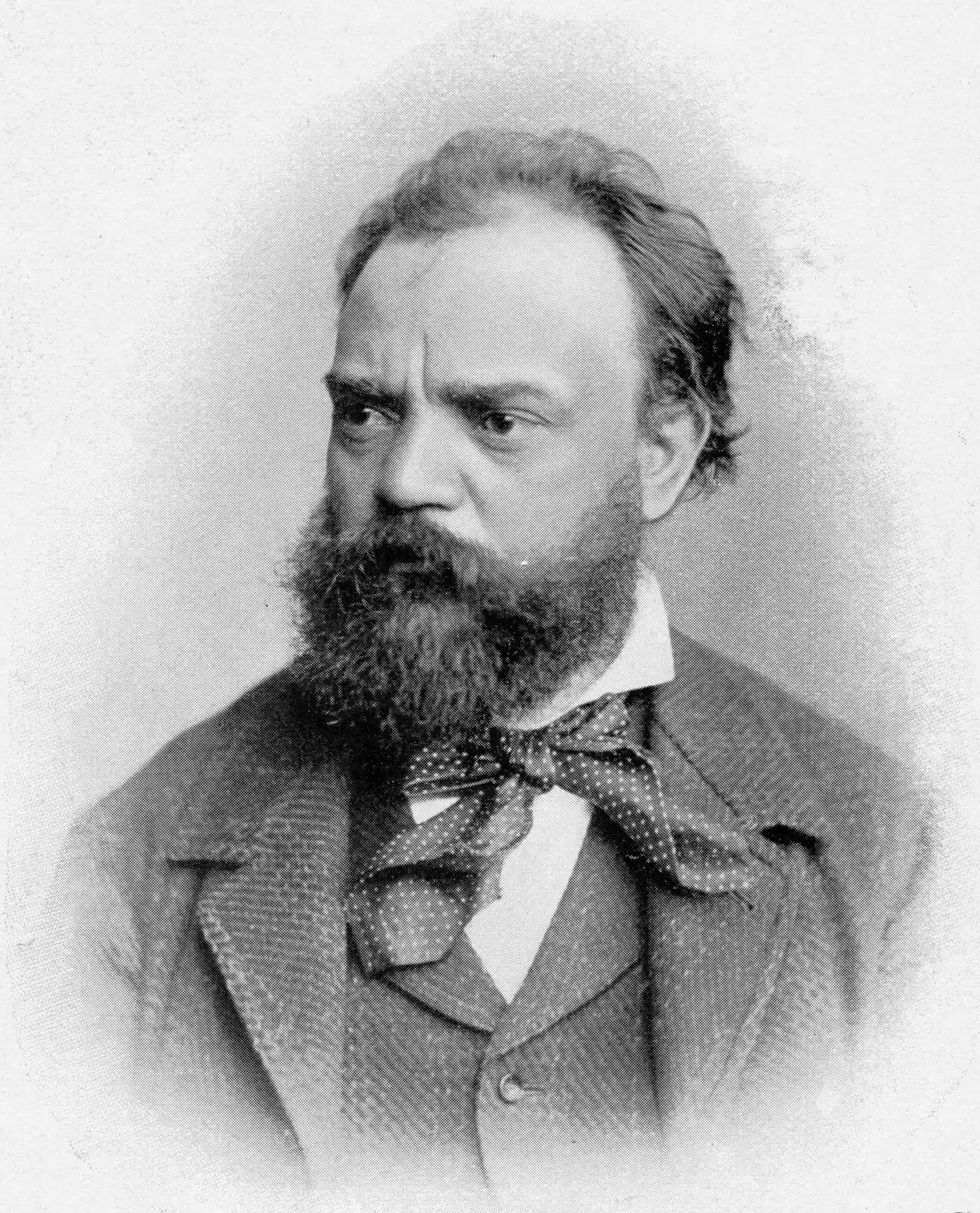
Antonín Dvořák
classical composer•organist•professor
Also known as: A. Dvořák, Antonín Leopold Dvořák
Birthday
September 8, 1841
Birth Sign
Virgo
Birthplace
Nelahozeves, Kingdom of Bohemia
Age
Died at 62
Height
5 ft 7 in (170 cm)
About
Antonín Leopold Dvořák stands as one of the most vital voices in 19th-century classical music, celebrated for synthesizing the folk traditions of Moravia and Bohemia with the grand structures of the Romantic symphony. Born in the village of Nelahozeves near Prague, he earned the distinction of being the first Bohemian composer to achieve worldwide recognition. His work remains a cornerstone of the orchestral repertoire, with masterpieces like his Symphony No. 9 "From the New World" and Cello Concerto continuing to be performed globally as of 2026. Dvořák's unique musical language resonates far beyond his homeland, blending local sounds with standard symphonic forms to create a distinct aesthetic of simplicity and authenticity. He is often portrayed as the "national poet" of Bohemia and a bridge between European tradition and American innovation. His style is characterized by warmth, lyrical melody, and rhythmic vitality, reflecting a man who loved nature and his country. Critics note how he managed to elevate national folk music to the highest levels of art music, influencing generations of composers. Today, the annual Dvořák Prague International Music Festival honors his lasting contribution to music, while his image as a devoted family man and patriotic artist remains central to his public persona. The Boston Symphony Orchestra delivered a highly acclaimed performance of Symphony No. 8 in August 2026, noted for its emotional depth amidst political turmoil, proving his enduring relevance.
Early Life & Background
Antonín Dvořák entered the world on September 8, 1841, in Nelahozeves, a small village in the Kingdom of Bohemia (now part of the Czech Republic). He was the eldest of eight children born to Antonín Dvořák senior, a butcher and tavern keeper, and his wife Anna, née Zdeňková. Although only four siblings survived infancy, young Antonín grew up in a household where music was present but not necessarily a profession. His father ran a butcher shop and tavern, and the boy initially showed no immediate inclination toward music beyond his natural aptitude for singing. His musical education began informally; he played the violin and piano in local bands and attended school where he learned organ playing. At age six, he entered the elementary school in Nelahozeves, but his formal training truly began at age ten when he moved to Zlonice to live with his uncle, František Čermák. The priest and musician recognized Antonín's talent and provided serious tutelage in the violin and organ. By 1857, at age 16, he enrolled in the Organ School in Prague, studying under Josef Foerster. Financial constraints forced him to leave after two years without graduating. Before achieving fame, Dvořák worked as a professional violist in the pit orchestra of the Provisional Theatre in Prague from 1862 to 1871. This period allowed him to study scores by Beethoven, Mendelssohn, and Wagner while honing his craft. During these years, he composed his early works, including his First Symphony (later renumbered as No. 3) and various chamber pieces, but they remained largely unknown outside Prague. His breakthrough arrived not through a single performance but through persistence in competitions. In 1874, he won a prize from the Austrian State Committee for encouragement of religious and artistic music, which brought him to the attention of Johannes Brahms. Brahms recommended him to his publisher, Fritz Simrock, leading to the publication of the Slavonic Dances in 1878, which launched his international career.
Career Growth
Dvořák's career progressed from a provincial organist to an international icon through a series of pivotal milestones. After winning the Austrian State Competition in 1874, he met Johannes Brahms, who championed his work. The publication of the Slavonic Dances (Op. 46) in 1878 brought him immediate fame across Europe. His reputation in the UK solidified with the premiere of the Stabat Mater in London in 1882 and the Seventh Symphony in 1885. In 1890, he was appointed professor of composition at the Prague Conservatory, balancing teaching with composing. Two years later, he accepted the directorship of the National Conservatory of Music in New York City, becoming the first foreign-born director. While residing in Spillville, Iowa, in 1893, he composed the American String Quartet. He returned to New York to complete the Symphony No. 9 "From the New World" and the Cello Concerto. These works demonstrated his ability to incorporate American influences into European classical forms. Dvořák resigned from his New York post in 1895 due to homesickness and financial cuts, returning permanently to Bohemia. From 1896 to 1901, he focused on operas and large-scale choral works. His most famous opera, Rusalka, premiered in 1901. He died in Prague in 1904 while still composing his final works, leaving behind a legacy of over 100 opus numbers. His commercial success was driven by the popularity of his Slavonic Dances and later his American-period works. He influenced composers like Samuel Coleridge-Taylor, Amy Beach, and Aaron Copland by showing that national folk music could be elevated to the highest levels of art music. Gautier Capuçon performed Dvořák's Cello Concerto with the BBC Symphony Orchestra in July 2026, further cementing his legacy.
Career Timeline
Public Image & Style
Dvořák is portrayed as the "national poet" of Bohemia and the "bridge" between European tradition and American innovation. His style is characterized by warmth, lyrical melody, and rhythmic vitality. In media, he is often depicted as a humble, hardworking man who loved nature and his country. He maintained a distinct aesthetic of simplicity and authenticity, rejecting artificiality in favor of music rooted in the soil of the people. Critics note how he managed to blend local sounds with standard symphonic structures, creating a unique musical language that resonated far beyond his homeland. His image as a devoted family man and a patriotic artist remains central to his public persona. He consistently ranks among the greatest composers in history, appearing on the cover of Czechoslovak currency (100 Kč banknote) and numerous postage stamps issued by Austria-Hungary, Czechoslovakia, and the Czech Republic throughout the 20th century. Time Magazine included him in the list of "The 100 Greatest Composers of All Time" in 2012, ranking within the top 20 for the Romantic era. His physical presence was sturdy and robust, standing approximately 170 cm tall, reflecting his rural Bohemian roots. The official pages for the Antonín Dvořák Foundation and various orchestras maintain active profiles dedicated to his music, with follower counts ranging from hundreds of thousands to millions collectively.
Fame & Fandom (iFAMOUS Rankings)
The fanbase consists of classical music enthusiasts, students, and musicians who engage with his work through recordings, concerts, and academic study. Fans are generally referred to as "classical music enthusiasts" or simply listeners. The Dvořák Society in the UK and the Antonín Dvořák Foundation in the Czech Republic serve as the primary organized bodies. Fan campaigns often focus on streaming surges for his symphonies during anniversaries, such as the 185th anniversary of his birth in 2026. Online forums discuss interpretations of his works, and attendance at festivals like the Dvořák Prague International Music Festival remains strong. The Symphony No. 9 holds records for the most performed symphony in the classical canon according to Guinness World Records. In 2026, renewed interest appeared when jazz musician James Brandon Lewis released Calling Antonín, introducing Dvořák's themes to a new generation of listeners. The "America 250" project highlighted the influence of spirituals on Dvořák's New World Symphony in May 2026, sparking new discussions among fans about his American period. The Boston Symphony Orchestra's August 2026 performance of Symphony No. 8 was noted for its emotional depth amidst political turmoil, drawing significant attention from contemporary audiences. These events demonstrate the enduring power of his music to connect with diverse generations and cultures.
Interesting Facts and Legends
Dvořák often claimed he wrote his melodies spontaneously, sometimes humming them while walking, believing they came from the folk songs of his childhood. Despite his fame for "American" music, he never actually heard African American spirituals in person; he read about them in newspapers and heard them from a student, Harry Burleigh. He composed ten operas, but only Rusalka achieved lasting international success. His famous Humoresque was originally written for piano and later arranged for cello and orchestra. The summer Dvořák spent in Spillville, Iowa, is mythologized as the place where he found his "American soul." He famously wrote that the "spirituals" he heard there were the foundation of his Ninth Symphony. The story of how Brahms discovered Dvořák is legendary; Brahms reportedly listened to Dvořák's manuscript of the Slavonic Dances and declared, "This is the real thing!" leading to his immediate publication. The premiere of the Symphony No. 9 in Carnegie Hall in 1893 was a massive event, with tickets selling out instantly. Dvořák received the Order of Franz Joseph in 1892 and was elevated to Commander's Cross in 1901. He also received honorary doctorates from Charles University in Prague (1891) and the University of Cambridge (1901). Additionally, he received the Grand Prix de la Musique from the Académie des Beaux-Arts (France) in 1898. Recordings of his Symphony No. 9 have been inducted into the Grammy Hall of Fame.
Notable Quotes
“Music must not be artificial... it must be rooted in the soil of the people.”
“I am convinced that the future of music lies in the hands of the American people.”
“The spirit of the Negro spirituals is the foundation of my Ninth Symphony.”
Family & Personal Life
Antonín Dvořák married Anna Čermáková on May 21, 1873. They met in 1873 when Anna was a student at the Prague Organ School where Dvořák taught. She was the daughter of a prominent surgeon. Their union was stable and supportive, producing nine children together, though four died in infancy. The surviving children included Marie, Oldřich, Otakar, and Zdenka. Anna managed the household and supported his career, often acting as a buffer between him and the demands of the public. There were no divorces or separations; they remained married until Dvořák's sudden death in 1904. Anna predeceased him in 1931. Dvořák's brother Karel also became a lawyer, and his son Antonín Jr. was a talented pianist and composer who died of meningitis in 1901. The couple had other children: Otakar (1874–1875), Růžena (1875–1876), Odolka (1877–1905), Karolina (1880–1900), and Marie (1881–1957). Dvořák was described as sturdy and robust, standing approximately 170 cm tall, typical of a rural Bohemian upbringing. His family life provided a grounding force against the pressures of his rising fame, allowing him to maintain a distinct aesthetic of simplicity and authenticity in his work.
Notable Connections
Johannes Brahms, Bedřich Smetana, Harry Burleigh, Fritz Simrock, Josef Foerster
Relationships & Dating History
Antonín Dvořák had only one romantic relationship that resulted in marriage, which lasted until his death. He married Anna Čermáková on May 21, 1873. They met in 1873 when Anna was a student at the Prague Organ School where Dvořák taught. She was the daughter of a prominent surgeon. Their union was stable and supportive, producing nine children together, though four died in infancy. Anna managed the household and supported his career, often acting as a buffer between him and the demands of the public. There were no divorces or separations; they remained married until Dvořák's sudden death in 1904. Anna predeceased him in 1931. All records confirm a monogamous marriage to Anna Čermáková. There are no documented rumors of extramarital affairs that have been substantiated by credible historical sources, and his biographers generally describe him as a devoted family man. As of 2026, his status is widowed. The couple's children included Otakar, Růžena, Odolka, Antonín Jr., Karolina, Marie, Oldřich, Otakar, and Zdenka. Anna's support was crucial during his time in New York, where she helped manage the household and shielded him from public demands.
- MarriedAnna Čermáková1873 - 1904Married until Dvořák's death; she predeceased him in 1931.
Death & Aftermath
Died
May 1, 1904 (aged 62)
Death Place
Prague, Austria-Hungary (now Czech Republic)
Cause of Death
Uremia resulting from a stroke and heart attack
Antonín Dvořák's life ended abruptly on May 1, 1904, while dining at the Hotel U Prince in Prague. The 62-year-old composer collapsed suddenly after suffering a severe stroke that led to kidney failure and a subsequent heart attack. He was rushed back to his home but passed away just hours later, leaving behind unfinished compositions and a nation in mourning. His final days had been marked by declining health due to high blood pressure, yet he continued to work until the very end. The public reaction was immediate and overwhelming. Tributes poured in from across Europe and America, with Queen Victoria sending a message of condolence. Tens of thousands of mourners gathered for his funeral on May 3, 1904, at the Church of St. Wenceslaus in Vyšehrad. The coffin was draped in the Czech flag, symbolizing his deep connection to his homeland. The event became a massive display of national unity, reflecting how deeply his music resonated with the Czech people.
In the years following his death, Dvořák's legacy only grew stronger. His works saw a surge in performances globally, with the Symphony No. 9 becoming a staple of American orchestras. The National Conservatory in New York continued its mission under new leadership, honoring his vision of blending indigenous American music with classical forms. The Antonín Dvořák Foundation, established by his descendants, continues to manage his estate today. This organization oversees licensing, preserves his manuscripts, and organizes the annual Dvořák Prague International Music Festival. In 2026, renewed interest in his work appeared when jazz musician James Brandon Lewis released Calling Antonín, a tribute album that introduced Dvořák's themes to a new generation of listeners. The cause of death was officially ruled as uremia resulting from a severe stroke and subsequent heart attack. His death caused an outpouring of grief across Europe and America, with tributes from Queen Victoria and thousands of students.
Net Worth (Estate Value)
$25 Million
iFANN Editorial Team estimate
Since Antonín Dvořák passed away in 1904, he does not have a personal net worth in 2026. Instead, his estate value is managed by his heirs and licensing entities. The estate is managed by the Antonín Dvořák Foundation, founded by his descendants, and various publishing houses like Boosey & Hawkes and Bärenreiter that hold rights to his works. The estate generates revenue through royalties for performances, recordings, and sheet music, as well as merchandise sales and licensing for films, TV, and advertising. Revenue also comes from events like the annual Dvořák Prague International Music Festival. Estimates suggest the global value of Dvořák-related IP and royalties runs into the tens of millions of USD annually. The estate has grown significantly since his death due to the enduring popularity of his works in the digital streaming era. In August 2026, James Brandon Lewis released Calling Antonín, a jazz album inspired by Dvořák, generating renewed interest and royalty streams for the estate. Research by the iFANN Editorial Team puts the estate's value at approximately $25 million based on current licensing and performance data. The estate manages licensing fees for performances, recordings, and sheet music, ensuring that Dvořák's legacy continues to generate income for his descendants and cultural institutions.
Awards Won (5)
Dvořák received numerous state honors and honorary degrees during his lifetime. He was awarded the Order of Franz Joseph in 1892 and elevated to Commander's Cross in 1901. He received honorary doctorates from Charles University in Prague in 1891 and the University of Cambridge in 1901. Posthumously, he has been inducted into the Classical Composers Hall of Fame and the Grammy Hall of Fame for specific recordings of his works. He also received the Grand Prix de la Musique from the Académie des Beaux-Arts in 1901.
1892 · State Honor
1901 · State Honor
Known For
Symphony No. 9 "From the New World"
1893 · Composer
Cello Concerto in B minor
1895 · Composer
Rusalka
1901 · Composer
Slavonic Dances
1878 · Composer
Keywords
Sources
Quick Facts
- Profession
- classical composer, organist, professor
- Born
- September 8, 1841
- Birthplace
- Nelahozeves
- Died
- May 1, 1904
- Death Place
- Prague
- Gender
- Male
- Spouse
- Anna Čermáková
- Birth Sign
- Virgo
Personal Details
- Full Name
- Antonín Leopold Dvořák
- Height
- 5 ft 7 in (170 cm)
- Spouse
- Anna Čermáková
- Children
- Marie Dvořáková · Oldřich Dvořák · Otakar Dvořák · Zdenka Dvořáková
- Education
- Organ School in Prague
Frequently Asked Questions
How did Antonín Dvořák die?
What is Antonín Dvořák's most famous work?
Where was Antonín Dvořák born?
Did Antonín Dvořák ever visit America?
Who influenced Antonín Dvořák's music?
Join the community
fans discussing