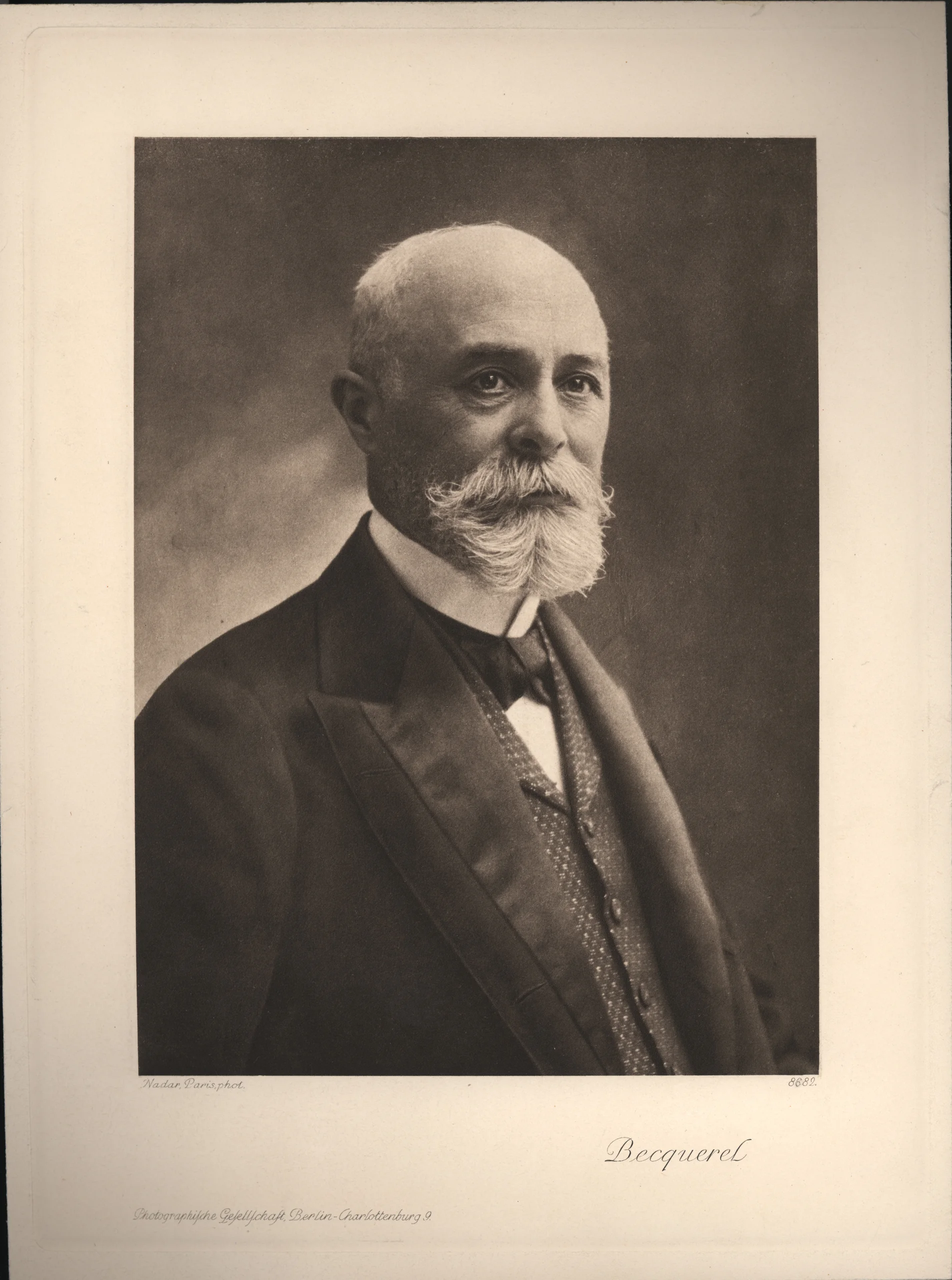
Antoine Henri Becquerel
 France
physicist•engineer•university teacher
Also known as: Henri Becquerel
Birthday
December 15, 1852
Birth Sign
Sagittarius
Birthplace
Paris, France
Age
Died at 55
About
Antoine Henri Becquerel was a French experimental physicist who, in 1896, accidentally discovered radioactivity, a breakthrough that reshaped modern physics. His work on uranium salts showed they emitted rays capable of penetrating opaque materials and exposing photographic plates, a phenomenon he called 'Becquerel rays.' For this, he shared the 1903 Nobel Prize in Physics with Marie and Pierre Curie. The SI unit for radioactivity, the becquerel (Bq), bears his name. Today, his legacy lives on in nuclear energy, medical imaging, and radiation therapy. Becquerel held the chair of physics at the Muséum National d'Histoire Naturelle and was a member of the French Academy of Sciences. His discovery came while studying phosphorescence, but he soon realized the emissions were a new form of radiation, independent of external stimulation.
Early Life & Background
Born into a scientific dynasty in Paris, Becquerel's father Alexandre-Edmond and grandfather Antoine César were both prominent physicists. This environment steeped him in physics from childhood. He attended the Lycée Louis-le-Grand before entering the École Polytechnique in 1872, graduating in 1874. He then studied engineering at the École des Ponts et Chaussées, earning his degree in 1877. After a brief stint as an engineer, he turned to research. In 1888, he earned his doctorate from the Faculty of Sciences in Paris with a thesis on the absorption of light in crystals. He became an assistant naturalist at the Muséum National d'Histoire Naturelle, where his father had worked. His early research focused on optics, magnetism, and the phosphorescence of uranium salts, which directly led to his pivotal discovery.
Career Growth
In early 1896, Becquerel was investigating whether phosphorescent materials, like uranium salts, emitted X-rays after exposure to sunlight. He wrapped a photographic plate in black paper, placed uranium salts on top, and left them in sunlight. The plate fogged. But when a cloudy day delayed his experiment, he developed the plate anyway and found it was still fogged, even without sunlight. He realized the uranium emitted its own rays, independent of external energy. He published his findings on March 2, 1896. This discovery of spontaneous radioactivity electrified the scientific community. Marie Curie coined the term 'radioactivity' and, with Pierre, isolated polonium and radium. In 1903, the Nobel Prize in Physics was awarded jointly to Becquerel, Marie, and Pierre Curie for their work on radiation. Becquerel continued researching the properties of radioactive elements until his health declined.
Career Timeline
Public Image & Style
Becquerel is remembered as a meticulous and modest scientist who stumbled upon one of the most important discoveries of the 20th century. He is often depicted in photographs as a serious, bearded man in formal attire, reflecting the dignified academic of his era. In the scientific community, he is respected for his rigorous experimental methods and his willingness to share credit with the Curies. The naming of the becquerel unit ensures his name appears in every physics textbook. Popular accounts sometimes overshadow his role with Marie Curie's story, but historians recognize him as the discoverer of radioactivity.
Fame & Fandom (iFAMOUS Rankings)
Antoine Henri Becquerel commands a reverence that transcends the fleeting nature of celebrity culture, existing instead as a foundational pillar within the global scientific community. Unlike modern icons who cultivate organized fanbases with specific names and ritualistic gatherings, Becquerel is revered by historians, physicists, and students rather than a dedicated fandom. No official moniker exists for his admirers, nor are there chart-topping campaigns or birthday tributes; his legacy is maintained through academic curricula and the enduring presence of the unit bearing his name. This quiet, institutional devotion stands in stark contrast to the noisy adoration reserved for living entertainers.
In August 2026, the iFANN Global Fame Engine evaluated Antoine Henri Becquerel's standing across all metrics. The assessment concludes that he is currently an EVALUATED_UNRANKED figure, meaning he does not hold a placement within the published Global Top 1,000 or any Top-100 scope list. While his name appears on every physics textbook, this ubiquity has not translated into a ranked position in the current fame hierarchy. His influence remains absolute yet static, rooted in historical fact rather than the fluctuating signals of contemporary media consumption or search volume.
The absence of a formal ranking reflects his status as a figure of the past whose cultural footprint is immutable. He is neither rising nor falling in popularity because his relevance is absolute. The scientific world honors him not through the mechanics of a popularity contest but through the fundamental laws of nature he helped uncover. His story serves as a permanent reference point, ensuring his name endures without the need for the competitive dynamics that drive modern fame rankings.
Interesting Facts and Legends
While often described as a serendipitous accident, Becquerel was methodically investigating phosphorescence when he noticed the anomaly that would change science. The unit becquerel (Bq) represents one radioactive decay per second, cementing his contribution in the International System of Units. Elected to the French Academy of Sciences in 1889 at age 36, he held the chair of physics at the Muséum National d'Histoire Naturelle. His son Jean also became a physicist, collaborating with him on magnetic experiments before both faced health declines likely due to radiation exposure.
A defining legend of his career centers on a rainy week in Paris during February 1896. Having prepared uranium salts atop photographic plates wrapped in black paper, he intended to expose them to sunlight. When overcast skies prevented this, he stored the setup in a dark drawer, assuming no reaction would occur. Upon developing the plates weeks later, he found they were strongly marked, proving the uranium emitted rays spontaneously without external energy. This verified event, recorded in his laboratory notebooks, illustrates the critical importance of observing unexpected results.
Becquerel remained humble despite his Nobel Prize, once noting his discovery was not a complete surprise given his family's extensive work in optics. An avid sailor, he spent summers at his manor in Le Croisic, where he died in 1908. His life exemplifies the meticulous experimental methods that defined his era, leaving a legacy that permeates nuclear energy and medical imaging without the need for self-promotion.
Notable Quotes
“I have observed that the rays emitted by uranium salts are capable of passing through opaque bodies.”
“The discovery of radioactivity was not a complete surprise, given the work of my father and grandfather.”
“I believe that the study of these radiations will open a new field of physics.”
Family & Personal Life
Becquerel married Louise Lorieux in 1877; she died in 1878 shortly after giving birth to their son Jean. He later married Lucie Jamin in 1890. Jean Becquerel followed his father and grandfather into physics, becoming a professor at the Muséum. The Becquerel family's scientific legacy spans three generations, all contributing to physics. Henri often credited his father for inspiring his early interest in phosphorescence. The family lived in Paris and at the manor of Pen Castel in Le Croisic, where Henri spent his final years.
Notable Connections
Becquerel collaborated closely with Marie and Pierre Curie, who built on his discovery to isolate new radioactive elements. His son Jean Becquerel was his research partner in later years. He was also influenced by Wilhelm Röntgen's discovery of X-rays, which inspired his initial experiments.
Relationships & Dating History
Becquerel married Louise Lorieux in 1877. She died the following year after giving birth to their son Jean. In 1890, he married Lucie Jamin, who survived him. His second marriage was stable and supportive of his scientific work. As of his death in 1908, he was married to Lucie.
- MarriedLouise Lorieux1877 - 1878Married in 1877; she died in childbirth in 1878.
- MarriedLucie Jamin1890 - 1908Married in 1890; she survived him.
Death & Aftermath
Died
August 25, 1908 (aged 55)
Death Place
Unknown
Cause of Death
Unknown
Net Worth (Estate Value)
As a 19th-century academic, Becquerel's wealth came from his professorship and family inheritance. He lived modestly in Paris and owned a manor in Le Croisic. His Nobel Prize money was shared with the Curies, but its value then was about 150,000 Swedish kronor. No modern net worth is calculable, as he died in 1908.
Awards Won (2)
Becquerel received the 1903 Nobel Prize in Physics jointly with Marie and Pierre Curie for his discovery of spontaneous radioactivity. He was also awarded the Rumford Medal by the Royal Society in 1900. The SI unit becquerel is named after him.
1903 · Physics
Discovery of spontaneous radioactivity
1900 · Physics
Discovery of radioactivity
Known For
Discovery of Radioactivity
1896 · Discoverer
Becquerel Rays
1896 · Discoverer
Keywords
Quick Facts
- Profession
- physicist, engineer, university teacher
- Born
- +1852-12-15
- Birthplace
- Paris
- Died
- +1908-08-25
- Death Place
- manoir de Pen Castel
- Gender
- Male
- Spouse
- Louise Lorieux, Lucie Jamin
- Birth Sign
- Sagittarius
Personal Details
- Full Name
- Antoine Henri Becquerel
- Spouse
- Louise Lorieux, Lucie Jamin
- Children
- Jean Becquerel
- Education
- École Polytechnique
Frequently Asked Questions
Who was Antoine Henri Becquerel?
What did Antoine Henri Becquerel discover?
When did Antoine Henri Becquerel win the Nobel Prize?
How did Antoine Henri Becquerel die?
What is the unit becquerel named after?
Similar People
Join the community
fans discussing