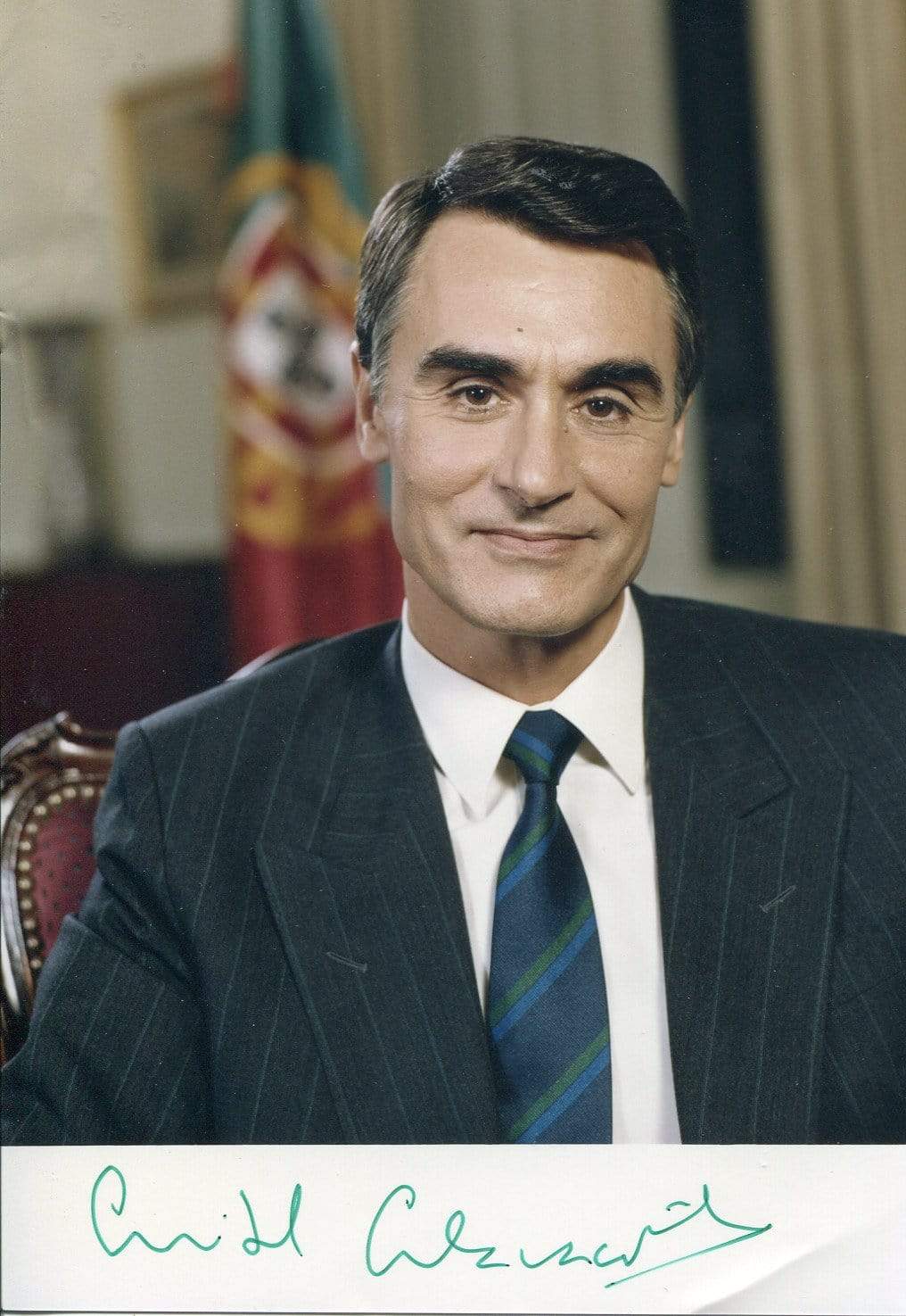
Aníbal Cavaco Silva
 Portugal
economist•politician•university teacher
Also known as: Cavaco Silva, Anibal Cavaco Silva
Birthday
July 15, 1939
Birth Sign
Cancer
Birthplace
Boliqueime, Algarve, Portugal
Age
87 years old
About
Aníbal António Cavaco Silva is a Portuguese economist and politician who served as the 19th President of the Republic from 2006 to 2016, and as Prime Minister from 1985 to 1995. He is the longest-serving freely elected prime minister in Portugal's republican history, and the first to win an absolute parliamentary majority under the current constitution. His premiership was marked by Portugal's entry into the European Economic Community in 1986, a sweeping privatization program, and major infrastructure projects. As president, he steered the country through the Eurozone debt crisis, working with international lenders on austerity measures. Known for his technocratic, data-driven style, his political philosophy earned the label 'Cavacoism.' He remains an influential elder statesman, and in May 2026 he received the newly created European Order of Merit.
Early Life & Background
Born on 15 July 1939 in Boliqueime, a small town in the Algarve, within the municipality of Loulé, Cavaco Silva grew up in a modest rural household. He studied economics at the Technical University of Lisbon, then moved to the United Kingdom for postgraduate work, earning a PhD from the University of York. Before entering politics, he built a career as an economist and university professor, establishing a reputation for rigorous analysis. In the early 1980s he served as Finance Minister, where his tough budget discipline and fiscal conservatism set him apart. These credentials positioned him as a technocratic reformer within the Social Democratic Party (PSD), and his academic background gave him a data-driven approach that would define his governance.
Career Growth
Cavaco Silva became Prime Minister on 6 November 1985, succeeding Mário Soares. His tenure, which lasted until 28 October 1995, was the longest for any freely elected prime minister in Portugal's republican history. He was the first prime minister under the current constitutional system to win an absolute parliamentary majority, enabling an ambitious reform agenda. Key achievements included leading Portugal into the European Economic Community in 1986, privatizing state-owned industries, and investing in infrastructure such as the Vasco da Gama Bridge and the Lisbon–Porto motorway. His policies modernized the economy but drew criticism for widening inequality. After losing the 1995 election, he remained active in the PSD. In 2006 he was elected President, serving two terms until 2016. As president, he acted as a stabilizing force during the Eurozone debt crisis, working with international lenders while attempting to protect social welfare.
Career Timeline
Public Image & Style
Cavaco Silva projects the image of a pragmatic, technocratic, and disciplined leader. His signature style is data-driven decision-making and fiscal conservatism, which earned him the nickname 'Cavacoism' for his policy approach. The media has often portrayed him as a stabilizing force during turbulent economic times, particularly during the Eurozone crisis. While he lacks the popular culture following of a celebrity, he commands respect in political and academic circles. His public appearances are measured and deliberate, reflecting his academic background. There is no known fandom name, but his legacy is firmly tied to Portugal's European integration and economic modernization.
Fame & Fandom
Aníbal Cavaco Silva commands a quiet, enduring presence in Portuguese public life rather than the roar of a celebrity cult. His legacy is built on the gavel and the ledger, not viral moments or fan parades. There is no organized fanbase with a formal name, no birthday billboards in Lisbon, and no unofficial nicknames born from street chants. The people who follow his career do so through the lens of political history, tracking policy shifts and economic data rather than personal dramas. He operated strictly through official state channels, diplomatic visits, and parliamentary discourse, leaving no room for the chaotic adoration typical of pop culture icons. While he lacks the fervent following of an entertainer, his reputation remains solid within academic and political circles as a stabilizing force during turbulent times. This disciplined approach defined his two terms as Prime Minister and his decade-long presidency, cementing a legacy of technocratic governance that resonates with voters who prioritize stability over spectacle. His recent receipt of the European Order of Merit in 2026 further highlighted his standing among global dignitaries, yet this recognition arrived as a formal diplomatic honor rather than a moment of mass hysteria. Despite the absence of a dedicated fandom, his influence permeates the national consciousness through the policies he enacted and the economic structures he helped build. In the iFANN Global Fame Rankings, Aníbal Cavaco Silva is currently the 32nd most famous person in Portugal and holds the position of the 59th most famous person from Portugal, maintaining steady placement across cycles.
Interesting Facts and Legends
Cavaco Silva's distinct policy blend of market-friendly reforms and cautious fiscal management earned its own moniker, 'Cavacoism,' a term still used to describe his economic philosophy. He stands as the first Portuguese president to hold a PhD in economics, bringing an unusually rigorous academic background to the highest office in the land. Born in Boliqueime, a small Algarve town better known for tourism than political leadership, he rose from humble beginnings to become the longest-serving freely elected prime minister in Portugal's republican history. During his presidency, he hosted Vladimir Putin in 2007 and conducted state visits to Colombia in 2013 and Mexico in 2014. A defining moment of his tenure occurred in July 2013 when he backed a coalition government and rejected calls for a snap poll, a decision that became a cornerstone of political stability during the Eurozone crisis. In January 2011, his re-election as President marked a significant milestone in Portuguese democratic history. More recently, in 2026, he received the European Order of Merit, an honor celebrated by his hometown of Loulé. Though he initially struggled academically, failing the third grade before eventually earning his doctorate, his journey from a struggling student to a global statesman remains a biographical detail often cited in his early life.
Family & Personal Life
Cavaco Silva has been married to Maria Cavaco Silva for decades. Maria served as First Lady during both his premiership and presidency, a role she carried out with quiet dignity. The couple has two children, though their names and professions are not widely publicized. The family has maintained a notably private life, with few personal details emerging in the press. They reside in Portugal, and Cavaco Silva's family background in the rural Algarve is a point of pride in his hometown of Boliqueime.
Notable Connections
Cavaco Silva's political career intersected with numerous world leaders. He succeeded Mário Soares as Prime Minister and was succeeded by António Guterres. During his premiership, he met with US President George H.W. Bush. As President, he hosted Vladimir Putin in 2007, and made state visits to Colombia (2013), Mexico (2014), and Poland (2012). His wife, Maria Cavaco Silva, served as First Lady throughout his time in office.
Relationships & Dating History
Cavaco Silva's personal life has been remarkably stable and private. The only documented relationship is his marriage to Maria Cavaco Silva, whom he wed decades ago. Maria served as First Lady during both his premiership (1985–1995) and presidency (2006–2016). The couple has two children. No information about prior relationships, engagements, or divorces has ever surfaced. As of 2026, Cavaco Silva remains married to Maria, and there are no reports of separation or any change in their relationship status.
- MarriedMaria Cavaco Silva1960 - presentCurrentMarried for decades; Maria served as First Lady during his premiership and presidency.
Salary, Net Worth In 2026
$2 Million
iFANN Editorial Team estimate
As a career politician and academic, Cavaco Silva's wealth remains modest compared to business magnates. His income streams derive from presidential and prime ministerial salaries, his long-standing academic career, and state pensions for former heads of government. Book royalties from his publications on economics and politics provide additional revenue. No public estimates of his net worth have been officially published, but research by the iFANN Editorial Team puts his total assets at $2 Million as of 2026. This figure aligns with his profile as a dedicated public servant rather than a commercial entrepreneur.
Awards & Accolades
View 8 records, honours and achievementsKnown For
Prime Minister of Portugal
1985-1995 · Prime Minister
President of Portugal
2006-2016 · President
Keywords
Sources
Quick Facts
- Profession
- economist, politician, university teacher
- Born
- +1939-07-15
- Birthplace
- Boliqueime
- Gender
- Male
- Spouse
- Maria Cavaco Silva
- Birth Sign
- Cancer
- Children
- 2
- Education
- Technical University of Lisbon, University of York
Personal Details
- Full Name
- Aníbal António Cavaco Silva
- Spouse
- Maria Cavaco Silva
- Children
- 2
- Education
- Technical University of Lisbon (BA), University of York (PhD)
Frequently Asked Questions
Is Aníbal Cavaco Silva still alive?
Who is Aníbal Cavaco Silva's wife?
How long was Aníbal Cavaco Silva Prime Minister?
What did Aníbal Cavaco Silva do as President?
What is Aníbal Cavaco Silva's net worth in 2026?
Social Media

Join the community
fans discussing