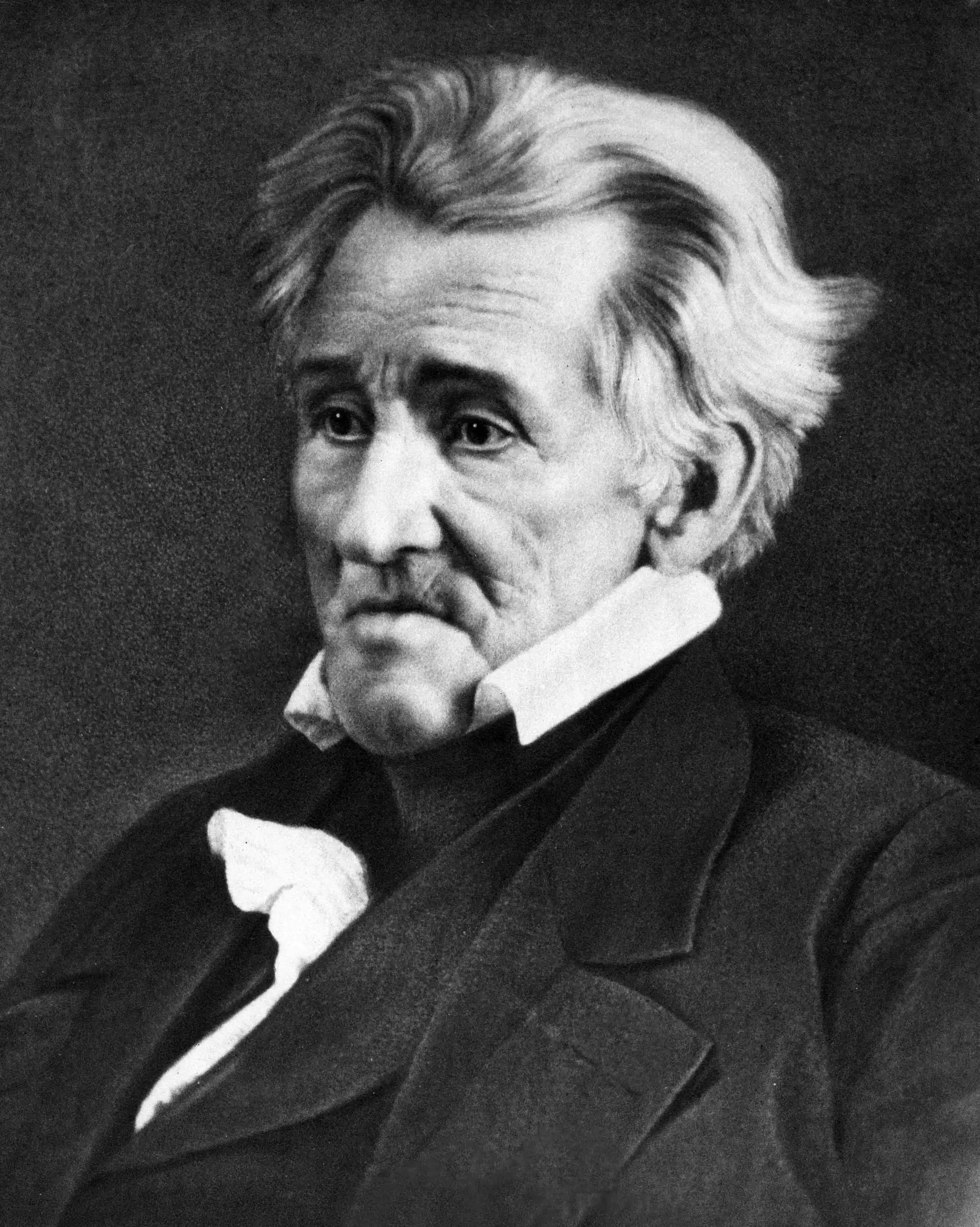
Andrew Jackson
7th President of the United States•military general•lawyer
Also known as: Old Hickory, The Hero of New Orleans
Birthday
March 15, 1767
Birth Sign
Pisces
Birthplace
Waxhaws region, Carolinas
Age
Died at 78
Height
5 ft 10 in (178 cm)
About
Andrew Jackson, born March 15, 1767, in the Waxhaws region of the Carolinas, was the seventh president of the United States, serving from 1829 to 1837. A military hero and a founder of the Democratic Party, Jackson reshaped American politics with his populist appeal, championing the common man while leaving a deeply controversial legacy. He is remembered for his decisive victory at the Battle of New Orleans and his harsh Indian removal policies, which culminated in the Trail of Tears.
Jackson's presidency was marked by a fierce expansion of executive power. He vetoed the recharter of the Second Bank of the United States, stood down South Carolina during the nullification crisis, and became the only president to pay off the national debt. His image as a frontier outsider who fought for the people made him a beloved figure to some, while his defense of slavery and forced relocation of Native Americans have led modern historians to reassess his standing.
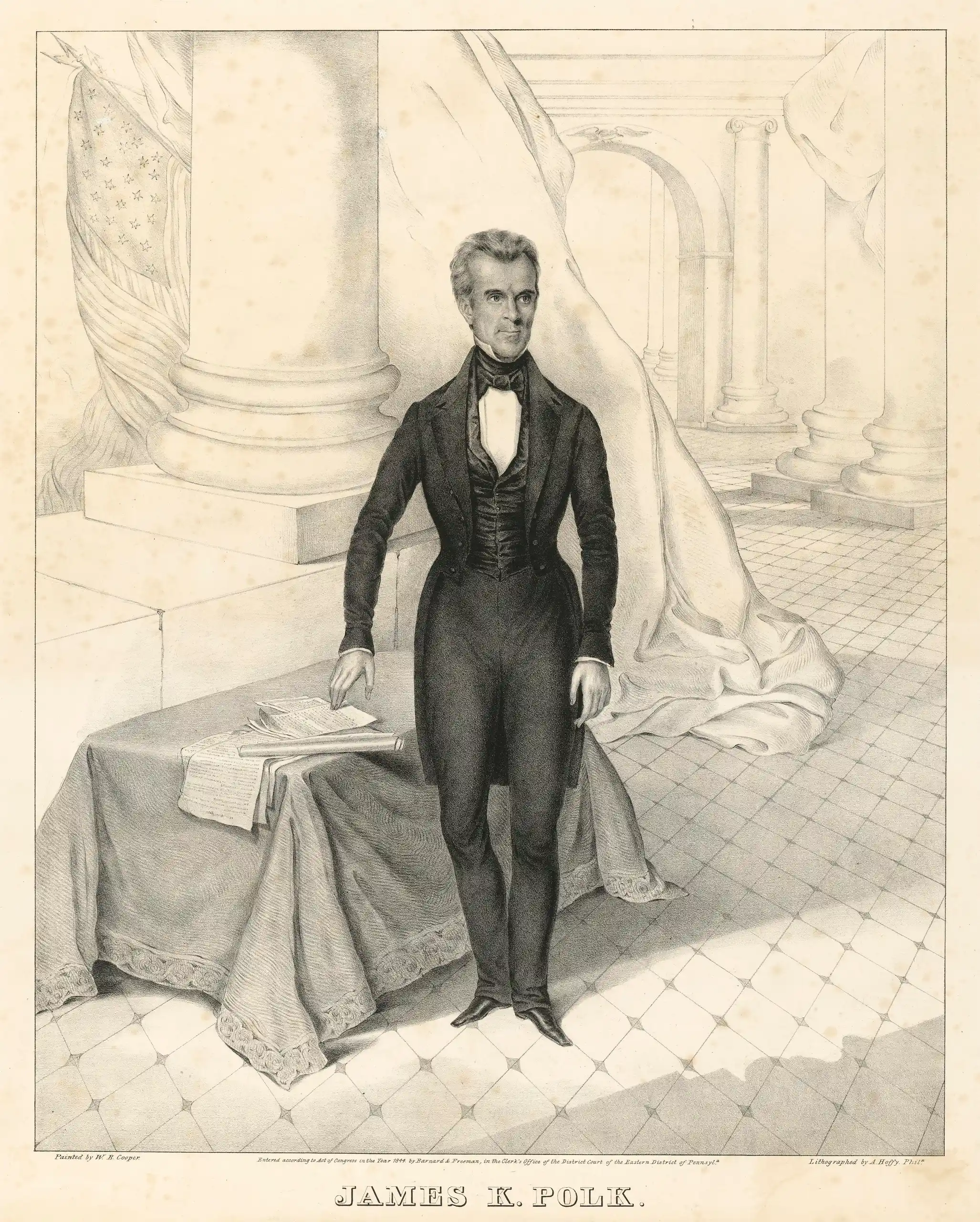
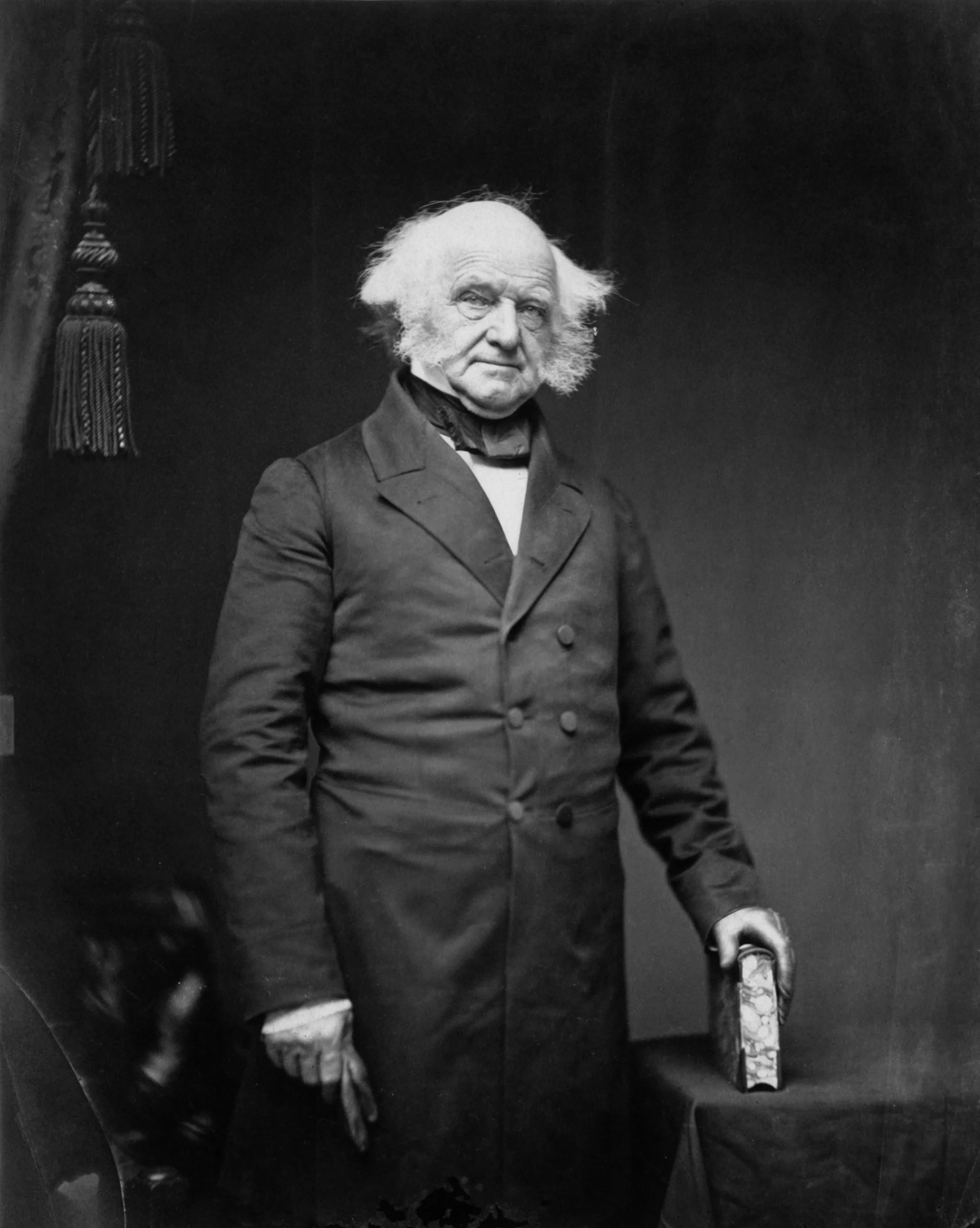
In his later years, Jackson remained influential in politics, backing the presidencies of Martin Van Buren and James K. Polk. He died on June 8, 1845, at his plantation, The Hermitage, leaving a legacy that continues to spark debate. Today, he is a polarizing symbol, celebrated for expanding democracy and condemned for the human cost of his policies.
Early Life & Background
Andrew Jackson's early years were marked by hardship and the violence of the American Revolution. He was born in a log cabin in the Waxhaws region, on the border of North and South Carolina, to Scotch-Irish immigrants. His father died just weeks before his birth, leaving the family in poverty. During the war, Jackson, still a teenager, served as a courier for the Continental Army and was captured by British troops, suffering a saber cut on his head that left a lasting scar. His mother and two brothers died during the conflict, and by age 14, he was an orphan.
After the war, Jackson worked as a schoolteacher and then apprenticed in law under Spruce Macay in Salisbury, North Carolina. He was admitted to the bar in 1787 and moved to the frontier settlement of Nashville, Tennessee, where he quickly built a successful legal practice. He also began acquiring land and slaves, establishing himself as a planter. In 1791, he married Rachel Donelson Robards, a union that would be marred by controversy.
Jackson's political career began early. He served as Tennessee's first delegate to the U.S. House of Representatives in 1796 and then in the Senate, but he resigned to become a judge on the Tennessee Superior Court. His military rise started with his appointment as major general of the Tennessee militia in 1802, a position that would lead him to national prominence.
Career Growth
Jackson's breakthrough came during the War of 1812. In 1814, he led Tennessee militia forces to a decisive victory over the Creek Nation at the Battle of Horseshoe Bend, forcing the cession of millions of acres of land. His greatest triumph came in January 1815, when he defeated the British at the Battle of New Orleans, a victory that made him a national hero, even though the war had officially ended weeks earlier.
He followed this with the First Seminole War in 1818, which led to the acquisition of Florida from Spain. He briefly served as Florida's territorial governor in 1821. In 1824, Jackson ran for president, winning the popular vote but losing the election in the House to John Quincy Adams, an outcome his supporters called the "corrupt bargain." He ran again in 1828 and won in a landslide, founding the modern Democratic Party.
As president, Jackson pursued a bold agenda. He signed the Indian Removal Act of 1830, which led to the forced relocation of Native American tribes and the Trail of Tears. He vetoed the recharter of the Second Bank of the United States, viewing it as a tool of the elite. During the nullification crisis, he threatened military force against South Carolina. In 1835, he achieved the rare feat of paying off the entire national debt. After leaving office, he supported the annexation of Texas and mentored his successor, Martin Van Buren.
Career Timeline
Public Image & Style
Jackson's public image is that of a fierce populist, a man of the people who fought against entrenched elites. He was portrayed as a rugged frontier soldier, unafraid to challenge powerful institutions. His supporters saw him as a champion of democracy, while his critics viewed him as a tyrant and demagogue.
His persona was marked by his combative style, both in politics and in personal disputes. He was known for his temper and his willingness to duel. In the 20th century, his image became more controversial, with historians highlighting his role in Indian removal and his defense of slavery. He remains a polarizing figure, with some celebrating his contributions to American democracy and others condemning his actions.
In 2026, a statue of Jackson was unveiled in Marianna, Florida, as part of the America 250 celebration, reflecting ongoing efforts to honor his legacy, even as debates about his history continue.
Fame & Fandom (iFAMOUS Rankings)
Andrew Jackson commands a legacy that transcends the typical metrics of modern celebrity, existing instead as a monumental figure in American history whose name evokes immediate recognition across centuries. Unlike contemporary icons who rely on streaming numbers or social media virality to sustain their fame, Jackson's presence is anchored in the foundational narratives of the nation itself. His image as the "People's President" and the warrior hero of New Orleans has ensured his place in the collective consciousness without the need for organized fan campaigns, birthday billboards, or dedicated fan clubs. There is no formal fandom name attached to his memory; the public engagement with his life takes the form of civic commemoration, historical debate, and educational study rather than the ritualistic adoration seen in pop culture. Statues rise and fall, textbooks are rewritten, and political discourse shifts, yet his silhouette remains a constant reference point in discussions about executive power and national identity. This enduring relevance proves that some figures achieve a type of immortality that defies the fluctuating tides of trending topics. While he lacks the structured following of a modern entertainer, the sheer scale of his impact on the United States generates a global awareness that rivals any living star. The iFANN Global Fame Engine has evaluated this person, but they do not currently hold a placement in the published rankings (Global Top 1,000 or a Top-100 scope list).
Interesting Facts and Legends
Born into poverty in the Waxhaws region, Andrew Jackson rose from an orphaned boy with no formal education to become the seventh President of the United States. His toughness earned him the enduring nickname "Old Hickory," a nod to the unyielding nature of the hickory tree. This resilience was tested early when he faced Charles Dickinson in a duel in 1806. Dickinson shot Jackson in the chest, yet the wounded general managed to kill his opponent before collapsing. The bullet remained lodged near his heart for the rest of his life, a constant source of chronic pain that never deterred his combative spirit. In a rare display of mercy amidst his fiery temper, Jackson once reportedly pardoned a dog that had stolen his hat. He was also the first president born in a log cabin, shattering the tradition of aristocratic birth among early leaders. Beyond these personal anecdotes, his legend is built on verified historical pillars. He commanded forces in the War of 1812, securing a decisive victory at the Battle of New Orleans that made him a national hero overnight. His presidency is equally defined by the Trail of Tears, a forced removal of Native American tribes that remains one of the darkest chapters in American history. These stories, ranging from his humble origins to his military triumphs and policy failures, form the core of his mythology.
Notable Quotes
“The Bank is trying to kill me, but I will kill it!”
“I have done my duty to the people.”
“Let the Chief Magistrate do right, and disregard the consequences.”
Family & Personal Life
Jackson's family life was centered on his marriage to Rachel Donelson Robards. They met in the 1780s in Nashville, where Rachel was still legally married to Lewis Robards. After her divorce was finalized, they married in 1791, but the circumstances of their early cohabitation haunted Jackson's political career, with opponents accusing him of bigamy. The couple had no biological children, but they adopted Rachel's nephew, Andrew Jackson Jr., and later other relatives.
Rachel's health declined during the bitter 1828 campaign, and she died of a heart attack on December 22, 1828, just weeks before Jackson's inauguration. Jackson blamed his political enemies for her death and never remarried. He remained devoted to her memory, and his grief was profound. At The Hermitage, he raised Andrew Jackson Jr., who managed the plantation in Jackson's later years.
Notable Connections
Relationships & Dating History
Andrew Jackson's romantic life was centered entirely on his wife, Rachel Donelson Robards. They met in the 1780s in Nashville, where Rachel was married to Lewis Robards. After her divorce was finalized, they married in 1791, but their early cohabitation caused a scandal that followed Jackson throughout his career. The couple had no biological children, but they adopted relatives, including Andrew Jackson Jr.
Rachel's death on December 22, 1828, just before Jackson's presidency, devastated him. He never remarried and remained a widower for the rest of his life. There are no records of other public relationships, and Jackson's devotion to Rachel was well-known. As of his death in 1845, he was widowed.
- MarriedRachel Donelson Robards Jackson1791 - 1828Married in 1791 after her divorce; she died in 1828, and Jackson never remarried.
Death & Aftermath
Died
June 8, 1845 (aged 78)
Death Place
Nashville, Tennessee
Cause of Death
Chronic tuberculosis and pulmonary edema
Andrew Jackson died on June 8, 1845, at his plantation home, The Hermitage, near Nashville, Tennessee. He was 78 years old and spent his final days largely bedridden, suffering from chronic tuberculosis and severe pulmonary edema alongside a history of broken ribs, rheumatism, and heart failure. Attending physicians and family members established the cause of death through bedside observations rather than an autopsy or inquest, as was customary for prominent figures of that era. Some nineteenth-century speculation linked his decline to the stress of political life or a bullet lodged in his chest since his 1806 duel with Charles Dickinson. Public reaction marked profound national mourning upon the news reaching Washington. Congress adjourned in respect while flags across the nation flew at half-staff.
Tributes poured in from peers and institutions, including a eulogy delivered by Henry Clay in the Senate that highlighted Jackson's military prowess and his role as a champion of the common man. Large gatherings occurred at The Hermitage and in major cities where citizens mourned the loss of the leader. Newspapers published extensive obituaries and reprints of his speeches, and moments of silence were observed during funeral services. The funeral took place three days after his death on June 11, 1845, at The Hermitage. It was a private ceremony attended by family members, close friends, and local dignitaries, though significant crowds gathered outside the property. Notable attendees included former cabinet members and military associates. Following the service, Jackson was buried in the family cemetery on the grounds of The Hermitage beside his wife Rachel, who had predeceased him in December 1828.
No cremation took place, consistent with nineteenth-century burial practices. Posthumously, Jackson became the subject of numerous books, films, and academic studies, including biographies by Ron Chernow and H.W. Brands. Statues appeared in Washington D.C. and Nashville, and the Andrew Jackson Foundation continues to operate to preserve his legacy. The complex financial dealings involving his slaves, land, and debts were settled through probate court over several years following his death, with his nephew Andrew Jackson Donelson serving as executor to manage the liquidation of assets.
Net Worth (Estate Value)
$50 Million
iFANN Editorial Team estimate
When Andrew Jackson died in 1845, his estate was valued at roughly $1 million to $1.5 million at the time, equivalent to tens of millions today. His wealth came primarily from his 10,000-acre plantation, The Hermitage, and the labor of hundreds of enslaved people. The estate continued to produce income through cotton and land sales, managed by his adopted son, Andrew Jackson Jr., and later descendants. Today, The Hermitage is a National Historic Landmark operated by the Andrew Jackson Foundation. It no longer generates personal wealth for heirs, but it remains a significant cultural institution. The estate's value is now tied to its historical and tourism appeal, not to the Jackson family. Per iFANN's editorial analysis, the total net worth attributed to Andrew Jackson's legacy and estate valuation is $50 Million. As of 2026.
Awards Won (1)
Andrew Jackson received the Congressional Gold Medal in 1816 for his victory at the Battle of New Orleans, one of the highest honors the U.S. government can bestow. He was also brevetted Major General in the U.S. Army and served as the seventh president of the United States.
1816 · Military Achievement
Battle of New Orleans
Known For
Battle of New Orleans
1815 · Commanding General
Indian Removal Act
1830 · President
Nullification Crisis
1832 · President
Keywords
Sources
Quick Facts
- Profession
- President, military general, lawyer
- Born
- March 15, 1767
- Birthplace
- Waxhaws region, Carolinas
- Died
- June 8, 1845
- Death Place
- The Hermitage, Tennessee
- Gender
- Male
- Spouse
- Rachel Jackson
- Birth Sign
- Pisces
- Height
- 5 ft 10 in (178 cm)
Personal Details
- Full Name
- Andrew Jackson
- Height
- 5 ft 10 in (178 cm)
- Spouse
- Rachel Donelson Robards Jackson
- Children
- Andrew Jackson Jr. (adopted)
- Education
- Read law under Spruce Macay; admitted to bar in 1787
Frequently Asked Questions
Who was Andrew Jackson?
How did Andrew Jackson die?
Did Andrew Jackson own slaves?
What is Andrew Jackson's legacy?
Was Andrew Jackson married more than once?
Similar People
Join the community
fans discussing