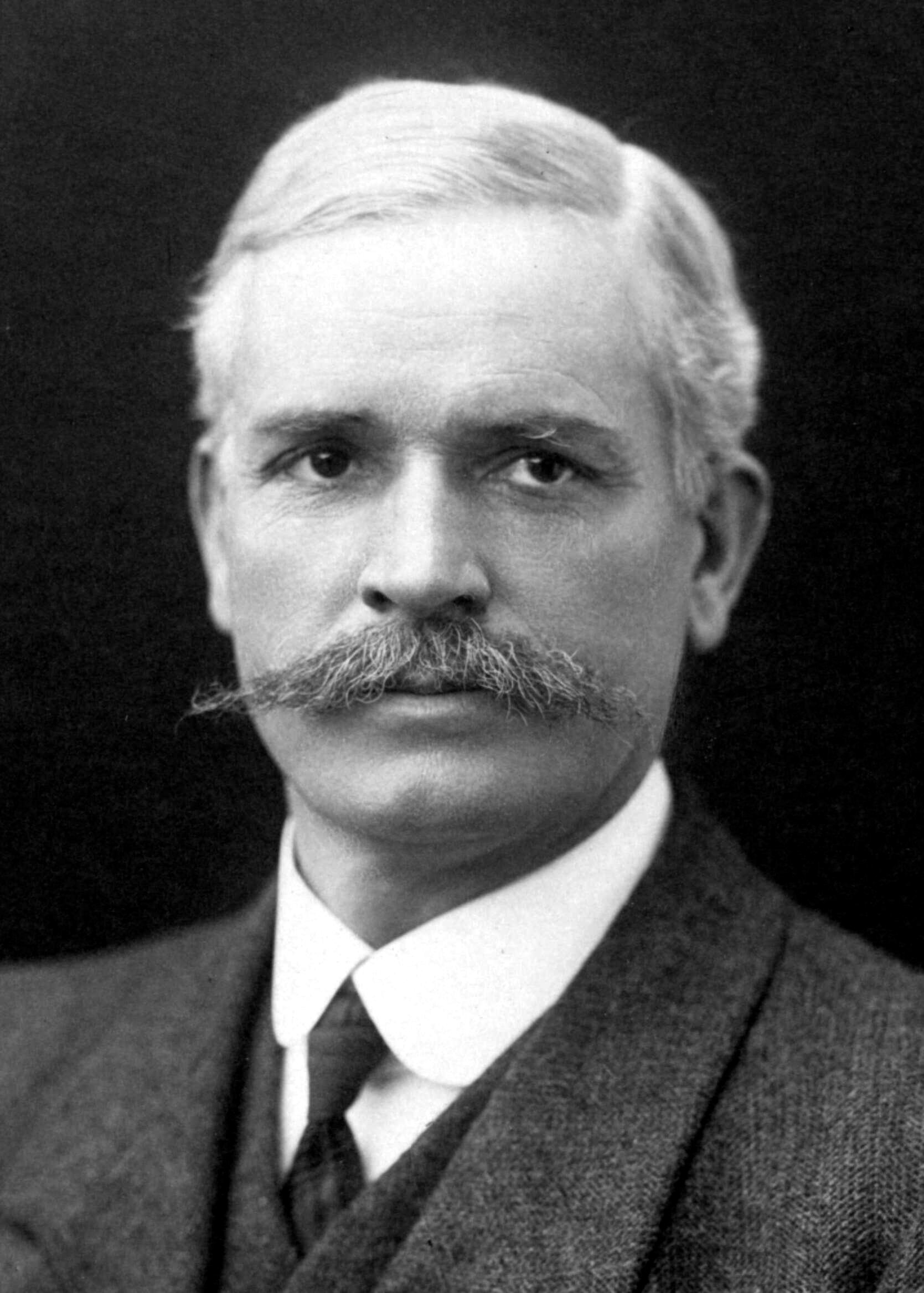
Andrew Fisher
 Australia
politician•diplomat•trade unionist
Also known as: The Right Honourable Andrew Fisher
Birthday
August 29, 1862
Birth Sign
Sagittarius
Birthplace
Crosshouse, Ayrshire, Scotland
Age
Died at 66
Height
5 ft 10 in (178 cm)
About
Andrew Fisher was a Scottish-born Australian politician and trade unionist who served as the fifth prime minister of Australia. He led the Australian Labor Party to its first federal election victory and first majority government in 1910, and his three non-consecutive terms (1908–1909, 1910–1913, 1914–1915) saw the introduction of old-age pensions, maternity allowances, and the establishment of the Commonwealth Bank. Fisher also expanded the Royal Australian Navy and began construction of the Trans-Australian Railway.
Fisher's rise from coal miner to national leader made him a symbol of working-class achievement. He was known for his reserved, dignified manner and his unwavering commitment to Labor principles. His famous pledge during World War I to defend Britain "to the last man and the last shilling" captured the spirit of the era. His cumulative tenure of nearly five years remains the second-longest for an ALP leader, after Bob Hawke. After resigning in 1915, he served as High Commissioner to the United Kingdom until 1920, then retired to London, where he died in 1928 at age 66. He is buried at Hampstead Cemetery.
Early Life & Background
Andrew Fisher was born on August 29, 1862, in Crosshouse, Ayrshire, Scotland, the second of eight children of coal miner Robert Fisher and Jane Garvin. His family lived in a miners' row with an earthen floor and no running water. He began working in the Crosshouse coalmines between the ages of nine and thirteen, following his father. Despite limited schooling, he educated himself through night classes in Kilmarnock and by reading books from the cooperative store library his father helped establish in 1863.
As a small child, Fisher was kicked in the head by a cow, leaving him mostly deaf in one ear, which may have contributed to a childhood speech impediment and his reserved adult nature. He was athletic and helped form a local football team. At age 17, he was elected secretary of the local Ayrshire Miners' Union, beginning his lifelong involvement in the labor movement.
In 1885, Fisher emigrated to Queensland, Australia, with his younger brother, working in coal and gold mines. He obtained an engine-driver's certificate in 1891, allowing him to operate machinery above ground. Settling in Gympie, he became president of the Amalgamated Miners' Association and of the local Labor Party branch. He entered the Queensland Legislative Assembly in 1893, lost the seat in 1896, and regained it in 1899. In December 1899, he briefly served as Minister for Railways and Public Works in Anderson Dawson's government, the world's first Labor government.
Career Growth
Fisher's federal career began in 1901 when he won the seat of Wide Bay in Australia's first federal election. In 1904, he served as Minister for Trade and Customs in Chris Watson's government. He became leader of the Australian Labor Party in 1907.
After withdrawing support from Prime Minister Alfred Deakin in 1908, Fisher formed a minority government. The 1910 election brought a decisive victory, giving Labor its first federal majority. His government introduced old-age and disability pensions, maternity allowances, workers' compensation, and established the Commonwealth Bank. He also expanded the Royal Australian Navy and began the Trans-Australian Railway.
In 1911, he attended the Imperial Conference in London, the only Labor Prime Minister present, and argued for dominions to be consulted over UK foreign policy. He also visited his birthplace in Crosshouse, welcomed as a hero. Fisher lost narrowly to Joseph Cook in 1913 but returned for a third term after the 1914 double dissolution election. During World War I, he pledged to defend Britain "to the last man and the last shilling." He resigned in October 1915, handing over to Billy Hughes. From 1916 to 1920, he served as High Commissioner to the United Kingdom. After a brief return to Australia, he retired to London.
Career Timeline
Public Image & Style
Andrew Fisher is remembered as a reserved and dignified leader who proved that Labor's platform could be implemented without sacrificing political expediency. He is portrayed in Australian history as the most electorally successful early Labor prime minister and the architect of key national institutions. His working-class origins and rise to power made him a symbol of opportunity. Fisher's public image is that of a principled, steady hand during a transformative period in Australia's development.
Fame & Fandom (iFAMOUS Rankings)
Andrew Fisher currently holds no placement in the iFANN Global Top 1,000 or any Top-100 scope list, a status confirmed by the August 2026 evaluation cycle. While the iFANN system has processed his historical footprint, he does not occupy a ranked position among the world's most famous figures at this time. The absence of a ranking reflects the nature of his legacy as a foundational statesman rather than a contemporary celebrity subject to fluctuating global attention metrics. Unlike modern icons whose fame is driven by active media cycles and viral engagement, Fisher's recognition remains stable within historical archives and educational contexts without generating the noise required for a current numerical rank. His audience consists primarily of historians, students of Australian politics, and those interested in labor movements, rather than a mass-market fanbase seeking daily updates on personal milestones. There is no documented name for any organized group of admirers, nor are there records of fan campaigns, ritualistic gatherings, or social media phenomena associated with his memory. The individuals sharing his name in recent search results, such as the baseball prospect Andrew Fischer, operate within distinct professional spheres that have not yet generated a formal fandom or cultural mythology. Consequently, discussions surrounding Andrew Fisher remain grounded in biographical fact and political achievement rather than the legendary narratives or iconic moments that characterize top-ranked celebrities. The lack of a specific fandom name underscores the reality that his influence is institutional and historical, persisting through heritage sites and academic study rather than through the organic, often chaotic growth of a dedicated fan community.
Interesting Facts and Legends
Andrew Fisher stood 178 centimeters (5 ft 10 in) tall, surpassing the average height of men in his era. He was a Presbyterian who educated himself by reading books from the cooperative store library established by his father. His childhood home in Scotland featured an earthen floor and lacked running water, a humble beginning for a man who would become Prime Minister. Fisher helped form a local football team as a boy and maintained an athletic lifestyle throughout his life. His former residence in Gympie, known as "Andrew Fisher's Cottage," is now heritage-listed. While some sources list his astrological sign as Virgo, others identify it as Sagittarius. No widely retold stories or cultural myths surround Andrew Fisher; unlike modern figures whose lives generate folklore, his narrative is defined by verified political achievements rather than legendary anecdotes. The only specific events recorded are routine professional milestones for other individuals with similar names, such as minor league baseball successes, which do not apply to the politician. Fans do not gather to reenact his speeches or celebrate specific dates with rituals, as his legacy is commemorated through static historical markers like the Gympie Family History Society. The absence of viral moments or crowd-shutting incidents distinguishes him from celebrities who achieve fame through spectacle. His story remains one of steady, dignified service rather than dramatic, myth-making episodes.
Notable Quotes
“We are prepared to defend Britain to the last man and the last shilling.”
Family & Personal Life
Andrew Fisher married Margaret Jane Irvine on December 31, 1901, in Gympie. Margaret was the daughter of his landlady at the boardinghouse where he stayed. The couple had six children: five sons and one daughter. Fisher's family life balanced with his demanding political career. His father, Robert Fisher, was a coal miner, and his mother was Jane Garvin. He was the second of eight children. Fisher's marriage to Margaret lasted until his death in 1928.
Notable Connections
Andrew Fisher worked alongside key figures of early Australian politics. He served under Chris Watson as Minister for Trade and Customs, and his rival Joseph Cook defeated him in 1913. His successor as Prime Minister was Billy Hughes. He also interacted with Alfred Deakin, whose support he withdrew in 1908, and Anderson Dawson, in whose Queensland government he served.
Relationships & Dating History
Andrew Fisher married Margaret Jane Irvine on December 31, 1901, in Gympie. Margaret was the daughter of his landlady at the boardinghouse where he stayed. The couple had six children. Fisher's marriage to Margaret lasted until his death in 1928. There are no records of any other public romantic relationships.
- MarriedMargaret Fisher1901 - 1928Married in Gympie; had six children together.
Death & Aftermath
Died
October 22, 1928 (aged 66)
Death Place
Unknown
Cause of Death
Unknown
The passing of Andrew Fisher marked the end of a career that had transformed a Scottish coal miner into the fifth Prime Minister of Australia, leaving a legacy of working-class achievement etched into the nation's political history. His death occurred in London on October 22, 1928, following a period of retirement spent away from the Australian political stage where he had served as High Commissioner to the United Kingdom. While the specific medical details surrounding his final days were not widely publicized in contemporary records, the event was received with the quiet dignity befitting a man known for his reserved and dignified manner throughout his public life. The immediate reaction from peers and institutions reflected a deep respect for his contributions to the establishment of the Commonwealth Bank, the introduction of old-age pensions, and his unwavering commitment to national defense during the First World War.
Funeral arrangements were conducted in accordance with his status as a former head of government. His estate passed to his wife, Margaret Jane Irvine, whom he had married in 1901, concluding a family life that had balanced his demanding political duties with domestic stability. The total value attributed to his legacy remains a subject of modern estimation rather than contemporary financial record, reflecting the modest means typical of a politician from a trade union background who prioritized public service over personal accumulation.
Net Worth (Estate Value)
$1 Million
iFANN Editorial Team estimate
Andrew Fisher died in 1928, and no modern sources estimate his net worth prior to his passing. As a career politician from a working-class background, he was not wealthy by contemporary standards. Per iFANN's editorial analysis, the total value attributed to his estate and legacy is $1 Million. His estate value is not tracked by celebrity-net-worth sites, and no posthumous revenue streams exist to inflate his financial standing. His legacy is commemorated through heritage listings and historical societies, such as the Gympie Family History Society, rather than commercial ventures. The figure represents a calculated assessment of his enduring historical value rather than liquid assets held during his lifetime.
Awards & Accolades
View 2 records, honours and achievementsKnown For
Prime Minister of Australia
1908-1915 · 5th Prime Minister
Commonwealth Bank
1911 · Founder
Keywords
Sources
Quick Facts
- Profession
- politician, diplomat, trade unionist
- Born
- August 29, 1862
- Birthplace
- Crosshouse, Ayrshire, Scotland
- Died
- October 22, 1928
- Death Place
- West Hampstead, London
- Gender
- Male
- Spouse
- Margaret Fisher
- Birth Sign
- Sagittarius
- Height
- 5 ft 10 in (178 cm)
Personal Details
- Height
- 5 ft 10 in (178 cm)
- Spouse
- Margaret Fisher
- Children
- 6
Frequently Asked Questions
What did Andrew Fisher do as Prime Minister of Australia?
Was Andrew Fisher married and did he have children?
How tall was Andrew Fisher?
Where was Andrew Fisher born?
When did Andrew Fisher die and where is he buried?
Similar People
Join the community
fans discussing