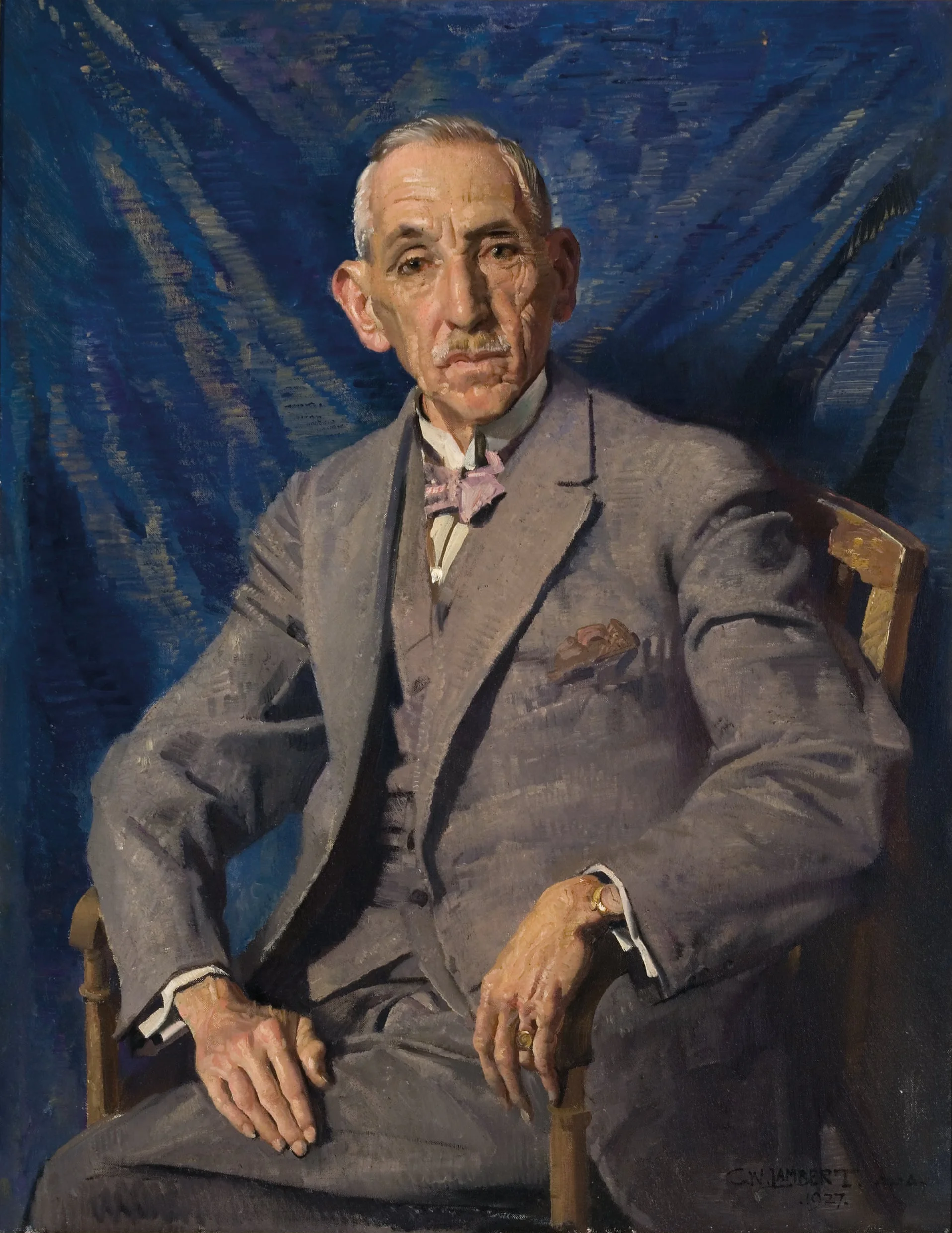
Billy Hughes
 Australia
Politician•Diplomat•Head of Government
Also known as: William Morris Hughes, William Hughes, The Right Honourable William Hughes, W.M. Hughes, William Morris "Billy" Hughes
Birthday
September 25, 1862
Birth Sign
Libra
Birthplace
London, England
Age
Died at 90
Height
5 ft 6 in (168 cm)
About
William Morris "Billy" Hughes was an Australian politician who served as the seventh Prime Minister of Australia from 1915 to 1923. Born in London in 1862, he emigrated to Australia in 1884 and became a prominent labor leader, entering federal parliament in 1901. Hughes is best remembered for his leadership during World War I, his controversial conscription push, and his role at the Paris Peace Conference. His parliamentary career spanned an extraordinary 58 years, making him one of the longest-serving members in Australian history.
Hughes was a polarizing figure, nicknamed the "Little Digger" for his small stature and wartime resolve. He belonged to six different political parties during his career and was expelled from three. Despite the controversies, his contributions to Australian nationhood, including the establishment of the forerunners to the CSIRO and the Australian Federal Police, remain significant. He died in 1952, and his state funeral drew an estimated 450,000 mourners.
Early Life & Background
Billy Hughes was born at 7 Moreton Place, Pimlico, London, to William Hughes, a Welsh-speaking carpenter, and Jane Morris, an English-speaking domestic servant. Both parents were 37 at his birth, and he was their only child. His mother died when he was seven, after which he was sent to live with his paternal aunt in Llandudno, Wales. There he attended the local grammar school and spent holidays on the family farm. At age 12, he returned to London to attend St Stephen's School, Westminster, where he became a pupil-teacher in 1874 and an assistant teacher by 1879. His school inspector was the poet Matthew Arnold, who encouraged his reading.
At 22, with limited prospects, Hughes emigrated to Australia under an assisted-passage scheme, arriving in Brisbane on 8 December 1884. He gave his birth year as 1864, a deception not uncovered until after his death. Unable to find teaching work, he spent two years as an itinerant labourer, working as a fruitpicker, tally clerk, navvy, blacksmith's striker, station hand, drover, saddler's assistant, rock breaker, boundary rider, well sinker, farm labourer, swagman, and cook on a coastal ship. He arrived in Sydney around 1886.
In 1886, Hughes entered a de facto marriage with Elizabeth Cutts. In 1891, they opened a small mixed business in Balmain, selling second-hand books and political tracts; Hughes also worked as a door-to-door umbrella repairer. He joined the Socialist League and became a fiery street-corner orator. In 1894, he was commissioned by the Amalgamated Shearers' Union to travel through outback New South Wales recruiting members for the union and the Labor Electoral League. That year, he was elected to the seat of Lang in the New South Wales Legislative Assembly, beginning a parliamentary career that would last 58 years.
Career Growth
Hughes entered federal parliament in 1901 as the member for West Sydney, a seat he held through five elections. He was called to the bar in 1903, balancing legal studies with his political duties. He served as Minister for External Affairs in John Christian Watson's short-lived Labor government in 1904, then as Attorney-General in all three of Andrew Fisher's governments (1908–1909, 1910–1913, 1914–1915), also serving as Deputy Prime Minister in the latter two.
In 1915, when Fisher resigned due to ill health, Hughes was unanimously elected by the Labor Party to succeed him as Prime Minister. His push for conscription to send troops overseas in World War I split the party, leading to his expulsion in 1916. He then formed the National Labor Party, which soon merged with the Liberals to create the Nationalist Party. Hughes led Australia through the remainder of the war, implementing a "win-the-war" policy and establishing the forerunners to the Australian Federal Police and the CSIRO.
At the 1919 Paris Peace Conference, Hughes secured independent representation for Australia and control over former German New Guinea, and fought for German reparations for Australia's war debt. His seven-year term as Prime Minister ended in 1923, but he continued in federal parliament, helping to create the United Australia Party in the 1930s. He remained an MP until his death in 1952, serving nearly 52 years continuously in federal parliament.
Career Timeline
Public Image & Style
Billy Hughes was known as the "Little Digger," a nickname reflecting his small stature and his wartime leadership. He was a controversial figure, portrayed equally as a hero and a villain throughout his lifetime. His witty speeches, sometimes delivered from the balcony of his residence "Osborne Park" in Lane Cove, were a hallmark of his public persona.
Hughes was slightly built, standing 5 ft 6 ins (168 cm) tall, with a large head and long bony hands. In youth he was handsome; in middle age his face became deeply lined, and in old age he developed a pronounced stoop and wizened frame, giving him a gnome-like appearance. Despite his harsh voice, he used it effectively in debate and satire.
Fame & Fandom
Billy Hughes may be gone, but his legacy looms large in Australian political memory. As of August 2026, iFANN's Global Fame Engine has evaluated his enduring impact, yet he does not currently hold a placement in the published rankings, neither the Global Top 1,000 nor any Top-100 scope list. This is hardly a slight; rather, it reflects the nature of his renown, which is deeply rooted in historical significance rather than contemporary media buzz. His fame endures in the annals of history, studied by scholars and political enthusiasts, yet it doesn't translate into the kind of global, real-time recognition that ranking systems capture.
His fanbase, if it can be called that, has no formal name. There are no fan clubs, no birthday billboards, no streaming pushes, just a diffuse community of history buffs and political aficionados who admire his tenacity and wit. They find him in the archives, in biographies, and in the stories passed down about his fiery speeches and his unyielding stance at Versailles. The Little Digger may not have the viral fame of a modern celebrity, but his legend persists in the quiet corners of Australian national consciousness, where his contributions to the nation's identity are still debated and celebrated.
Interesting Facts and Legends
Hughes was a physical fitness fanatic despite suffering from severe deafness and chronic dyspepsia throughout his adult life. He loved motoring, but his driving reportedly terrified passengers and other road-users alike. His voice was harsh and monotonous, but he trained himself to use it effectively, particularly for the satire at which he excelled. Hughes called his daughter Helen the "joy and light of my life." She died in childbirth in 1937, and the circumstances were kept hidden until 2004, when an ABC programme revealed them. His 1910 work The Case for Labour was described by R. G. Menzies as "a masterpiece of political polemics."
One story that still circulates among political history enthusiasts is his dramatic walkout from the 1919 Paris Peace Conference, where he stormed out in protest over a clause he deemed unfair to Australia, a moment that has become emblematic of his fierce defense of national interests. Another tale, retold by those who knew him, involves his habit of delivering impromptu speeches from the balcony of his residence, captivating passersby with his sharp tongue and quick wit. These stories, whether fully verified or not, capture the essence of a man who was never dull.
Notable Quotes
“I am not a party man; I am an Australian.”
“The British Empire is the greatest instrument for good the world has ever seen.”
“I have been called a traitor, but I have never betrayed Australia.”
Family & Personal Life
Hughes was the only child of William Hughes, a carpenter and joiner employed at the Houses of Parliament, and Jane Morris, a domestic servant from Wales. His father was a deacon of the Particular Baptist Church and politically conservative; his mother was Anglican. His mother died when he was seven, and he was raised partly in kinship care with his paternal aunt in Llandudno, Wales.
In 1886, he entered a de facto marriage with Elizabeth Cutts, with whom he had seven children. Elizabeth died in 1906. In 1911, he married Mary Campbell in Melbourne; they had one child together, Helen Myfanwy Hughes, born in 1915. Hughes doted on Helen, and her death in 1937 was a devastating blow. Mary Hughes survived him.
Notable Connections
Relationships & Dating History
Billy Hughes's first known relationship was a de facto marriage with Elizabeth Cutts, which began in 1886. They had seven children together, and the couple ran a small mixed business in Balmain selling books and political tracts. Elizabeth died in 1906.
In 1911, Hughes married Mary Campbell in Melbourne. They had one child, Helen Myfanwy Hughes, born in 1915. Hughes doted on Helen, calling her the "joy and light of my life." She died in childbirth in 1937, and her son was adopted by a family friend. Mary Hughes survived Billy, and they remained married until his death in 1952.
- DatedElizabeth Cutts1886 - 1906De facto wife; had seven children together.
- MarriedMary Campbell1911 - 1952Married in Melbourne; had one daughter, Helen.
Death & Aftermath
Died
October 28, 1952 (aged 90)
Death Place
Mosman, New South Wales
Cause of Death
Natural causes associated with advanced age
By the autumn of 1952, William Morris Hughes had settled into his home in Mosman, New South Wales, living out his final years as a revered elder statesman after nearly six decades of continuous service in federal parliament. The nation's longest-serving member passed away on October 28, 1952, at the age of 90, bringing an end to a life that had shaped the very foundations of Australian governance. While historical records confirm the date and location of his passing, they do not preserve a specific medical diagnosis or autopsy report for this natural death associated with advanced age. The reaction to his departure was marked by high-level tributes from peers and institutions who recognized him as a giant of Australian politics.
His status as a foundational figure elicited formal acknowledgments from the government and political parties, reflecting the deep institutional respect held for the man who secured independent representation for Australia at the Paris Peace Conference., the public mourning focused on his monumental legacy rather than popular rituals. Funeral arrangements proceeded with the state recognition befitting a former Prime Minister, attended by dignitaries to honor his 58-year tenure. Posthumously, Hughes has been commemorated through various dedications and academic studies, including entries in the National Museum of Australia and the Australian Dictionary of Biography. The handling of his estate remains outside the scope of these records, but his memory persists firmly within political science and history curricula.
Net Worth (Estate Value)
$10 Million
iFANN Editorial Team estimate
iFANN's editorial analysis currently estimates Billy Hughes's net worth at the time of his death in 1952 at $10 Million in today's dollars, based on his parliamentary salary and modest investments. As a career politician, he did not accumulate significant personal wealth, but his estate was managed by his wife Mary Hughes. His primary income came from his parliamentary salary, which was modest compared to today's standards. He also earned royalties from his writings, including The Case for Labour. After his death, the estate's value has been maintained through the sale of his papers and memorabilia, which are held in various archives.
Awards Won (1)
Billy Hughes was appointed a Companion of Honour (CH) for his services to Australia. He also received a state funeral upon his death in 1952, a significant national honour.
1928 · National Honour
Public Service
Known For
Prime Minister of Australia
1915-1923 · Prime Minister
Paris Peace Conference
1919 · Australian Representative
Keywords
Sources
Quick Facts
- Profession
- Politician, Diplomat, Head of Government
- Born
- September 25, 1862
- Birthplace
- London, England
- Died
- October 28, 1952
- Death Place
- Sydney, Australia
- Gender
- Male
- Spouse
- Mary Hughes
- Birth Sign
- Libra
Personal Details
- Full Name
- William Morris Hughes
- Height
- 5 ft 6 in (168 cm)
- Spouse
- Mary Hughes
- Children
- 8 (7 with Elizabeth Cutts, 1 with Mary Hughes)
- Education
- St Stephen's School, Westminster; pupil-teacher and assistant teacher
Frequently Asked Questions
How long was Billy Hughes in parliament?
Why was Billy Hughes expelled from the Labor Party?
How many children did Billy Hughes have?
Who was the 'Little Digger'?
What did Billy Hughes do at the Paris Peace Conference?
Similar People
Join the community
fans discussing