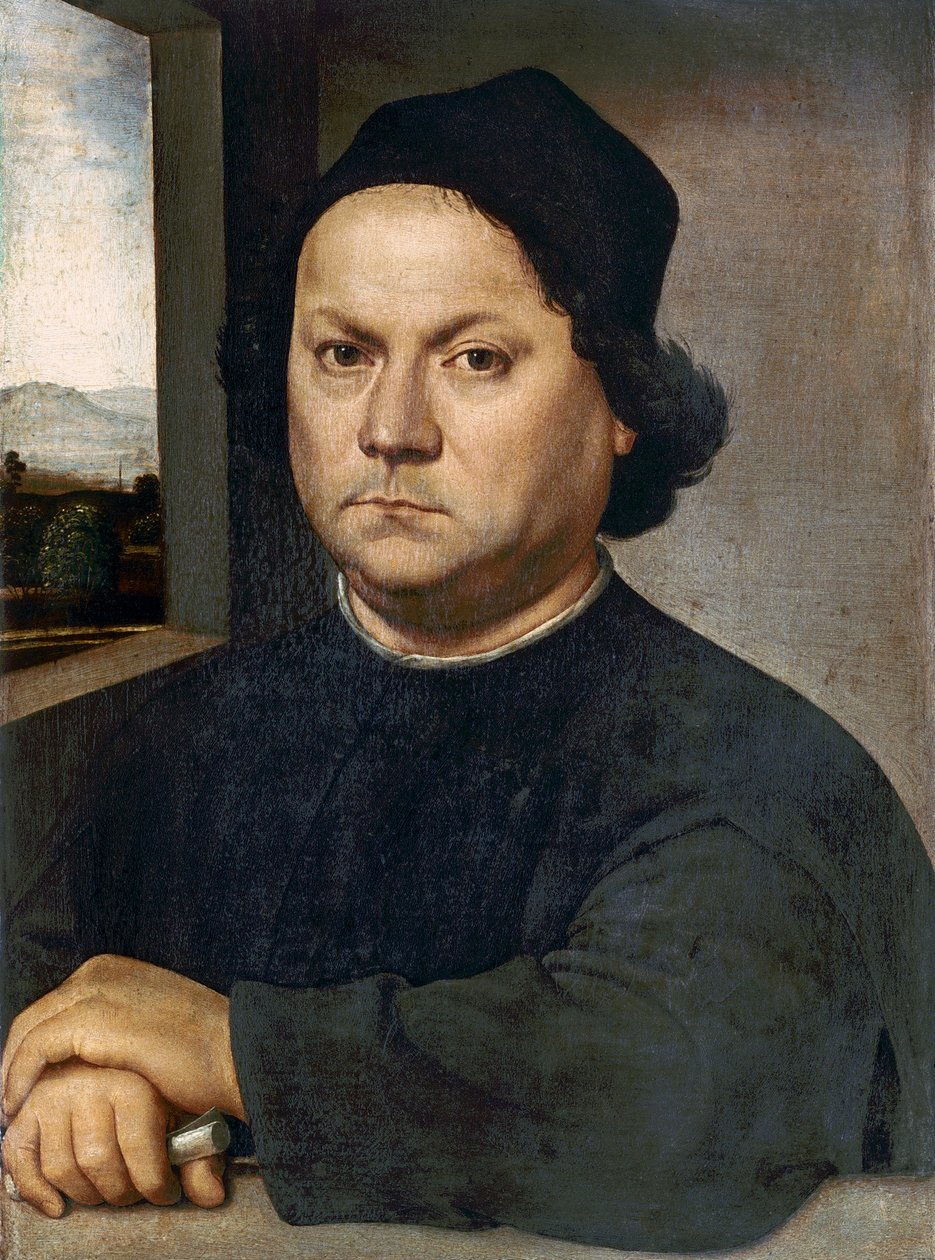
Andrea del Verrocchio
Also known as: Andrea di Michele Cioni
Birthday
1435
Birth Sign
Capricorn
Birthplace
Florence, Republic of Florence
Age
Died at 53
About
Andrea del Verrocchio, born Andrea di Michele Cioni in 1435 in Florence, was an Italian sculptor, painter, and goldsmith whose workshop became a crucible of Renaissance art. He is remembered as a master of bronze sculpture and the teacher of Leonardo da Vinci, Perugino, and Lorenzo di Credi. His bronze David (circa 1465) and the monumental equestrian statue of Bartolomeo Colleoni in Venice are among the period's finest sculptures. Though few paintings are securely attributed to him, his influence as a teacher and workshop master shaped Florentine art for generations. Today, his works reside in major museums, and exhibitions like the 2023 Uffizi show 'Verrocchio: Master of Leonardo' continue to highlight his pivotal role.
Early Life & Background
Born to Michele di Francesco Cioni, a brick and tile maker turned tax collector, Verrocchio grew up in modest circumstances in Florence. Around age ten, he was apprenticed to the goldsmith Giuliano Verrocchi, from whom he later took his name. That training gave him a precise hand and deep knowledge of metalworking, engraving, and design. By the 1460s, he had shifted from goldsmithing to larger-scale sculpture and painting, and in 1465 he opened his own workshop on Via de' Servi. The shop quickly attracted commissions from the Medici family, setting the stage for his breakthrough.
Career Growth
Verrocchio's first major commission was the bronze David (circa 1465-1470) for the Medici, a work that showcased his technical mastery and secured his reputation. In the 1470s, he painted The Baptism of Christ (1472-1475), in which his young pupil Leonardo da Vinci painted the kneeling angel and landscape. He also completed the bronze Christ and St. Thomas (1467-1483) for Orsanmichele and the Putto with a Dolphin fountain sculpture. His most ambitious project came in 1480: the equestrian monument to Bartolomeo Colleoni in Venice. Verrocchio moved to Venice to work on the colossal bronze horse and rider, but he died in 1488 before it was fully cast; it was completed by Alessandro Leopardi. The Colleoni monument is now considered his masterpiece and a landmark of Renaissance sculpture.
Career Timeline
Public Image & Style
Verrocchio's sculpture is characterized by dynamic naturalism, precise anatomical detail, and technical virtuosity in bronze casting. His works often feature dramatic movement and psychological depth. In media and art history, he is consistently portrayed as the master teacher who shaped Leonardo da Vinci, often overshadowed by his famous pupil but recognized as a genius in his own right. Art history enthusiasts and Renaissance scholars form an informal community around his legacy. Museums present him with scholarly reverence, emphasizing his technical mastery and teaching legacy.
Fame & Fandom
Andrea del Verrocchio stands as a pivotal figure in Renaissance history, yet his current standing in the global consciousness does not secure him a position within the published iFANN Global Top 1,000 rankings or any specialized Top-100 scope list. The iFANN Global Fame Engine has evaluated this master of Florence and determined that he holds no placement in the current hierarchy, reflecting his status as a revered historical icon rather than a contemporary celebrity with active ranking metrics. While modern audiences often recognize him primarily through his famous pupil Leonardo da Vinci, the collective interest remains anchored in academic appreciation and museum attendance rather than viral fame or chart-based popularity.
This lack of a formalized fanbase is entirely consistent with his era; there is no documented fandom name, organized supporter group, or specific community rituals surrounding the artist. As a 15th-century figure, Verrocchio existed long before the concepts of celebrity culture, social media campaigns, or fan-driven movements emerged. His legacy is carried by art historians, students of sculpture, and visitors to the Uffizi Gallery rather than a dedicated corps of fans engaging in charity drives or public celebrations. The admiration for his work is expressed through scholarly re-evaluation and institutional retrospectives, such as recent exhibitions stepping out of Leonardo's shadow, but these represent professional recognition rather than the passionate, named fandoms seen in modern pop culture.
Interesting Facts and Legends
Andrea di Michele Cioni was born in 1435 and later adopted the surname 'Verrocchio' from his goldsmith master, establishing the identity known to history. He operated a bustling workshop in Florence that functioned as a creative hub, producing everything from monumental bronze statues like the David to intricate jewelry and tournament armor for the Medici family. Though Vasari famously claimed that Verrocchio vowed to stop painting after seeing Leonardo's angel in The Baptism of Christ, this story is likely apocryphal since historical records show he continued working as a painter. Beyond the visual arts, he was also a skilled musician, mathematician, and engineer, although none of his engineering designs have survived the centuries.
A defining legend of his life involves his role as the grandfather of the High Renaissance; he taught Perugino, who subsequently taught Raphael, creating a direct lineage of genius. Another enduring narrative focuses on his masterpiece, the bronze David, which marked the first time a free-standing nude male sculpture was cast since antiquity, signaling a major artistic breakthrough. While the tale of him abandoning painting due to Leonardo's superior skill remains a popular folklore, it serves as a reflection of the extraordinary talent that emerged from his studio.
Notable Quotes
“The greatest of all masters of the arts of design., Giorgio Vasari”
“Verrocchio was a goldsmith, a painter, a sculptor, a musician, and a mathematician, and he excelled in all these arts., Giorgio Vasari”
Family & Personal Life
Verrocchio's father, Michele di Francesco Cioni, worked as a brick and tile maker before becoming a tax collector. His mother's name is not widely documented. He never married and had no known children. His workshop was his life, and he devoted himself entirely to his art and teaching. He lived and worked in Florence and later in Venice, where he died.
Notable Connections
Verrocchio is best known as the master of Leonardo da Vinci, who assisted him on The Baptism of Christ. His other pupils included Perugino, who later taught Raphael, and Lorenzo di Credi, who inherited his workshop. His primary patron was Lorenzo de' Medici. The Colleoni monument was completed by Alessandro Leopardi after Verrocchio's death.
Relationships & Dating History
Andrea del Verrocchio's romantic life is not documented in surviving historical records. There are no known romantic relationships, marriages, engagements, or public rumors of partners. He died unmarried and without a known partner.
Death & Aftermath
Died
1488 (aged 53)
Death Place
Unknown
Cause of Death
Unknown
Net Worth (Estate Value)
$1 Million
iFANN Editorial Team estimate
As a 15th-century artist, Andrea del Verrocchio did not possess modern financial records or a personal estate in the contemporary sense. His wealth was derived from substantial workshop commissions, direct payments from powerful patrons like the Medici family, and the sale of his diverse works ranging from sculptures to goldsmith items. Historical accounts suggest he lived comfortably without extravagance, managing a large household and employing numerous assistants. No active estate exists today to manage his assets; instead, his priceless artworks are preserved as cultural treasures in museums worldwide and remain in the public domain. His legacy is currently managed by cultural institutions rather than a private family trust. Per iFANN's editorial analysis, the estimated net worth of Andrea del Verrocchio is $1 Million.
Awards & Accolades
View 3 records, honours and achievementsKnown For
David
1465 · Sculptor
The Baptism of Christ
1475 · Painter
Equestrian statue of Bartolomeo Colleoni
1488 · Sculptor
Keywords
Quick Facts
- Profession
- sculptor, painter, goldsmith
- Born
- 1435
- Birthplace
- Florence, Republic of Florence
- Died
- 1488
- Death Place
- Venice
- Gender
- Male
Personal Details
- Full Name
- Andrea di Michele Cioni
Frequently Asked Questions
Is Andrea del Verrocchio a painter or a sculptor?
Did Verrocchio really stop painting after seeing Leonardo's angel?
How many of Verrocchio's paintings survive?
Was Verrocchio richer than Leonardo?
What happened to Verrocchio's workshop after he died?
Similar People
Join the community
fans discussing