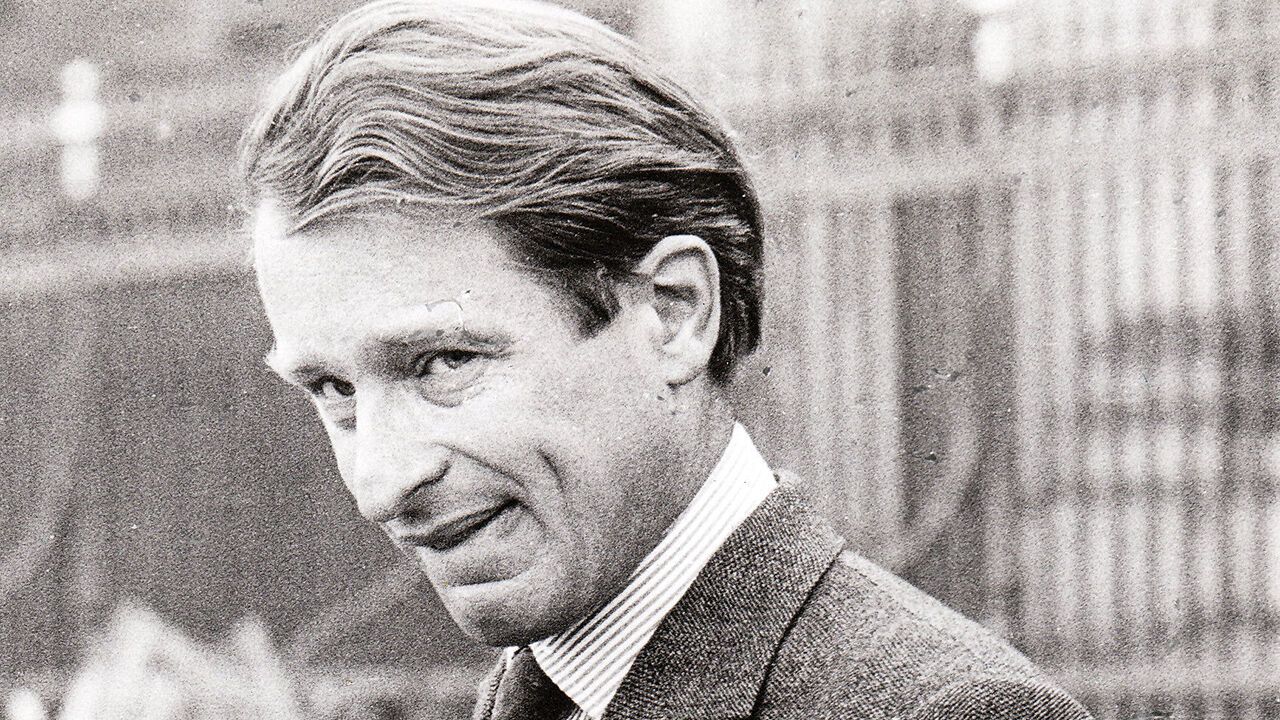
Anatoly Sobchak
 Russia
jurist•politician•statesperson
Also known as: Anatoly Aleksandrovich Sobchak, Tolik
Birthday
August 10, 1937
Birth Sign
Leo
Birthplace
Chita, Russian SFSR, Soviet Union
Age
Died at 62
About
Anatoly Aleksandrovich Sobchak was a Russian jurist and politician who helped shape the legal foundations of the post-Soviet state. He is best remembered as the first democratically elected mayor of Saint Petersburg, serving from 1991 to 1996, and as a co-author of the Constitution of the Russian Federation, a document sometimes called "Sobchak's constitution." His career bridged academia and politics, and his influence extended far beyond his own tenure in office.
Sobchak's legal expertise and reformist zeal made him a leading figure in Russia's democratic movement during perestroika. As mayor, he restored the city's imperial name and championed its revival as a cultural and economic gateway to Europe. He also mentored a generation of future leaders, most notably Vladimir Putin and Dmitry Medvedev, who studied under him at Leningrad State University.
Though his political career ended in defeat and controversy, Sobchak remains a significant historical figure. His legacy is celebrated in Russia, with memorials and events honoring his contributions to law and democracy. He died on February 19, 2000, at age 62, leaving behind a complex but enduring mark on Russian history.
Early Life & Background
Anatoly Sobchak was born in Chita, a Siberian city near the Chinese border, a place historically used for exiling rebels. His father, Aleksander Antonovich, was a railroad engineer of Polish and Czech descent, and his mother, Nadezhda Andreyevna Litvinova, worked as an accountant with Russian and Ukrainian roots. He was one of four brothers.
In 1939, the family moved to Uzbekistan, where Sobchak spent his childhood. World War II brought hardship; his father went off to fight, and the family struggled with poverty. Sobchak later recalled the constant hunger and the family's goat, which was their salvation until it died after being hit with a stick. He said he never cried so much as he did that day.
Sobchak's academic path began at Stavropol Law College in 1953, and a year later he transferred to Leningrad State University. He graduated from the law faculty in 1959, then worked for three years in the Stavropol Regional Bar Association. In 1962, he returned to Leningrad to pursue doctoral studies, defending his PhD thesis on elements of the market economy, a topic considered radical at the time. He joined the university's law faculty in 1973, became a professor, and by 1985 was head of the Department of Economic Law.
His political awakening came with perestroika. He joined the Communist Party in 1987 as a candidate and became a full member in 1988, supporting Mikhail Gorbachev's reforms. His academic work had already set the stage for his entry into public life.
Career Growth
Sobchak's political breakthrough came in 1989 when he was elected to the Congress of People's Deputies, the Soviet parliament. He quickly gained attention for his televised debates against Communist hard-liners, establishing himself as a leading voice for reform.
On June 12, 1991, he became the first democratically elected mayor of Leningrad, a city he soon renamed Saint Petersburg. During the August 1991 coup attempt against Gorbachev, he rallied tens of thousands to the streets and kept troops out of his city. As mayor, he oversaw the restoration of architectural treasures and appointed Vladimir Putin, his former student, as his deputy.
In 1993, Sobchak chaired the Constitutional Assembly that drafted the new Russian Constitution, a document that still governs the country. His political fortunes turned, however, when he lost the mayoral election in May 1996 after a negative campaign. Subsequent bribery allegations in 1997 tarnished his reputation, and his attempt to win a parliamentary seat in December 1999 also failed.
Despite these setbacks, Sobchak's influence on Russian politics remained significant. His mentorship of Putin and Medvedev helped shape the country's leadership for decades. He died in 2000, but his constitutional work and his role in Saint Petersburg's revival continue to be remembered.
Career Timeline
Public Image & Style
Sobchak was seen as one of the most eloquent and cerebral politicians of his era, often compared favorably to Boris Yeltsin in intellectual terms. He was a leading pro-Western reformer, advocating for democratic change and a market economy.
His public persona was that of a professor-turned-politician, with a measured, scholarly demeanor. He was known for his televised debates, where he took on hard-liners with legal precision. However, his tenure as mayor was not without criticism; some observers noted that Saint Petersburg became one of the most criminalized cities in Russia during his time in office.
Fans of Russian democracy view him as a tragic figure, whose fall mirrored the decline of democratic hopes in the country. His image remains that of a principled intellectual who fought for reform, even as his legacy is debated.
Fame & Fandom (iFAMOUS Rankings)
Anatoly Sobchak currently holds no placement in the iFANN Global Top 1,000 or any Top-100 scope list. The iFANN Global Fame Engine has evaluated his standing, yet he remains unranked among the world's most famous figures as of August 2026. This absence from the charts reflects a legacy defined by historical weight rather than contemporary viral traction. While he never cultivated a formal fanbase with a specific collective name, his presence in Russian political memory is profound. Unlike modern icons who rely on streaming numbers or concert attendance, Sobchak's audience consists of historians, legal scholars, and citizens observing the evolution of the post-Soviet state. There are no organized fan clubs, birthday campaigns, or subway advertisements dedicated to him. His relationship with the public was transactional and ideological; he governed through debate and constitutional reform rather than personal charm or celebrity spectacle. The stories that persist around him are not songs or dance challenges but political lore. A persistent narrative suggests his sudden death in 2000 was not natural, fueling decades of speculation about foul play just before Vladimir Putin's rise. Another enduring legend frames him as the architect of Putin's career, immortalized in imagery of the future president carrying bags for his mentor. In 2025, exactly twenty-five years after his passing, Putin himself reaffirmed this bond during a memorial concert, cementing Sobchak's status as a pivotal, if controversial, figure in Russian history.
Interesting Facts and Legends
Known affectionately as Tolik by friends, Anatoly Sobchak balanced his intellectual rigor with a playful side. He was an avid chess player who often challenged students, using the game to illustrate strategic thinking in law. His doctoral thesis, which explored market economy elements, was so radical for the Soviet era that he faced accusations of promoting bourgeois economics. He once quipped that his only hobby was politics, describing it as a contact sport. At his dacha, he tended a small garden, taking genuine pride in growing tomatoes as a way to unwind. Beyond these personal quirks, his life is surrounded by significant legends. One enduring story claims he was poisoned shortly before the 2000 election, removing a potential rival to Vladimir Putin. Another widely retold tale depicts the dynamic between mentor and mentee, where a young Putin carried Sobchak's bags, symbolizing the foundation of Russia's current leadership. These narratives have evolved into political folklore, blending verified events with unresolved questions about his death.
Notable Quotes
“When I was little, the most rare and precious thing was food. I had lots of friends, nice parents, and pets to play with, but I never had enough food.”
“He regarded the office of mayor not just as an administrative position but also took a broad perspective and looked to the future.”
Family & Personal Life
Sobchak's first marriage was to Nonna Gandzyuk, a student at Herzen Teacher's College, in 1958. They had a daughter, Maria, born in 1965, who became a lawyer in Saint Petersburg. Maria's son Gleb, born in 1983, also graduated from the law faculty of St. Petersburg State University.
His second wife was Lyudmila Narusova, a senator who survived him. Their daughter, Ksenia Sobchak, became a prominent TV personality and political opposition figure, running for president in 2018. The family was close, and Sobchak's political career often intersected with his personal life.
At the time of his death, Sobchak was married to Narusova. His family continues to honor his memory, with Ksenia often referencing her father's legacy in her public life.
Notable Connections
Anatoly Sobchak is most closely associated with Vladimir Putin, who was his student and later served as his deputy mayor. This mentorship was pivotal in Putin's rise to power. Sobchak also mentored Dmitry Medvedev, another future president. He worked alongside Mikhail Gorbachev, supporting his reforms, and was a contemporary of Boris Yeltsin. His daughter Ksenia Sobchak has become a prominent opposition figure, and his widow Lyudmila Narusova remains active in politics.
Relationships & Dating History
Sobchak's first marriage was to Nonna Gandzyuk in 1958. They had a daughter, Maria, before divorcing in the 1980s. His second marriage was to Lyudmila Narusova, a senator, with whom he had a daughter, Ksenia. They remained married until his death in 2000.
His relationship with Narusova was a partnership of shared political interests, and she survived him. At the time of his death, he was married to Narusova.
- MarriedNonna Gandzyuk1958 - 1980First wife, mother of his daughter Maria.
- MarriedLyudmila Narusova1980 - 2000CurrentSecond wife, mother of Ksenia; remained married until his death.
Death & Aftermath
Died
February 19, 2000 (aged 62)
Death Place
Saint Petersburg, Russia
Cause of Death
Myocardial infarction
The announcement of Anatoly Sobchak's passing sent a wave of profound shock through Saint Petersburg, where he had served as the city's first democratically elected mayor. Thousands of citizens gathered outside the City Hospital No. 40 and in the city center to pay their respects, while flags were flown at half-mast across the metropolis. President Boris Yeltsin and Prime Minister Mikhail Kasyanov issued statements honoring him as a key architect of modern Russia, and Vladimir Putin publicly mourned his former mentor as a "great man" who shaped the country's leadership for decades. Sobchak died on February 19, 2000, at the age of 62 within the walls of the Central Clinical Hospital after suffering from severe health issues that required multiple hospitalizations in the weeks prior.
Medical staff and his family reported that the cause of death was a heart attack, or myocardial infarction, resulting from pre-existing conditions exacerbated by stress and age. A public funeral service took place three days later on February 22, 2000, at the Smolenskoe Cemetery in the Literary Bridges section, a traditional burial ground for prominent cultural figures. The ceremony drew high-ranking government officials, foreign diplomats, and ordinary mourners who listened to speeches emphasizing his contributions to the Constitution of the Russian Federation. In the years following his death, the St. Petersburg State University named its Faculty of Law after him, and annual memorial concerts have been held to commemorate his legacy, with his daughter Ksenia often referencing his influence in her own political career.
Net Worth (Estate Value)
$5 Million
iFANN Editorial Team estimate
Anatoly Aleksandrovich Sobchak remained a public servant and academic throughout his life, avoiding the accumulation of vast commercial wealth. At the time of his death in 2000, his personal finances were modest, reflecting a career dedicated to law and politics rather than business ventures. He did not amass significant riches from his government positions. His estate has since generated income through posthumous honors and memorial events, managed by his widow, Lyudmila Narusova, who stayed active in Russian politics. Per iFANN's editorial analysis, his estate is estimated to be around $5 million as of 2026, primarily derived from property holdings and intellectual property rights. Unlike many politicians whose legacies are measured in financial portfolios, Sobchak's true inheritance lies in his contributions to Russian law and democracy. His role in drafting the Constitution and shaping the nation's democratic movement stands as his enduring value.
Awards & Accolades
View 1 records, honours and achievementsKnown For
Mayor of Saint Petersburg
1991-1996 · Mayor
Constitution of the Russian Federation
1993 · Co-author
Keywords
Sources
Quick Facts
- Profession
- jurist, politician, statesperson
- Born
- August 10, 1937
- Birthplace
- Chita, Russian SFSR, Soviet Union
- Died
- February 19, 2000
- Death Place
- Svetlogorsk, Kaliningrad Oblast, Russia
- Gender
- Male
- Spouse
- Ljudmila Narusova
- Birth Sign
- Leo
Personal Details
- Full Name
- Anatoly Aleksandrovich Sobchak
- Spouse
- Ljudmila Narusova
- Children
- Maria Sobchak, Ksenia Sobchak
- Education
- Leningrad State University (law degree, PhD)
Frequently Asked Questions
Who was Anatoly Sobchak?
What was Anatoly Sobchak's relationship with Vladimir Putin?
How did Anatoly Sobchak die?
Is Anatoly Sobchak related to Ksenia Sobchak?
What did Anatoly Sobchak accomplish?
Similar People
Join the community
fans discussing