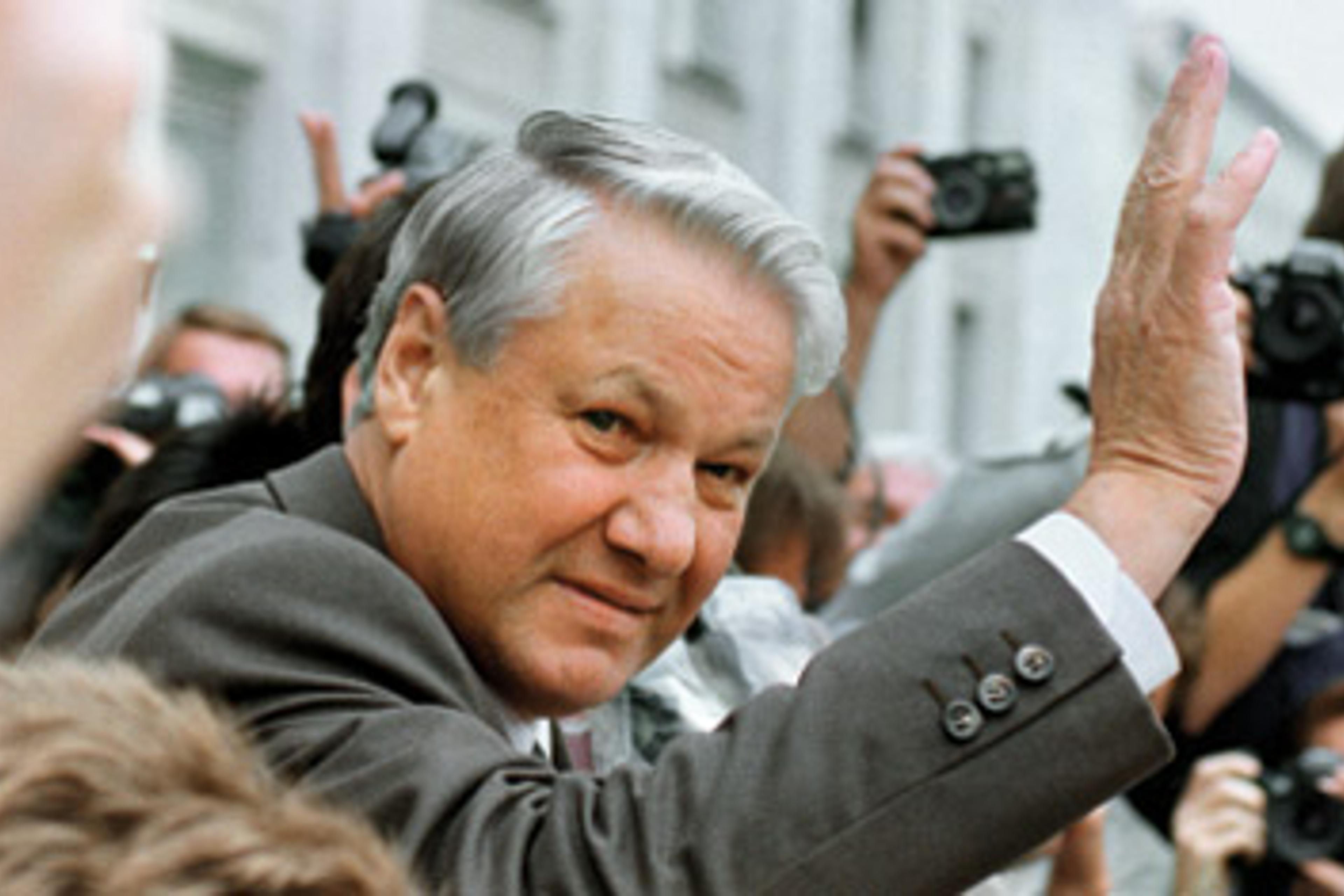
Boris Yeltsin
 Russia
Also known as: Boris Nikolayevich Yeltsin, Eltsine Boris Nikolaevitch, Boris Jeltsin
Birthday
February 1, 1931
Birth Sign
Aquarius
Birthplace
Butka, Sverdlovsk Oblast, Russian SFSR
Age
Died at 76
Height
5 ft 10 in (178 cm)
About
Boris Nikolayevich Yeltsin was the first President of the Russian Federation, serving from 1991 until his resignation in 1999. Born in the Ural region of the Soviet Union, he began his career as a civil engineer before rising through the ranks of the Communist Party. He became a central figure in the dissolution of the Soviet Union and oversaw Russia's transition to a market economy. His tenure was defined by dramatic political reforms, economic volatility, and a fierce struggle against conservative opposition. Yeltsin is remembered for his charismatic leadership style and his decisive actions during critical moments, such as the 1991 coup attempt.
His legacy remains complex and controversial. While credited with dismantling the Soviet system and establishing democratic institutions, his presidency also saw the rise of powerful oligarchs and significant social unrest. He died in 2007 after years of declining health, leaving behind a nation that continues to debate the impact of his policies. His relationship with Western leaders, particularly US President Bill Clinton, shaped the geopolitical landscape of the post-Cold War era.
Early Life & Background
Born on February 1, 1931, in the small village of Butka in the Ural Mountains, Boris Yeltsin grew up in modest circumstances. His father, Nikolai Yeltsin, worked as a construction worker and bricklayer, while his mother, Maria, was employed in a textile factory. The family faced significant hardship during Stalin's collectivization drive, which led to accusations of being kulaks, or wealthy peasants. This forced the family to move frequently and endure poverty, shaping Yeltsin's early resilience and work ethic.
He attended school in Kungur and later moved to Sverdlovsk, now known as Yekaterinburg. His education was often interrupted by the need to work to support his family. Influenced by his father's trade, Yeltsin developed a strong interest in engineering and construction. In 1955, he graduated from the Ural Polytechnic Institute with a degree in industrial and civil engineering. This technical background distinguished him from many of his political peers who came from legal or academic backgrounds. After graduation, he worked as a civil engineer in Sverdlovsk, eventually rising to become a site manager and chief engineer. His competence in infrastructure development earned him a reputation for decisiveness and practical problem-solving.
In 1961, at the age of 30, Yeltsin joined the Communist Party of the Soviet Union. This strategic move accelerated his political ascent. By the late 1960s, he held leadership positions in the Sverdlovsk regional party committee. In 1976, he was appointed First Secretary of the Sverdlovsk Regional Committee, a powerful role that gave him control over the region's political and economic affairs. During this period, he gained a reputation as a reformer within the party, often clashing with Moscow's conservative bureaucracy over issues of local autonomy and efficiency.
Career Growth
Yeltsin's breakthrough into national prominence occurred in the late 1980s under Mikhail Gorbachev's perestroika reforms. Initially a supporter, he soon became critical of the pace of reform, advocating for more radical democratic changes. In 1987, he made a bold move by resigning from the Politburo and the Central Committee in a public speech, denouncing the stagnation of the Soviet system. This act established him as the leading anti-establishment figure in the USSR.
In 1990, he was elected Chairman of the Supreme Soviet of the Russian Soviet Federative Socialist Republic. That same year, he resigned from the Communist Party, declaring it no longer fit to lead. This paved the way for his election as the first popularly elected President of the Russian Federation on June 12, 1991. As President, Yeltsin oversaw the dissolution of the Soviet Union in December 1991. His administration implemented shock therapy economic reforms, including price liberalization and mass privatization, which aimed to create a market economy but resulted in hyperinflation and the rise of powerful oligarchs.
A major crisis occurred in October 1993 when Yeltsin ordered the military to shell the Russian White House after a constitutional standoff with the legislature. This event resulted in dozens of deaths and the adoption of a new constitution that significantly expanded presidential powers. Perhaps his most iconic moment came during the August 1991 coup attempt, where he climbed onto a tank outside the White House in Moscow, delivering a defiant speech to the crowd and rallying resistance against the plotters. He resigned from office on December 31, 1999, handing power to Vladimir Putin.
Career Timeline
Public Image & Style
Yeltsin's public image was that of a charismatic, albeit flawed, leader. He was known for his ability to connect with the masses, often engaging in spontaneous interactions. His energetic demeanor and sometimes disheveled appearance in later years due to health issues made him a distinctive figure. Unlike many politicians, he often displayed vulnerability, openly discussing his struggles with alcoholism and heart disease. However, his later years were marred by perceptions of incompetence and erratic behavior. His style was unpolished and direct, contrasting sharply with the formal protocols of the Soviet era.
Fame & Fandom
Global attention to the legacy of Boris Yeltsin remains a subject of sustained historical interest, tracked across decades of media coverage and scholarly consumption worldwide. Current metrics from the iFANN Global Fame Rankings place him as the 11th most famous person from Russia, a standing he has held steady through the previous cycle. This specific ranking reflects his enduring position in the national consciousness following his tenure as the first President of the Russian Federation. Despite the passage of time since his resignation in December 1999 and his death in 2007, his profile retains a distinct prominence within the broader scope of global political figures. The fanbase associated with this figure does not possess a formal or unofficial name, distinguishing his legacy from that of pop culture icons who cultivate organized fandoms. His public presence was defined by statecraft rather than personal charisma, resulting in a support structure rooted in voters and political alliances rather than dedicated fan clubs or ritualistic engagement. While no fan campaigns or charity drives funded by admirers exist in the historical record, the narrative surrounding his life events continues to generate analysis and comparison in contemporary discourse.
Interesting Facts and Legends
During the hard-line communist coup attempt in August 1991, Yeltsin famously climbed onto a tank outside the Russian White House to denounce the plotters and rally the public. Another widely cited incident occurred in July 1990 when he climbed the Eiffel Tower in Paris, claiming he did so to demonstrate that Russians could climb too, showcasing his unconventional style against the rigid formality of Soviet leadership. His presidency also saw the violent 1993 Constitutional Crisis, where he ordered the military to shell the parliament building, a controversial act that solidified presidential power but left a deep scar on the nation's memory. Finally, his resignation in December 1999 and the handover of power to Vladimir Putin became mythologized by some officials as divine intervention, marking the definitive end of the Yeltsin Era. Historical records further note the close rapport between Yeltsin and U.S. President Bill Clinton, a relationship often described as the golden age of post-Cold War diplomacy. Additionally, his declining health during his final years became a central part of his public narrative, with images of his recovery from pneumonia and heart issues frequently appearing in international media before his passing.
Notable Quotes
“I am a democrat, and I will remain a democrat until my last breath.”
“We must build a market economy, even if it means pain.”
“Russia is a great country, and we must make it great again.”
Family & Personal Life
Boris Yeltsin was married only once. He met Naina Iosifovna Girina in 1954 while they were both students at the Ural Polytechnic Institute. They married in 1955 and remained together until his death. Naina was known for her loyalty and her role as a supportive spouse, often managing his personal schedule and shielding him from certain aspects of his public life. She accompanied him throughout his political career, including his final years in the hospital.
The couple had two daughters. Tatyana Yeltsina, born in 1956, pursued a career in business and finance, serving as a board member of various companies. She was often seen supporting her father during his presidency and was involved in charitable activities. Maria Yeltsina, born in 1957, died in a car accident in 1996, just months before her father's re-election campaign. Her death deeply affected Yeltsin and is often cited as a contributing factor to his declining mental state and health during his second term. There are no publicly documented romantic relationships outside of his marriage to Naina.
Notable Connections
Relationships & Dating History
Boris Yeltsin was married only once. He met Naina Iosifovna Girina in 1954 while they were both students at the Ural Polytechnic Institute. They married in 1955 and remained together until his death in 2007. Naina was known for her loyalty and her role as a supportive spouse, often managing his personal schedule and shielding him from certain aspects of his public life. She accompanied him throughout his political career, including his final years in the hospital. The couple had two daughters: Tatyana, born in 1956, and Maria, born in 1957. Maria died in a car accident in 1996, just months before her father's re-election campaign. Her death deeply affected Yeltsin and is often cited as a contributing factor to his declining mental state and health during his second term. There are no publicly documented romantic relationships outside of his marriage to Naina. While rumors occasionally surfaced regarding his personal life due to his heavy drinking and erratic behavior, no credible sources have confirmed any extramarital affairs or other partners. As of his death in 2007, he was widowed, having lost his wife to his own passing, though she outlived him by several years.
- MarriedNaina Yeltsina1955 - 2007Met as students at Ural Polytechnic Institute; remained married until his death.
Death & Aftermath
Died
April 23, 2007 (aged 76)
Death Place
Moscow, Russia
Cause of Death
Severe myocardial infarction due to chronic heart failure
Boris Yeltsin spent his final years in seclusion at his home in Moscow, having stepped down from the presidency on December 31, 1999, and handing power to Vladimir Putin. His health had deteriorated significantly over the preceding decade, marked by multiple heart attacks and surgeries that left him physically frail and often absent from public view. On April 23, 2007, he suffered a massive heart attack at his residence and was rushed to the Central Clinical Hospital No. 1. Despite emergency surgery, doctors could not save him, and he passed away later that day at the age of 76. The official cause of death was listed as severe myocardial infarction resulting from complications related to his long-standing cardiac condition.
The news of his death triggered a wave of international tributes, with United States President George W. Bush calling him a close friend who played an instrumental role in bringing democracy to Russia. However, the reaction within Russia remained deeply divided; while many mourned him as the father of modern Russian freedom, others criticized his legacy for the economic chaos and corruption of the 1990s. A state funeral was held, attended by world leaders including French President Jacques Chirac and German Chancellor Gerhard Schröder. He was laid to rest in the Novodevichy Cemetery in Moscow, a final resting place reserved for the nation's most prominent figures. His widow, Naina Yeltsina, outlived him by three years before passing away in 2010.
Net Worth (Estate Value)
$10 Million
iFANN Editorial Team estimate
As a state official, Boris Yeltsin's personal net worth was not disclosed in the manner of modern celebrities. However, reports suggest that during his presidency, he accumulated significant wealth through informal channels and the influence of the oligarch class. Following his death, his estate was managed by his family, primarily his wife Naina. There are no specific public records of a massive posthumous estate value comparable to entertainment icons, as his wealth was largely tied to real estate and assets acquired during his political career. Estimates of his total assets at death range from $1 million to $10 million, though these figures are speculative and based on the lifestyle of high-ranking Soviet officials of the era. iFANN currently estimates Yeltsin's net worth at approximately $10 Million based on available historical data regarding his assets and estate management.
Awards Won (3)
Boris Yeltsin received numerous state honors and distinctions throughout his career. He was awarded the Order of Lenin multiple times for his contributions to the Soviet state. Posthumously, he was named a Hero of the Russian Federation for his role in the defense of democracy. He also received the Presidential Medal of Freedom from the United States, recognizing his close relationship with President Bill Clinton and his efforts in fostering international cooperation.
1976 · State Honor
Contribution to Soviet State
2007 · Posthumous Award
Defense of Democracy
Known For
First President of the Russian Federation
1991 · Political Leader
Dissolution of the Soviet Union
1991 · Key Figure
August Coup Attempt
1991 · Leader of Resistance
Keywords
Sources
Quick Facts
- Profession
- Civil Engineer, Politician
- Born
- February 1, 1931
- Birthplace
- Butka, Sverdlovsk Oblast
- Died
- April 23, 2007
- Death Place
- Moscow, Russia
- Gender
- Male
- Spouse
- Naina Yeltsina
- Birth Sign
- Aquarius
Personal Details
- Full Name
- Boris Nikolayevich Yeltsin
- Height
- 5 ft 10 in (178 cm)
- Spouse
- Naina Yeltsina
- Children
- Tatyana Yeltsina · Maria Yeltsina
- Education
- Ural Polytechnic Institute
Frequently Asked Questions
Who was Boris Yeltsin?
How did Boris Yeltsin die?
What was Boris Yeltsin's most famous moment?
Did Boris Yeltsin have children?
Why did Boris Yeltsin resign?
Join the community
fans discussing