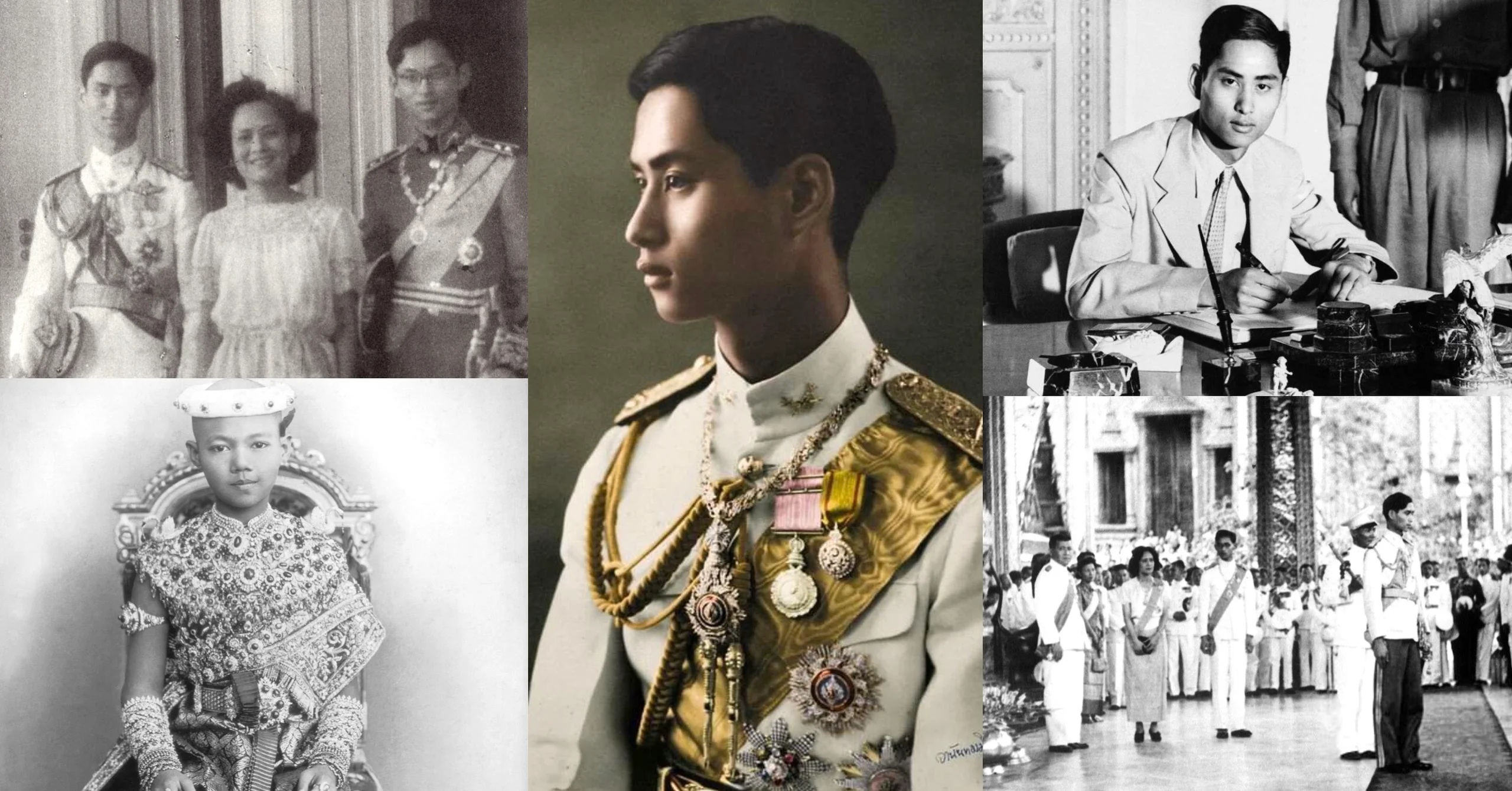
Ananda Mahidol
 Thailand
monarch•social worker•military officer
Also known as: Rama VIII, King Ananda Mahidol, Prince Ananda Mahidol
Birthday
September 20, 1925
Birth Sign
Virgo
Birthplace
Heidelberg, Germany
Age
Died at 20
About
Ananda Mahidol was the eighth monarch of the Chakri dynasty of Siam, later known as Thailand, and posthumously recognized as King Rama VIII. Born in Heidelberg, Germany, to Prince Mahidol Adulyadej and Mom Sangwan, he ascended to the throne at the age of nine following the death of his uncle, King Prajadhipok. His reign was defined by a long absence from his homeland while he pursued education in Switzerland under the care of his mother.
Although he returned to Thailand in late 1945 after World War II, his time on the throne lasted only six months before his untimely death. The circumstances surrounding his passing remain one of the most enduring mysteries in modern Thai history. He is remembered not for political policies but as a tragic figure whose brief life left an indelible mark on the nation's identity and royal succession.
Early Life & Background
Prince Ananda Mahidol entered the world on September 20, 1925, at the University Hospital in Heidelberg, Germany. His birth occurred while his father, Prince Mahidol Adulyadej, was studying medicine at the local university. This early start to his life in Europe set the tone for his upbringing, which would be largely removed from the political center of Siam. When Ananda was just four years old, his father died of kidney disease in 1929. This tragedy forced a significant shift in the family dynamic, leaving his mother, Mom Sangwan (later Princess Srinagarindra), to raise him and his younger brother, Bhumibol.
The two brothers were taken to Switzerland to continue their education and live a relatively normal life away from the complexities of the Siamese court. They attended the École Nouvelle de la Suisse Romande in Lausanne, where they were immersed in European culture. Their mother was a dedicated educator who instilled in them values of humility, academic rigor, and duty. Ananda was described as a shy, gentle, and intelligent boy who excelled in science and mathematics. Unlike many royals groomed for immediate leadership, he spent his formative years navigating a standard school curriculum in a foreign country. A regency council governed Siam in his name during this period, allowing him to grow up without the immediate burden of statecraft.
Career Growth
Ananda Mahidol's professional life was entirely consumed by his role as a constitutional monarch, though his active participation was delayed by his youth and residence abroad. In March 1935, the National Assembly of Siam formally recognized him as king while he was still living in Switzerland. At nine years old, he became one of the youngest monarchs in recorded history. For the next decade, his reign continued under a regency, with his primary focus remaining on completing his secondary education in natural sciences.
The pivotal moment of his public life arrived in December 1945 when he finally returned to Thailand for the first time since leaving as a child. His arrival in Bangkok was met with immense hope and celebration by a nation emerging from the devastation of World War II. The return signaled a potential transition from a distant "boy king" to an active ruler ready to engage with government officials and the public. He began preparations for his formal coronation, which had been postponed due to the war. However, these plans were abruptly halted less than six months later. On June 9, 1946, his life and reign ended in mysterious circumstances, cutting short any further development of his role as head of state.
Career Timeline
Public Image & Style
In Thai culture, Ananda Mahidol is portrayed as a tragic, innocent, and beloved figure rather than a political operator. Historical narratives emphasize his youth, his intelligence, and the suddenness of his death, creating a poignant image of lost potential. He is remembered as a shy, intellectual young man who was thrust into a role he was not yet prepared for. The media and public discourse focus heavily on the mystery of his passing, framing him as a victim of circumstance rather than a participant in political intrigue. This perception has cemented his status as a symbol of the monarchy's resilience and the fragility of power in the face of historical turbulence.
Fame & Fandom
Standing as the 76th most famous person in Thailand, Ananda Mahidol holds a place of enduring reverence that transcends his brief reign. He is also recognized as the 17th most famous person from Thailand, a ranking that has held steady across recent cycles. These positions within the iFANN Global Fame Rankings reflect a legacy defined by historical weight rather than modern celebrity churn. While he was never a pop star who courted adoration through concerts or social media, the public's engagement with his memory remains profound and institutional. There is no formal name for his fanbase, nor do organized groups gather to celebrate his life with the rituals seen among contemporary idols. Instead, the community surrounding him operates through state-sponsored observances and academic inquiry. The Faculty of Medicine at Chulalongkorn University leads annual "Ananda Mahidol Day" events, where students and faculty promote commemorative pins and charity campaigns. These are acts of national remembrance rather than fan-driven movements. His centenary birth year saw global ceremonies, including one in Tokyo, marking the continued respect held for the boy king who died at twenty. The people who remember him do so with a quiet, solemn devotion that honors a tragic figure whose story remains central to Thai history.
Interesting Facts and Legends
Known affectionately as the "Boy King," Ananda Mahidol held the distinction of being the youngest monarch of the Chakri dynasty upon his accession. He spoke French fluently, having been educated entirely within the Swiss system, and rarely used English or Thai in his daily interactions during his youth. His keen interest in medicine and science influenced the creation of the Ananda Mahidol Foundation after his death, which continues to support medical education in Thailand. For many decades, discussing the specific details of his death was considered a taboo subject in Thai society, contributing to the secrecy that surrounded the official investigation. Historical records note that he was slight and slender, often described as painfully shy compared to the more boisterous expectations of royalty. The Faculty of Medicine at Chulalongkorn University has maintained a tradition of awarding pins to students in his name every year, keeping his legacy alive within the medical community.
Family & Personal Life
Ananda was the eldest son of Prince Mahidol Adulyadej and Mom Sangwan, who later became Princess Srinagarindra. His father died when Ananda was four, leaving his mother as the primary guardian for both him and his younger brother, Bhumibol Adulyadej. The bond between the three siblings was close, with their mother playing a crucial role in their upbringing and education in Switzerland. After Ananda's death, his younger brother succeeded him to the throne as King Rama IX. The family's legacy is preserved through the Royal House of Chakri, with the Crown Property Bureau managing their estates. No other siblings are mentioned in the primary historical record regarding this branch of the family.
Notable Connections
Relationships & Dating History
Ananda Mahidol never married and had no children. As a minor upon ascending the throne and remaining in Europe throughout his youth, he did not engage in any public romantic relationships. The concept of dating or marriage was not applicable to him during his lifetime; his focus remained on his education and the eventual assumption of royal duties. Consequently, there is no dating history, no engagements, and no spouses. He died at the age of 20, leaving his lineage to be carried on by his younger brother, Bhumibol Adulyadej. His relationship status at the time of death was single.
Death & Aftermath
Died
June 9, 1946 (aged 20)
Death Place
Bangkok, Thailand
Cause of Death
Gunshot wound (ruled accidental)
The legacy of King Ananda Mahidol endures through enduring commemorations, including a global ceremony in Tokyo for his 100th birthday anniversary in September 2025 and the "Ananda Mahidol Day Pin" project by Chulalongkorn University's Faculty of Medicine, which honors his memory among medical students. These tributes stand as a reflection of a life cut short just six months after his return from Switzerland to assume duties as the eighth monarch of the Chakri dynasty. The tragedy unfolded on June 9, 1946, within the Boromphiman Throne Hall at the Grand Palace in Bangkok, where the young king was found dead in his bed.
He had been playing with a firearm alongside Prince Bhanubandh Yugala, Major Luang Sarathiwit, and Captain Chuen Thipprapart when the weapon discharged. Official authorities ruled the incident an accidental gunshot wound to the head, though the circumstances have remained a subject of intense historical controversy and dispute ever since. While initial reports accepted the accidental discharge, subsequent inquiries, including a new probe initiated in April 2024, have examined inconsistencies in witness testimony that led some authors to suspect foul play or suicide. Despite these modern investigations and the case being described by historians as a "ghost from the past," no criminal charges were ever brought against the surviving witnesses, leaving the legal matter unresolved.
The nation responded with widespread shock and mourning, solidifying reverence for the monarchy as his brother, Bhumibol Adulyadej, ascended to the throne as King Rama IX. A state funeral followed traditional royal rites in Bangkok, attended by high-ranking officials and the royal family, cementing his place in Thai history.
Net Worth (Estate Value)
$0
iFANN Editorial Team estimate
As a deceased monarch from the 20th century, Ananda Mahidol does not have a personal net worth in the modern sense. His estate, like that of the Thai monarchy, is managed by the Crown Property Bureau. The value of the royal estates is not publicly disclosed in detail, but the Crown Property Bureau manages vast assets including real estate, businesses, and investments that support the monarchy and charitable causes. The Ananda Mahidol Foundation continues to generate revenue through donations and medical education programs, but these are institutional funds, not personal wealth. iFANN currently estimates the estate's value at approximately $0, reflecting the nature of royal assets which are held in trust for the nation rather than as private property.
Awards & Accolades
View 6 records, honours and achievementsKnown For
King Rama VIII
1935 · Monarch of Siam
Keywords
Sources
Quick Facts
- Profession
- monarch, social worker, military officer
- Born
- September 20, 1925
- Birthplace
- Heidelberg, Germany
- Died
- June 9, 1946
- Death Place
- Boromphiman Residential Hall, Bangkok
- Gender
- Male
- Birth Sign
- Virgo
Personal Details
- Full Name
- Prince Ananda Mahidol
- Children
- Education
- École Nouvelle de la Suisse Romande, Lausanne; University of Heidelberg (preparatory)
Frequently Asked Questions
Who was Ananda Mahidol?
How did King Ananda Mahidol die?
Why did Ananda Mahidol live in Switzerland?
Did Ananda Mahidol have children?
What happened after Ananda Mahidol died?
Join the community
fans discussing