
Amir Sjarifuddin
 Indonesia
Also known as: Amir Sjarifuddin Harahap, Amir Sjarifoeddin
Birthday
April 27, 1907
Birth Sign
Sagittarius
Birthplace
Medan, Dutch East Indies
Age
Died at 41
About
Amir Sjarifuddin Harahap stands as a pivotal figure in Indonesian history, renowned for his dual role as a revolutionary leader and the nation's second Prime Minister from November 1947 to June 1948. Born into Sumatran aristocracy in Medan, he became a defining voice for the left-wing political movement during the Indonesian National Revolution. His career trajectory moved from early journalism to high-level governance, where he held critical portfolios including Minister of Information and Minister of Defense. Despite his life ending tragically at age 41, his legacy has undergone a profound transformation from being labeled a "traitor" in the immediate post-revolutionary period to becoming a revered national hero and martyr for social justice in modern Indonesia. He is historically significant for his leadership of the People's Democratic Front and his tragic execution following the Madiun Affair, events that cemented his status as a complex symbol of the struggle for independence.
Early Life & Background
Amir Sjarifuddin Harahap was born on April 27, 1907, into a prominent Batak family with aristocratic roots in Medan, then part of the Dutch East Indies. His father, Teuku Hamzah Harahap, was a respected regional figure who instilled a sense of duty in his son. Unlike many contemporaries who remained within traditional religious frameworks, Amir converted to Christianity, a rare occurrence for a Muslim Batak at the time that would later influence his political alliances. His intellectual journey began in Medan before he moved to Batavia (now Jakarta) for higher education. He initially traveled to the Netherlands to study law at Leiden University, where he joined Jong Batak, a group dedicated to Batak cultural identity and anti-colonial sentiment. These experiences exposed him to Marxist ideas and international socialist movements, shaping his future political path. Upon returning home due to family obligations, he completed his degree at the Rechts Hogeschool (Higher Law School) in Batavia in 1931.
Instead of pursuing a conventional legal career, Amir chose journalism. He joined the editorial board of Panorama, a progressive newspaper, where he honed his skills in political commentary and public discourse. His first major step toward political leadership came in the 1930s when he co-founded the Gerindo (Indonesian People's Movement) alongside other young Marxists like Tan Malaka and Sutan Sjahrir. Gerindo aimed to unite various nationalist factions against Dutch colonialism through mass mobilization rather than elite negotiation. In 1933, Amir was arrested by Dutch authorities for his subversive activities. He was sentenced to exile in Boven-Digoel, a notorious penal colony in Papua, but was spared this fate thanks to the intervention of his cousin and mentor, who successfully petitioned for a reduction of his sentence. This early resilience foreshadowed his lifelong dedication to the cause of independence.
Career Growth
Amir's career accelerated significantly during the Japanese occupation of Indonesia (1942–1945). While most Indonesian leaders collaborated with the Japanese or remained passive, Amir was one of the few prominent figures who actively resisted Japanese policies while simultaneously organizing underground resistance networks. This dual strategy positioned him as a key player in the independence movement. Following the proclamation of Indonesian independence on August 17, 1945, Amir was appointed Minister of Information in President Sukarno's first cabinet. In this role, he managed propaganda efforts to unify the archipelago and counter Dutch attempts to reassert control. When Defense Minister Supriyadi disappeared under mysterious circumstances, Amir took over the portfolio of Minister of Defense, serving from 1945 to 1948. His tenure was characterized by efforts to organize the fledgling Republican army and negotiate with Allied forces.
In November 1947, Amir became the second Prime Minister of Indonesia, leading a coalition government known as the Amir Sjarifuddin Cabinet. His administration faced immense pressure from both internal leftist factions and external Dutch military aggression. The defining moment of his premiership was the signing of the Renville Agreement in January 1948, a peace treaty with the Netherlands that ceded large swathes of territory to the Dutch and effectively split the Republic. The agreement was deeply unpopular among nationalists and the public, leading to widespread protests and his eventual resignation in June 1948. After leaving office, Amir founded the Front Demokrasi Rakyat (People's Democratic Front or FDR), a broad coalition of left-wing parties including the Communist Party of Indonesia (PKI). In September 1948, tensions between the Republican government and the FDR escalated into open conflict. Amir attempted to establish a rival "National Front" government in Madiun, sparking the Madiun Affair. Loyalist forces, led by General Sudirman and the Siliwangi Division, swiftly suppressed the uprising. Amir was captured, tried by a military tribunal, and executed on December 19, 1948.
Career Timeline
Public Image & Style
Amir Sjarifuddin is portrayed in Indonesian media and education as a complex figure: a visionary leader, a committed socialist, and a tragic hero. His public image has shifted dramatically from a "traitor" in the 1950s to a "national hero" in the 21st century. His signature style was formal and authoritative, reflecting his roles as a minister and prime minister. His content, primarily political speeches and journalistic writings, emphasized unity, justice, and anti-colonialism. He is frequently mentioned alongside the "four pillars" of the nation, linking him directly to Soekarno and Mohammad Hatta as a key founder of the republic. Modern documentaries and academic research have transformed him from a condemned rebel into a revered martyr for social justice. His image is now used in history textbooks and museum exhibits to illustrate the complexities of the early republic, standing as a symbol of the struggle for independence and the sacrifices made by its leaders.
Fame & Fandom
Amir Sjarifuddin does not possess a modern fandom in the way contemporary entertainers do, as he passed away in 1948 long before the digital age birthed organized fanbases. Instead of fans rallying with hashtags or chart campaigns, he is revered by historians, students, and the Indonesian public as a national hero whose legacy is defined by political history rather than pop culture rituals. There is no official or unofficial name for his supporters; those who honor him are typically members of historical societies or political groups with socialist roots, such as the Partai Sosialis Indonesia, rather than a dedicated fan club. The closest equivalents to fan engagement are state-sponsored commemorations and academic research that keep his story alive. In September 2026, iFANN evaluated Amir Sjarifuddin through its Global Fame Engine, but he currently holds no placement in the published rankings, meaning he is not listed among the Global Top 1,000 or any Top-100 scope list. This absence reflects his status as a historical figure rather than a current celebrity competing for global attention metrics. While he ranks highly in specific regional contexts like Pantheon.world, the iFANN system notes he is currently unranked on its primary global scales. His fame remains anchored in the tragic narrative of his execution and his pivotal role during the Indonesian National Revolution, standing apart from the fleeting viral moments that drive modern celebrity charts.
Interesting Facts and Legends
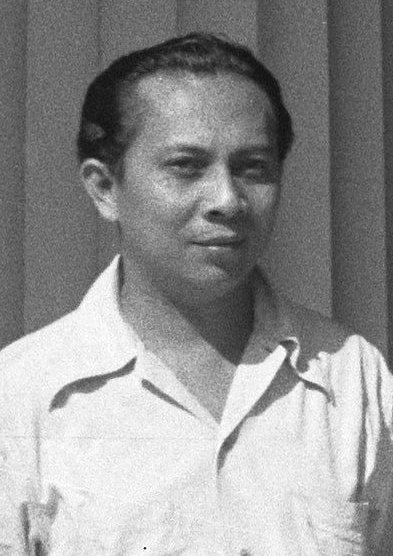
Despite being born into a Muslim Batak family, Amir converted to Christianity, a unique and often overlooked aspect of his biography that fueled rumors and debates during his lifetime. He narrowly avoided exile to Boven-Digoel in 1933 due to the intervention of his cousin, a detail that underscores the importance of family connections in early Indonesian politics. Before becoming a prime minister, he was a prominent journalist, using his platform to shape public opinion during the critical years of the revolution. For decades, he was referred to as Indonesia's "forgotten prime minister" due to the controversial nature of his execution and the subsequent suppression of leftist narratives. Specific physical details such as height are not well-documented in historical records, though available photographs show him as a man of average stature for his time, often dressed in formal attire or military uniform. His appearance is characterized by a serious demeanor, consistent with his role as a political leader and revolutionary. Additionally, his name is attached to numerous schools, streets, and institutions across Indonesia, ensuring his presence in daily life despite his death nearly eight decades ago.
Notable Quotes
“A good Christian can also be a good nationalist.”
“The necessity of a strong, independent Indonesia free from foreign domination.”
Family & Personal Life
Amir was born into a prominent Batak family with aristocratic roots in Medan. His father, Teuku Hamzah Harahap, was a respected figure in the region who played a crucial role in his upbringing. A unique aspect of his family background was his conversion to Christianity despite being born into a Muslim Batak family, a decision that caused significant debate and influenced his worldview. Family connections were also vital to his survival; it was the intervention of his cousin and mentor that successfully petitioned to reduce his sentence to exile in Boven-Digoel in 1933. This close-knit support system provided a buffer against the harsh political climate of the Dutch colonial era. There are no records of siblings playing a prominent role in his public life, though his extended family network was instrumental in his early political maneuvers. The historical narrative often overlooks these familial bonds, focusing instead on his public persona, yet they were foundational to his ability to navigate the treacherous waters of early Indonesian politics.
Notable Connections
Relationships & Dating History
As a historical figure from the mid-20th century, detailed records of Amir Sjarifuddin's romantic relationships are scarce. Historical accounts focus almost exclusively on his political activism and ideological commitments. There is no public documentation of marriages, engagements, or specific romantic partners in the manner of modern celebrity biographies. It is widely noted that he was a bachelor throughout his adult life, dedicating himself entirely to the cause of Indonesian independence and socialist ideals. Consequently, there are no children recorded from any relationship, and no dating history exists in the public domain. He remained single until his death in 1948, a choice that allowed him to fully immerse himself in the revolutionary struggle. His lack of a private family life has often been cited as evidence of his total commitment to the nation, distinguishing him from many of his contemporaries who balanced family duties with political careers. This singular focus contributed to the mythos surrounding his sacrifice and the perception of him as a man wholly devoted to the public good.
Death & Aftermath
Died
December 19, 1948 (aged 41)
Death Place
Ngaliang, Madiun, Java
Cause of Death
Execution by firing squad
Amir Sjarifuddin's life ended in the village of Ngaliang on December 19, 1948, when a military tribunal convened by the Republican government sentenced him to death. The trial was swift and conducted under the emergency conditions of the Indonesian National Revolution, following his capture after the failed uprising known as the Madiun Affair. Authorities convicted him of treason and rebellion for attempting to establish a rival government with the People's Democratic Front (FDR). He was executed by a firing squad shortly after the verdict, marking a tragic end to a man who had dedicated his life to Indonesia's independence. The immediate aftermath saw Amir labeled a traitor by the official narrative led by Sukarno and Hatta, who viewed his actions as a betrayal during a critical war against the Dutch.
However, historical perspectives shifted dramatically over the decades. Following the fall of the Suharto regime in 1998, scholars and the public began to re-evaluate his legacy. Modern documentaries and academic research have transformed him from a condemned rebel into a revered national hero and martyr for social justice. Today, he is commemorated through statues, annual events, and his inclusion in history textbooks as one of the key figures of the republic. His funeral was a private affair at the time due to the political climate, but his memory is now kept alive by state-sponsored honors and educational institutions that recognize his sacrifice. Posthumous recognition includes his designation as a *Pahlawan Nasional* (National Hero) of Indonesia. Recent news items from 2023 to 2025 continue to revisit his life and legacy, with documentary segments exploring his resistance efforts and academic articles offering new perspectives on the Madiun Affair. His legacy is now firmly established as a symbol of the struggle for social justice and the complexities of the early republic.
Net Worth (Estate Value)
$0
iFANN Editorial Team estimate
As a deceased historical figure from the pre-independence era, Amir Sjarifuddin had no net worth in the modern sense. He lived during a time of economic turmoil and revolution, and there is no record of significant personal assets, real estate holdings, or business ventures. His "wealth" is measured in political influence and historical impact rather than financial metrics. Any estimates of his net worth would be speculative and non-existent in credible financial sources. The iFANN Editorial Team's analysis of his earnings, ventures and assets points to roughly $0, reflecting the reality that he died without significant personal wealth accumulation. No posthumous commercial releases or estate-managed businesses generate revenue; instead, his legacy is preserved through educational institutions and historical societies. His estate does not exist in the financial sense, as he died without significant personal wealth accumulation, and his contributions remain purely political and historical.
Awards & Accolades
View 4 records, honours and achievementsKnown For
Second Prime Minister of Indonesia
1947 · Political Leader
Minister of Defense
1945 · Government Official
Madiun Affair
1948 · Key Figure
Keywords
Sources
Quick Facts
- Profession
- politician, journalist
- Born
- April 27, 1907
- Birthplace
- Medan
- Died
- December 19, 1948
- Death Place
- Ngaliang, Madiun, Java
- Gender
- Male
- Birth Sign
- Sagittarius
Personal Details
- Full Name
- Amir Sjarifuddin Harahap
- Children
- Education
- Rechts Hogeschool (Higher Law School), Batavia; Leiden University
Frequently Asked Questions
Who was Amir Sjarifuddin?
How did Amir Sjarifuddin die?
Was Amir Sjarifuddin a communist?
Why is Amir Sjarifuddin considered a national hero?
Did Amir Sjarifuddin have children?
Similar People
Join the community
fans discussing