Álvaro Siza Vieira
 Portugal
Also known as: Álvaro Siza, Alvaro Siza, Siza Vieira
Birthday
June 25, 1933
Birth Sign
Cancer
Birthplace
Matosinhos, Portugal
Age
93 years old
About
Álvaro Siza Vieira is a Portuguese architect widely regarded as one of the most influential figures in modern architecture. Born in Matosinhos in 1933, he has spent more than seven decades shaping buildings that respond to their surroundings with quiet precision. His portfolio spans private houses, museums, churches, and urban projects across Europe, Asia, and South America, and his work has earned him the Pritzker Prize, the Praemium Imperiale, and the RIBA Royal Gold Medal.
Siza is known for a design language that combines modernist geometry with a deep sensitivity to light, landscape, and local tradition. His buildings often appear simple from the outside yet reveal complex spatial experiences within. He has also been a dedicated teacher, spending much of his career at the University of Porto, where he influenced generations of architects. Even in his nineties, he continues to practice, drawing and building with the same intensity that defined his early career.
Early Life & Background
Álvaro Joaquim de Melo Siza Vieira was born on June 25, 1933, in Matosinhos, a fishing town on the Atlantic coast just north of Porto. Growing up beside the sea, he absorbed the region's vernacular architecture, its granite walls, whitewashed facades, and the constant presence of the ocean. That coastal landscape would become a recurring theme in his work.
In 1949, Siza enrolled at the University of Porto School of Architecture, where he studied under Carlos Ramos and other teachers who shaped what would later be called the Porto School. His education was rigorous, grounded in modernist principles but open to local context. He completed his first built works, four houses in Matosinhos, in 1954, a year before he graduated. These early commissions showed remarkable confidence, integrating simple volumes with the rocky terrain and sea views.
After graduating in 1955, Siza spent the next few years traveling and refining his ideas. He worked briefly in the office of Fernando Távora, a key mentor, and began to develop his own approach: architecture that respects the site, uses honest materials, and manipulates natural light with care. These formative experiences set the stage for his first major public projects in the late 1950s.
Career Growth
Siza's breakthrough came in the late 1950s with two projects near his birthplace: the Boa Nova Tea House (1958–1963) and the Leça Swimming Pools (1961–1966). Both were carved into the Atlantic coastline, using stone and concrete to blend with the rocks. The swimming pools, in particular, drew international attention for their careful integration of architecture and landscape.
The 1980s brought work beyond Portugal. His Galician Center of Contemporary Art in Santiago de Compostela, Spain (1988) demonstrated his ability to work in a different cultural context while maintaining his signature clarity. In 1992 he received the Pritzker Prize, architecture's highest honor. The jury praised his ability to create buildings that feel both timeless and deeply rooted in their surroundings.
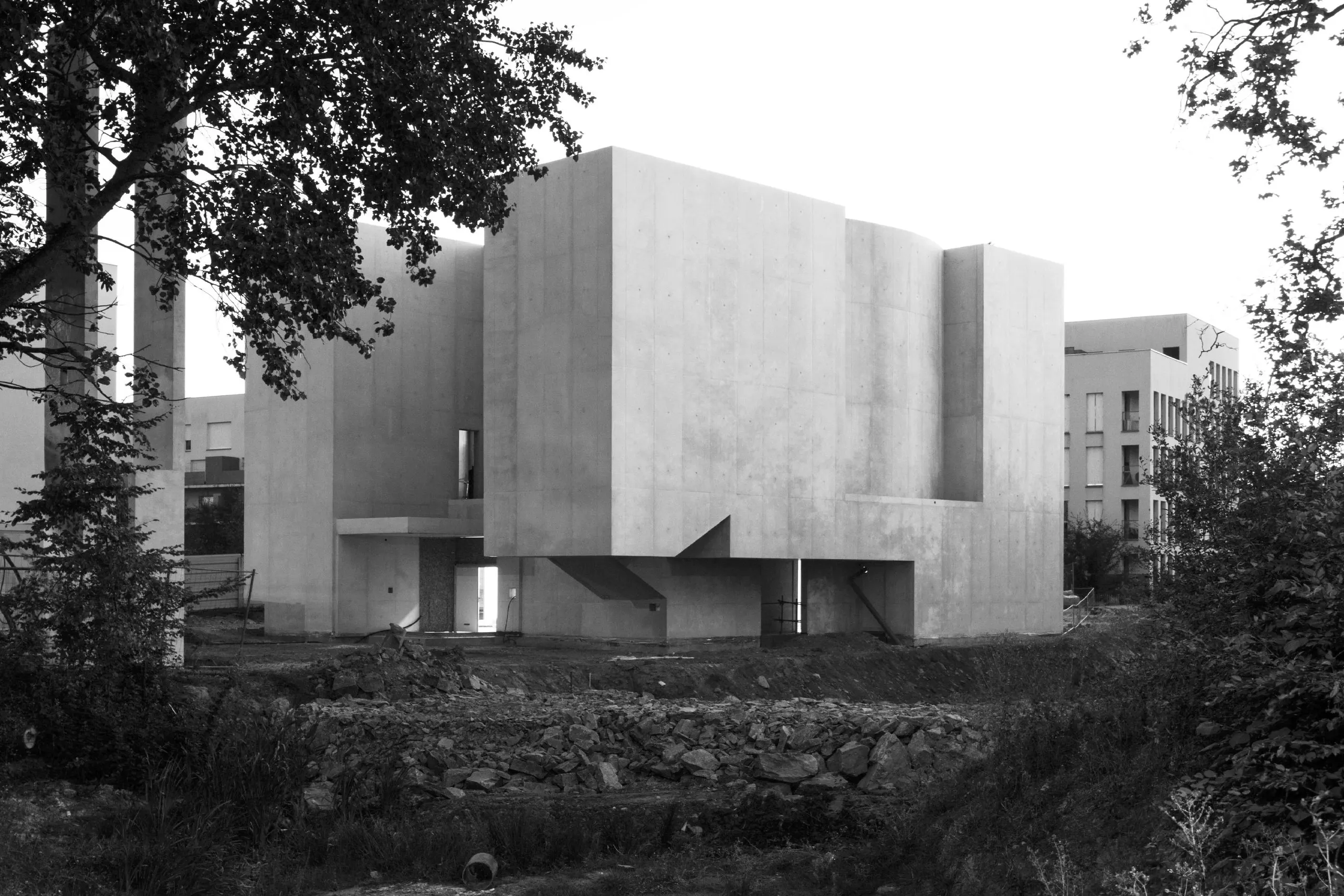
In 1998, Siza completed the Portuguese Pavilion at Expo '98 in Lisbon, celebrated for its elegant, minimal canopy that appears to float over a shaded plaza. That same year he won the Praemium Imperiale. The Serralves Museum of Contemporary Art in Porto (1999) and the Church of Santa Maria in Marco de Canaveses (1996) are among his most admired works. He has also designed projects in the Netherlands, Germany, Spain, South Korea, and Brazil.
Throughout his career, Siza has balanced practice with teaching. He taught at the University of Porto from 1966 to 1969, returned as full professor in 1976, and has lectured worldwide. In 2001 he received the RIBA Royal Gold Medal. As of 2026, he continues to run his studio in Porto and take on new commissions.
Career Timeline
Public Image & Style
Siza's public image is that of a quiet, rigorous master of modern architecture. His signature aesthetic combines white-rendered volumes, careful manipulation of natural light, and a profound sensitivity to site and landscape. Media portrayals emphasize his intellectual depth and his role as a teacher as much as his built work.
He does not have an official fandom name or fan-culture rituals typical of entertainment figures, but he commands deep respect within architectural circles and among design enthusiasts worldwide. His buildings are studied in schools and admired for their timeless quality. He is often described as shy and reserved in interviews, letting his work speak for itself.
Fame & Fandom
Álvaro Siza Vieira commands a following defined by professional reverence rather than pop-culture fervor. His admirers are primarily architects, students, and critics who view his work as a masterclass in contextual modernism, yet this audience lacks a formal collective identity or organized rituals. There is no official fandom name to attach to his supporters, nor do they engage in the coordinated campaigns, birthday tributes, or social media mobilizations typical of entertainment icons. Instead, his public presence remains a quiet dialogue between the built environment and its observers, punctuated only by isolated gestures of respect from followers on platforms like Instagram. The mythology surrounding him is rooted in the physical reality of his structures, such as the raw concrete and fluid light of the Porto School of Architecture, which has become a pilgrimage site for design students worldwide. Legends of his career focus on his rigorous approach to materiality and light, often described as sculpting with illumination, rather than viral incidents or celebrity scandals. While he maintains a low profile and rarely engages in direct fan interaction outside of academic lectures or award ceremonies, his influence persists through the enduring legacy of projects like the Casa de Chá da Boa Nova and recent developments such as the 2026 announcement of a new wing at Livraria Lello. Despite his global stature and decades of high-profile commissions across Europe, Asia, and South America, iFANN's Global Fame Engine evaluated his status in August 2026 and determined that Álvaro Siza Vieira does not currently hold a placement in the published rankings, including the Global Top 1,000 or any scope-specific list.
Interesting Facts and Legends
Siza completed his first four built houses in Matosinhos before finishing his architectural studies in 1954. His full name is Álvaro Joaquim de Melo Siza Vieira, though he is known internationally simply as Álvaro Siza. He is a central figure of the Porto School, a tradition celebrated for its modernist rigor and deep sensitivity to context. His drawings and models have been exhibited in major museums worldwide, and he maintains a modest Instagram presence at @alvaro_siza_vsp. A defining legend in architectural lore involves his rigorous approach to light and material, a theme highlighted in the documentary "The First Siza" which explores his early influences. Another frequently retold story concerns the reception of the Pritzker Prize in 1992, which cemented his status as a global icon and validated the Portuguese School. His design for the Porto School of Architecture serves as a pilgrimage site for students, celebrated for its raw concrete and dramatic play of natural light. Recent narratives include the completion of his first built project in the United States in Hell's Kitchen, noted for bringing his European sensibility to New York City, and the announcement of a new wing at the historic Livraria Lello in 2026.
Family & Personal Life
Siza married Maria Antónia Siza, and the couple has maintained a remarkably private life together. Details about their wedding date or how they met are not publicly documented. No information about children is available in public sources. The family has lived in Porto, where Siza has based his practice for decades. Their discretion stands in contrast to the public nature of his professional career.
Notable Connections
Siza is closely associated with the Porto School of architecture and its founder, Fernando Távora, with whom he worked early in his career. He has influenced countless architects through his teaching at the University of Porto. His practice has collaborated with engineers and artists across Europe and Asia, though specific names are not widely publicized.
Relationships & Dating History
Public information about Siza's romantic relationships is extremely limited. His marriage to Maria Antónia Siza is the only documented relationship in available sources. The couple's relationship has been characterized by remarkable discretion, with no public information about how they met, their wedding date, or the details of their life together.
No divorces, separations, or other romantic relationships have been publicly documented. As of 2026, based on available information, Siza remains married to Maria Antónia Siza.
- MarriedMaria Antónia SizaCurrentThe couple has maintained a private relationship throughout Siza's career.
Salary, Net Worth In 2026
$10 Million
iFANN Editorial Team estimate
As an architect rather than a commercial entertainer, Siza's net worth is not publicly documented in standard celebrity wealth databases. His income derives primarily from architectural commissions, teaching positions, and royalties from published drawings and monographs. Research by the iFANN Editorial Team puts his total estimated net worth at $10 Million. This figure reflects a long career with high-profile commissions across Europe, Asia, and South America, as well as academic salaries and honoraria from lectures. His Porto-based studio has been active for decades, and his projects include cultural institutions, residential buildings, and urban plans. While he has not engaged in major commercial ventures, his influence and reputation ensure a steady stream of work. His drawings and models are exhibited in museums, adding to his professional standing if not directly to his income.
Awards Won (3)
Siza has received some of the most prestigious honors in architecture and the arts. In 1992 he won the Pritzker Prize, often considered the Nobel Prize of architecture. In 1998 he received the Praemium Imperiale from the Japan Art Association. In 2001 he was awarded the RIBA Royal Gold Medal. These accolades recognize a career of exceptional design and influence.
1992 · Architecture
Lifetime achievement
1998 · Architecture
Lifetime achievement
Known For
Boa Nova Tea House
1963 · Architect
Leça Swimming Pools
1966 · Architect
Galician Center of Contemporary Art
1988 · Architect
Portuguese Pavilion at Expo '98
1998 · Architect
Serralves Museum of Contemporary Art
1999 · Architect
Keywords
Sources
Quick Facts
- Profession
- architect, university teacher
- Born
- June 25, 1933
- Birthplace
- Matosinhos, Portugal
- Gender
- Male
- Spouse
- Maria Antónia Siza
- Birth Sign
- Cancer
- Education
- University of Porto School of Architecture (1949–1955)
Personal Details
- Full Name
- Álvaro Joaquim de Melo Siza Vieira
- Spouse
- Maria Antónia Siza
- Education
- University of Porto School of Architecture (1949–1955)
Frequently Asked Questions
How old is Álvaro Siza?
Who is Álvaro Siza married to?
What is Álvaro Siza known for?
Where is Álvaro Siza from?
What is Álvaro Siza's net worth?
Social Media
Similar People
Join the community
fans discussing