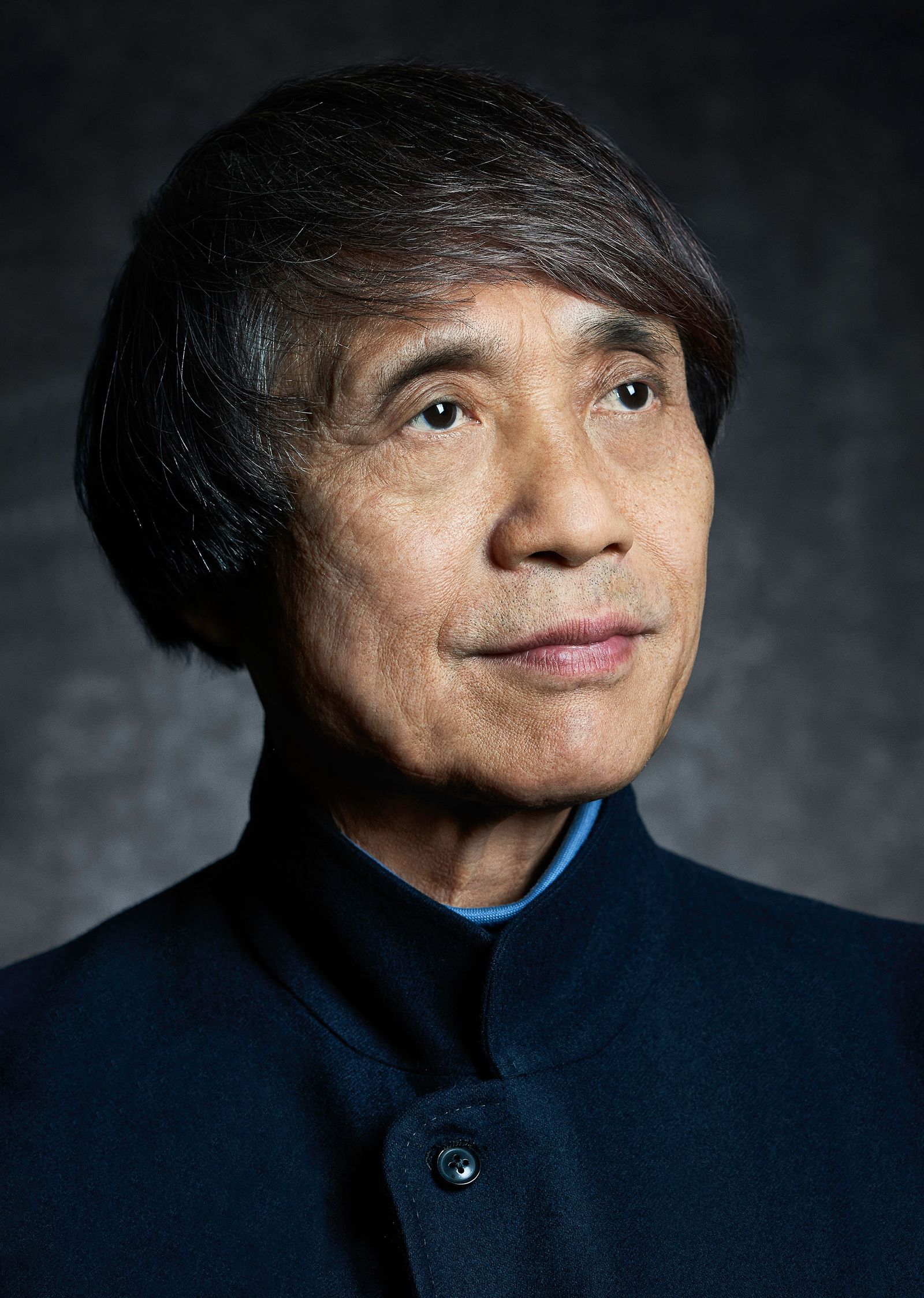
Tadao Ando
 Japan
JapanAlso known as: 安藤忠雄
Birthday
September 13, 1941
Birth Sign
Virgo
Birthplace
Osaka, Japan
Age
85 years old
About
Tadao Ando is a Japanese architect whose name is synonymous with raw concrete, geometric purity, and the poetic play of light and shadow. Born in Osaka, he rose from a self-taught background to become one of the most influential figures in contemporary architecture. His buildings, from the Church of Light to the Chichu Art Museum, are celebrated for their meditative integration with nature. Architectural historian Francesco Dal Co famously described his work as "critical regionalism," a term that captures how Ando roots modern forms in local context.
In 1995, Ando received the Pritzker Architecture Prize, the field's highest honor. As of 2026, at 84, he remains remarkably active, leading projects like the new Naoshima museum and collaborating on design objects. His disciplined, philosophical approach has inspired a generation of architects, and his structures continue to draw pilgrims from around the world.
Early Life & Background
Tadao Ando's path to architecture was anything but conventional. Born in Minato-ku, Osaka, he grew up in a working-class neighborhood, the twin brother of a family that ran a small business. As a teenager, he worked as a boxer, a profession that taught him discipline and resilience. He never attended a single architecture class. Instead, he educated himself by reading books, visiting temples and shrines in Kyoto and Nara, and traveling extensively across Japan, Europe, and the United States.
In his early twenties, Ando spent nights studying blueprints and days observing buildings firsthand. He apprenticed briefly with a carpenter and a designer, but his real education came from direct experience. By 1969, he had established Tadao Ando Architectural & Associates in Osaka, ready to apply his unconventional vision to residential projects.
Career Growth
Ando's breakthrough came in 1976 with the Row House in Sumiyoshi (Azuma House), a narrow concrete residence in Osaka that challenged traditional notions of domestic space. The house, with its open courtyard, brought him national attention and the Annual Prize of the Architectural Institute of Japan in 1979.
International recognition followed. In 1989, he completed the Church of Light in Ibaraki, a masterpiece of concrete and light that became a pilgrimage site for architecture lovers. The 1990s brought the Japan Pavilion at the Seville Expo (1992) and the Pritzker Prize in 1995. He then reshaped Naoshima Island, a former industrial site, into a world-renowned art destination, with projects like the Chichu Art Museum (2004) and the Benesse House. His later works include the Pulitzer Arts Foundation in St. Louis (2000), the renovation of the Bourse de Commerce in Paris (2021), and the Wrightwood 659 gallery in Chicago. In 2026, he continues to push boundaries with a new earth-sheltered museum on Naoshima.
Career Timeline
Public Image & Style
Ando's public persona is that of a disciplined, philosophical master craftsman. Media portrayals often emphasize his self-taught genius and his relentless forward-looking work ethic, captured in his quote: "Once you look back, it's already over." His signature aesthetic, raw concrete, geometric precision, and dramatic light, has become instantly recognizable and widely imitated. He is seen as a humble figure who lets his buildings speak, yet his influence on contemporary biophilic design is profound. He has no official fandom name, but his works attract devoted followers who travel to remote sites like Naoshima to experience his spaces.
Fame & Fandom (iFAMOUS Rankings)
Tadao Ando stands as a disciplined master of raw concrete and light, his influence rippling through the global design community rather than the pop charts. He is currently the 85th most famous person in Art & Design, a position he has held steady since the previous cycle according to the iFANN Global Fame Rankings. This placement reflects a career spanning five decades where his work on Naoshima Island and his stark spiritual structures have defined a generation of architectural thought. While he lacks a formal fanbase with a specific moniker or organized streaming campaigns, his supporters are architecture students, critics, and enthusiasts who treat his buildings as pilgrimage sites. These visitors travel to experience the interplay of silence and space in projects like the Church of Light, engaging in rituals of observation that mirror religious devotion without the dogma. The narrative surrounding him is less about celebrity gossip and more about the mythos of the autodidact boxer who mastered the craft through global travel before opening his studio in Osaka at age 28. Recent stories involving high-profile collaborations, such as the complex saga of a Malibu mansion for Kanye West, have added layers to his legend, highlighting the friction between precise artistic vision and regulatory reality. His audience does not chant slogans but studies his formwork and learns from his philosophy that architecture should remain silent to let nature in.
Interesting Facts and Legends
Before stepping behind the drafting table, Tadao Ando was a professional middleweight boxer, a discipline he credits for his later rigor. He never attended architectural school, a fact he embraces as proof of his self-taught mastery. His signature aesthetic relies on unfinished reinforced concrete with precise formwork, often paired with water features that reflect the sky. Light acts as a primary material in his designs, sculpting space through sharp cuts and deep shadows. Beyond his buildings, Ando collects ceramic vases, including his "Cosmos - Cristallo" set which has appeared at auction. He maintains a rare Twitter presence, posting only professional updates when necessary. A persistent legend tells of his transition from boxing ring to construction site, a journey that took him through New York, London, and Rome before he returned to Japan to take the architect's exam. Another enduring story centers on the Church of Light in Ibaraki, where a simple cross-shaped cutout in a concrete wall creates a profound spiritual atmosphere without traditional iconography. More recently, the architectural world has watched the unfolding drama of his collaboration with Kanye West on a Malibu beach house, a project marked by legal disputes and cost overruns that remains in limbo as of April 2026.
Notable Quotes
“Once you look back, it's already over.”
Family & Personal Life
Ando has kept his family life intensely private. There is no public record of his parents, siblings, spouse, or children. He was born in Osaka to a family that supported his early interests, but details remain scarce. His twin brother, if any, is not publicly documented. Throughout his career, Ando has chosen to let his work speak, rarely discussing personal matters in interviews. His family, whatever its composition, has stayed out of the limelight, and he has never publicly acknowledged a partner or children.
Notable Connections
Ando has collaborated with a range of figures, from art director Soichiro Fukutake on the Naoshima projects to Kanye West, who commissioned a Malibu beach house. Architectural historian Francesco Dal Co coined the term "critical regionalism" to describe his work. His practice has also partnered with institutions like the Benesse Corporation and the Pulitzer Arts Foundation.
Relationships & Dating History
Tadao Ando has kept his personal life remarkably private. There is no public record of marriages, divorces, or romantic relationships in credible sources. Unlike many public figures, he has never discussed a partner or family in interviews. His professional identity as a self-taught architect from Osaka dominates his public narrative, and as of 2026, his relationship status remains unknown. He has no known dating history.
Salary, Net Worth In 2026
$50 Million
iFANN Editorial Team estimate
iFANN currently estimates Tadao Ando's net worth at $50 Million. This financial standing derives primarily from architectural commissions that command premium fees for cultural institutions and private residences worldwide. His income streams also include teaching engagements, lectures, and select design collaborations, such as a 2026 watch featuring a leaf-shaped hour hand. Additional revenue sources include the auction appearances of his three-piece vase set "Cosmos - Cristallo." With an active practice spanning over five decades and hundreds of projects across the globe, his wealth reflects the enduring influence of his work in contemporary architecture.
Awards Won (13)
Ando's awards span a lifetime of achievement. He won the Pritzker Prize in 1995, architecture's highest honor, along with the AIA Gold Medal, the Praemium Imperiale, and the Kyoto Prize. His international recognition includes the French Academy's Gold Medal and the U.S. State Department's International Medal of Arts. In 2021, Japan named him a Person of Cultural Merit.
1995 · Architecture
Lifetime achievement
2002 · Architecture
Lifetime achievement
Known For
Church of Light
1989 · Architect
Chichu Art Museum
2004 · Architect
Row House in Sumiyoshi
1976 · Architect
Naoshima Island projects
1988-present · Architect
Bourse de Commerce
2021 · Architect
Keywords
Sources
Quick Facts
- Profession
- Architect
- Born
- September 13, 1941
- Birthplace
- Osaka, Japan
- Gender
- Male
- Birth Sign
- Virgo
- Education
- Self-taught
- Awards
- Pritzker Prize (1995), AIA Gold Medal (2002)
Personal Details
- Full Name
- Tadao Ando (安藤 忠雄)
- Education
- Self-taught; no formal architectural training
Frequently Asked Questions
Is Tadao Ando self-taught?
What is Tadao Ando's most famous building?
How old is Tadao Ando?
What materials does Tadao Ando use?
Did Tadao Ando win the Pritzker Prize?
Social Media
Similar People
Join the community
fans discussing