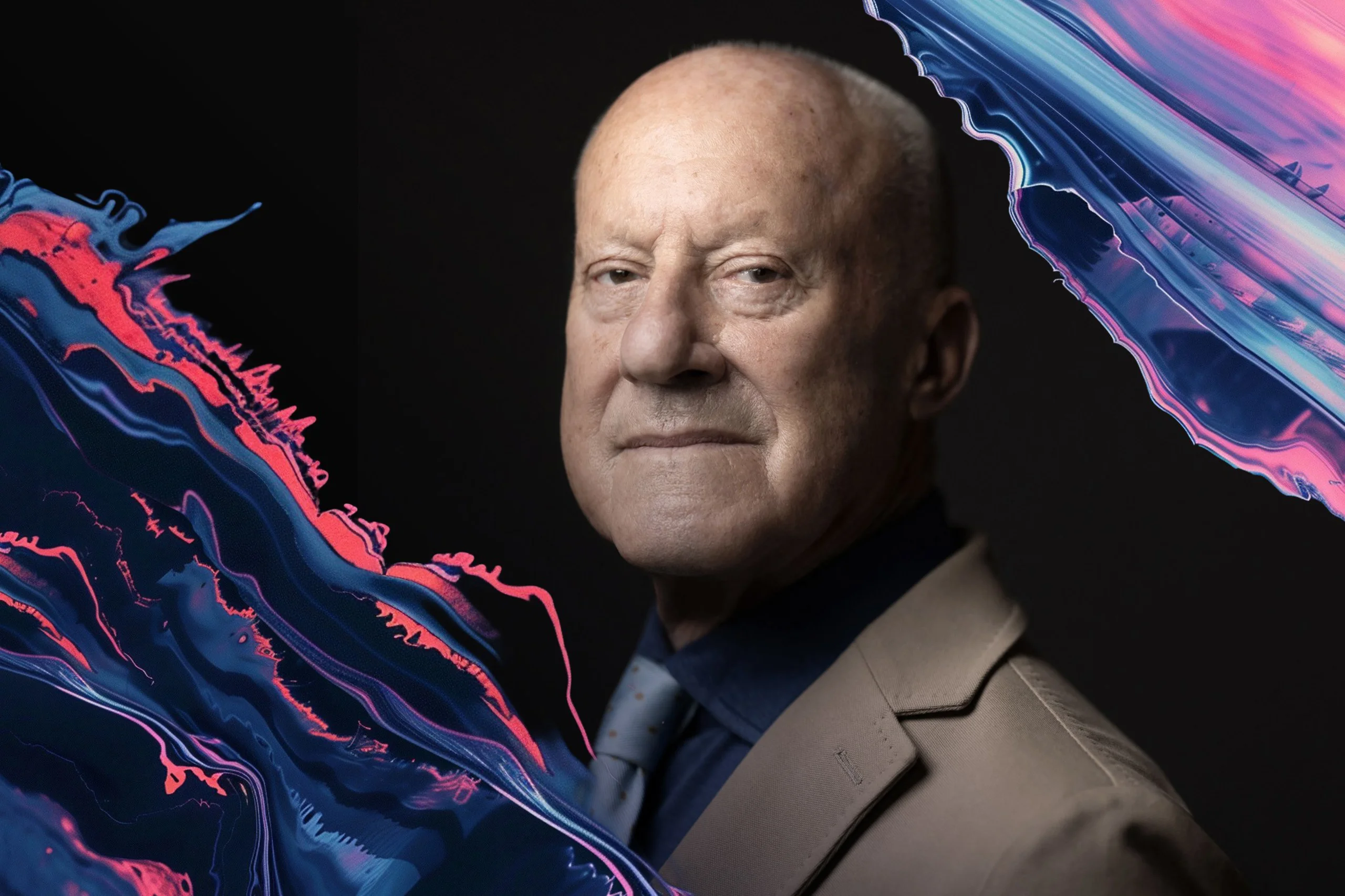
Norman Foster
 United Kingdom
Also known as: Lord Foster, Baron Foster of Thames Bank, Norman Robert Foster
Birthday
June 1, 1935
Birth Sign
Gemini
Birthplace
Stockport, Greater Manchester, England
Age
91 years old
About
Norman Foster is an English architect and urbanist, Baron Foster of Thames Bank, and the founder and chairman of Foster + Partners, the London studio he started in 1967 and which is now the largest architectural practice in the United Kingdom. He is the 21st laureate of the Pritzker Architecture Prize, awarded in 1999, and holds the RIBA Royal Gold Medal (1983) and the AIA Gold Medal (1994).
His buildings are the ones people photograph without knowing who drew them: the HSBC Building in Hong Kong, the glass dome on the Reichstag in Berlin, 30 St Mary Axe in London, the Great Court at the British Museum, and Apple Park in Cupertino. The practice describes itself as a global studio for sustainable architecture, urbanism, engineering and design, and Foster, at 91, still leads it. In 2026 alone the studio revealed the World Trade Center Yerevan development in Armenia, completed a €45 million wing for the Bilbao Fine Arts Museum, and worked on a Murano glass revival with Barovier&Toso.
What sets him apart is range and stamina. Few architects of his generation have kept a practice of that scale running past ninety, and fewer still have moved the studio's centre of gravity toward environmental planning through the Norman Foster Foundation and the Norman Foster Institute. British teenagers meet his steel-and-glass approach in the Design and Technology GCSE syllabus, which is a strange kind of fame for a working architect.
Early Life & Background
Foster arrived in the world on 1 June 1935, and the sources disagree on exactly where: the profile tradition says Stockport in Greater Manchester, while the Pritzker Prize biography and Britannica give Manchester. Either way, the household was working class, a detail he has never been shy about, and it shaped the trajectory that followed.
He took his first degree in architecture at the University of Manchester, then crossed the Atlantic for a master's at Yale. Yale is where the story turns. Richard Rogers was there, and the two of them fell in with the same small group of students who wanted to build with industrial materials rather than brick and stone. That friendship would matter more than any classroom.
Back in England, Foster and Rogers co-founded Team 4 with Wendy Cheesman and Su Brumwell. The collective lasted only a few years, but it pushed British practice toward open planning and off-the-shelf components, and it gave Foster the taste for running his own operation. In 1967 he left to set up Foster Associates. The name would change later; the ambition did not.
The first commissions were modest. A small studio, a factory, a handful of houses. What mattered was the method: test the structure, strip the detail, let the engineering show. By the time the Ipswich and Norwich jobs arrived he had a working vocabulary, and the practice had a reputation. Everything after that is a matter of scale.
Career Growth
Foster Associates became Foster + Partners, and the firm's rise tracked a series of buildings that each reset what a British practice could win. The Willis Faber and Dumas Headquarters in Ipswich and the Sainsbury Centre for Visual Arts in Norwich established the early language: glass curtain walls, exposed structure, floors left open. The 1985 HSBC Building in Hong Kong was the international breakthrough, a tower hung from an external steel frame rather than propped on an internal core.
Commissions then came at a different level. The Reichstag reconstruction in Berlin put a glass dome over the German parliament. 30 St Mary Axe, finished in 2004 and known to everyone as the Gherkin, became the most recognisable addition to the London skyline in a generation. The Queen Elizabeth II Great Court at the British Museum turned a forgotten courtyard into a public room. Apple Park in Cupertino, completed in 2017, wrapped a corporate campus into a single ring.
The 2020s have not slowed the output. In October 2026 the studio revealed designs for the World Trade Center Yerevan development in Armenia, and the Bilbao Fine Arts Museum opened a new €45 million Foster-designed wing, reported on 6 October 2026. A rendering of the proposed new AC Milan and Inter stadium was expected in late October 2026. Alongside the buildings, the studio has branched into product and craft work, including a Murano glass revival with Barovier&Toso reported on 23 October 2026, and Foster launched a journal, Insights, whose first issue was covered by World-Architects on 24 September 2026.
He has also spent the last decade arguing publicly for denser, greener cities, and the Norman Foster Foundation and the Norman Foster Institute carry that work forward. The Financial Times ran a feature on 6 October 2026 on how he turned the classic architect's studio into a global operation, which is as good a one-line summary of the career as any.
Career Timeline
Public Image & Style
Foster's public presence is that of the elder statesman who never quite retired. He wears dark, plain tailoring, usually a suit without fuss, and he speaks in measured, slightly relentless paragraphs about density, infrastructure and the future of cities. The media treat him as the go-to British architect for a quote on anything from airport design to climate policy, and he obliges.
His studio's visual signature is easy to spot and hard to mistake: glass, steel, exposed structure, a preference for the engineered joint over the decorative flourish. Critics who dislike high-tech architecture use his buildings as the example. Supporters point out that the same approach produced the Reichstag dome and the Great Court, two of the most visited interiors in Europe.
He has become, in the 2020s, a more explicitly political figure in design circles, arguing that architects have a duty to address the climate and housing crises. That shift has softened the technocratic image somewhat, though the suits and the steel have not changed.
Fame & Fandom (iFAMOUS Rankings)
iFANN has not yet collected fame data for Norman Foster, so no placement in the Global Fame Rankings can be stated here. The rankings measure worldwide attention across public signals such as Wikipedia readership and global search interest; Foster is evaluated by that engine but is not currently in the Top 1,000. He is also not on the September 2026 iFAMOUS Rankings flagship list.
His audience is not a fandom in the pop-culture sense and has no formal name. It is instead a professional and civic one: architecture students, practising architects, city planners, and the considerably larger group of people who have stood under the Reichstag dome or walked the Great Court without ever learning who designed them. The buildings do the recruiting. Foster's Instagram account, @officialnormanfoster, functions as a quiet studio diary, posting project photography and the occasional site visit rather than personal content, and the comment sections fill with students asking about detailing.
Fan behaviour in this world looks like pilgrimage. People travel to Ipswich to see the Willis Faber building, to Norwich for the Sainsbury Centre, to Cupertino to circle Apple Park. When La Voile, his former Riviera house, was listed for €29.5 million in September 2026, the coverage ran in design media rather than property pages, which tells you who was paying attention.
Interesting Facts and Legends
His full title is Baron Foster of Thames Bank, of Reddish in the County of Greater Manchester, a life peerage granted in 1999, the same year as the Pritzker.
The Gherkin is not its name. 30 St Mary Axe is the address, and the nickname stuck so hard that the building's actual title is now the less-used of the two.
He designed a house for himself on the French Riviera, a steel-and-glass structure called La Voile, and it came onto the market in September 2026 with an asking price of €29.5 million. Few architects get to list their own former home as a trophy property.
Foster appears in the Design and Technology AQA GCSE syllabus, which means British schoolchildren study his steel-and-glass approach whether or not they intend to become architects.
Search engines have a persistent confusion problem: queries for the film director Norman Foster, who worked in Hollywood from the 1930s to the 1970s and died in 1976, regularly surface the architect instead. The two men are unrelated.
Notable Quotes
“We have power. And we should use it.”
Family & Personal Life
Foster was married to Wendy Cheesman, an architect and one of the four founding members of Team 4. She died in 1989. His second wife is Elena Ochoa, a Spanish psychotherapist and art publisher, whom he married in 1996; the pair have long been based in Madrid, and his Instagram account lists that city as its location. The marriage made him a fixture of the Spanish art world as well as the British architectural one.
He has children from his first marriage. Beyond that, he has kept the domestic side of his life largely out of the press, and the published record is thin on detail. What is documented is the household's taste in houses: La Voile, the steel-and-glass retreat he built for himself on the French Riviera, is the clearest public statement of how he wanted to live, and it went on the market in September 2026 for €29.5 million.
Notable Connections
Richard Rogers, with whom he co-founded Team 4 before either man became famous. Wendy Cheesman, architect and Team 4 co-founder, who became his first wife. Elena Ochoa, his second wife and a publisher in the Madrid art world. The practice itself, Foster + Partners, which he founded in 1967 and still chairs, and the Norman Foster Foundation and Norman Foster Institute, which carry his urban-planning advocacy.
Relationships & Dating History
Foster's first marriage was to Wendy Cheesman, an architect and one of the four founders of Team 4 alongside Foster, Richard Rogers and Su Brumwell. The couple married in the early 1960s, before Foster Associates existed, and the partnership ran through the lean early years of the practice. Cheesman died in 1989, ending the marriage after roughly a quarter of a century.
He married Elena Ochoa in 1996. Ochoa is a Spanish psychotherapist who became a publisher and a significant figure in the Madrid art world, and the marriage moved Foster's centre of gravity partly to Spain. The pair have been together for three decades and are regularly photographed at gallery openings and architecture events. As of 2026, Foster is married to Elena Ochoa.
The published record does not document other long-term relationships. Foster has kept his personal life out of the tabloids to a degree unusual for someone of his profile, and no credible reporting fills the gaps between the two marriages.
- MarriedWendy Cheesman1960 - 1989Architect and fellow Team 4 founder; the marriage ended with her death in 1989.
- MarriedElena Ochoa1996 - presentCurrentSpanish psychotherapist and art publisher; the couple are long based in Madrid.
Salary, Net Worth In 2026
$240 Million
iFANN Editorial Team estimate
Foster's fortune rests less on any single fee than on fifty-nine years of running a practice that became the largest in Britain. Foster + Partners employs well over a thousand people across studios in London and around the world, and the fee income from a portfolio that includes HSBC Hong Kong, the Reichstag, the Gherkin, the British Museum Great Court and Apple Park is the foundation of everything else. Major commissions of that size are typically billed in the tens of millions, and the studio has collected them for four decades.
Beyond architecture, the revenue streams are varied. Product and furniture design, licensing arrangements, and craft collaborations such as the Murano glass work with Barovier&Toso reported in October 2026 all feed the practice's balance sheet. The Norman Foster Foundation operates separately as a cultural and research institution, and the Norman Foster Institute trains planners, but the commercial engine remains the studio.
Property makes up a visible slice of the personal balance sheet. La Voile, the steel-and-glass house he built for himself on the French Riviera, was listed in September 2026 at €29.5 million, which gives a rare public read on the value of his residential work. His long-standing base in Madrid with Elena Ochoa adds to the real-estate picture.
Research by the iFANN Editorial Team puts Norman Foster's net worth at approximately $240 million as of 2026. The figure reflects the accumulated value of the practice, decades of international commissions, design licensing and property holdings rather than any recent windfall. At 91 he shows no sign of stepping back, and the 2026 pipeline, from Bilbao to Yerevan to the proposed Milan stadium, suggests the studio's earning power is intact.
Awards Won (3)
Foster holds the three prizes that define an architectural career: the RIBA Royal Gold Medal (1983), the AIA Gold Medal (1994) and the Pritzker Architecture Prize (1999), where he was the 21st laureate. He was knighted in 1990 and elevated to the House of Lords in 1999 as Baron Foster of Thames Bank. He is also an Academy of Achievement honoree.
1999 · Architecture
Lifetime achievement, 21st laureate
1994 · Architecture
Lifetime achievement
Known For
30 St Mary Axe (the Gherkin)
2004 · Architect
HSBC Building, Hong Kong
1985 · Architect
Reichstag dome, Berlin
1999 · Architect
Apple Park, Cupertino
2017 · Architect
Queen Elizabeth II Great Court, British Museum
2000 · Architect
Keywords
Sources
Quick Facts
- Profession
- architect, urbanist, designer
- Born
- June 1, 1935
- Birthplace
- Stockport, Greater Manchester, England
- Gender
- Male
- Spouse
- Elena Ochoa
- Birth Sign
- Gemini
- Title
- Baron Foster of Thames Bank
- Practice
- Foster + Partners, founded 1967
Personal Details
- Full Name
- Norman Robert Foster
- Spouse
- Elena Ochoa
- Education
- University of Manchester; Yale University
Frequently Asked Questions
What is Norman Foster most famous for?
How old is Norman Foster?
What is Norman Foster's net worth in 2026?
Is Norman Foster still working in 2026?
Who is Norman Foster married to?
Social Media
Similar People
Join the community
fans discussing