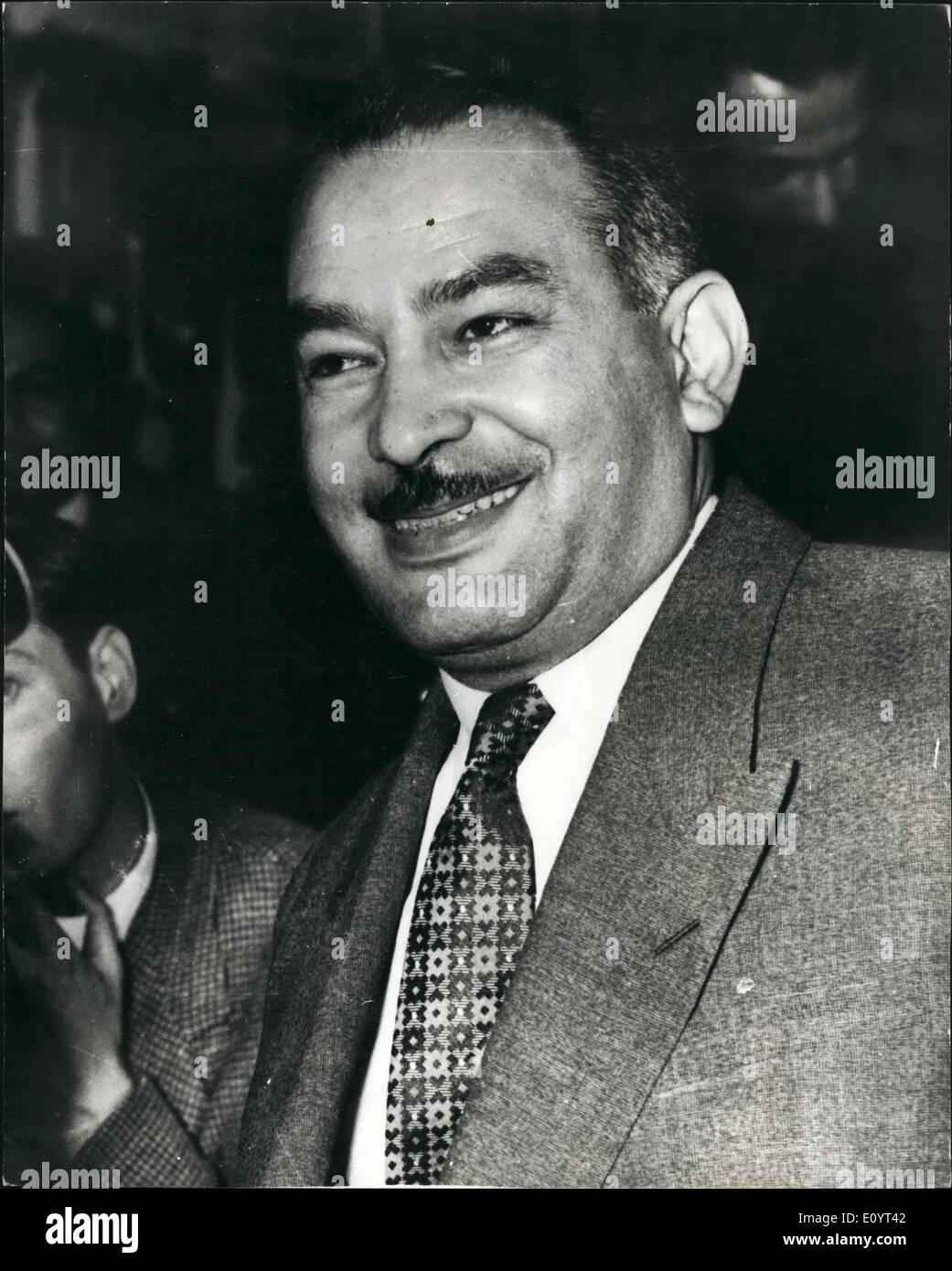
Ali Sabri
 Egypt
EgyptBirthday
August 30, 1920
Birth Sign
Virgo
Birthplace
Sharqia Governorate, Egypt
Age
Died at 70
About
Ali Sabri was an Egyptian politician of Turkish origin who served as the fifth vice president of Egypt from 1965 to 1968 and again from 1970 to 1971. He was a key figure in the Nasser era, navigating the country through the Six-Day War and its aftermath. His political career ended in 1971 when President Anwar Sadat consolidated power, removing many Nasser loyalists.
Sabri came from one of Egypt's old, respected families and was educated at a Catholic school in Cairo, placing him among the Western-educated elite. He passed away on August 3, 1991, in Cairo, leaving behind a legacy as a statesman during a turbulent period of modern Egyptian history.
Early Life & Background
Ali Sabri was born on August 30, 1920, in the Sharqia Governorate of Egypt, into a prominent family of Turkish descent. His upbringing in this influential household provided him with connections and opportunities from an early age. He attended a Catholic school in Cairo, an unusual choice for a Muslim politician of his era, which gave him a Western-style education and fluency in foreign languages.
This educational background set him apart from many of his peers and helped him build a reputation as a capable administrator. By the time he entered politics, he was already viewed favorably within Egyptian circles, as noted in a declassified CIA document from the Cold War era. The document describes him as coming from an old, respected family and being part of the country's political elite.
His early career in public service is not well-documented, but his family's standing and education positioned him for a rise during the Nasser years. He became part of the inner circle of Gamal Abdel Nasser, who came to power in the 1950s, and his pre-fame life laid the groundwork for his later role as vice president.
Career Growth
Ali Sabri's political career reached its peak during the presidency of Gamal Abdel Nasser. He served as the fifth vice president of Egypt from 1965 to 1968, a period that included the Six-Day War of 1967 and its aftermath. His role during this critical time placed him at the center of Egypt's governance during a major regional conflict.
After a brief hiatus, he returned to the vice presidency from 1970 to 1971, this time under Nasser's successor, Anwar Sadat. However, his second term was short-lived. In 1971, Sadat launched the Corrective Revolution, a political purge that removed many Nasser-era officials from power, and Sabri's career came to an abrupt end. He was among those sidelined as Sadat consolidated his authority.
Despite his removal from office, Sabri's service during the Nasser years left a lasting mark on Egypt's political history. He was part of a generation of leaders who shaped the country's post-independence trajectory, and his career is remembered as emblematic of the Nasserist era.
Career Timeline
Public Image & Style
Ali Sabri is remembered primarily as a Nasser-era statesman who served during a critical period of Egyptian history. His public image is that of a capable administrator and loyalist to Gamal Abdel Nasser, who played a role in the country's governance during the Six-Day War and its aftermath. He does not have a contemporary fandom, but he is referenced in historical and political contexts as a figure from Egypt's post-independence leadership. His legacy is preserved through encyclopedia entries and archival records, including the declassified CIA document that profiles him.
Fame & Fandom
Ali Sabri remains a figure of historical significance rather than contemporary celebrity, operating in the realm of statecraft where his influence was measured by diplomatic maneuvering and political stability. His legacy is anchored in the Nasser era, specifically his tenure as Vice President during the Six-Day War and the subsequent geopolitical realignments that defined the region. Despite his high office, he does not currently hold a placement in the published Global Top 1,000 or any Top-100 scope list maintained by iFANN's Global Fame Engine. This evaluation reflects a status where his fame is preserved within academic and historical archives rather than active public consumption metrics. The absence of a formal ranking indicates that while his name appears in biographical records, it does not generate the sustained global search volume or media coverage required for current inclusion in the top tiers of the engine's database. There is no documented fandom name associated with Ali Sabri, nor are there organized fan groups, ritualistic celebrations, or digital campaigns dedicated to his memory. Unlike modern entertainers who cultivate loyal followings through social media interaction, Sabri's audience consists of historians and students of Middle Eastern politics. His story is one of quiet service and complex diplomacy, lacking the viral moments or legendary anecdotes that typically spark a devoted fanbase. While some might recall his role in advising Soviet leadership during the Cold War, these events are treated as historical facts rather than folklore. The lack of a specific fan community underscores his position as a statesman whose work was done behind closed doors, leaving a legacy of governance rather than a following of admirers.
Interesting Facts and Legends
Born into one of Egypt's old, respected families, Ali Sabri was of Turkish origin, reflecting the significant Turkish influence in Egypt's political elite during the 20th century. He received his education at a Catholic school in Cairo, a notable detail for a Muslim politician of his time. A CIA document from the Cold War era profiles him, indicating that American intelligence closely tracked Egyptian political figures. His second term as vice president ended in 1971, the same year Sadat's Corrective Revolution purged many Nasser loyalists. Historical accounts note his role in advising Soviet leader Brezhnev to increase military support to Egypt amidst US and Israeli pressure, a moment of high-stakes diplomacy that defined his career. Though he did not have a personal legend in the pop-culture sense, his ability to navigate the turbulent aftermath of the Six-Day War remains a key part of his biography. He passed away on August 3, 1991, in Cairo, leaving behind a legacy as a statesman during a turbulent period of modern Egyptian history.
Family & Personal Life
Details about Ali Sabri's family life are scarce in available sources. He came from a prominent Egyptian family of Turkish descent, which was part of the country's old, respected elite. His family's standing helped him gain access to education and political circles. Specific information about his parents, siblings, spouse, or children has not been documented in the accessible records. He lived during a time when personal details of politicians were not widely publicized, and his focus remained on his political career.
Notable Connections
Ali Sabri is associated with the presidencies of Gamal Abdel Nasser and Anwar Sadat, under whom he served as vice president. His political career was intertwined with the Nasserist era, and he was part of the generation of leaders who shaped Egypt's post-independence trajectory. He is also referenced in declassified CIA documents, indicating his significance to international observers during the Cold War.
Relationships & Dating History
There is no documented information about Ali Sabri's romantic relationships or marriages. As a historical political figure from mid-20th century Egypt, his personal life was not widely covered in the available sources. The focus of the records is on his political career, and no details about his dating history or family relationships have been found.
Death & Aftermath
Died
August 3, 1991 (aged 70)
Death Place
Cairo, Egypt
Cause of Death
Internal bleeding
Ali Sabri, the former Egyptian Vice President (serving 1965, 1968 and 1970, 1971), died on August 3, 1991, in Cairo, Egypt. He was 71 years old at the time of his death. According to a report by The Washington Post published two days after the event, Sabri died of internal bleeding. There are no conflicting reports in the provided sources regarding the date, location, or cause of death for the Egyptian politician; however, other individuals named Ali Sabri or Ali Sabry (including Sri Lankan politicians and musicians) are alive or have died under different circumstances in later years, which must be distinguished from this historical event. The sources do not mention any disputes surrounding his final days or the circumstances of his passing.
The provided search results do not contain specific details regarding public tributes, vigils, moments of silence, or memorial murals dedicated to Ali Sabri following his death in 1991. While he held significant political office, the available text snippets focus primarily on biographical data and recent news concerning other individuals with similar names. Details regarding the timing, location, or nature (public vs. private) of Ali Sabri's funeral or memorial service are not included in the search results. Regarding the handling of his estate, no information is available in the search results.
Net Worth (Estate Value)
$1 Million
iFANN Editorial Team estimate
As a deceased political figure from mid-20th century Egypt, Ali Sabri's net worth is not well-documented. He was a politician and vice president, a role that typically carried a government salary but not vast personal wealth. There is no public record of his estate or its earnings since his death. His financial legacy is not a subject of public interest. Based on the limited information, iFANN currently estimates his net worth to be $1 Million, reflecting his career in public service rather than business.
Awards & Accolades
Known For
Vice President of Egypt
1965-1968, 1970-1971 · Vice President
Keywords
Sources
Quick Facts
- Profession
- Politician
- Born
- August 30, 1920
- Birthplace
- Sharqia Governorate, Egypt
- Died
- August 3, 1991
- Death Place
- Cairo, Egypt
- Gender
- Male
- Birth Sign
- Virgo
- Ethnicity
- Turkish
Personal Details
- Full Name
- Ali Sabri
- Education
- Catholic school in Cairo
Frequently Asked Questions
Who was Ali Sabri?
When was Ali Sabri born and when did he die?
What was Ali Sabri's net worth?
Why is Ali Sabri famous?
Was Ali Sabri of Turkish origin?
Similar People
Join the community
fans discussing