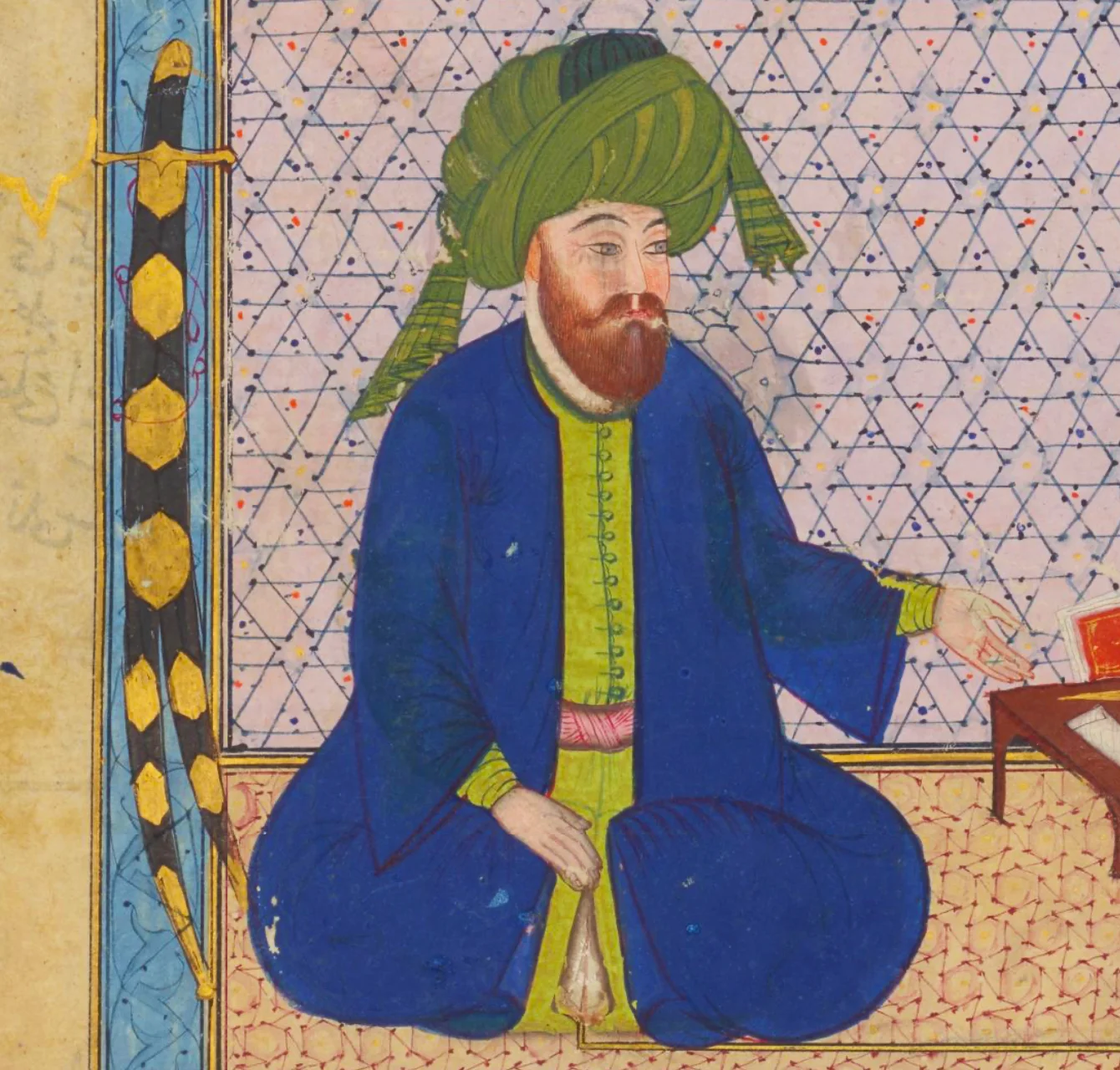
Husayn ibn Ali
religious leader•military commander•theologian•poet
Also known as: Imam Husayn, Sayyid al-Shuhada
Birthday
January 11, 626
Birth Sign
Capricorn
Birthplace
Medina
Age
Died at 54
About
Husayn ibn Ali was an Arab religious leader, the third Imam of Shia Islam, and a grandson of the Prophet Muhammad. He is renowned for his stand at Karbala in 680 CE, a pivotal event that reshaped Islamic history and continues to inspire millions. For Shia Muslims, Husayn is the prince of martyrs, embodying righteous struggle against tyranny, while Sunni tradition also honors him as a revered member of the Prophet's household. His refusal to pledge allegiance to the Umayyad caliph Yazid I and his subsequent martyrdom transformed a military defeat into a spiritual victory. Today, millions commemorate his sacrifice during Muharram, particularly on Ashura, through processions, poetry, and passion plays, ensuring his story remains vibrant and influential in devotional piety and resistance movements across the Muslim world.
Early Life & Background
Born in Medina on January 11, 626, Husayn ibn Ali ibn Abi Talib was the second son of Ali ibn Abi Talib and Fatima, the Prophet Muhammad's daughter. As a cherished grandson of the Prophet, Husayn grew up within Muhammad's own household, immersed in the formative years of Islam and surrounded by its founding generation. His revered grandfather doted on him and his older brother, Hasan, famously bestowing upon them the tender epithet, "the two sweet-scented flowers of this world." This unique upbringing provided Husayn with direct exposure to the Prophet's teachings and the early community's spiritual foundations.
Following the Prophet's death in 632, the political landscape of the nascent Islamic state grew increasingly complex. Husayn's father, Ali, emerged as a central figure in the early caliphate, and Husayn witnessed firsthand the intense political turmoil that unfolded. His involvement in public life began early; during the First Fitna, the civil war that raged between 656 and 661, Husayn fought bravely alongside his father in significant engagements such as the battles of the Camel and Siffin, gaining invaluable experience in leadership and conflict.
The assassination of his father, Ali, in 661 marked a pivotal moment. Subsequently, Husayn's older brother, Hasan, negotiated a peace treaty with Muawiya I, the Umayyad governor of Syria, to bring an end to the civil strife. Husayn, demonstrating his commitment to peace and stability, honored that treaty. He chose to withdraw from active politics, settling back in his hometown of Medina. For the next nine years, he dedicated himself to religious study and teaching, patiently cultivating a reputation for profound piety and quiet, principled leadership within the community.
Career Growth
Husayn's defining moment came after Muawiya's death in 680. His son Yazid demanded allegiance from Husayn, but Husayn refused, viewing Yazid as an unjust ruler who violated Islamic principles. He left Medina for Mecca in April 680, then accepted an invitation from the pro-Alid faction in Kufa to lead them against Umayyad rule. With about seventy-two companions, including women and children, he set out for Kufa. Near Karbala, a town in present-day Iraq, a 1,000-strong Umayyad force intercepted his caravan. Forced to camp on the arid plain, Husayn negotiated for days with the governor Ubayd Allah ibn Ziyad, who demanded unconditional surrender. On October 10, 680, the tenth of Muharram, the Umayyad army, estimated between 4,000 and 30,000, attacked. Husayn and his male relatives and companions were killed; the survivors were taken captive. The massacre sparked the Second Fitna, with Kufans launching two avenging campaigns that destabilized the Umayyad Caliphate.
Career Timeline
Public Image & Style
For Shia Muslims, Husayn is the perfect martyr: a righteous leader who chose death over submission to tyranny. His image is one of unwavering faith, courage, and compassion. The annual Ashura rituals transform grief into a communal reaffirmation of justice. In popular culture, Husayn's story is told through poetry, especially the elegies known as marsiya and nauha, and through ta'ziyeh, a dramatic reenactment. Sunni tradition also honors him as a member of the Prophet's household, though without the same ritual mourning. In modern times, Husayn's stand at Karbala has been invoked by political and social movements as a symbol of resistance against oppression, transcending sectarian boundaries.
Fame & Fandom (iFAMOUS Rankings)
Husayn ibn Ali commands a following of hundreds of millions, defined not by commercial clubs but by the profound devotion of Shia Muslims and revered Sunnis who gather for rituals like Ashura and the massive Arbaeen pilgrimage. This global assembly, often described as a river of humanity moving from Najaf to Karbala, represents one of the largest annual peaceful gatherings in history, where followers engage in charity, mourning, and the recitation of elegies such as marsiya and nauha. His legacy transforms grief into a communal reaffirmation of justice, with his shrine in Karbala serving as a central destination for millions despite periods of persecution. Within this vast landscape of religious adherence, his standing is quantified by modern metrics that track global attention across media coverage, search, and consumption signals worldwide. Husayn ibn Ali is currently the 24th most famous person in Religious Leaders, a position holding steady from the previous cycle according to the iFANN Global Fame Rankings. This placement reflects the enduring impact of his story, which remains a potent symbol of resistance against tyranny and a source of spiritual victory for believers. The magnitude of his influence ensures that his name appears frequently in discussions regarding social justice and historical theology, bridging centuries of tradition with contemporary observance.
Interesting Facts and Legends
Historical accounts note that Husayn bore a striking resemblance to his grandfather, the Prophet Muhammad, in both appearance and demeanor, and was distinctively left-handed. In Shia tradition, the number 72 holds symbolic weight as the count of his martyred companions at Karbala, while his half-brother Abbas ibn Ali is venerated for his loyalty after being killed while fetching water from the Euphrates. Mourning rituals during Ashura include the preparation of nazri, a sweet pudding distributed as charity, and his shrine remains a major pilgrimage site visited annually by millions. The central legend surrounding him is the Battle of Karbala in 680 CE, a verified historical event where he and his small group refused allegiance to Caliph Yazid I before being massacred. A recurring element of this lore involves the denial of water to his camp, leading to the thirst of his infant son and others, details frequently cited to evoke emotional response in sermons. The aftermath of this tragedy sparked immediate uprisings and evolved into the modern Arbaeen pilgrimage, where crowds estimated in the tens of millions walk to honor his memory, effectively turning a seventh-century defeat into a lasting spiritual victory.
Notable Quotes
“I have not risen to spread corruption or to oppress, but to reform the religion of my grandfather.”
“Death is but a bridge which ferries the lover to the beloved.”
“I do not see death but happiness, and living with the oppressors but a source of pain.”
Family & Personal Life
Husayn was born into the Banu Hashim clan of the Quraysh tribe. His father, Ali ibn Abi Talib, was the fourth Rashidun caliph and the first Shia Imam. His mother, Fatima, was the Prophet Muhammad's daughter, making Husayn and his brother Hasan the Prophet's only surviving grandsons. Husayn had several wives, including Layla bint Abi Murrah al-Thaqafi, Shahrbanu (a Sasanian princess), Umm Ishaq bint Talhah, Rubab bint Imra al-Qais, and Atika bint Zayd. His son Ali Zayn al-Abidin survived Karbala because illness prevented him from fighting, and he became the fourth Shia Imam. Husayn's daughter Sukayna is remembered for her eloquence and suffering during captivity.
Notable Connections
Husayn is closely associated with his father Ali, his brother Hasan, and his half-brother Abbas. His opponent Yazid I and the governor Ubayd Allah ibn Ziyad are central to the Karbala narrative. The fourth Shia Imam, his son Ali Zayn al-Abidin, continued his legacy.
Relationships & Dating History
Husayn married multiple times, with his wives coming from prominent Arab and Persian families. Layla bint Abi Murrah al-Thaqafi bore him a son, Abd Allah. Shahrbanu, a Sasanian princess captured during the Muslim conquest of Persia, was the mother of Ali Zayn al-Abidin, linking the Imamate to Persian royalty. Umm Ishaq bint Talhah was the daughter of a prominent companion of the Prophet. Rubab bint Imra al-Qais was the mother of Sukayna. Atika bint Zayd was another wife. As of 680, Husayn was married to multiple wives at the time of his death.
- MarriedLayla bint Abi Murrah al-Thaqafi640 - 680Mother of his son Abd Allah.
- MarriedShahrbanu640 - 680Sasanian princess, mother of Ali Zayn al-Abidin.
- MarriedUmm Ishaq bint Talhah640 - 680Daughter of Talhah ibn Ubayd Allah.
- MarriedRubab bint Imra al-Qais640 - 680Mother of his daughter Sukayna.
- MarriedAtika bint Zayd640 - 680Wife of Husayn.
Death & Aftermath
Died
October 10, 680 (aged 54)
Death Place
Karbala
Cause of Death
Reported martyrdom by combat
Husayn ibn Ali, the third Imam of Shia Islam and grandson of the Prophet Muhammad, spent his final days camped on the arid plains of Karbala in present-day Iraq after being intercepted by Umayyad forces. Surrounded by thousands of soldiers under the command of Ubayd Allah ibn Ziyad and cut off from water for several days, he refused to pledge allegiance to Caliph Yazid I. On October 10, 680, during the tenth day of Muharram, a siege ensued that resulted in the martyrdom of Husayn and his companions; historical chronicles state he was struck down while praying and subsequently beheaded, though specific details of his final moments vary between Sunni and Shia traditions.
Immediate grief among supporters in Kufa and Medina evolved into a defining moment for Islamic history, eventually splitting the community and establishing Ashura as a central pillar of Shia identity observed globally with mourning processions. His body was buried in Karbala where the Imam Husayn Shrine now stands, serving as a major pilgrimage destination for millions during annual commemorations like Arbaeen. Husayn's legacy endures through countless literary works, religious foundations, and the veneration of his descendants rather than any material estate, maintaining his status as a symbol of resistance against tyranny across centuries.
Awards & Accolades
View 1 records, honours and achievementsKnown For
Third Imam of Shia Islam
680 · Imam
Battle of Karbala
680 · Martyr
Keywords
Quick Facts
- Profession
- religious leader, military commander, theologian, poet
- Born
- +0626-01-09
- Birthplace
- Medina
- Died
- +0680-10-10
- Death Place
- Karbala
- Gender
- Male
- Spouse
- Layla bint Abi Murrah al-Thaqafi, Shahrbanu, Umm Ishaq bint Talhah, Rubab bint Imra al-Qais, Atika bint Zayd
- Birth Sign
- Capricorn
Personal Details
- Full Name
- Husayn ibn Ali ibn Abi Talib
- Spouse
- Layla bint Abi Murrah al-Thaqafi, Shahrbanu, Umm Ishaq bint Talhah, Rubab bint Imra al-Qais, Atika bint Zayd
- Children
- Ali Zayn al-Abidin, Abd Allah, Ja'far, Sukayna, Fatima
Frequently Asked Questions
Who was Husayn ibn Ali?
What is Husayn ibn Ali famous for?
When and where was Husayn ibn Ali born?
Why did Husayn ibn Ali refuse to pledge allegiance to Yazid?
What is the significance of the Battle of Karbala?
Similar People
Join the community
fans discussing