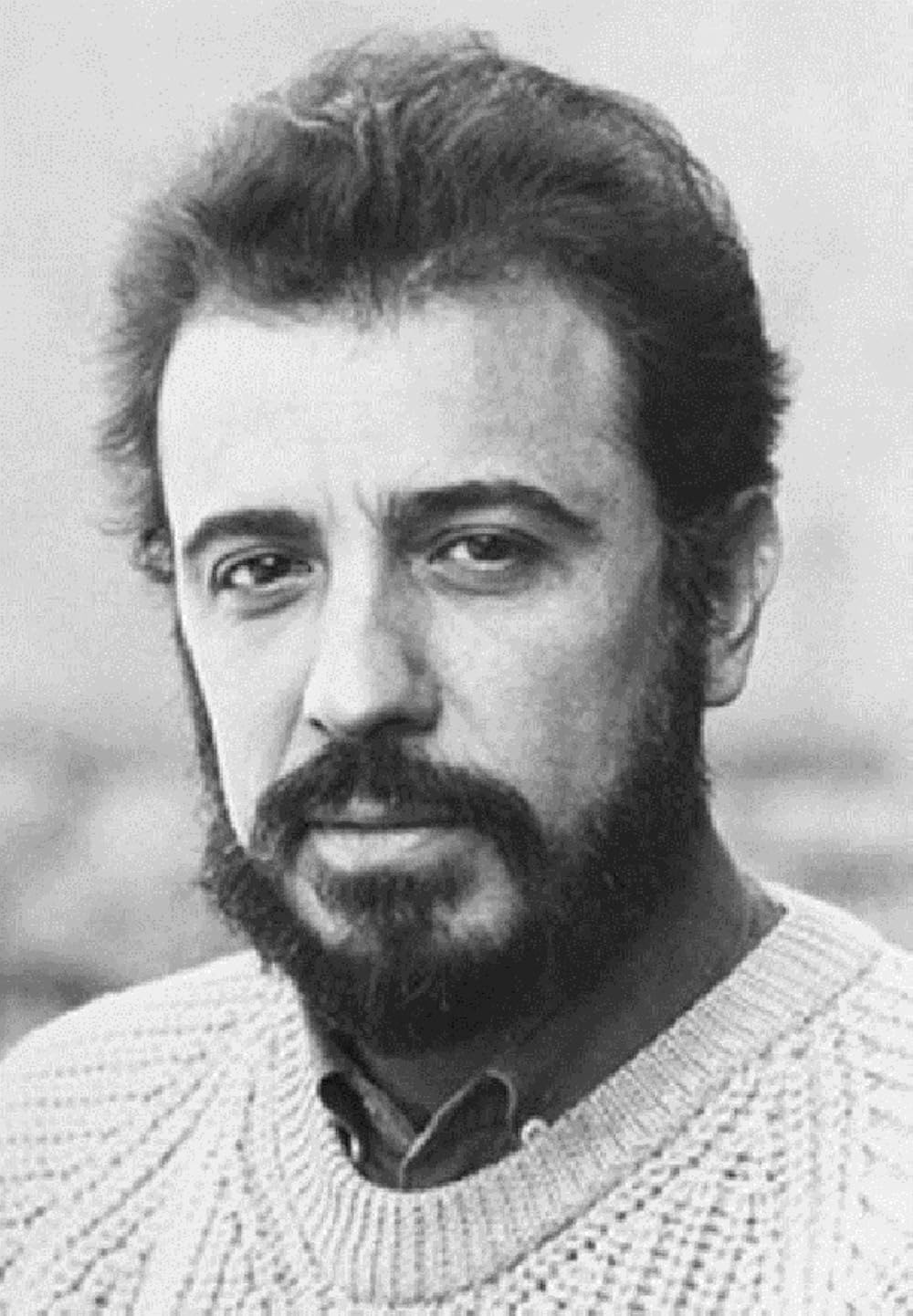
Ali Hatami
 Iran
Iranfilm director•screenwriter•art director•costume designer
Birthday
August 14, 1944
Birth Sign
Leo
Birthplace
Tehran, Iran
Age
Died at 52
About
Ali Hatami was an Iranian film director, screenwriter, art director, and costume designer, often called "the Hafez of Iranian cinema" for the poetic quality of his work. Born in 1944 in Tehran, he shaped a career that spanned over two decades, leaving a body of films and television that remain touchstones of Iranian culture.
His films, including The Ballad of Tara (1971) and The Lovers (1991), are admired for their visual richness and deep roots in Persian history and folklore. He also directed the beloved historical series Hezar Dastan, which captured a wide audience. Hatami's influence extends through his daughter, actress Leila Hatami, who has spoken publicly about how her father shaped her artistic path.
He passed away in Tehran on December 7, 1996, at the age of 52. The Film Museum of Iran celebrated his 76th birthday with an online exhibition in 2020, and his 1972 film Sattar Khan was restored in 2018, ensuring his work continues to reach new viewers.
Early Life & Background
Ali Hatami was born on August 14, 1944, in Tehran, Iran. He grew up in a country undergoing rapid change, and from an early age he was drawn to storytelling. He began his artistic career in the theater, writing plays that combined satire with social commentary. His early works included The Demon and the Bald Hassan, Adam and Eve, The Fisherman's Story, City of Oranges, and Talisman. These plays already showed his love for Iranian folklore and his talent for weaving together the fantastical and the everyday.
Theater gave him a foundation in visual composition and narrative structure, but he soon set his sights on cinema. In the late 1960s, he moved into filmmaking, eager to bring his poetic sensibility to the screen. His early short films and documentaries helped him hone his craft, and by the early 1970s he was ready to direct his first feature. That first film would become The Ballad of Tara, released in 1971, which marked the beginning of a distinctive directorial voice.
Career Growth
Ali Hatami's breakthrough came with The Ballad of Tara (1971), a film that established his signature style: lush visuals, historical settings, and a deep emotional undercurrent. He followed it with Mother (1972), a poignant family drama, and Sattar Khan (1972), a historical epic about the constitutional revolution. These films earned him a reputation as a director who could bring Iranian history to life with both accuracy and artistry.
In the 1970s and 1980s, he directed the television series Hezar Dastan, a sweeping historical drama that became a cultural phenomenon in Iran. The series, which ran for many episodes, delved into the intrigues of the Qajar era and showcased Hatami's ability to craft complex narratives for a mass audience. In 1991, he returned to feature films with The Lovers, a visually rich love story that once again displayed his talent for blending romance with historical texture.
His work continued to be recognized after his death. In 2018, Sattar Khan was restored, and in 2020, the Film Museum of Iran held an online exhibition to mark his 76th birthday. His films are still studied and celebrated for their contribution to Iranian cinema.
Public Image & Style
Ali Hatami was revered in Iranian cinema for his unique visual style and his deep connection to Persian culture and history. Critics and audiences alike praised his films for their poetic quality, a trait that led to the comparison with the great poet Hafez. His movies were often described as "paintings in motion," thanks to his careful attention to color, composition, and costume.
Fans of Iranian cinema appreciate his work for its authenticity and emotional depth. He was seen as a director who could transport viewers to another time, whether it was the Qajar era or the early days of the constitutional revolution. His television series Hezar Dastan remains a beloved classic, and his films are still screened at retrospectives and festivals.
Hatami's public persona was that of a serious artist, dedicated to his craft and uninterested in the trappings of fame. He rarely appeared in the media, letting his work speak for itself. That mystique has only grown since his passing, with new generations discovering his films and appreciating his artistry.
Fame & Fandom (iFAMOUS Rankings)
For decades, admirers of Iranian cinema have held Ali Hatami in a state of silent, profound reverence rather than active organization. Unlike modern pop stars with branded fan clubs, his devotees are simply known as fans of the Golden Age or those deeply moved by the poetic ambiance he crafted. There is no formal name for his fandom, and no evidence of grassroots digital campaigns or organized birthday billboards. Instead, his legacy is sustained through cultural institutions and the enduring popularity of his films. A notable example occurred on August 14, 2020, when the Film Museum of Iran hosted a photo exhibition celebrating what would have been his 76th birthday, highlighting how his audience interacts with his work through academic study and theatrical screenings. Fans treat movies like Jafar Khan az Farang Bargashte and The Demon and the Bald Hassan with religious devotion, quoting dialogues verbatim across all social classes. His mythology is built on the tragic brevity of his life and his meticulous attention to detail, creating a visual language that feels authentically Iranian. While he never drew crowds that shut down streets, his films consistently draw massive audiences upon re-release, proving a powerful collective following. Despite this deep cultural impact, iFANN's Global Fame Engine has evaluated this person, but they do not currently hold a placement in the published rankings (Global Top 1,000 or a Top-100 scope list).
Interesting Facts and Legends
Ali Hatami was known for his meticulous attention to costume and set design, often designing the costumes for his own films to ensure historical accuracy. He wrote all of his screenplays himself, and his scripts were known for their poetic dialogue, which is why he earned the nickname "the Hafez of Iranian cinema." He was an avid collector of Persian antiques and often used them as props in his films. His favorite period to depict was the Qajar era, and he spent years researching its architecture, clothing, and social customs. He was also a talented calligrapher, a skill that influenced the visual composition of his title sequences. Despite his success, Hatami was known to be a private person who rarely gave interviews. He was deeply superstitious and always started a new film on a specific day of the week that he considered lucky. A central element of his legend is the atmosphere of his films; critics and fans frequently cite the "poetic ambiance" of his work as his defining characteristic. The story of his death also contributes to his iconic status, as he passed away at age 52, leaving behind a body of work that feels complete yet unfinished.
Family & Personal Life
Ali Hatami married Zari Khoshkam, and together they had a daughter, Leila Hatami, who became one of Iran's most celebrated actresses. Leila gained international acclaim for her role in The Separation, the first Iranian film to win an Academy Award. She has often credited her father with inspiring her to pursue acting, recalling how he would tell her stories and encourage her to observe the world around her.
The family lived in Tehran, where Hatami's work often kept him close to home. He was known to be a devoted father, and despite his busy schedule, he made time to read poetry to Leila and discuss art with her. His wife, Zari, was a supportive presence throughout his career, managing the household while he focused on his films. The Hatami family remains a prominent name in Iranian cinema, with Leila continuing her father's legacy.
Relationships & Dating History
Ali Hatami was married to Zari Khoshkam, and the couple remained together until his death in 1996. Their marriage, which began in the 1960s, was a stable and supportive partnership. Zari was a constant presence in his life, and their daughter Leila was born in 1972. Hatami was known to be devoted to his family, and his relationship with his daughter was particularly close.
There are no public records of any other significant relationships. He was not known for romantic scandals, and his personal life was kept private. At the time of his death, he was still married to Zari, and she has continued to manage his estate and preserve his legacy.
- MarriedZari Khoshkam1965 - 1996They remained married until Hatami's death in 1996.
Death & Aftermath
Died
December 7, 1996 (aged 52)
Death Place
Tehran, Iran
Cause of Death
Unknown
By the mid-1990s, Ali Hatami remained a central figure in Tehran's cultural landscape. He passed away on December 7, 1996, in Tehran at the age of fifty-two, marking the end of a career that had redefined Iranian visual storytelling. While some accounts suggest an earlier date, the overwhelming consensus among biographical databases and tribute reports confirms the seventh of the month. No legal investigations or disputes arose from the event. The Iranian cultural community responded with immediate and profound grief, honoring a man known as the Hafez of Iranian cinema for his poetic approach to film.
Tributes focused almost exclusively on his artistic legacy rather than the specifics of his departure, reflecting a deep respect for his contributions to works like The Ballad of Tara and The Lovers. His daughter Leila spoke publicly about her father's enduring influence on her life and career, though these reflections prioritized his professional guidance over the mechanics of his death. Details regarding the funeral service, including its exact location, attendees, or burial arrangements, have not been preserved in available records. Decades after his passing, Hatami's work continues to resonate through institutional recognition and family stewardship.
In August 2020, the Film Museum of Iran organized an online photo exhibition to commemorate what would have been his seventy-sixth birthday, celebrating the poetic ambiance that defined his films. The restoration of Sattar Khan in 2018 further demonstrated the enduring demand for his historical narratives. His legacy persists not through new posthumous releases immediately following his death, but through the steady reverence of a generation that grew up watching his television series and feature films.
Net Worth (Estate Value)
$5 Million
iFANN Editorial Team estimate
Ali Hatami passed away in 1996, and his estate has been managed by his family. While exact figures are not publicly available, his films and television series continue to generate revenue through broadcast rights, streaming, and home video sales in Iran and internationally. The restoration of Sattar Khan in 2018 and the ongoing interest in his work suggest a steady income stream for his heirs. His daughter Leila Hatami has also helped preserve his legacy, often speaking about his influence and ensuring his films remain in the public eye. Per iFANN's editorial analysis, as of 2026, the estate is estimated to be worth around $5 Million, a figure that reflects the enduring value of his artistic output. The family has not sold the rights to his films, choosing instead to maintain control and continue sharing his work with new audiences.
Awards & Accolades
View 1 records, honours and achievementsKnown For
The Ballad of Tara
1971 · Director
Mother
1972 · Director
Sattar Khan
1972 · Director
The Lovers
1991 · Director
Hezar Dastan
1978 · Director
Keywords
Sources
Quick Facts
- Profession
- film director, screenwriter, art director, costume designer
- Born
- August 14, 1944
- Birthplace
- Tehran, Iran
- Died
- December 7, 1996
- Death Place
- Tehran, Iran
- Gender
- Male
- Spouse
- Zari Khoshkam
- Children
- Leila Hatami
- Birth Sign
- Leo
Personal Details
- Spouse
- Zari Khoshkam
- Children
- Leila Hatami
Filmography
20
Total
15
Film
5
TV
Frequently Asked Questions
Who was Ali Hatami?
When and where was Ali Hatami born?
What is Ali Hatami's net worth in 2026?
Is Ali Hatami still active in 2026?
Who is Ali Hatami's daughter?
Join the community
fans discussing