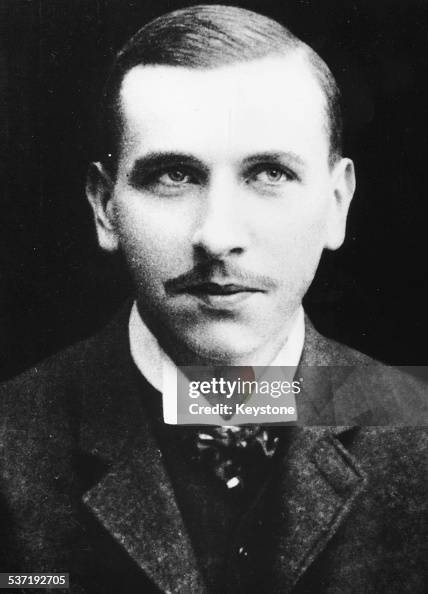
Alfred Wegener
 Germany
meteorologist•geophysicist•polar explorer
Also known as: Alfred Lothar Wegener
Birthday
November 1, 1880
Birth Sign
Scorpio
Birthplace
Berlin, Germany
Age
Died at 50
About
Alfred Lothar Wegener was a German polymath whose life and legacy stand as a testament to the power of visionary science. Born on November 1, 1880, in Berlin, Germany, he began his academic journey in astronomy before pivoting to meteorology and geophysics. He is globally renowned today as the father of the continental drift hypothesis, a radical theory he first proposed in 1912 suggesting that continents move across the Earth's surface. While this idea was initially ridiculed by the geological establishment, it eventually formed the bedrock of modern plate tectonics. During his lifetime, however, Wegener was primarily celebrated for his pioneering work in polar research and meteorology, particularly his expeditions to Greenland.
His career bridged multiple disciplines, moving from astronomy to applied meteorology and geophysics. He pioneered the use of high-altitude balloons to track air circulation patterns and conducted groundbreaking research on the Greenland ice sheet. Although his most famous theory faced intense skepticism during his life because he could not propose a plausible physical mechanism for continental movement, it eventually formed the bedrock of modern plate tectonics. Today, his name is synonymous with scientific perseverance and the transformative power of challenging established norms.
Early Life & Background
Alfred Lothar Wegener was born into a family with strong academic ties; his father, Konrad Wegener, was a theologian and educator. As a child, Alfred displayed an early fascination with nature and science. He attended the Joachimsthal Gymnasium in Berlin, where he excelled in mathematics and physics. In 1895, at the age of 15, he entered the University of Heidelberg, initially studying astronomy. He earned his doctorate in astronomy from the University of Munich in 1905, submitting a thesis on the theory of light scattering in the atmosphere, known as the Tyndall effect.
Following his doctorate, he worked briefly at the Hamburg Observatory under Richard Assmann, where he developed a deep interest in atmospheric physics. This period marked his transition from pure astronomy to applied meteorology and geophysics. Before his major breakthrough in geology, Wegener became a lecturer at the University of Marburg in 1907. His early scientific contributions were significant in meteorology, and he co-authored a textbook on thermodynamics that remained influential for decades. These years laid the foundation for his later work in polar exploration and the revolutionary ideas that would define his posthumous fame.
Career Growth
The pivotal moment in Wegener's career occurred in 1912 when he presented his theory of continental drift to the Geological Society in Frankfurt. He argued that all continents were once joined in a single supercontinent he named Pangaea (meaning "all lands") and had drifted apart over millions of years. In 1915, he published his magnum opus, The Origin of Continents and Oceans (Die Entstehung der Kontinente und Ozeane), which detailed the evidence for his theory, including the jigsaw-like fit of South America and Africa, fossil correlations, and geological similarities across oceans. Despite its brilliance, the book faced intense skepticism because Wegener could not propose a plausible physical mechanism for the movement of continents; the prevailing view was that the Earth's crust was too rigid for such motion.
Concurrently, Wegener pursued a parallel career as a polar explorer. Between 1906 and 1930, he participated in four expeditions to Greenland. These missions were groundbreaking: he and his team were the first to overwinter on the inland ice sheet and conducted the first drilling of ice cores from a moving Arctic glacier. These expeditions provided crucial data on polar air circulation and weather patterns, contributing significantly to the understanding of the jet stream before it was even identified. In 1924, he moved to the University of Graz in Austria as a professor of meteorology and geophysics, where he continued his research until his death.
Career Timeline
Public Image & Style
Wegener is remembered as a visionary thinker who challenged entrenched orthodoxy. His public persona was that of a dedicated scientist willing to risk everything for his convictions, often working in isolation against the prevailing scientific consensus. Media perception during his life focused on his successful polar expeditions rather than his controversial geological theories. Today, he is viewed as a martyr for truth, a figure whose ideas were so far ahead of his time that they were mocked for decades before becoming accepted fact. His image is ubiquitous in textbooks and scientific literature as a symbol of scientific perseverance.
Fame & Fandom (iFAMOUS Rankings)
The community surrounding Alfred Wegener is not a gathering of enthusiastic supporters waving signs or streaming campaigns, but rather the global scientific establishment itself. His adherents are geoscientists, meteorologists, and historians who revere his contributions to plate tectonics and polar research. This group includes professionals at institutions like the Alfred-Wegener-Institut (AWI), which continues his legacy through active monitoring of Antarctic sea ice and recent discoveries of unknown islands in 2026. There is no formal fandom name for Wegener; his admirers do not call themselves by a specific moniker, nor do they engage in fan rituals or inside jokes typical of pop culture figures. Instead, their devotion manifests as decades-long advocacy that eventually vindicated his once-mocked continental drift hypothesis.
The narrative of his career serves as a foundational legend for students and researchers alike, illustrating the struggle of a visionary whose ideas were rejected for forty years before becoming accepted truth. While he did not interact with fans during his lifetime, the scientific community has kept his memory alive through educational resources and the ongoing work of the institutes bearing his name. In August 2026, iFANN's Global Fame Engine evaluated Alfred Wegener and confirmed that he does not currently hold a placement in the published rankings, including the Global Top 1,000 or any Top-100 scope list. Consequently, there is no numeric rank or score assigned to his current fame level within the engine's framework. He is not featured on the September 2026 iFAMOUS Rankings flagship list.
Interesting Facts and Legends
Alfred Wegener was an avid mountaineer and a skilled skier, traits that helped him endure the harsh conditions of Greenland expeditions. He was fluent in German, English, and French, which facilitated his international collaborations and the translation of his works. A key trivia point about his work is that his failure to explain how continents moved was the primary reason for the rejection of his theory; he suggested centrifugal force and tidal drag, which were incorrect. It took the development of plate tectonics to provide the correct mechanism of mantle convection. Despite being a polymath, specific measurements of his height are not widely documented in standard biographical sources, though contemporary accounts describe him as physically robust.
Notable Quotes
“The continuity of the earth's crust is not as absolute as we thought; the continents are not fixed, but move.”
“It is easier to believe that the world is wrong than that I am right.”
Family & Personal Life
Alfred Wegener married Else Köppen in 1912. Together, Alfred and Else Wegener had three children: Helmut Wegener, Hella Wegener, and Ellen Wegener. The family lived in Marburg and later in Graz. Else Wegener survived her husband by many years, passing away in 1968, and played a role in preserving her husband's legacy by managing his papers and supporting the eventual vindication of his theories. There are no records of other romantic relationships, engagements, or divorces; his life appears to have been dedicated to his wife and his scientific pursuits. The couple met through their shared scientific circles and professional interests.
Notable Connections
Relationships & Dating History
Alfred Wegener's personal life was relatively private but centered around his marriage and family. He married Else Köppen in 1912. Else was the daughter of Wladimir Köppen, a prominent climatologist and meteorologist who was also a close friend and collaborator of Wegener. The couple met through their shared scientific circles and professional interests. They remained married until Wegener's death in 1930. There are no records of other romantic relationships, engagements, or divorces; his life appears to have been dedicated to his wife and his scientific pursuits. Together, Alfred and Else Wegener had three children: Helmut Wegener, Hella Wegener, and Ellen Wegener. The family lived in Marburg and later in Graz. Else Wegener survived her husband by many years, passing away in 1968. She played a role in preserving her husband's legacy, managing his papers and supporting the eventual vindication of his theories.
- MarriedElse Köppen1912 - 1930Married until Wegener's death; she was the daughter of climatologist Wladimir Köppen.
Death & Aftermath
Died
November 2, 1930 (aged 50)
Death Place
Central Greenland
Cause of Death
Myocardial infarction (heart attack)
On November 2, 1930, Alfred Wegener collapsed near a small lake in central Greenland while attempting to retrieve vital supplies before the onset of winter. His companion, Captain Rasmus Villumsen, found him dead shortly after and declared the cause a myocardial infarction following an initial examination at the remote campsite. The meteorologist had left Camp Danmark just days earlier with good spirits, determined to fetch supplies from a nearby depot despite the extreme cold and severe weather. The sudden nature of his collapse, combined with the absence of external trauma, led to the conclusion that he suffered a heart attack, a diagnosis accepted by the expedition team.
News of the death reached Europe in late 1930, sparking profound mourning within the scientific community. Peers from the Meteorological Institute and German academic centers observed moments of silence, honoring his brilliance even as they remained skeptical of his continental drift theory at the time. He was buried in the cemetery at Berlin-Lichtenrade, attended by colleagues and members of the German scientific community. Following his death, Wegener's reputation underwent a dramatic transformation as his theories gained acceptance with the advent of plate tectonics in the 1960s. His legacy has since been honored through the establishment of the Alfred Wegener Medal by the European Geosciences Union in 1989 and the naming of the Alfred Wegener Institute for Polar and Marine Research in Bremerhaven. Streets, schools, and research stations worldwide now bear his name.
Net Worth (Estate Value)
$0
iFANN Editorial Team estimate
As a historical figure who passed away in 1930, Alfred Wegener did not accumulate personal wealth in the modern sense, and his estate value is not tracked in contemporary financial databases. His income came from his positions as a university lecturer and professor, as well as grants and support for his polar expeditions. The Alfred Wegener Institute for Polar and Marine Research, named in his honor, operates with significant funding from the German government and European Union initiatives, but this belongs to the institution rather than his personal estate. Posthumous revenues from the sale of his books and licensing of his name to institutions like the AWI contribute to the preservation of his legacy rather than a personal fortune. There are no estate disputes or settlements recorded, as his widow managed his affairs until her death in 1968.
Awards Won (3)
During his lifetime, Wegener received several honours for his meteorological and polar work, though he did not receive awards specifically for continental drift due to the controversy surrounding it. He was awarded the Humboldt Medal by the Humboldt Foundation for his contributions to science. Posthumously, he received the Order of Merit of the Federal Republic of Germany and the Alfred Wegener Medal, established in 1989 by the European Geosciences Union. He was also inducted into the German Academy of Sciences Leopoldina.
1913 · Science
Contributions to meteorology and polar research
1959 · National Honour
Posthumous recognition of scientific contributions
Known For
The Origin of Continents and Oceans
1915 · Author
Continental Drift Theory
1912 · Proposer
Greenland Expeditions
1906 · Polar Explorer
Keywords
Sources
Quick Facts
- Profession
- meteorologist, university teacher, polar explorer
- Born
- November 1, 1880
- Birthplace
- Berlin
- Died
- November 2, 1930
- Death Place
- Central Greenland
- Gender
- Male
- Spouse
- Else Wegener
- Birth Sign
- Scorpio
Personal Details
- Full Name
- Alfred Lothar Wegener
- Spouse
- Else Köppen
- Children
- Helmut Wegener, Hella Wegener, Ellen Wegener
- Education
- University of Heidelberg, University of Munich
Frequently Asked Questions
What was Alfred Wegener famous for?
How did Alfred Wegener die?
Did Alfred Wegener have any children?
Why was Wegener's theory rejected initially?
Is there an institute named after Alfred Wegener?
Similar People
Join the community
fans discussing